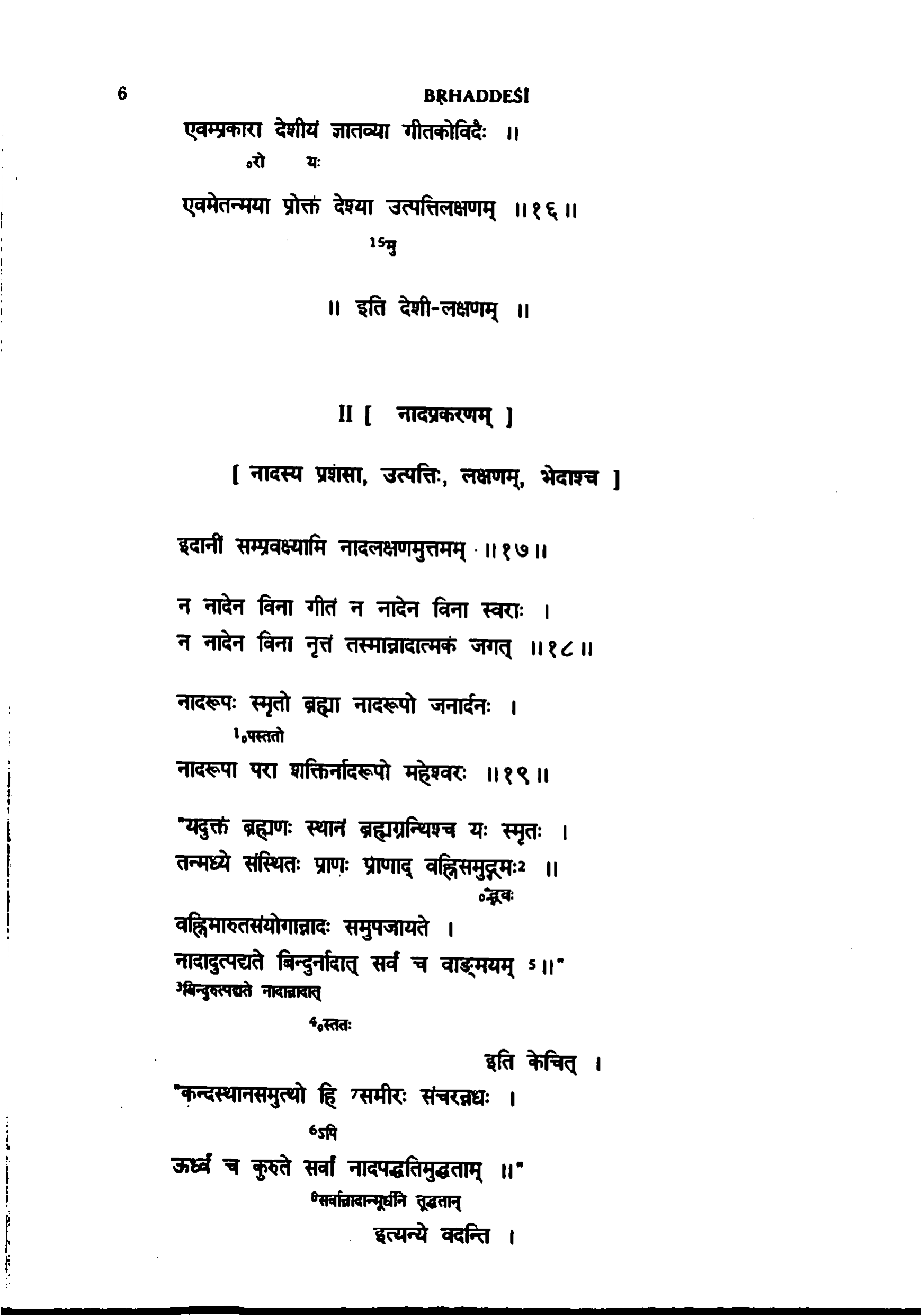
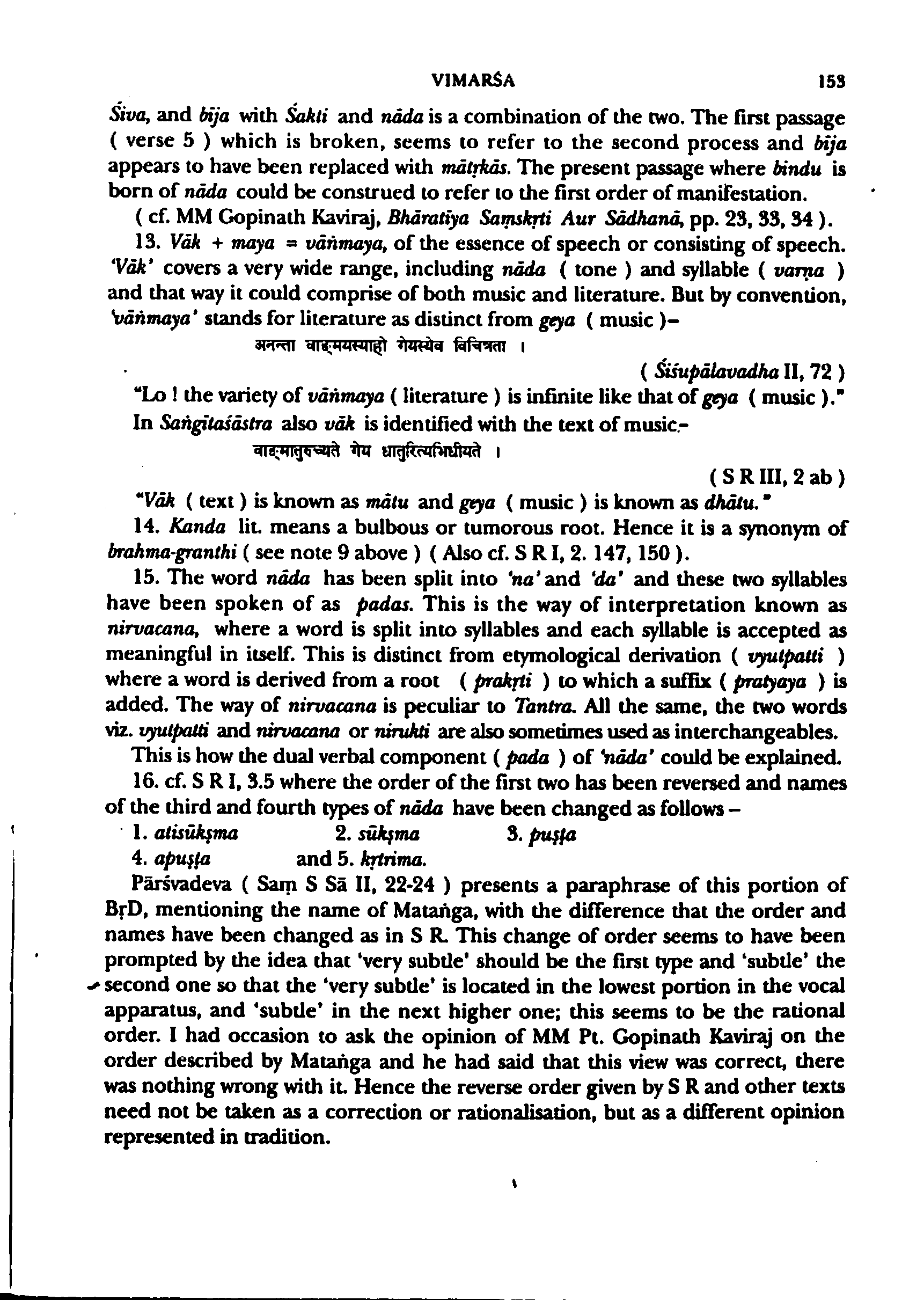
Brahmagranthi is the seat of energy in the human body from which vital air is propelled
"The vital air is propelled
from the seat of energy in the body known as brahmagranthi and as it travels
upward it touches the various locations, producing low and high sounds."
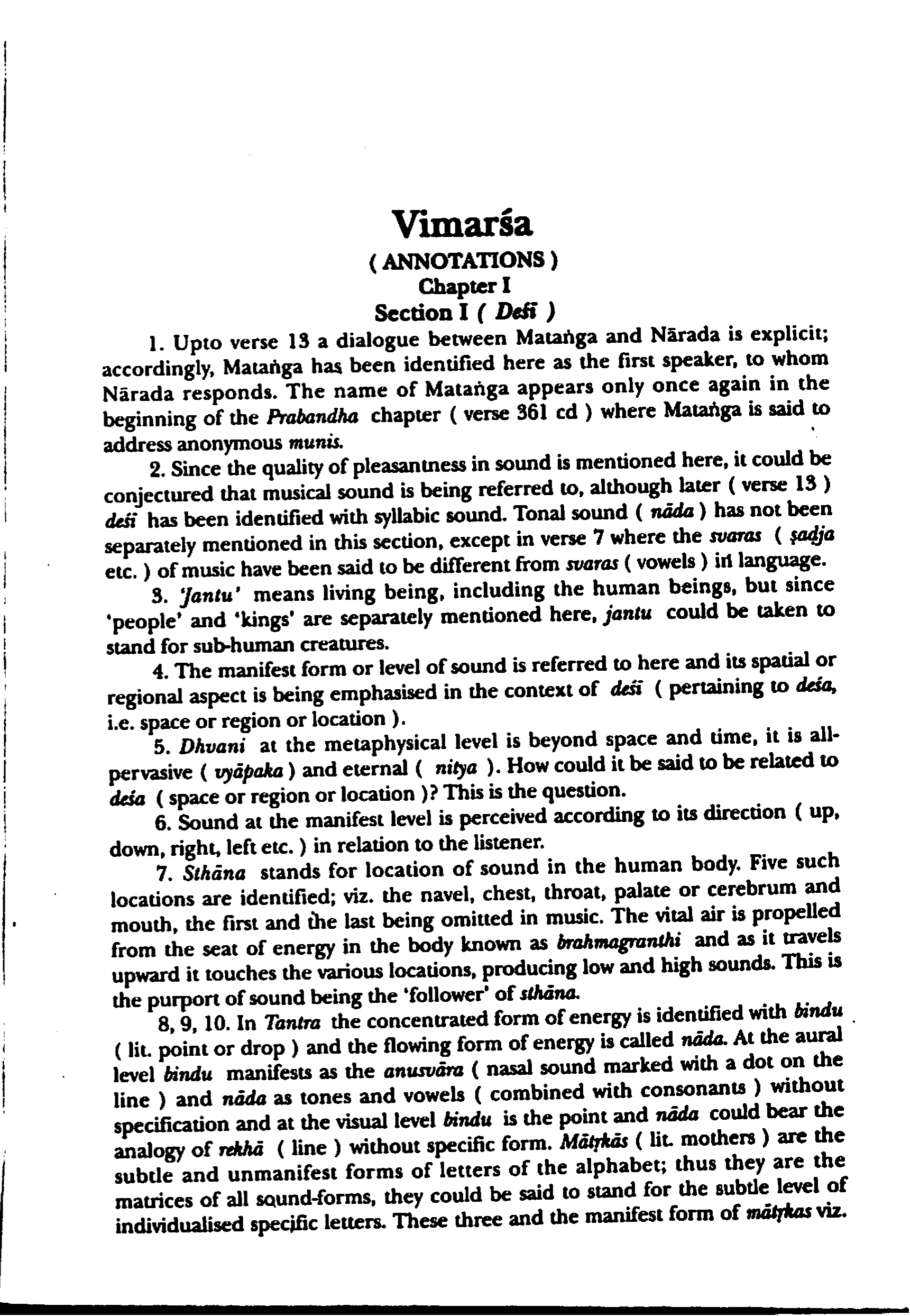
Vimarśa
(ANNOTATIONS)
Chapter I
Section I ( Desi )
1. Upto verse 13 a dialogue between Matanga and Nārada is explicit;
accordingly, Matanga has been identified here as the first speaker, to whom
Nārada responds. The name of Matanga appears only once again in the
beginning of the Prabandha chapter (verse 361 cd) where Matanga is said to
address anonymous munis.
2. Since the quality of pleasantness in sound is mentioned here, it could be
conjectured that musical sound is being referred to, although later (verse 13)
desi has been identified with syllabic sound. Tonal sound ( nāda ) has not been
separately mentioned in this section, except in verse 7 where the svaras ( şadja
etc.) of music have been said to be different from svaras (vowels) in language.
3. 'Jantu' means living being, including the human beings, but since
'people' and 'kings' are separately mentioned here, jantu could be taken to
stand for sub-human creatures.
4. The manifest form or level of sound is referred to here and its spatial or
regional aspect is being emphasised in the context of desi (pertaining to desa,
i.e. space or region or location).
5. Dhvani at the metaphysical level is beyond space and time, it is all-
pervasive ( vyāpaka ) and eternal ( nitya ). How could it be said to be related to
desa (space or region or location)? This is the question.
6. Sound at the manifest level is perceived according to its direction (up,
down, right, left etc.) in relation to the listener.
7. Sthāna stands for location of sound in the human body. Five such
locations are identified; viz. the navel, chest, throat, palate or cerebrum and
mouth, the first and the last being omitted in music. The vital air is propelled
from the seat of energy in the body known as brahmagranthi and as it travels
upward it touches the various locations, producing low and high sounds. This is
the purport of sound being the 'follower' of sthana.
8, 9, 10. In Tantra the concentrated form of energy is identified with bindu
(lit. point or drop) and the flowing form of energy is called nāda. At the aural
level bindu manifests as the anusvāra ( nasal sound marked with a dot on the
line) and nāda as tones and vowels (combined with consonants) without
specification and at the visual level bindu is the point and nāda could bear the
analogy of rekhā (line) without specific form. Mātṛkās (lit. mothers) are the
subtle and unmanifest forms of letters of the alphabet; thus they are the
matrices of all sound-forms, they could be said to stand for the subtle level of
individualised specific letters. These three and the manifest form of mátykas viz.