In vārtika mārga, samagraha is employed
"In Vārtika (mārga) there is samagraha,20"
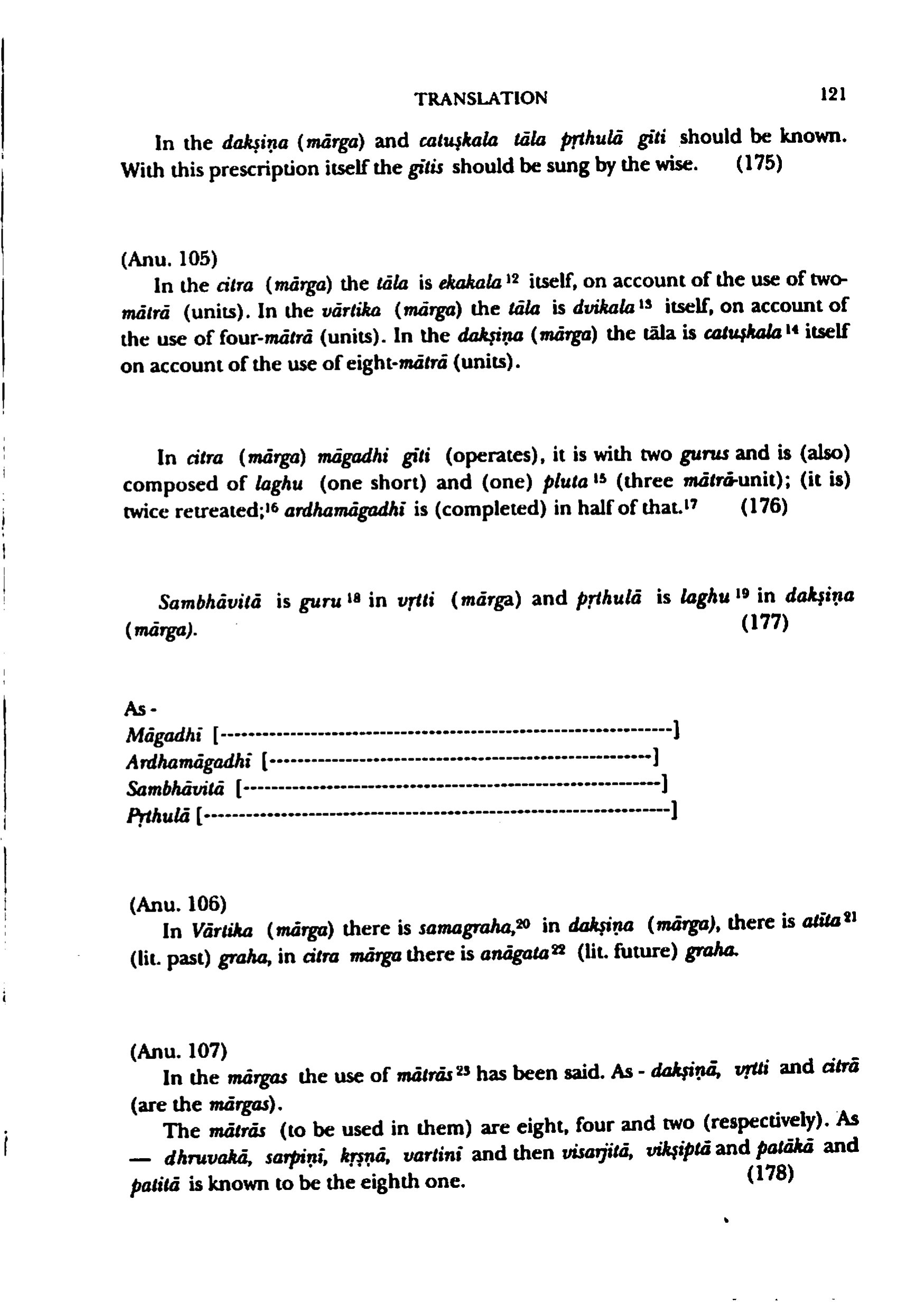
<sup>121</sup>
TRANSLATION
In the dakṣiṇa (mārga) and catuṣkala tāla pṛthulā giti should be known.
(175)
With this prescription itself the gitis should be sung by the wise.
(Anu. <sup>105</sup>)
In the citra (mārga) the tāla is ekakala 12 itself, on account of the use of two-
mātrā (units). In the vārtika (mārga) the tāla is dvikala 13 itself, on account of
the use of four-mātrā (units). In the dakṣiṇa (mārga) the tāla is catuṣkala 14 itself
on account of the use of eight-mātrā (units).
In citra (mārga) māgadhi gīti (operates), it is with two gurus and is (also)
composed of laghu (one short) and (one) pluta 15 (three mātrā-unit); (it is)
(176)
twice retreated;<sup>16</sup> ardhamāgadhī is (completed) in half of that.<sup>17</sup>
Sambhāvitā is guru 18 in vṛtti (mārga) and pṛthulā is laghu 19 in dakṣiṇa
(177)
(mārga).
As -
Māgadhī [-----]
Ardhamāgadhī [-----]
Sambhāvitā [-----]
Pythulā [-----]
(Anu. <sup>106</sup>)
In Vārtika (mārga) there is samagraha,20 in dakṣiṇa (mārga), there is atīta 21
(lit. past) graha, in citra mārga there is anāgata<sup>22</sup> (lit. future) graha.
(Anu. <sup>107</sup>)
In the mārgas the use of mātrās 23 has been said. As - dakṣiṇā, vṛtti and citrā
(are the margas).
The mātrās (to be used in them) are eight, four and two (respectively). As
— dhruvakā, sarpiņī, kṛṣṇā, vartinī and then visarjitā, vikṣiptā and patākā and
(178)
patitā is known to be the eighth one.