niṣāda, ṛṣabha, pañcama and dhaivata technical_term
Generative rules (1) ↗ filter all
r_brd_791_karmaravi_amsasassignment · 2 att.
In Kārmāravī jāti, niṣāda+ṛṣabha+pañcama+dhaivata are aṁśas, all maintaining mutual concert
Pseudocode (DSL v1.1) ↗ full DSL (raw text)
RULE id: niṣāda, ṛṣabha, pañcama and dhaivata (cluster 791)
SCOPE: technical_term family
STATUS: traditional
CONFIDENCE: traditional
PROTECT: false
Essence pseudocode — identity + RECORD. The page citations for each slot value are in the Grammar record table above (audit trail). The full DSL adds ASSERTIONS with verbatim quotes (see Affirmations below) and CITED_RULES (see Graph relations).
Affirmations (2)
These four svaras are designated as amsas in the Kārmāravi jāti
"In kārmāravī, niṣāda, ṛṣabha, pañcama and dhaivata become the ainśas."
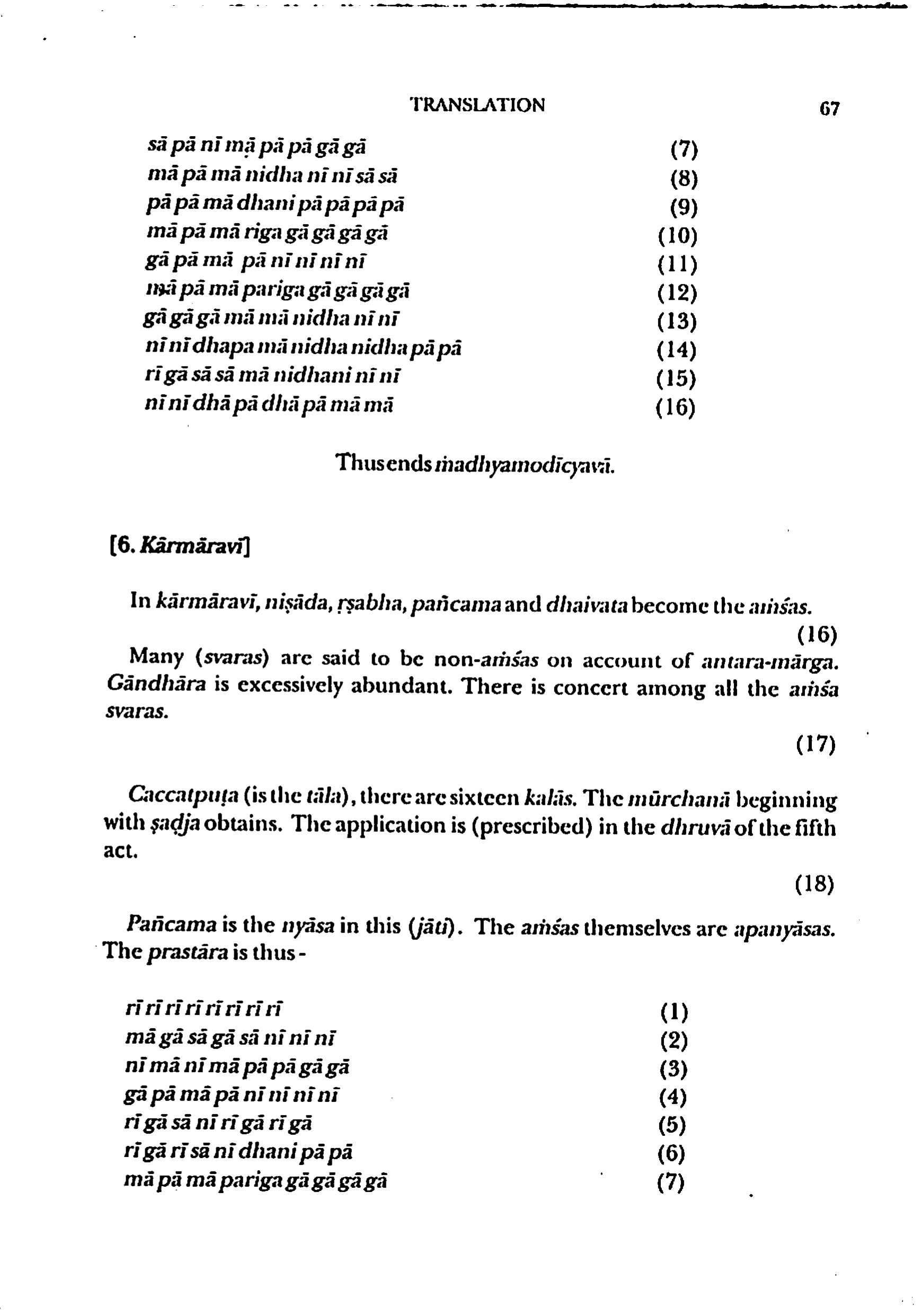
These four svaras maintain concert (compatibility) with all amsas in Kārmāravi
"There is concert among all the aṁśa svaras."