एला technical_term
Generative rules (1) ↗ filter all
R_c1149_eladefinition · 3 att.
elā = forme prabandha où les 2 premiers pieds portent anuprāsa, 4 gītis par pied, combinée à pratitāla; thèmes: renoncement, bien-être, beauté, valeur, fermeté;
Pseudocode (DSL v1.1) ↗ full DSL (raw text)
RULE id: एला (cluster 1149)
SCOPE: technical_term family
STATUS: traditional
CONFIDENCE: traditional
PROTECT: false
Essence pseudocode — identity + RECORD. The page citations for each slot value are in the Grammar record table above (audit trail). The full DSL adds ASSERTIONS with verbatim quotes (see Affirmations below) and CITED_RULES (see Graph relations).
Graph relations
Outgoing (0)
none
Incoming (4)
nandāvatī --[structural]--> (2)hamsāvatī --[structural]--> (1)bhadrāvatī --[structural]--> (1)द्राविडैला --[structural]--> (1)
Affirmations (3)
Elā is defined as a form containing alliteration (anuprāsa) in specific feet, four gītis in each foot, and descriptions of renunciation, well-being, beauty, valour, and steadfastness
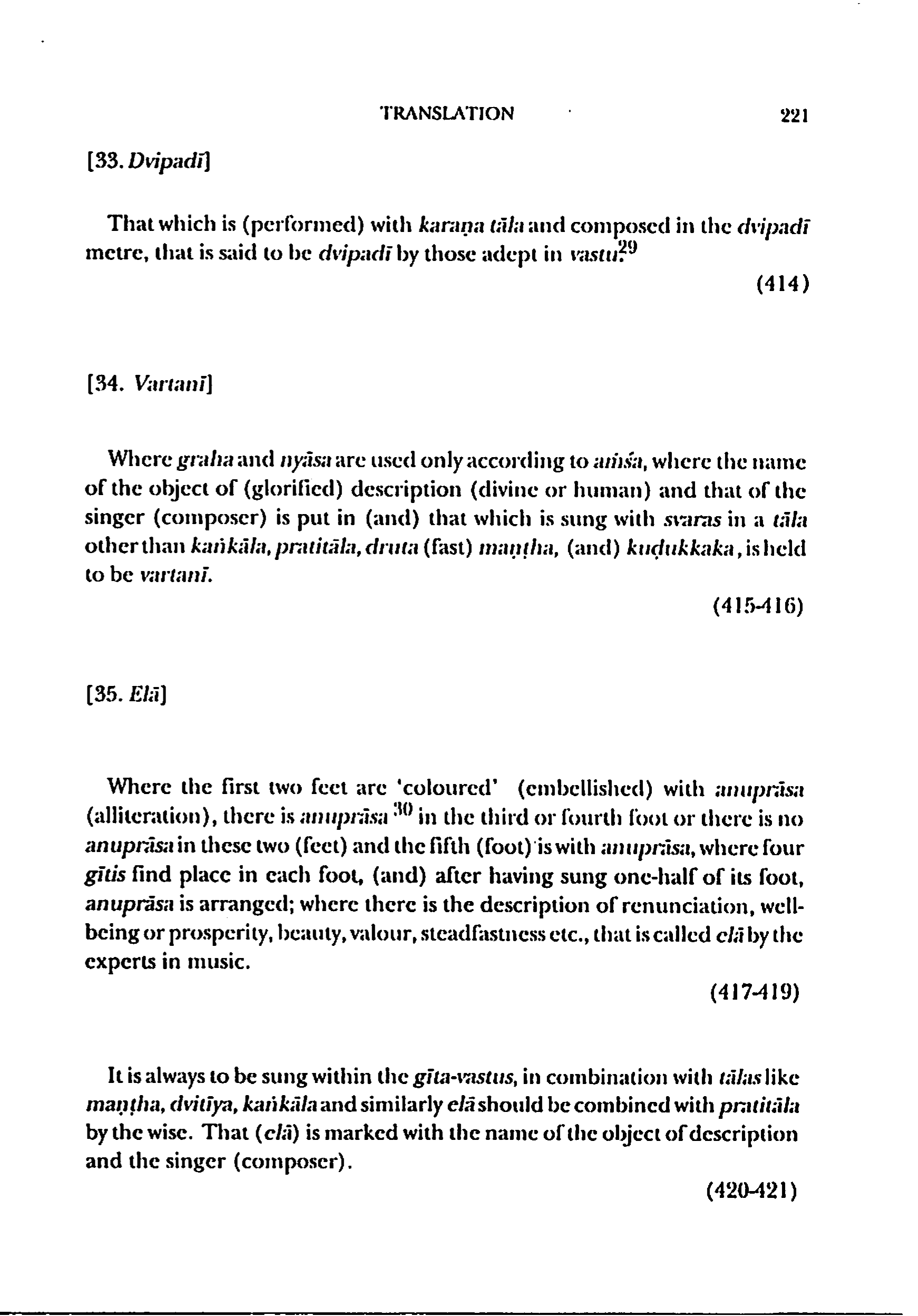
"Where the first two feet are 'coloured' (embellished) with anuprāsa
(alliteration), there is anuprāsa in the third or fourth foot or there is no
anuprāsa in these two (feet) and the fifth (foot) is with anuprāsa, where four
gītis find place in each foot"
Elā should be combined with pratitāla according to the wise
"elā should be combined with pratitāla by the wise"
Elā is marked with the name of the object of description and the name of the singer/composer
"That (clā) is marked with the name of the object of description and the singer (composer)."