Pañcamanyāsaḥ (the fifth note as a resting point) is a structural element that can originate from the Kaiśikī jāti
"पड्ज?ांशो मध्यमन्यासः कैशिकीज?ातिसम्भवः।"
<sup>1</sup>. <sup>*****</sup>
<sup>258</sup>
BRHADDEŚĨ
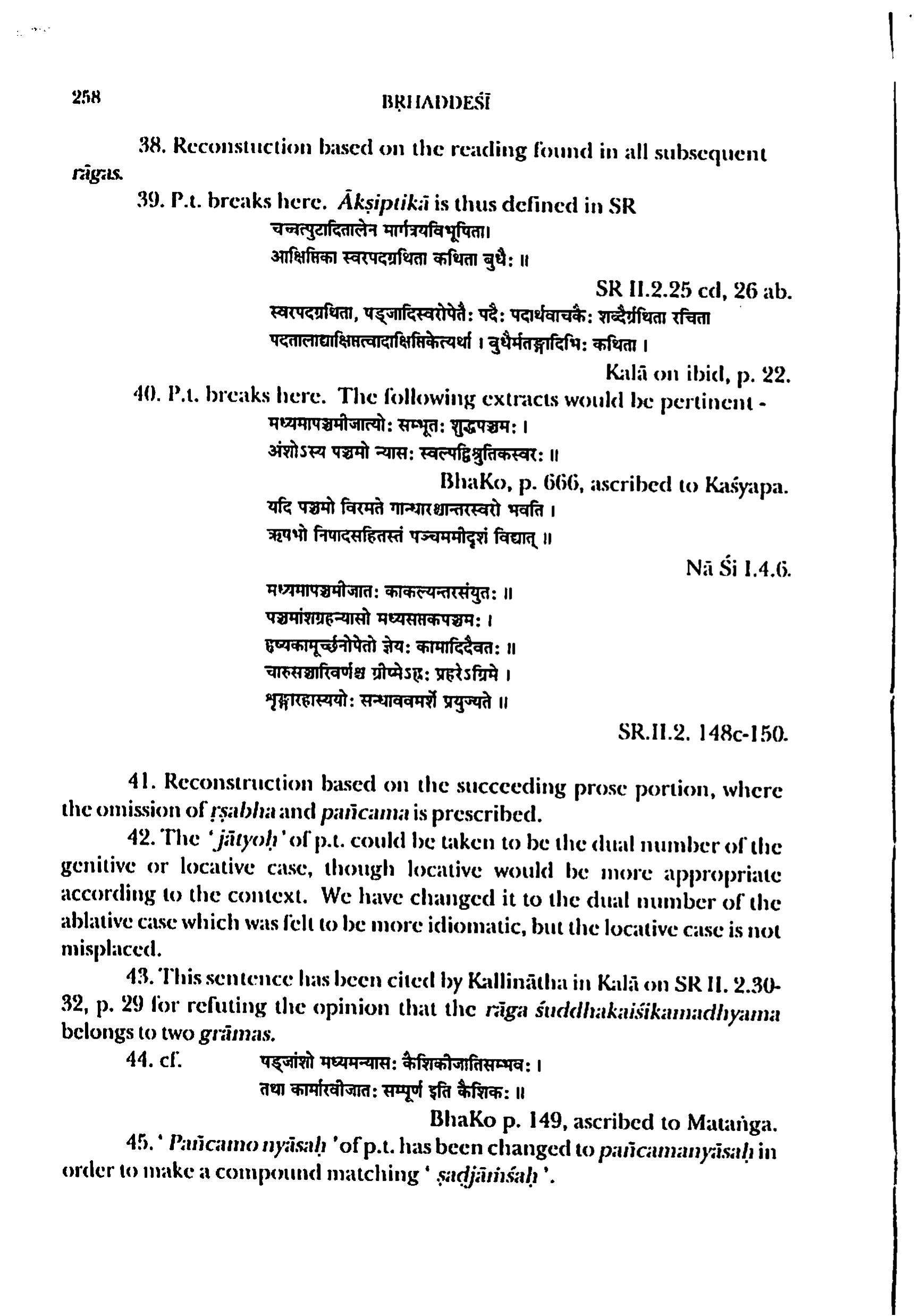
38. Reconstuction based on the reading found in all subsequent
rāgas.
39. P.t. breaks here. Ākṣiptikā is thus defined in SR
चच्चत्पुटादितालेन मार्गत्रयविभूपिता।
आक्षिप्तिका स्वरपदग्रथिता कथिता बुधैः ॥
SR II.2.25 cd, 26 ab.
स्वरपदग्रधिता, पड्ज?ादिस्वरोपेतैः पदैः पदार्थवाचकैः शब्दैग्रंथिता रचिता
पदतालाद्याक्षिप्तत्वादाक्षिप्तिकेत्यर्था । वुधैर्मतङ्गादिभिः कथिता ।
Kalā on ibid, p. 22.
40. P.t. breaks here. The following extracts would be pertinent -
मध्यमापञ्चमीज?ात्योः सम्भूतः शुद्धपञ्चमः ।
अंशोऽस्य पञ्चमो न्यासः स्वल्पद्विश्रुतिकस्वरः॥
BhaKo, p. 666, ascribed to Kaśyapa.
यदि पञ्चमो विरमते गान्धारधान्तरस्वरो भवति ।
ऋपभो निपादसहितस्तं पञ्चममीदृशं विद्यात् ॥
Nā Śi <sup>1</sup>.4.6.
मध्यमापञ्चमीज?ातः काकल्यन्तरसंयुतः ॥
पञ्चमांशग्रहन्यासो मध्यसप्तकपञ्चमः।
इष्यकामूर्च्छनोपेतो ज?्ञेयः कामादिदैवतः ॥
चारुसञ्चारिवर्णश्च ग्रीप्मेऽहः प्रहरेऽग्रिमे ।
शृङ्गारहास्ययोः सन्धाववमर्शे प्रयुज?्यते ॥
SR.II.2. <sup>148</sup>c-150.
41. Reconstruction based on the succeeding prose portion, where
the omission of ṛṣabha and pañcama is prescribed.
42. The 'jātyoḥ' of p.t. could be taken to be the dual number of the
genitive or locative case, though locative would be more appropriate
according to the context. We have changed it to the dual number of the
ablative case which was felt to be more idiomatic, but the locative case is not
misplaced.
43. This sentence has been cited by Kallinātha in Kalā on SR II. 2.30-
32, p. 29 for refuting the opinion that the rāga śuddhakaiśikamadhyama
belongs to two grāmas.
44. cf.
पड्ज?ांशो मध्यमन्यासः कैशिकीज?ातिसम्भवः।
तथा कार्मारवीज?ातः सम्पूर्ण इति कैशिकः ॥
BhaKo p. 149, ascribed to Matanga.
45. ' Pañcamo nyāsaḥ 'of p.t. has been changed to pañcamanyāsaḥ in
order to make a compound matching ' ṣadjāmśaḥ '.