śukacańcu technical_term
Generative rules (2) ↗ filter all
shukacancu_position_22assignment · 1 att.
Śukacañcu is the twenty-second musical form (prabandha).shukacancu_definition_svaras_patas_regionaldefinition · 1 att.
Śukacañcu is sung with svaras and pāṭas in various regional languages, beginning with rāga-with-gamaka, endowed with tāla.
Pseudocode (DSL v1.1) ↗ full DSL (raw text)
RULE id: śukacańcu (cluster 438)
SCOPE: technical_term family
STATUS: empirical
CONFIDENCE: empirical
PROTECT: false
Essence pseudocode — identity + RECORD. The page citations for each slot value are in the Grammar record table above (audit trail). The full DSL adds ASSERTIONS with verbatim quotes (see Affirmations below) and CITED_RULES (see Graph relations).
Graph relations
Outgoing (5)
--[definition]--> gamaka (1)--[definition]--> pāṭas (1)--[definition]--> svaras (1)--[definition]--> tāla (1)--[definition]--> rāga (1)
Incoming (2)
Affirmations (2)
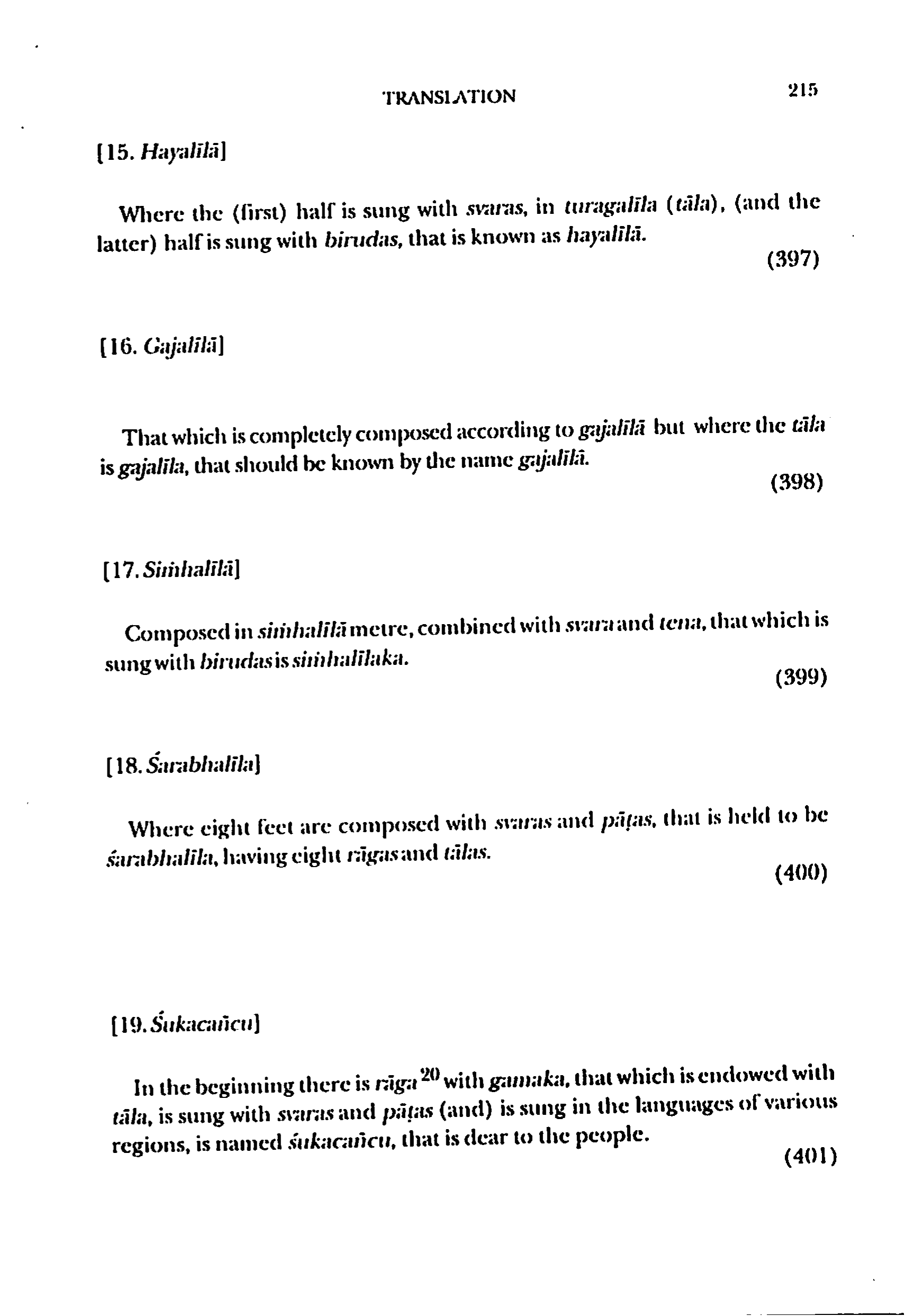
Śukacańcu is sung with svaras and pāṭas in various regional languages, beginning with rāga with gamaka, endowed with tāla
"that which is endowed with
tāla, is sung with svaras and pātas (and) is sung in the languages of various
regions, is named śukacańcu"
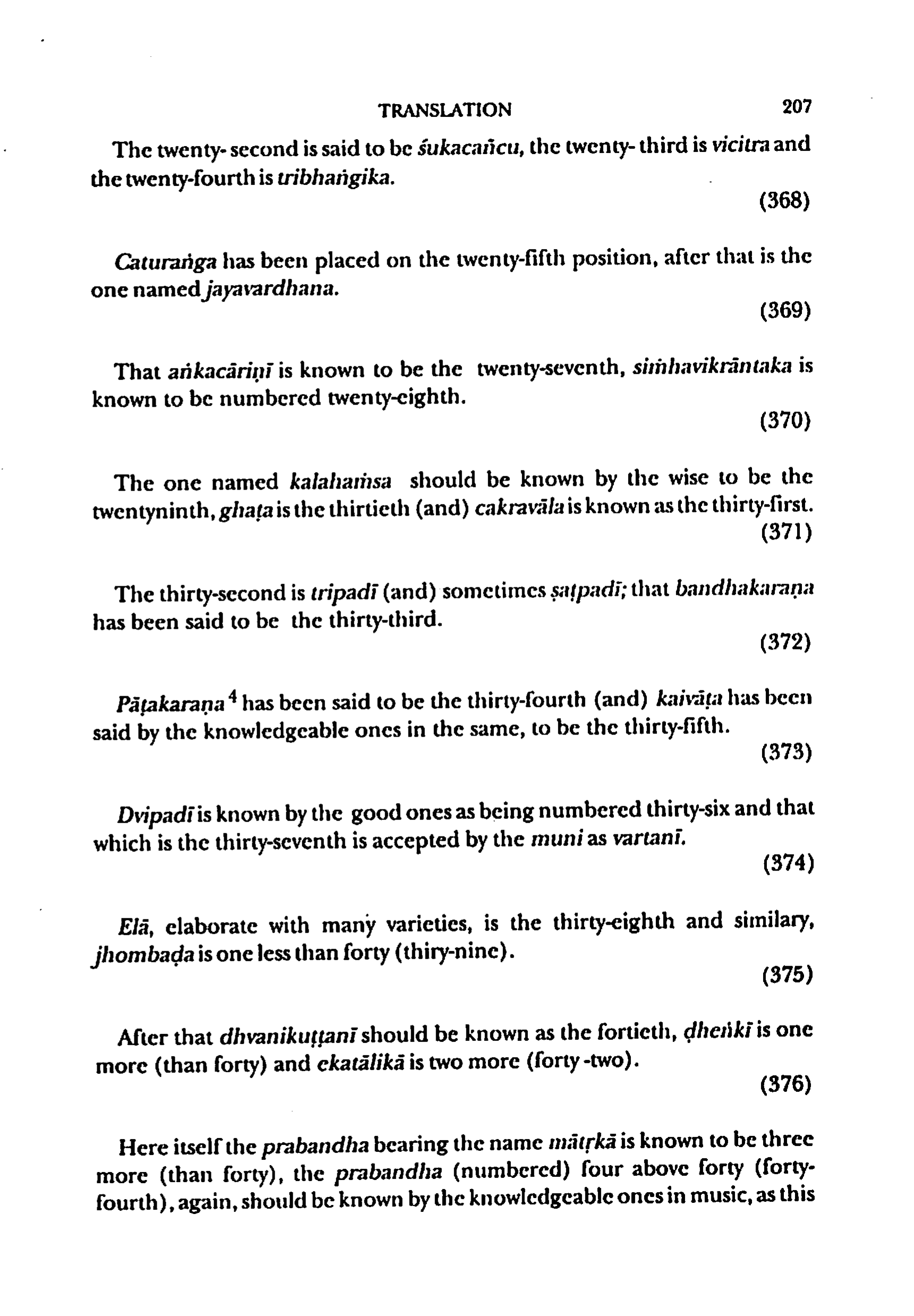
śukacańcu is the twenty-second musical form
"The twenty-second is said to be śukacańcu"