gaņa technical_term
Generative rules (1) ↗ filter all
R_727_gana_definitiondefinition · 4 att.
A gaṇa is a group of (typically) three jātis with increasing svara count; 7 varieties exist (1,2,3,4-svara × 3 jātis; 5-svara × 4; 6 and 7 svara × 1 each)
Pseudocode (DSL v1.1) ↗ full DSL (raw text)
RULE id: gaņa (cluster 727)
SCOPE: technical_term family
STATUS: empirical
CONFIDENCE: empirical
PROTECT: false
Essence pseudocode — identity + RECORD. The page citations for each slot value are in the Grammar record table above (audit trail). The full DSL adds ASSERTIONS with verbatim quotes (see Affirmations below) and CITED_RULES (see Graph relations).
Graph relations
Outgoing (0)
none
Incoming (3)
Affirmations (4)
A gaņa is a group formed with three jātis in each case
"सर्वासामेव ज?ातीना त्रिज?ातिस्तु गणः स्मृतः"
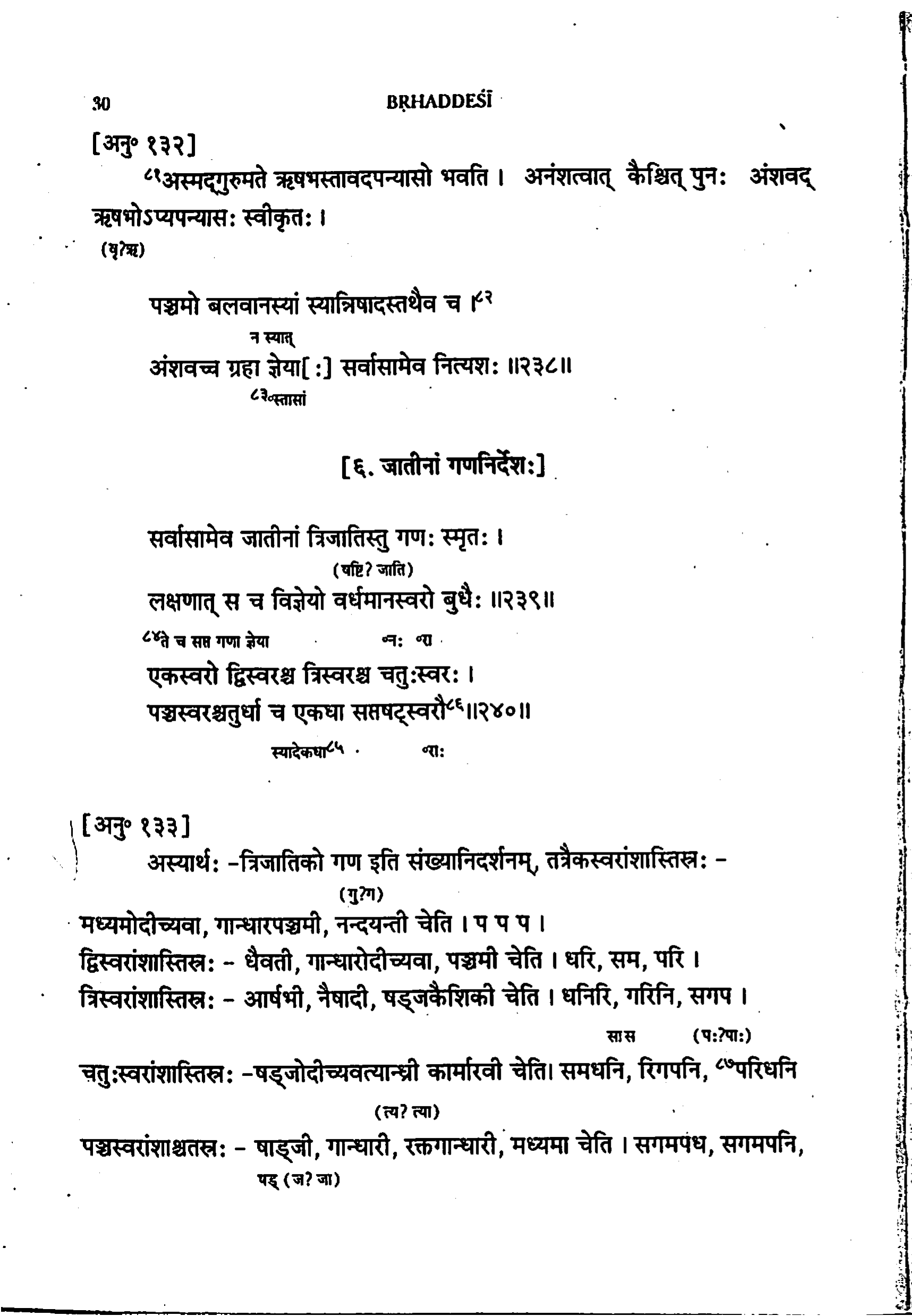
There are seven gaņa varieties: one svara, two svaras, three svaras, four svaras (each with three jātis), five svaras (four jātis), six svaras (one variety), and seven svaras (one variety)
"एकस्वरो द्विस्वरश्च त्रिस्वरश्च चतुःस्वरः।
पञ्चस्वरश्चतुर्धा च एकधा सप्तषट्स्वरौ"
Gaņa groups are distinguished by the definition of having an increasing number of svaras
"लक्षणात् स च विज?्ञेयो वर्धमानस्वरो बुधैः"
The statement that a gaņa is formed with three jātis is an indication of the maximum number applicable in most cases
"त्रिज?ातिको गण इति संख्यानिदर्शनम्"