1: BRHADDEŚĪ
2: 48
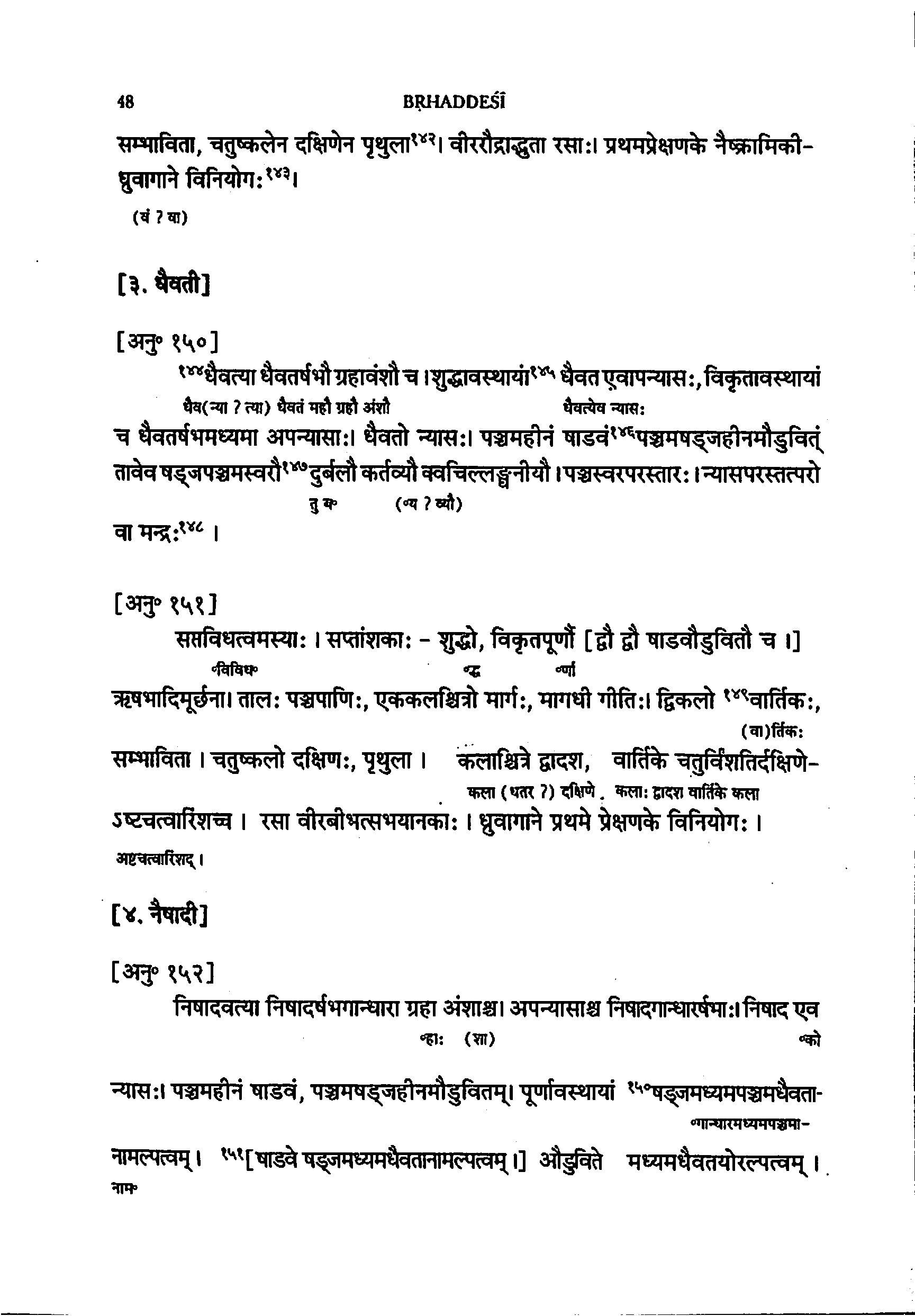
3: सम्भाविता, चतुष्कलेन दक्षिणेन पृथुला<sup>१४२</sup>। वीररौद्राद्धता रसा:। प्रथमप्रेक्षणके नैष्क्रामिकी-
4: धूवागाने विनियोगः<sup>१४३</sup>।
5: (वं ? वा)
6: [३. धैवती]
7: [अनु॰ १५०]
8: <sup>१४४</sup>धैवत्या धैवतर्षभौ ग्रहावंशौ च ।शुद्धावस्थायां<sup>१४५</sup> धैवत एवापन्यास:, विकृतावस्थायां
9: धैव(न्या ? त्या) धैवतं महौ ग्रहौ अंशौ
10: धैवत्येव न्यासः
11: च धैवतर्षभमध्यमा अपन्यासाः। धैवतो न्यासः। पञ्चमहीनं षाडवं<sup>१४६</sup>पञ्चमषड्जहीनमौडुवित्ं
12: तावेव षड्जपञ्चमस्वरौ<sup>१४७</sup>दुर्बलौ कर्तव्यौ क्वचिल्लङ्घनीयौ । पञ्चस्वरपरस्तार: । न्यासपरस्तत्परो
13: (व्य ? व्यौ)
14: तु क
15: वा मन्द्र:१४८।
16: [अनु॰ १५१]
17: सप्तविधत्वमस्या: । सप्तांशका: - शुद्धो, विकृतपूर्णो [द्वौ द्वौ षाडवौडुवितौ च ।]
18: <i>विविध</i>॰
19: ्ण
20: ऋषभादिमूर्छना। ताल: पञ्चपाणि:, एककलश्चित्रो मार्ग:, मागधी गीति:। द्विकलो <sup>१४९</sup>वार्तिक:.
21: (वा)र्तिक:
22: सम्भाविता । चतुष्कलो दक्षिण:, पृथुला । कलाश्चित्रे द्वादश, वार्तिके चतुर्विशतिर्दक्षिणे-
23: कला (धतर ?) दक्षिणे . कला: द्वादश वार्तिके कला
24: ऽष्टचत्वारिंशच्च । रसा वीरबीभत्सभयानकाः । ध्रुवागाने प्रथमे प्रेक्षणके विनियोगः ।
25: अष्टचत्वारिशद् ।
26: [४. नैषादी]
27: [अनु॰ १५२]
28: निषादवत्या निषादर्षभगान्धारा ग्रहा अंशाश्च। अपन्यासाश्च निषादगान्धारर्षभा:। निषाद एव
29: (शा)
30: न्हाः
31: को
32: न्यासः। पञ्चमहीनं षाडवं, पञ्चमषड्जहीनमौडुवितम्। पूर्णावस्थायां १५०षड्जमध्यमपञ्चमधैवता-
33: <i>ान्धारमध्यमपञ्चमा</i>-
34: नामल्पत्वम् । १५१ [षाडवे षङ्जमध्यमधैवतानामल्पत्वम् ।] औडुविते मध्यमधैवतयोरल्पत्वम् ।
35: नामः
Crop image (token + contexte)
Pas de crop disponible (Layer B n'a pas tourne sur ce token).
Page complete
Cote token (LEFT) — line ?, token surligne en jaune
Contexte semantique (RIGHT)
1400
TRANSLATION
49
citra (mārga) there is māgadhī (gīti), with the dvikala (tāla) in the vārtika
(mārga) there is sambhāvitā (gīti), with the catuṣkala (tāla) in the dakṣiṇa
(mārga) there is pṛthulā (gīti). Vīra, raudra, adbhuta are the rasas. Its
application (viniyoga) is (prescribed) in the singing of the naiskrāmiki<sup>65</sup>
(associated with exit) dhruvā in the first scene (or act).
[3. Dhaivati]
[Anu. 150]
In dhaivati, dhaivata and ṛṣabha are the two grahas and aṁśas. In the śuddhā
state, dhaivataitself is the apanyāsa and in the vikrtā state, dhaivata, ṛṣabha and
madhyama are the apanyāsas, dhaivata is the nyāsa. The ṣāḍava formation is
devoid of pañcama and the auduva formation is devoid of pañcama, șadja.
The same two svaras, viz. şadja and pañcama should be made weak and should
sometimes be leapt over. The tara is upto five svaras. The mandra is upto the
nyāsa<sup>66</sup> or upto the svara next to nyāsa.
[Anu. 151]
It (dhaivatī) is seven-fold. There are seven amśas. Śuddhā (is one), vikṛtās
in the complete state are two and ṣāḍava-auḍuva are two each. The mūrchanā
beginning with ṛṣabha obtains (in it). Pañcapāṇi is the tāla. Ekakala (tāla),
citra mārga and māgadhī gīti (go together). Dvikala (tāla), vārtika (mārga) and
sambhāvitā (gīti) (go together). Catuṣkala (tāla), dakṣiṇa (mārga) and pṛthulā
(gīti) (go together). The kalās are twelve in the citra (mārga), twenty-four in
the vārtika (mārga) and forty-eight in dakṣiṇa (mārga). Vīra, bībhatsa,
bhayānaka are the rasas. Its application is (prescribed) in the singing of
dhruvā in the first scene (or act).
[4. Naisādī]
[Anu. 152]
In niṣādavatī,67 niṣāda, ṛṣabha and gāndhāra are the grahas and aniśas.
Niṣāda, gāndhāra and ṛṣabha are apanyāsas. Niṣāda alone is nyāsa. The ṣāḍava
formation is devoid of pañcama and the auduvita formation is devoid of
TRANSLATION
49
citra (mārga) there is māgadhī (gīti), with the dvikala (tāla) in the vārtika
(mārga) there is sambhāvitā (gīti), with the catuṣkala (tāla) in the dakṣiṇa
(mārga) there is pṛthulā (gīti). Vīra, raudra, adbhuta are the rasas. Its
application (viniyoga) is (prescribed) in the singing of the naiskrāmiki<sup>65</sup>
(associated with exit) dhruvā in the first scene (or act).
[3. Dhaivati]
[Anu. 150]
In dhaivati, dhaivata and ṛṣabha are the two grahas and aṁśas. In the śuddhā
state, dhaivataitself is the apanyāsa and in the vikrtā state, dhaivata, ṛṣabha and
madhyama are the apanyāsas, dhaivata is the nyāsa. The ṣāḍava formation is
devoid of pañcama and the auduva formation is devoid of pañcama, șadja.
The same two svaras, viz. şadja and pañcama should be made weak and should
sometimes be leapt over. The tara is upto five svaras. The mandra is upto the
nyāsa<sup>66</sup> or upto the svara next to nyāsa.
[Anu. 151]
It (dhaivatī) is seven-fold. There are seven amśas. Śuddhā (is one), vikṛtās
in the complete state are two and ṣāḍava-auḍuva are two each. The mūrchanā
beginning with ṛṣabha obtains (in it). Pañcapāṇi is the tāla. Ekakala (tāla),
citra mārga and māgadhī gīti (go together). Dvikala (tāla), vārtika (mārga) and
sambhāvitā (gīti) (go together). Catuṣkala (tāla), dakṣiṇa (mārga) and pṛthulā
(gīti) (go together). The kalās are twelve in the citra (mārga), twenty-four in
the vārtika (mārga) and forty-eight in dakṣiṇa (mārga). Vīra, bībhatsa,
bhayānaka are the rasas. Its application is (prescribed) in the singing of
dhruvā in the first scene (or act).
[4. Naisādī]
[Anu. 152]
In niṣādavatī,67 niṣāda, ṛṣabha and gāndhāra are the grahas and aniśas.
Niṣāda, gāndhāra and ṛṣabha are apanyāsas. Niṣāda alone is nyāsa. The ṣāḍava
formation is devoid of pañcama and the auduvita formation is devoid of
Voir figures de la page (diagrammes / tables)
Pas de figure detectee sur cette page (Surya layout n'a rien identifie).
Pourquoi flagué
- Tres proche d'un mot connu du dico Sanskrit (1 lettre de difference)
Vu par
OCR Surya Translitterateur Dico Sanskrit IA visuelle
Raisonnement IA visuelle
(aucun reasoning Layer B disponible)