1: 14.00
2: TRANSLATION
3: 111
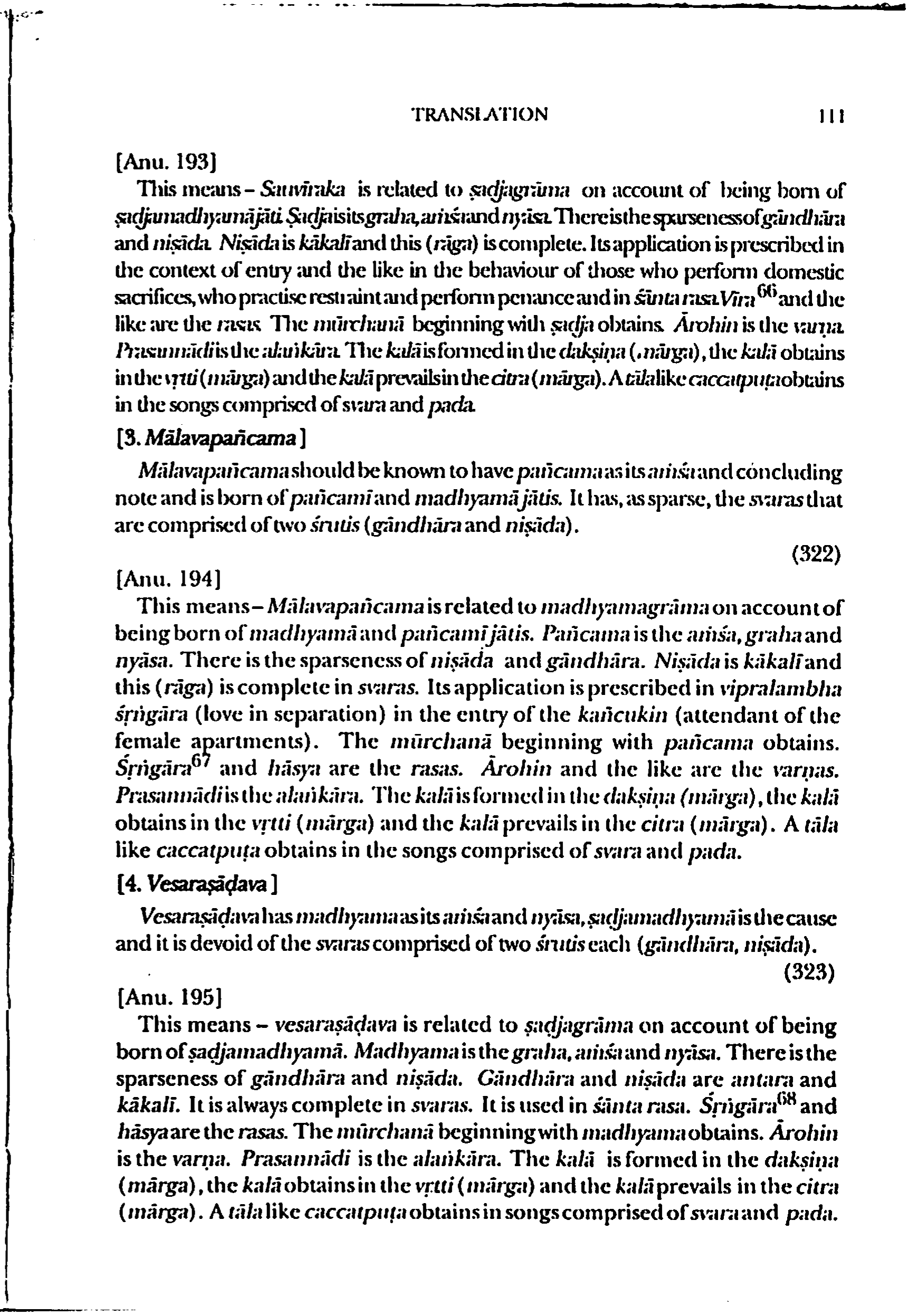
4: [Anu. 193]
5: This means - Sauvīraka is related to sadjagrāma on account of being born of
6: ṣaḍjamadhyamājāti Ṣaḍjaisitsgraha,amśandnyāsa. Thereisthe sparsenessof gāndhāra
7: and niṣāda. Niṣāda is kākalī and this (rāga) is complete. Its application is prescribed in
8: the context of entry and the like in the behaviour of those who perform domestic
9: sacrifices, who practise restraint and perform penance and in sinta rasa Vira 66 and the
10: like are the rasas. The mürchanā beginning with sadja obtains. Arohin is the varna.
11: Prasumādiis the alarikāra. The kalā is formed in the dakṣiṇa („nārga), the kalā obtains
12: in the vitti (mārga) and the kalā prevailsin the citra (mārga). A tālalike caccatputa obtains
13: in the songs comprised of svara and pada.
14: [3. Mālavapañcama]
15: Mālavapancamashould be known to have pancamaasits anistand concluding
16: note and is born of pañcami and madhyamā jātis. It has, as sparse, the svaras that
17: are comprised of two śrutis (gāndhāra and niṣāda).
18: (322)
19: [Anu. 194]
20: This means-Mālavapañcamais related to madhyamagrāma on account of
21: being born of madhyamā and pañcamī jātis. Pañcama is the amśa, graha and
22: nyāsa. There is the sparseness of niṣāda and gāndhāra. Niṣāda is kākalī and
23: this (rāga) is complete in svaras. Its application is prescribed in vipralambha
24: śṛṅgāra (love in separation) in the entry of the kañcukin (attendant of the
25: female apartments). The mūrchanā beginning with pañcama obtains.
26: Śringāra<sup>67</sup> and hāsya are the rasas. Ārohin and the like are the varņas.
27: Prasannādi is the alankāra. The kalā is formed in the dakṣiṇa (mārga), the kalā
28: obtains in the vṛtti (mārga) and the kalā prevails in the citra (mārga). A tāla
29: like caccatputa obtains in the songs comprised of svara and pada.
30: [4. Vesarașādava]
31: Vesaraṣāḍavahas madhyamaas its amsaand nyāsa, ṣaḍjamadhyamā is the cause
32: and it is devoid of the svaras comprised of two śrutis each (gāndhāra, niṣāda).
33: (323)
34: [Anu. 195]
35: This means - vesaraṣāḍava is related to ṣaḍjagrāma on account of being
36: born of ṣaḍjamadhyamā. Madhyama is the graha, amśa and nyāsa. There is the
37: sparseness of gāndhāra and niṣāda. Gāndhāra and niṣāda are antara and
38: kākalī. It is always complete in svaras. It is used in sānta rasa. Šriigāra<sup>68</sup> and
39: hāsyaare the rasas. The mūrchanā beginning with madhyama obtains. Ārohin
40: is the varņa. Prasannādi is the alankāra. The kalā is formed in the dakṣiṇa
41: (mārga), the kalā obtains in the vṛtti (mārga) and the kalā prevails in the citra
42: (mārga). A tāla like caccatpuṭa obtains in songs comprised of svara and pada.
Crop image (token + contexte)
Pas de crop disponible (Layer B n'a pas tourne sur ce token).
Page complete
Cote token (RIGHT) — line ?, token surligne en jaune
Contexte semantique (LEFT)
110
BRHADDEŚĪ
[अनु॰ १९३]
अस्यार्थः - सौवीरकः षड्जग्रामसम्बन्धः षड्जमध्यमाजातेर्जातत्वात् । षड्जोऽस्य
ग्रहोंऽशो न्यासश्च । गान्धारनिषादयोरल्पत्वम्<sup>७१</sup> । निषाद: काकली । पूर्णश्चायम् । गृहमेधिनां
संयमिनां तापसानां च प्रवेशादिके चरिते, शान्तरसे चास्य विनियोग:। वीरादिको रस:।
वास्य
षड्जादिमूर्छना। आरोही वर्ण:<sup>७२</sup>। प्रसन्नादिरलङ्कार: । दक्षिणे कला,वार्तिके कला,चित्रे कला ।
स्वरपदगीते चच्चत्पुटादितालः।
[३. मालवपञ्चम:]
पञ्चमांशस्तदन्तश्च पञ्चमीमध्यमोद्भव:।
स्वल्पद्विष्ठतिकश्चैव ज्ञेयो मालवपञ्चमः ॥ ३२२॥
[अन्॰ १९४]
अस्यार्थ: - मालवपञ्चमो मध्यमग्रामसम्बन्ध:, मध्यमापञ्चमीसमुत्पन्नत्वात् । पञ्चमीऽशो
ग्रहो न्यासश्च। निषादगान्धारयोरल्पत्वम् <sup>७३</sup>। निषादोऽत्र काकली पूर्णस्वरश्चायम् । विप्रलम्भशृङ्गारे
कञ्चकीप्रवेशेऽस्य विनियोगः । पञ्चमादि-मूर्छना<sup>७४</sup>। रसौ शृङ्गारहास्यौ । आरोह्यादिवर्णः ।
प्रसन्नादिरलङ्कार:। दक्षिणे कला, वार्तिके कला, चित्रे कला। स्वरपदगीते चच्चत्पुटादिताल:।
[४. वेसरपाडव:]
मध्यमांशस्तथा न्यासः कारणं षड्जमध्यमा ।
अद्विश्रुतिभ्यां विहीनस्तु भवेद् वेसरषाडवः ॥ ३२३॥
[अनु॰ १९५]
अस्यार्थः - वेसरषाडवः षड्जग्रामसम्बन्धः षड्जमध्यमाजातत्वात् । मध्यमों ऽशो ग्रहो
न्यासश्च । गान्धारिनषादयोरल्पत्वम् । गान्धारिनषादौ काकल्यन्तरौ । नित्यं पूर्णस्वरश्चायम् । शान्तरसे
(गान्धारनिपादयोरल्पत्वम्)
चास्य प्रयोग:। शृङ्गारहास्यौ रसौ । मध्यमादि-मूर्छना % । आरोही वर्ण: । प्रसन्नादिरलङ्कार: ।
दक्षिणे कला, वार्तिके कला, चित्रे कला । स्वरपदगीते चच्चत्पुटादिताल: ।
The state of the state of the state of the state of the state of the state of the state of the state of the state of the state of the state of the state of the state of the state of the state of the state of the state of t
BRHADDEŚĪ
[अनु॰ १९३]
अस्यार्थः - सौवीरकः षड्जग्रामसम्बन्धः षड्जमध्यमाजातेर्जातत्वात् । षड्जोऽस्य
ग्रहोंऽशो न्यासश्च । गान्धारनिषादयोरल्पत्वम्<sup>७१</sup> । निषाद: काकली । पूर्णश्चायम् । गृहमेधिनां
संयमिनां तापसानां च प्रवेशादिके चरिते, शान्तरसे चास्य विनियोग:। वीरादिको रस:।
वास्य
षड्जादिमूर्छना। आरोही वर्ण:<sup>७२</sup>। प्रसन्नादिरलङ्कार: । दक्षिणे कला,वार्तिके कला,चित्रे कला ।
स्वरपदगीते चच्चत्पुटादितालः।
[३. मालवपञ्चम:]
पञ्चमांशस्तदन्तश्च पञ्चमीमध्यमोद्भव:।
स्वल्पद्विष्ठतिकश्चैव ज्ञेयो मालवपञ्चमः ॥ ३२२॥
[अन्॰ १९४]
अस्यार्थ: - मालवपञ्चमो मध्यमग्रामसम्बन्ध:, मध्यमापञ्चमीसमुत्पन्नत्वात् । पञ्चमीऽशो
ग्रहो न्यासश्च। निषादगान्धारयोरल्पत्वम् <sup>७३</sup>। निषादोऽत्र काकली पूर्णस्वरश्चायम् । विप्रलम्भशृङ्गारे
कञ्चकीप्रवेशेऽस्य विनियोगः । पञ्चमादि-मूर्छना<sup>७४</sup>। रसौ शृङ्गारहास्यौ । आरोह्यादिवर्णः ।
प्रसन्नादिरलङ्कार:। दक्षिणे कला, वार्तिके कला, चित्रे कला। स्वरपदगीते चच्चत्पुटादिताल:।
[४. वेसरपाडव:]
मध्यमांशस्तथा न्यासः कारणं षड्जमध्यमा ।
अद्विश्रुतिभ्यां विहीनस्तु भवेद् वेसरषाडवः ॥ ३२३॥
[अनु॰ १९५]
अस्यार्थः - वेसरषाडवः षड्जग्रामसम्बन्धः षड्जमध्यमाजातत्वात् । मध्यमों ऽशो ग्रहो
न्यासश्च । गान्धारिनषादयोरल्पत्वम् । गान्धारिनषादौ काकल्यन्तरौ । नित्यं पूर्णस्वरश्चायम् । शान्तरसे
(गान्धारनिपादयोरल्पत्वम्)
चास्य प्रयोग:। शृङ्गारहास्यौ रसौ । मध्यमादि-मूर्छना % । आरोही वर्ण: । प्रसन्नादिरलङ्कार: ।
दक्षिणे कला, वार्तिके कला, चित्रे कला । स्वरपदगीते चच्चत्पुटादिताल: ।
The state of the state of the state of the state of the state of the state of the state of the state of the state of the state of the state of the state of the state of the state of the state of the state of the state of t
Voir figures de la page (diagrammes / tables)
Pas de figure detectee sur cette page (Surya layout n'a rien identifie).
Pourquoi flagué
- Tres proche d'un mot connu du dico Sanskrit (1 lettre de difference)
Vu par
OCR Surya Translitterateur Dico Sanskrit IA visuelle
Raisonnement IA visuelle
(aucun reasoning Layer B disponible)