1: -- 1
2: History of the State of the State of the State of the State of the State of the State of the State of the State of the State of the State of the State of the State of the State of the State of the State of the State of the
3: 184
4: BRHADDEŚĪ
5: [१. अथ टके]
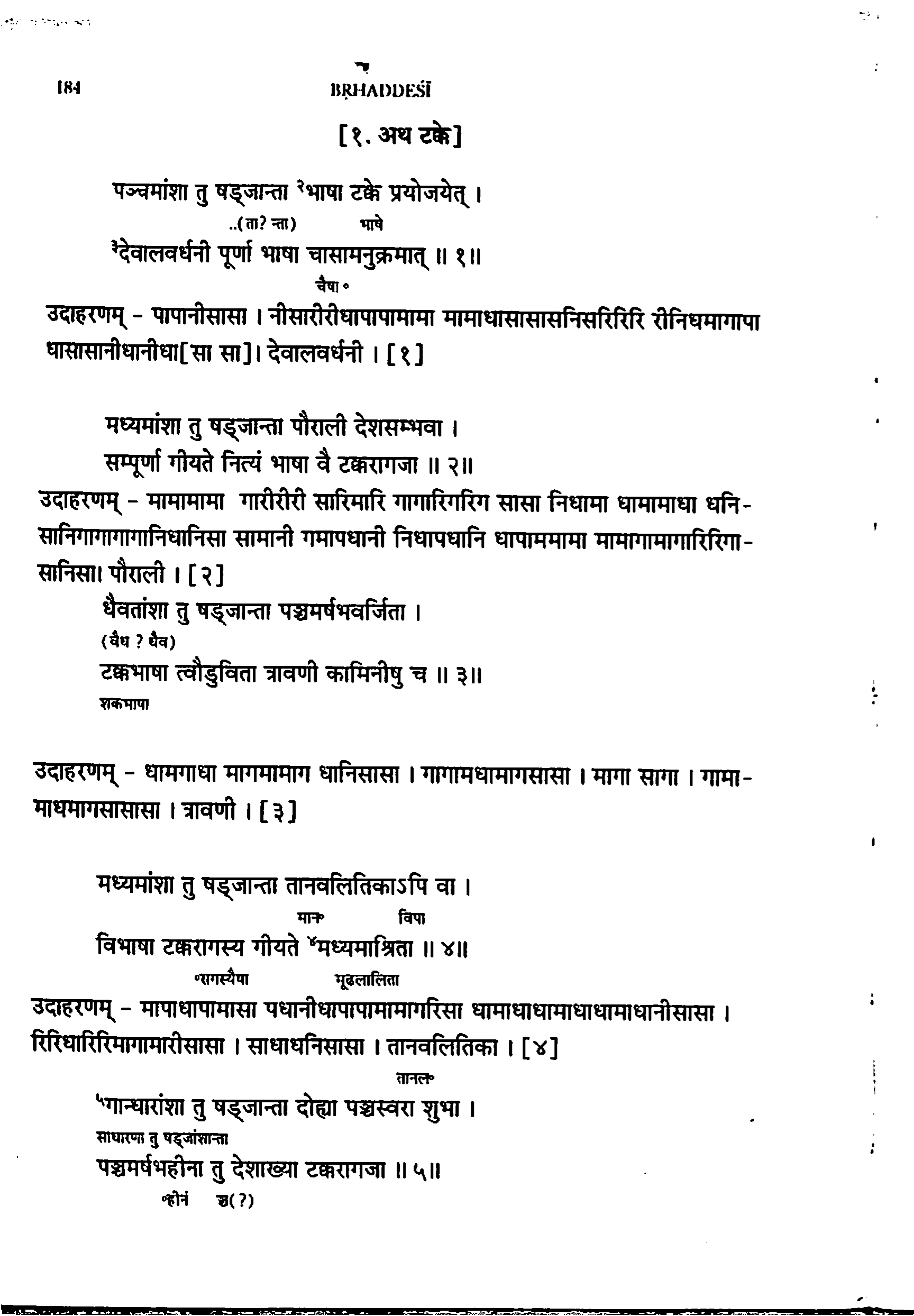
6: पञ्चमांशा तु षड्जान्ता रभाषा टक्के प्रयोजयेत्।
7: ..(ता? न्ता)
8: भाषे
9: <sup>३</sup>देवालवर्धनी पूर्णा भाषा चासामनुक्रमात् ॥ १॥
10: चैषा ॰
11: उदाहरणम् - पापानीसासा । नीसारीरीघापापामामा मामाधासासासनिसरिरिरि रीनिधमागापा
12: धासासानीधानीधा[सा सा]। देवालवर्धनी । [१]
13: मध्यमांशा तु षड्जान्ता पौराली देशसम्भवा ।
14: सम्पूर्णा गीयते नित्यं भाषा वै टक्करागजा ॥ २॥
15: उदाहरणम् - मामामामा गारीरीरी सारिमारि गागारिगरिग सासा निधामा धामामाधा धनि-
16: सानिगागागागानिधानिसा सामानी गमापधानी निधापधानि धापाममामा मामागामागारिरिगा-
17: सानिसा। पौराली । [२]
18: धैवतांशा तु षड्जान्ता पञ्चमर्षभवर्जिता ।
19: (वैध ? धैव)
20: टक्कभाषा त्वौडुविता त्रावणी कामिनीषु च ॥ ३॥
21: शकभाषा
22: उदाहरणम् – धामगाधा मागमामाग धानिसासा । गागामधामागसासा । मागा सागा । गामा-
23: माधमागसासासा । त्रावणी । [३]
24: मध्यमांशा तु षड्जान्ता तानवलितिकाऽपि वा ।
25: विपा
26: मान
27: विभाषा टक्करागस्य गीयते ४मध्यमाश्रिता ॥ ४॥
28: ॰रागस्यैपा
29: मूढलालिता
30: उदाहरणम् – मापाधापामासा पधानीधापापामामागरिसा धामाधाधामाधामाधानीसासा ।
31: रिरिधारिरिमागामारीसासा । साधाधनिसासा । तानवलितिका । [४]
32: तानल॰
33: भगान्धारांशा तु षड्जान्ता दोह्या पञ्चस्वरा शृभा ।
34: साधारणा तु पङ्जांशान्ता
35: पञ्चमर्षभहीना तु देशाख्या टक्करागजा ॥ ५॥
36: <b>ल्होनं</b>
37: স্ত(?)
38: 1 A STATE OF THE PARTY OF THE PARTY OF THE PARTY OF THE PARTY OF THE PARTY OF THE PARTY OF THE PARTY OF THE PARTY OF THE PARTY OF THE PARTY OF THE PARTY OF THE PARTY OF THE PARTY OF THE PARTY OF THE PARTY OF THE PARTY OF T
Crop image (token + contexte)
Pas de crop disponible (Layer B n'a pas tourne sur ce token).
Page complete
Cote token (LEFT) — line ?, token surligne en jaune
Contexte semantique (RIGHT)
TRANSLATION
185
[1. Now in takka]
One should use the bhāṣā having pañcama as amśa and ṣadja as the
concluding note, in takka. Devālavardhanī is a complete bhāṣā in the order
of these (bhāṣās).
(1)
Illustration - Pāpānīsāsā. Nīsārīrīdhāpāpāmāmā māmādhāsā sāsanisaririri -
rīnidhāmāgāpā dhāsāsānīdhānīdhā [sāsā]. Devālavardhanī [i]
Having madhyama as amśa and ṣadja as the concluding note, paurālī is
born of a deśa (region) (and) being a bhāṣā of ṭakkarāga is always sung as
complete.
(2)
Illustration-Māmāmāgārīrīrīsārimārigāgārigurigasāsānidhāmādhāmāmādhā
dhanisanigagagaganidhanisa samanigamapadhani nidhapadhani dhapamamama
māmāgāmā gāriri gāsānisā. Paurālī [ii]
Trāvaṇī, the bhāṣā of ṭakka, has dhaivata as amśa and ṣadja as the concluding
note, is pentatonic, being devoid of pañcama-ṛṣabha and is (used) in the
context of amorous women.
(3)
Illustration-<i>Dhāmagādhā māgamāmāga dhānisāsā. Gāgāmadhāmāgasāsā. Māgā</i>
sāgā. Gāmāmādhāmāgasāsāsā. Trāvaņī [iii]
Having madhyama as amśa and şadja as the concluding note, tānavalitikā is
also sung as a vibhāṣā¹ of ṭakkarāga, based on madhyamagrāma² as an
alternative (of bhāṣā).
(4)
Illustration - Māpādhāpāmāsā padhānīdhāpāpāmāmāgarisā dhāmādhādhā
mādhādhāmādhānīsāsā. Riridhāririmāgāmārīsāsā. Sādhādhanisāsā.
Tānavalitikā[iv]
Having gāndhāra as amśa, ṣaḍja as the concluding note, the auspicious
dohyā is comprised of five svaras, being devoid of pañcama and ṛṣabha, bears
a regional name<sup>3</sup> (and) is born of takkarāga.
(5)
185
[1. Now in takka]
One should use the bhāṣā having pañcama as amśa and ṣadja as the
concluding note, in takka. Devālavardhanī is a complete bhāṣā in the order
of these (bhāṣās).
(1)
Illustration - Pāpānīsāsā. Nīsārīrīdhāpāpāmāmā māmādhāsā sāsanisaririri -
rīnidhāmāgāpā dhāsāsānīdhānīdhā [sāsā]. Devālavardhanī [i]
Having madhyama as amśa and ṣadja as the concluding note, paurālī is
born of a deśa (region) (and) being a bhāṣā of ṭakkarāga is always sung as
complete.
(2)
Illustration-Māmāmāgārīrīrīsārimārigāgārigurigasāsānidhāmādhāmāmādhā
dhanisanigagagaganidhanisa samanigamapadhani nidhapadhani dhapamamama
māmāgāmā gāriri gāsānisā. Paurālī [ii]
Trāvaṇī, the bhāṣā of ṭakka, has dhaivata as amśa and ṣadja as the concluding
note, is pentatonic, being devoid of pañcama-ṛṣabha and is (used) in the
context of amorous women.
(3)
Illustration-<i>Dhāmagādhā māgamāmāga dhānisāsā. Gāgāmadhāmāgasāsā. Māgā</i>
sāgā. Gāmāmādhāmāgasāsāsā. Trāvaņī [iii]
Having madhyama as amśa and şadja as the concluding note, tānavalitikā is
also sung as a vibhāṣā¹ of ṭakkarāga, based on madhyamagrāma² as an
alternative (of bhāṣā).
(4)
Illustration - Māpādhāpāmāsā padhānīdhāpāpāmāmāgarisā dhāmādhādhā
mādhādhāmādhānīsāsā. Riridhāririmāgāmārīsāsā. Sādhādhanisāsā.
Tānavalitikā[iv]
Having gāndhāra as amśa, ṣaḍja as the concluding note, the auspicious
dohyā is comprised of five svaras, being devoid of pañcama and ṛṣabha, bears
a regional name<sup>3</sup> (and) is born of takkarāga.
(5)
Voir figures de la page (diagrammes / tables)
Pas de figure detectee sur cette page (Surya layout n'a rien identifie).
Pourquoi flagué
- Tres proche d'un mot connu du dico Sanskrit (1 lettre de difference)
Vu par
OCR Surya Translitterateur Dico Sanskrit IA visuelle
Raisonnement IA visuelle
(aucun reasoning Layer B disponible)