1: 175
2: TRANSLATION
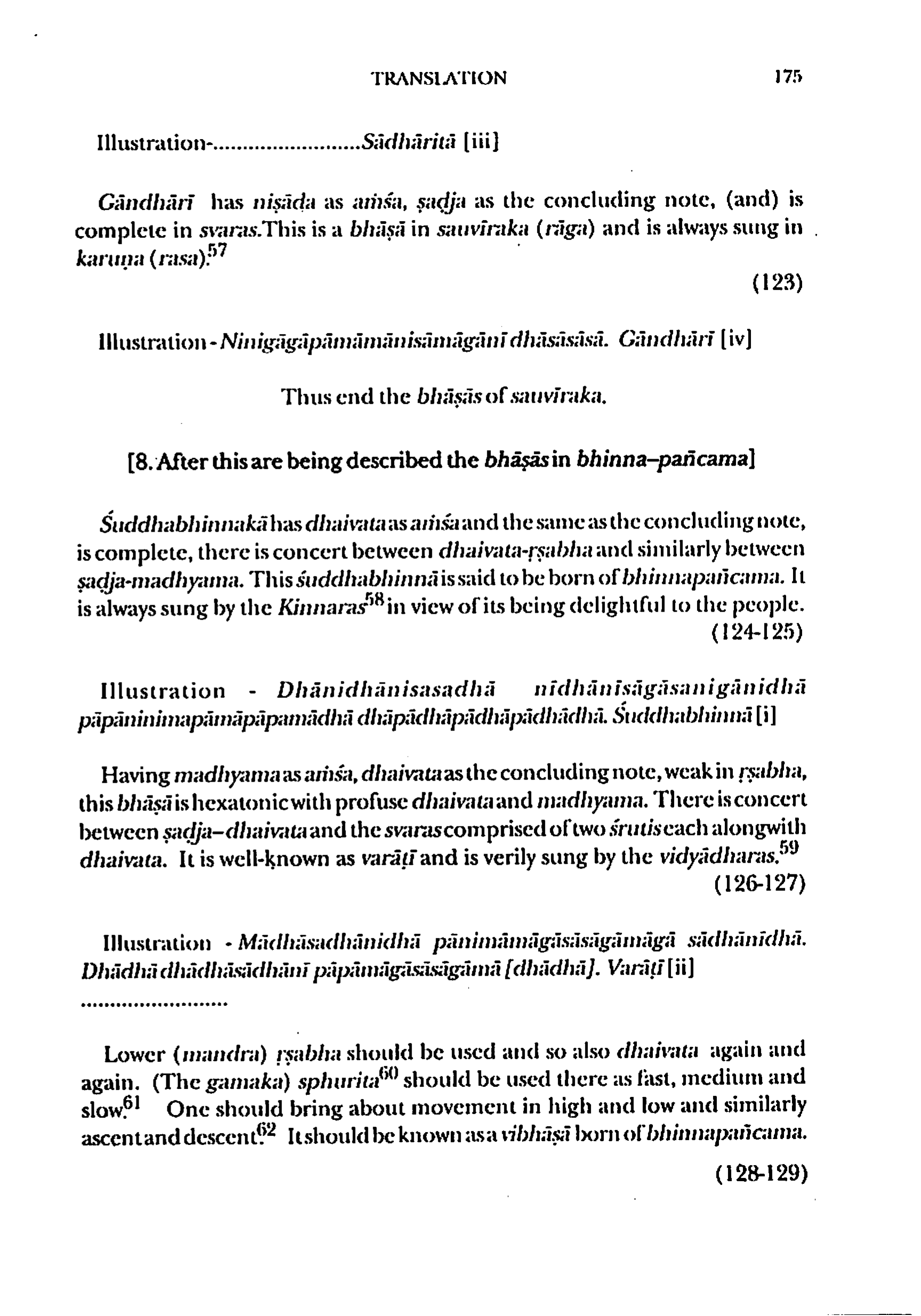
3: Illustration-.....Sādhāritā [iii]
4: Gāndhārī has niṣāda as amśa, ṣadja as the concluding note, (and) is
5: complete in svaras. This is a bhāṣā in sauvīraka (rāga) and is always sung in
6: karuna (rasa).<sup>57</sup>
7: (123)
8: Illustration - Ninigāgāpāmāmānisāmāgānī dhāsāsāsā. Gāndhārī [iv]
9: Thus end the <i>bhāṣās</i> of <i>sauvīraka</i>.
10: [8. After this are being described the bhāṣās in bhinna-paācama]
11: Śuddhabhinnakā has dhaivata as amśa and the same as the concluding note,
12: is complete, there is concert between dhaivata-ṛṣabha and similarly between
13: șadja-madhyama. This śuddhabhinnā is said to be born of bhinnapañcama. It
14: is always sung by the Kinnaras<sup>58</sup> in view of its being delightful to the people.
15: (124-125)
16: Illustration - Dhānidhānisasadhā nīdhānisāgāsanigānidhā
17: pāpāninimapāmāpāpamādhā dhāpādhāpādhādhā. Śuddhabhinnā [i]
18: Having madhyama as amśa, dhaivata as the concluding note, weak in ṛṣabha,
19: this bhāṣā is hexatonic with profuse dhaivata and madhyama. There is concert
20: between şadja-dhaivata and the svaras comprised of two śrutis each alongwith
21: dhaivata. It is well-known as varāṭī and is verily sung by the vidyādharas. 59
22: <math>(126-127)</math>
23: Illustration - Mādhāsadhānidhā pānimāmāgāsāsāgāmāgā sādhānīdhā.
24: Dhādhā dhādhāsādhānī pāpāmāgāsāsāgāmā [dhādhā]. Varāṭī [ii]
25: Lower (mandra) ṛṣabha should be used and so also dhaivata again and
26: again. (The gamaka) sphurita60 should be used there as fast, medium and
27: One should bring about movement in high and low and similarly
28: slow.<sup>61</sup>
29: ascentand descent. Eshould be known as a vibhāṣā born of bhinnapañcama.
30: <math>(128-129)</math>
Crop image (token + contexte)
Pas de crop disponible (Layer B n'a pas tourne sur ce token).
Page complete
Cote token (RIGHT) — line ?, token surligne en jaune
Contexte semantique (LEFT)
BRHADDEŠĪ
174
.....साधारिता । [३]
निषादांशा तु षड्जान्ता गान्धारी पूर्णसुस्वरा ।
भाषा सौवीरके ह्येषा गीयते करुणे सदा ११३॥ १२३॥
उदाहरणम् – निनिगागापामामानिसामागानी । धासासासा<sup>११४</sup>। गान्धारी । [४]
॥ [इति]सौवीरकभाषा: समाप्ता: ॥
८. अतःपरं भिन्नपञ्चमस्य भाषाः कथ्यन्ते
॰पञ्चमेऽस्य
धैवतांशा तदन्ता च ११५सम्पूर्णा शुद्धभित्रका ।
धैवतर्षभसंवाद: षड्जमध्यमयोस्तथा ॥ १२४॥
भित्रपञ्चमजा होषा शुद्धभित्रा प्रकीर्तिता ।
लोकस्य रञ्जनं दृष्ट्वा किन्नरैर्गीयते सदा ॥ १२५॥
रञ्जकं
उदाहरणम्-धानिधानिससधा नीधानीसागासनिगानिधा पापानिनिमपामापापमाधा
धापाधापा
धापाधाधा । शुद्धभिन्ना । [१]
मध्यमांशा धैवतान्ता ऋषभेण तु दुर्बला ।
षड्जधैवतसंवादो द्विश्रुतीनां सधैवतम् ॥ १२६॥
भाषा तु षाडवा ह्येषा बहुधैवतमध्यमा ।
वराटी चेति विख्याता गीता विद्याधरै: किल<sup>११६</sup>॥ १२७॥
उदाहरणम् - माधासधानिधा पानिमामागासासागामागा साधानीधा।
धाधाधाधासाधा
नीपापामागासासागामा[धाधा] । वराटी । [२]
(वराटी)
मन्द्रेऽत्र ऋषभः कार्यो [धैवतश्च] मुहुर्मुहुः ॥ १२८॥
स्फुरितं तत्र कर्तव्यं द्रुतमध्यविलम्बितम् ।
तारमन्द्रगतिं कुर्यात् तथारोहावरोहकम् ॥
तारं म(न्त्र?न्द्र)
तथा भाषा च विज्ञेया भित्रपञ्चमसम्भवा १९७॥ १२९॥
174
.....साधारिता । [३]
निषादांशा तु षड्जान्ता गान्धारी पूर्णसुस्वरा ।
भाषा सौवीरके ह्येषा गीयते करुणे सदा ११३॥ १२३॥
उदाहरणम् – निनिगागापामामानिसामागानी । धासासासा<sup>११४</sup>। गान्धारी । [४]
॥ [इति]सौवीरकभाषा: समाप्ता: ॥
८. अतःपरं भिन्नपञ्चमस्य भाषाः कथ्यन्ते
॰पञ्चमेऽस्य
धैवतांशा तदन्ता च ११५सम्पूर्णा शुद्धभित्रका ।
धैवतर्षभसंवाद: षड्जमध्यमयोस्तथा ॥ १२४॥
भित्रपञ्चमजा होषा शुद्धभित्रा प्रकीर्तिता ।
लोकस्य रञ्जनं दृष्ट्वा किन्नरैर्गीयते सदा ॥ १२५॥
रञ्जकं
उदाहरणम्-धानिधानिससधा नीधानीसागासनिगानिधा पापानिनिमपामापापमाधा
धापाधापा
धापाधाधा । शुद्धभिन्ना । [१]
मध्यमांशा धैवतान्ता ऋषभेण तु दुर्बला ।
षड्जधैवतसंवादो द्विश्रुतीनां सधैवतम् ॥ १२६॥
भाषा तु षाडवा ह्येषा बहुधैवतमध्यमा ।
वराटी चेति विख्याता गीता विद्याधरै: किल<sup>११६</sup>॥ १२७॥
उदाहरणम् - माधासधानिधा पानिमामागासासागामागा साधानीधा।
धाधाधाधासाधा
नीपापामागासासागामा[धाधा] । वराटी । [२]
(वराटी)
मन्द्रेऽत्र ऋषभः कार्यो [धैवतश्च] मुहुर्मुहुः ॥ १२८॥
स्फुरितं तत्र कर्तव्यं द्रुतमध्यविलम्बितम् ।
तारमन्द्रगतिं कुर्यात् तथारोहावरोहकम् ॥
तारं म(न्त्र?न्द्र)
तथा भाषा च विज्ञेया भित्रपञ्चमसम्भवा १९७॥ १२९॥
Voir figures de la page (diagrammes / tables)
Pas de figure detectee sur cette page (Surya layout n'a rien identifie).
Pourquoi flagué
- Tres proche d'un mot connu du dico Sanskrit (1 lettre de difference)
Vu par
OCR Surya Translitterateur Dico Sanskrit IA visuelle
Raisonnement IA visuelle
(aucun reasoning Layer B disponible)