Source scans · vol_II_p119
recto · open full
scan recto
verso · open full
scan verso
Bṛhaddeśī · Volume II
pp. 220–221folio 119
Devanāgarī (Bṛhaddeśī)
property and a property of the second
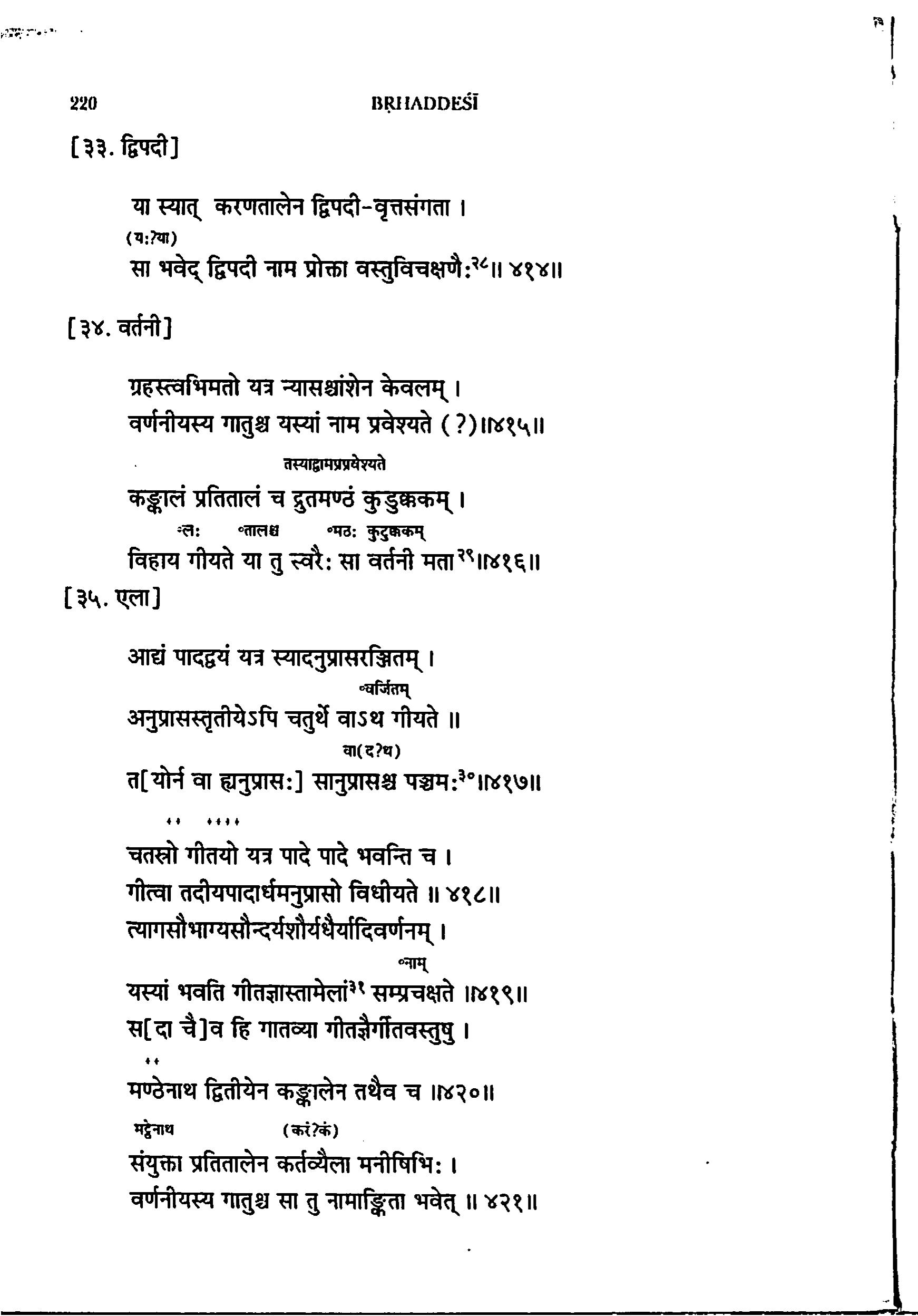
[३३. द्विपदी]
या(य:?या) स्यात् करणतालेन द्विपदी-वृत्तसंगता5
सा भवेद् द्विपदी नाम प्रोक्ता वस्तुविचक्षणै:२८॥४१४॥
[३४. वर्तनी]
ग्रहस्त्विभमतो यत्र न्यासश्चांशेन केवलम् ।
वर्णनीयस्य गात्श्च यस्यां नाम प्रवेश्यते (?)॥४१५॥ तस्याद्वामप्रप्रवेश्यते
कङ्कालं∘ल: प्रतितालं°तालधद्रुतमण्ठं॰मठ: कुटुककम् कुडुक्ककम्।
विहाय गीयते या तु स्वरै: सा वर्तनी मता4र९॥४१६॥
[३५. एला]
आद्यं पादद्वयं यत्र स्यादनुप्रासरञ्जितम्<b>व्धर्जितम्</b>
अनुप्रासस्तृतीयेऽपि चतुर्थे वाऽथवा(द?ध) गीयते ॥
त[योर्न वा ह्यनुप्रास:] सानुप्रासश्च पञ्चम:३०॥४१७॥ ++++ 4 #
चतस्रो गीतयो यत्र पादे पादे भवन्ति च।
गीत्वा तदीयपादार्धमनुप्रासो विधीयते ॥४१८॥
त्यागसौभाग्यसौन्दर्यशौर्यधैर्यादिवर्णनम्•नाम्
यस्यां भवति गीतज्ञास्तामेलां३१ सम्प्रचक्षते ॥४१९॥
स[दा चै]व हि गातव्या गीतज्ञैर्गीतवस्तुषु ।
++ मण्ठेनाथमद्रेनाथ द्वितीयेन कङ्कालेन(करं?कं) तथैव च6 ॥४२०॥
संयुक्ता प्रतितालेन कर्तव्येला मनीषिभि:7
वर्णनीयस्य गातुश्च सा तु नामाङ्किता भवेत्9 ॥४२१॥
English — Sharma (translation)
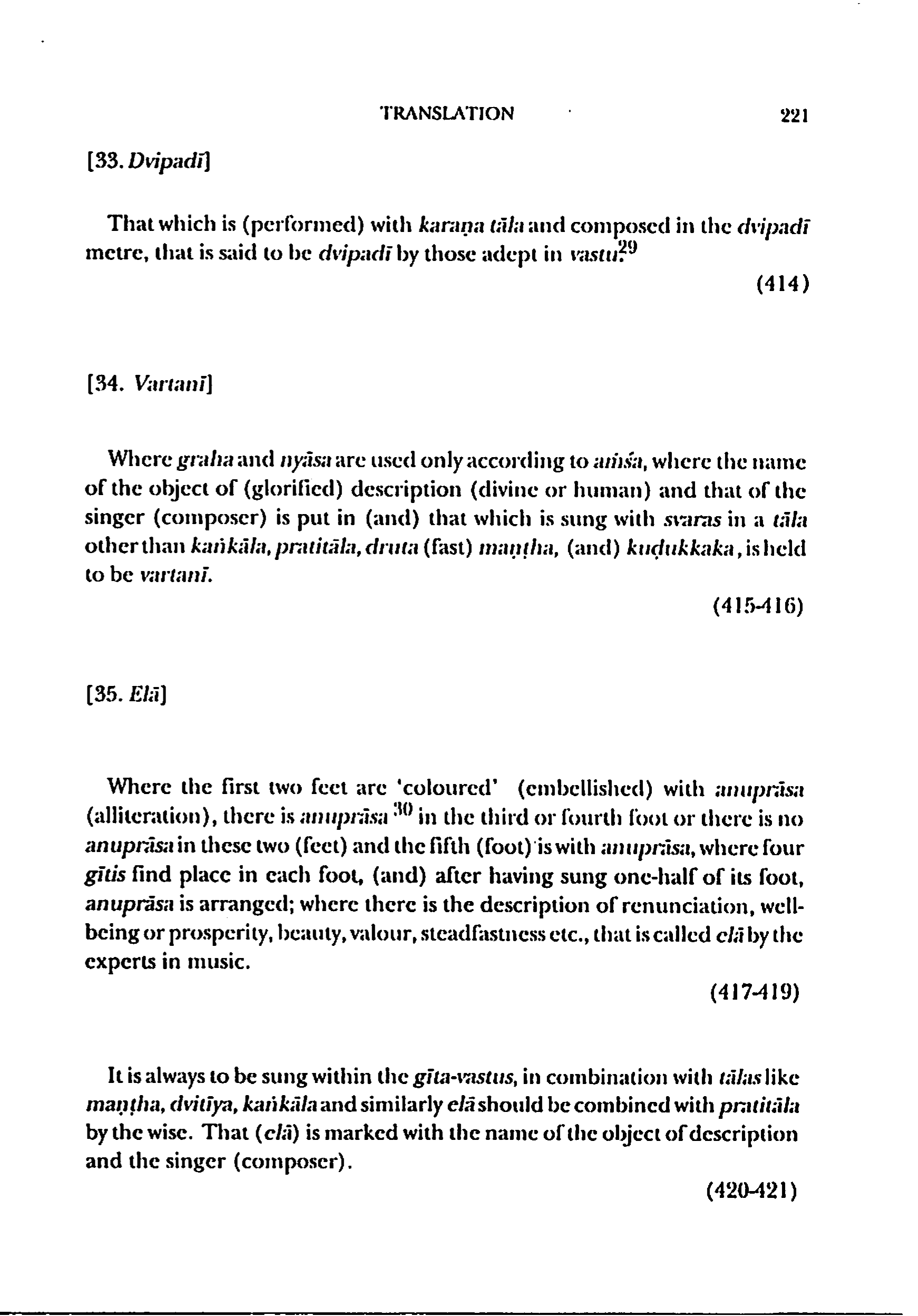
[33. Dvipadī]
That which is (performed) with karaṇa tāla and composed in the dvipadī metre5, that is said to be dvipadī by those adept in vastu.129
(414)
[34. Vartanī]
Where graha and nyāsa are used only according to ańiśa, where the name of the object of (glorified) description (divine or human) and that of the singer (composer) is put in (and) that which is sung with svaras in a tāla other than kankāla, pratitāla, druta (fast) maņțha, (and) kudukkaka2, is held to be vartani.4 (415-416)
[35. Elā]
Where the first two feet are 'coloured' (embellished) with anuprāsa (alliteration), there is anuprāsa 30 in the third or fourth foot8 or there is no anuprāsa in these two (feet) and the fifth (foot) is with anuprāsa, where four gītis find place in each foot3, (and) after having sung one-half of its foot, anuprāsa is arranged; where there is the description of renunciation, well- being or prosperity, beauty, valour, steadfastness etc., that is called clā by the experts in music. <math>(417-419)</math> It is always to be sung within the gīta-vastus, in combination with tālas like maṇṭha, dvitīya, kaṅkāla and similarly elā should be combined with pratitāla by the wise7. That (clā) is marked with the name of the object of description and the singer (composer).9 <math>(420-421)</math>
4.[enumeration] Kankāla, pratitāla, druta maņțha, and kudukkaka are tāla types that are excluded from vartanī performanceविहाय गीयते या तु स्वरैः सा वर्तनी मता
5.[relation] Karaṇa tāla is used as a constituent element in the composition of dvipadīया स्यात् करणतालेन द्विपदी-वृत्तसंगता
6.[relation] Elā should always be sung within the context of gīta-vastusमण्ठेनाथ द्वितीयेन कङ्कालेन तथैव च
7.[relation] Elā should be combined with pratitāla according to the wiseसंयुक्ता प्रतितालेन कर्तव्येला मनीषिभिः
9.[structural] Elā is marked with the name of the object of description and the name of the singer/composerवर्णनीयस्य गातुश्च सा तु नामाङ्किता भवेत्
1.[definition]Dvipadī is defined as that which is performed with karaṇa tāla and composed in the dvipadī metreThat which is (performed) with karaṇa tāla and composed in the dvipadī metre, that is said to be dvipadī by those adept in vastu.
2.[definition]Vartanī is characterized by use of graha and nyāsa according to ańiśa, inclusion of the name of the object of description and the singer, and being sung with svaras in specific tālasWhere graha and nyāsa are used only according to ańiśa, where the name of the object of (glorified) description (divine or human) and that of the singer (composer) is put in (and) that which is sung with svaras in a tāla other than kankāla, pratitāla, druta (fast) maņțha, (and) k
3.[definition]Elā is defined as a form containing alliteration (anuprāsa) in specific feet, four gītis in each foot, and descriptions of renunciation, well-being, beauty, valour, and steadfastnessWhere the first two feet are 'coloured' (embellished) with anuprāsa (alliteration), there is anuprāsa in the third or fourth foot or there is no anuprāsa in these two (feet) and the fifth (foot) is with anuprāsa, where four gītis find place in each foot
4.[enumeration]Kankāla, pratitāla, druta maņțha, and kudukkaka are tāla types that are excluded from vartanī performancethat which is sung with svaras in a tāla other than kankāla, pratitāla, druta (fast) maņțha, (and) kudukkaka, is held to be vartani.
5.[relation]Karaṇa tāla is used as a constituent element in the composition of dvipadīThat which is (performed) with karaṇa tāla and composed in the dvipadī metre
6.[relation]Elā should always be sung within the context of gīta-vastusIt is always to be sung within the gīta-vastus, in combination with tālas like maṇṭha, dvitīya, kaṅkāla
7.[relation]Elā should be combined with pratitāla according to the wiseelā should be combined with pratitāla by the wise
8.[structural]Anuprāsa (alliteration) is used to embellish the feet of elā and can be arranged in various positions within the structureWhere the first two feet are 'coloured' (embellished) with anuprāsa (alliteration), there is anuprāsa in the third or fourth foot
9.[structural]Elā is marked with the name of the object of description and the name of the singer/composerThat (clā) is marked with the name of the object of description and the singer (composer).