Source scans · vol_II_p118
recto · open full
scan recto
verso · open full
scan verso
Bṛhaddeśī · Volume II
pp. 0–219folio 118
Devanāgarī (Bṛhaddeśī)
[२६. कलहंस:]
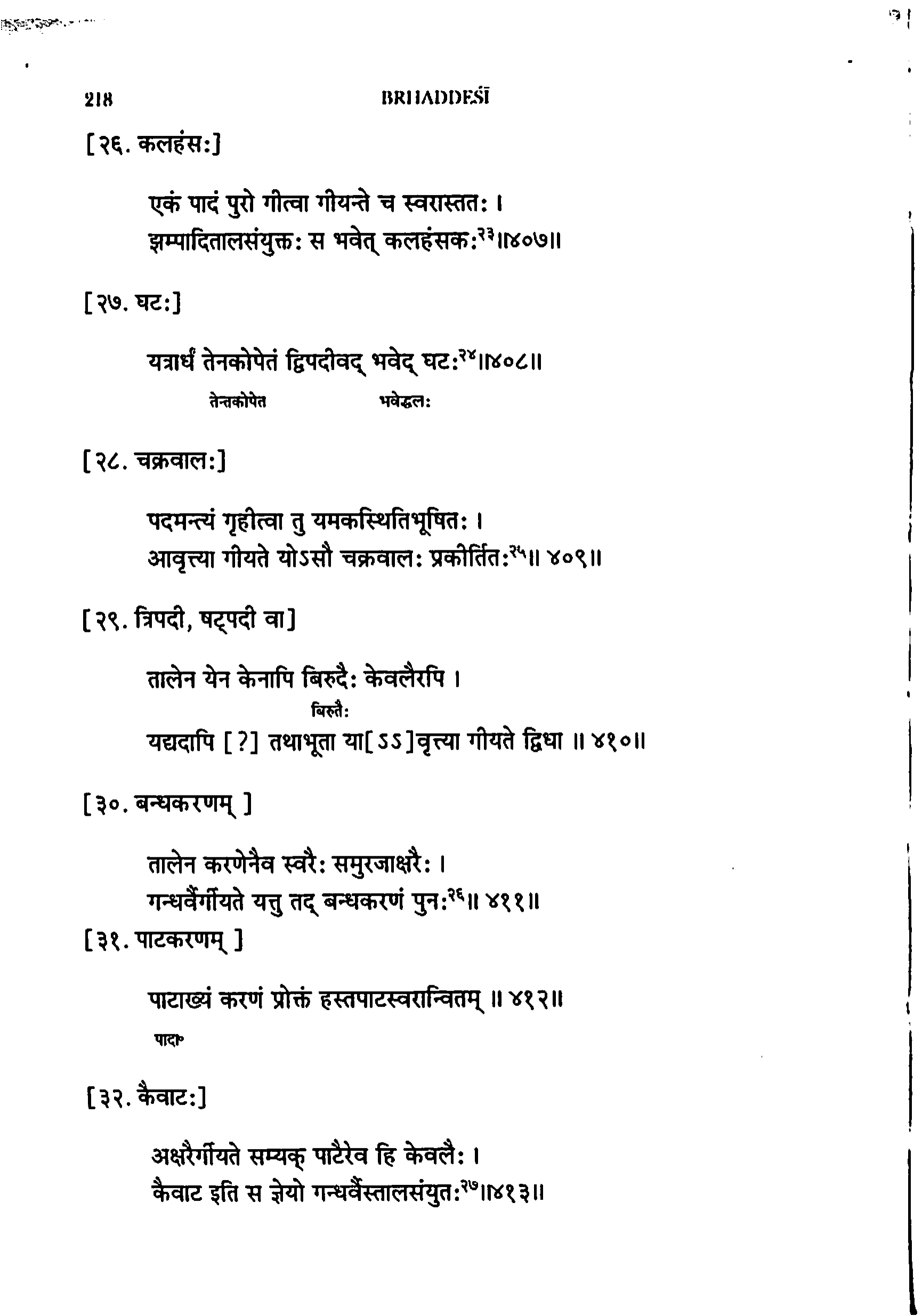
एकं पादं पुरो गीत्वा गीयन्ते च स्वरास्तत:। झम्पादितालसंयुक्त:8 स भवेत् कलहंसक:1२३॥४०७॥
[२७. घट:]
यत्रार्धं तेनकोपेतंतेन्तकोपेत द्विपदीवद् भवेद् घट:2२४भवेद्धल:॥४०८॥
[२८. चक्रवाल:]
पदमन्त्यं गृहीत्वा तु यमकस्थितिभूषित:9 आवृत्या गीयते योऽसौ चक्रवालः प्रकीर्तितः3 १५॥४०९॥
[२९. त्रिपदी, षट्पदी वा]
तालेन येन केनापि बिरुदै:बिरुतै: केवलैरपि।104 यद्यदापि [?] तथाभूता या[ऽऽ]वृत्त्या गीयते द्विधा ॥४१०॥ तालेन करणेनैव स्वरै: समुरजाक्षरै:।11 गन्धर्वेर्गीयते यतु तद् बन्धकरणं पुनः6 १६॥४११॥ पाटाख्यंपादा॰ करणं प्रोक्तं हस्तपाटस्वरान्वितम्5 ॥४१२॥
[३२. कैवाट:]
अक्षरैर्गीयते सम्यक् पाटैरेव हि केवलै:। कैवाट इति स ज्ञेयो गन्धर्वेस्तालसंयुतः7 १७॥४१३॥
English — Sharma (translation)
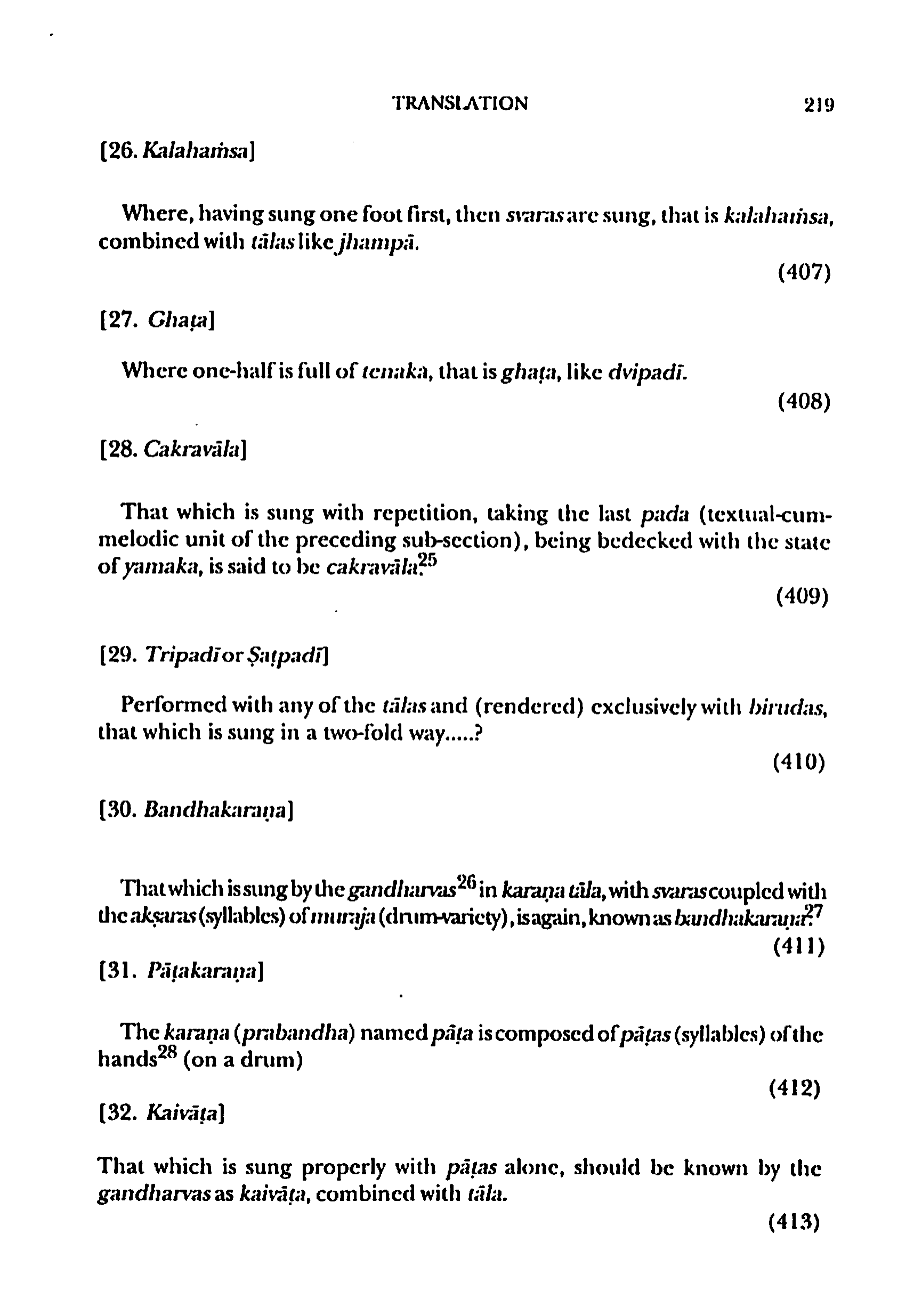
Where, having sung one foot first, then svaras are sung, that is kalahamsa, combined with tālas like jhampā.81
(407)
[27. Ghața]
Where one-half is full of tenaka, that is ghata, like dvipadī.2
(408)
That which is sung with repetition, taking the last pada (textual-cum- melodic unit of the preceding sub-section), being bedecked with the state of yamaka,9 is said to be cakravāla.325
(409)
[29. Tripadī or Şaţpadī]
Performed with any of the tālas and (rendered) exclusively with birudas,104 that which is sung in a two-fold way....?
(410)
That which is sung by the gandharvas <math>^{26}</math> in karana tāla, with svaras coupled with the akṣaras (syllables) of muraja (drum-variety)11, isagain, known as bandhakarana?7
(411)
The karaṇa (prabandha) named pāṭa is composed of pāṭas (syllables) of the hands528 (on a drum)
(412)
[32. Kaivāţa]
That which is sung properly with pāṭas alone, should be known by the gandharvas as kaivāṭa, combined with tāla.
(413)
1.[definition] Kalahamsa is a musical form where one foot is sung first, then svaras are sung, and it is combined with tālas like jhampāएकं पादं पुरो गीत्वा गीयन्ते च स्वरास्ततः। झम्पादितालसंयुक्तः स भवेत् कलहंसकः
2.[definition] Ghata is a musical form where one-half is full of tenaka, and it is likened to dvipadīयत्रार्धं तेनकोपेतं द्विपदीवद् भवेद् घटः
3.[definition] Cakravāla is sung with repetition, takes the last pada from the preceding sub-section, and is adorned with the state of yamakaपदमन्त्यं गृहीत्वा तु यमकस्थितिभूषितः । आवृत्या गीयते योऽसौ चक्रवालः प्रकीर्तितः
4.[definition] Tripadī or Şaţpadī is performed with any of the tālas and rendered exclusively with birudasतालेन येन केनापि बिरुदैः केवलैरपि।
5.[definition] Pāṭakaraṇa is a karaṇa prabandha composed of pāṭas (syllables) of the hands on a drumपाटाख्यं करणं प्रोक्तं हस्तपाटस्वरान्वितम्
6.[definition] Bandhakarana is sung by gandharvas in karana tāla, with svaras coupled with syllables of muraja drumतालेन करणेनैव स्वरैः समुरजाक्षरैः। गन्धर्वेर्गीयते यतु तद् बन्धकरणं पुनः
7.[definition] Kaivāţa is sung properly with pāṭas alone and is known to gandharvas combined with tālaअक्षरैर्गीयते सम्यक् पाटैरेव हि केवलैः। कैवाट इति स ज?्ञेयो गन्धर्वेस्तालसंयुतः
8.[relation]Kalahamsa is combined with jhampā tālaझम्पादितालसंयुक्तः
9.[relation]Cakravāla is bedecked with or adorned by the state of yamakaयमकस्थितिभूषितः
10.[relation] Birudas are used exclusively in the performance of Tripadī or Şaţpadīतालेन येन केनापि बिरुदैः केवलैरपि।
11.[relation] Muraja is a drum variety whose syllables (akṣaras) are coupled with svaras in Bandhakaranaस्वरैः समुरजाक्षरैः।
1.[definition]Kalahamsa is a musical form where one foot is sung first, then svaras are sung, and it is combined with tālas like jhampāWhere, having sung one foot first, then svaras are sung, that is kalahamsa, combined with tālas like jhampā.
2.[definition]Ghata is a musical form where one-half is full of tenaka, and it is likened to dvipadīWhere one-half is full of tenaka, that is ghata, like dvipadī.
3.[definition]Cakravāla is sung with repetition, takes the last pada from the preceding sub-section, and is adorned with the state of yamakaThat which is sung with repetition, taking the last pada (textual-cum- melodic unit of the preceding sub-section), being bedecked with the state of yamaka, is said to be cakravāla.
4.[definition]Tripadī or Şaţpadī is performed with any of the tālas and rendered exclusively with birudasPerformed with any of the tālas and (rendered) exclusively with birudas,
5.[definition]Pāṭakaraṇa is a karaṇa prabandha composed of pāṭas (syllables) of the hands on a drumThe karaṇa (prabandha) named pāṭa is composed of pāṭas (syllables) of the hands
6.[definition]Bandhakarana is sung by gandharvas in karana tāla, with svaras coupled with syllables of muraja drumThat which is sung by the gandharvas in karana tāla, with svaras coupled with the akṣaras (syllables) of muraja (drum-variety), is again, known as bandhakarana
7.[definition]Kaivāţa is sung properly with pāṭas alone and is known to gandharvas combined with tālaThat which is sung properly with pāṭas alone, should be known by the gandharvas as kaivāţa, combined with tāla.
8.[relation] Kalahamsa is combined with jhampā tālacombined with tālas like jhampā.
9.[relation] Cakravāla is bedecked with or adorned by the state of yamakabeing bedecked with the state of yamaka,
10.[relation]Birudas are used exclusively in the performance of Tripadī or ŞaţpadīPerformed with any of the tālas and (rendered) exclusively with birudas,
11.[relation]Muraja is a drum variety whose syllables (akṣaras) are coupled with svaras in Bandhakaranawith svaras coupled with the akṣaras (syllables) of muraja (drum-variety)