[General Prescription]
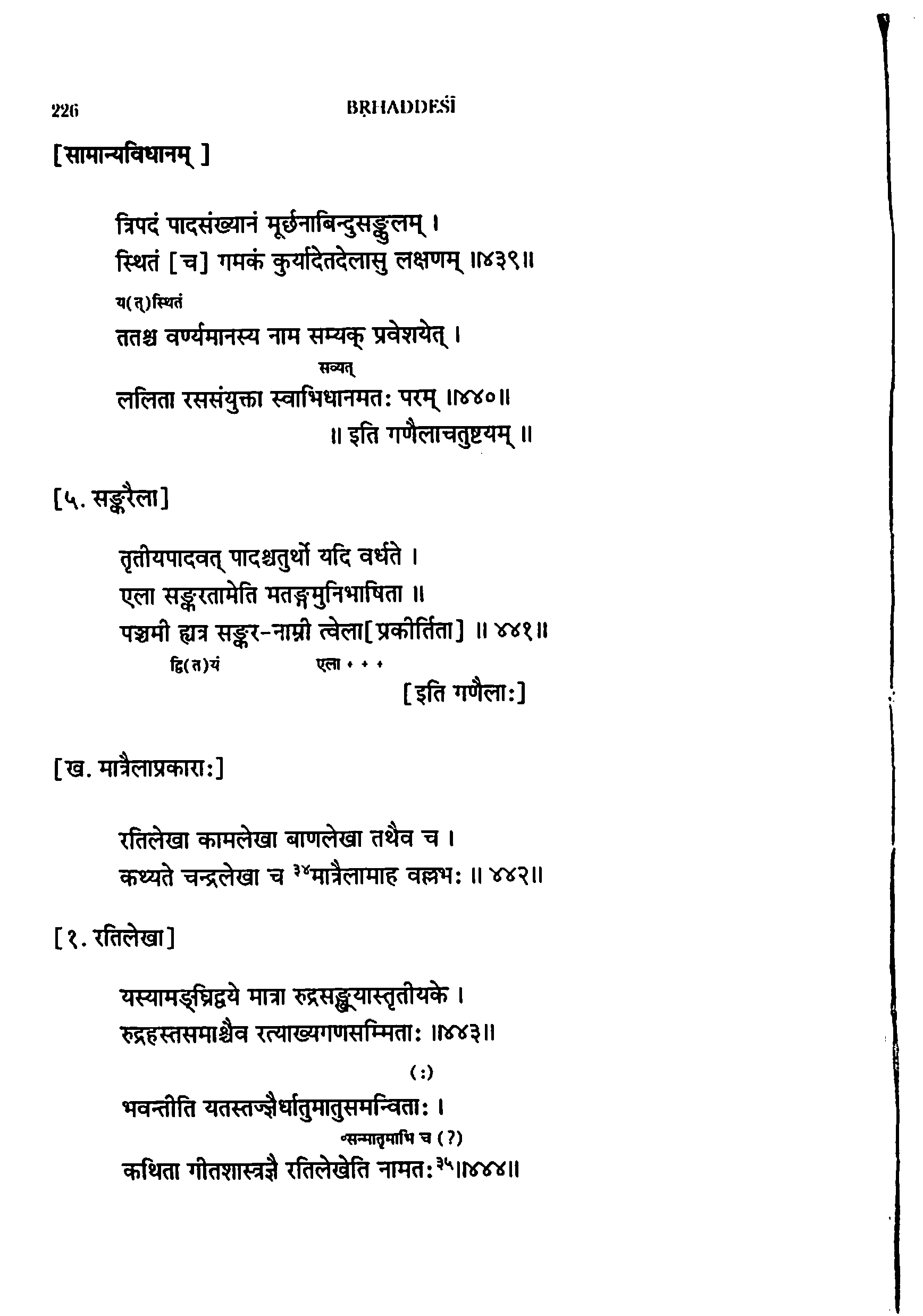
The name pāda (foot) is given to a group of three padas (textual-cum-melodic units) which is brimming with
mūrchanā bindu (?),
52 the gamaka
should be made sthita
53 (slow?); this is the prescription in respect of elās.
(439)
Then one should properly put in the name of the one being described. It
(elā) is lalitā (beautiful) (and) full of rasa; the name of self (composer)
comes after this.
(440)
Thus ends the fourfold ganaila.8
If the fourth foot 'grows' (gets elaborated) like the third foot, then the elā
spoken of by Matanga Muni becomes sankara (mixed).32 Here the fifth elā is
said to be named sankara.
(441)
[Thus ends gaņailā.]
Ratilekhā, kāmalekhā, bāṇalekha and similarly candralekhā are (the varieties
of) mātrailā spoken of by Vallabha1.654
(442)
[1. Raulekhā]
Where there are rudra 55 numbered (eleven) mātrās in (each of the first)
two feet and ten (rudrahasta?)56 mātrās measured according to the gaņa
named rati
57 (and) endowed with dhātu
58 (tonal-cum-rhymthic structure)
(and) mātu
59 (text), on account of this (ratigaņa) (this elā) is given the name
ratilekhā by the experts in the science of music (
gītaśāstra).
<math>(443-444)</math>