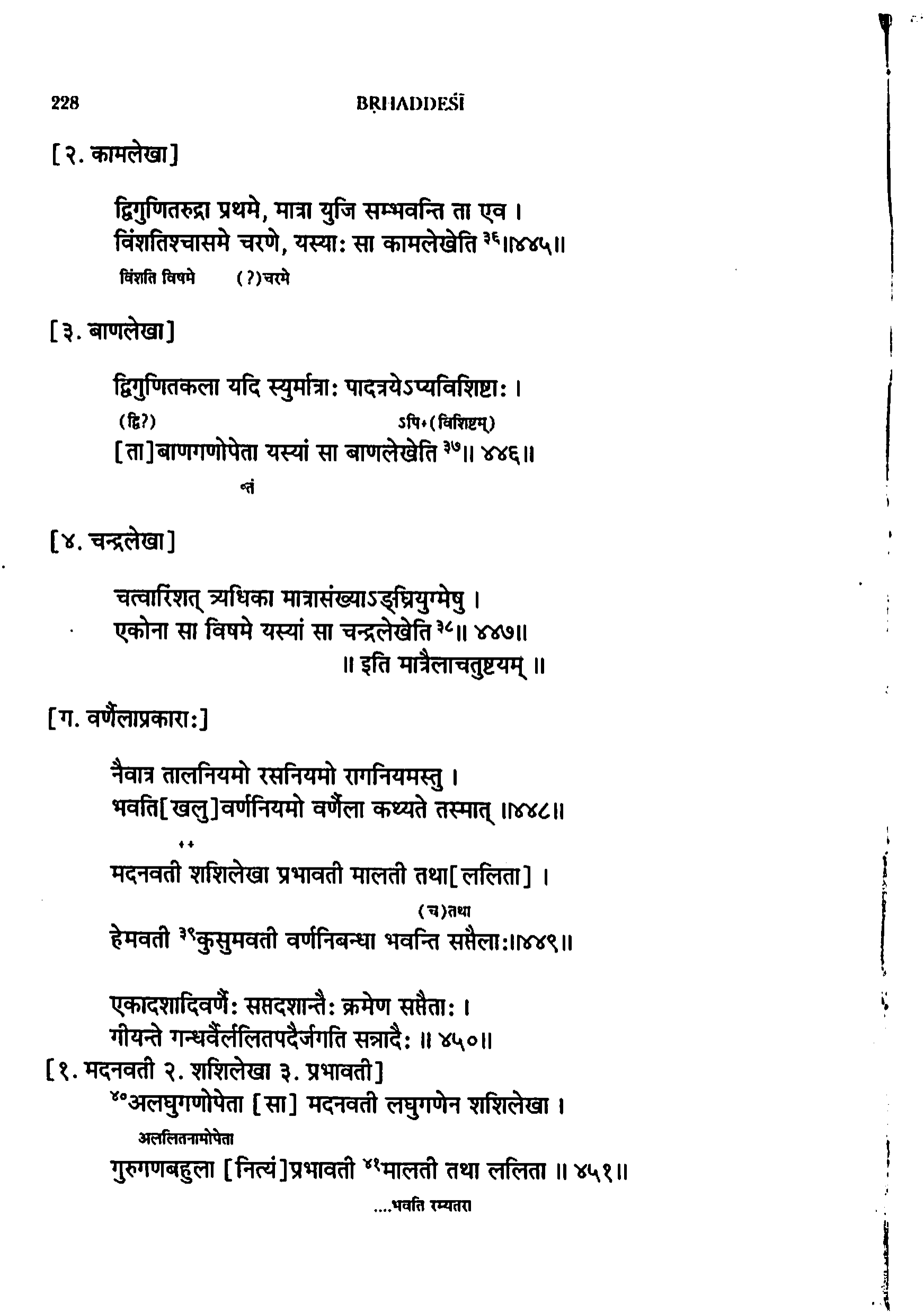
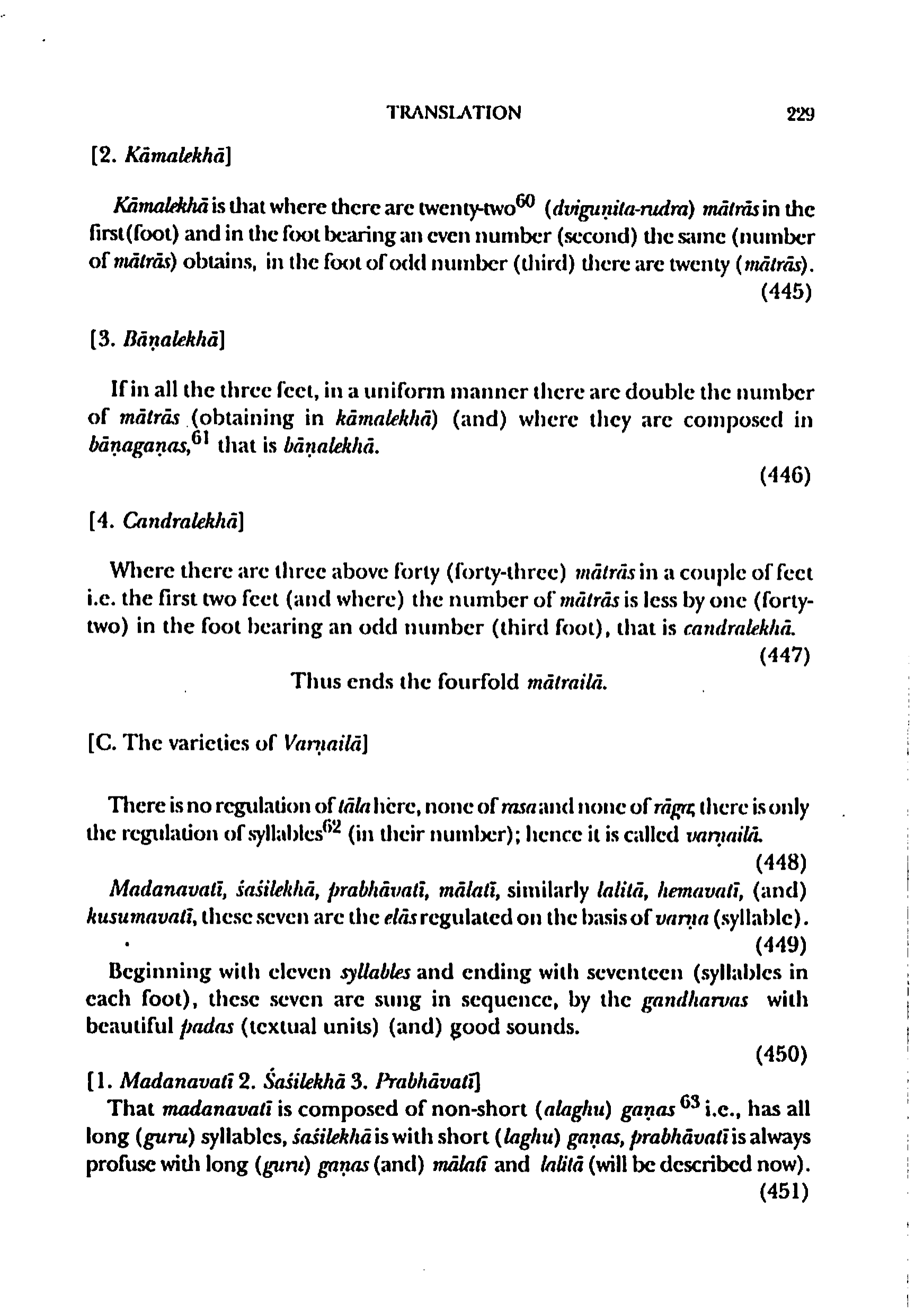
Kāmalekhā is that where there are twenty-two60 (dviguņita-rudra) mātrās in the
first (foot) and in the foot bearing an even number (second) the same (number
of mātrās) obtains, in the foot of odd number (third) there are twenty (mātrās).5
(445)
If in all the three feet, in a uniform manner there are double the number
of mātrās (obtaining in kāmalekhā) (and) where they are composed in
bāṇagaṇas,61 that is bāṇalekhā.10
(446)
Where there are three above forty (forty-three) mātrās in a couple of feet
i.e. the first two feet (and where) the number of mātrās is less by one (forty-
two) in the foot bearing an odd number (third foot), that is
candralekhā.
(447)
Thus ends the fourfold
mātrailā.
There is no regulation of
tāla here, none of
msa and none of
rāga; there is only
the regulation of syllables <math>^{62}</math> (in their number); hence it is called
varyailā.
(448)
Madanavatī, śaśilekhā, prabhāvatī, mālatī, similarly lalitā, hemavatī, (and)
kusumavatī, these seven are the elās regulated on the basis of varņa (syllable).3
(449)
Beginning with eleven syllables and ending with seventeen (syllables in
each foot), these seven are sung in sequence, by the gandharvas with
beautiful padas (textual units) (and) good sounds.94
(450)
That madanavatī is composed of non-short (alaghu) gaṇas 63 i.e., has all
long (guru) syllables6,
śaśilekhā is with short (laghu) gaṇas7,
prabhāvatī is always
profuse with long (guni) gaṇas8 (and) mālatī and lalitā (will be described now).
(451)