Source scans · vol_I_p019
recto · open full
scan recto
verso · open full
scan verso
Bṛhaddeśī · Volume I
pp. 20–21folio 019
Devanāgarī (Bṛhaddeśī)
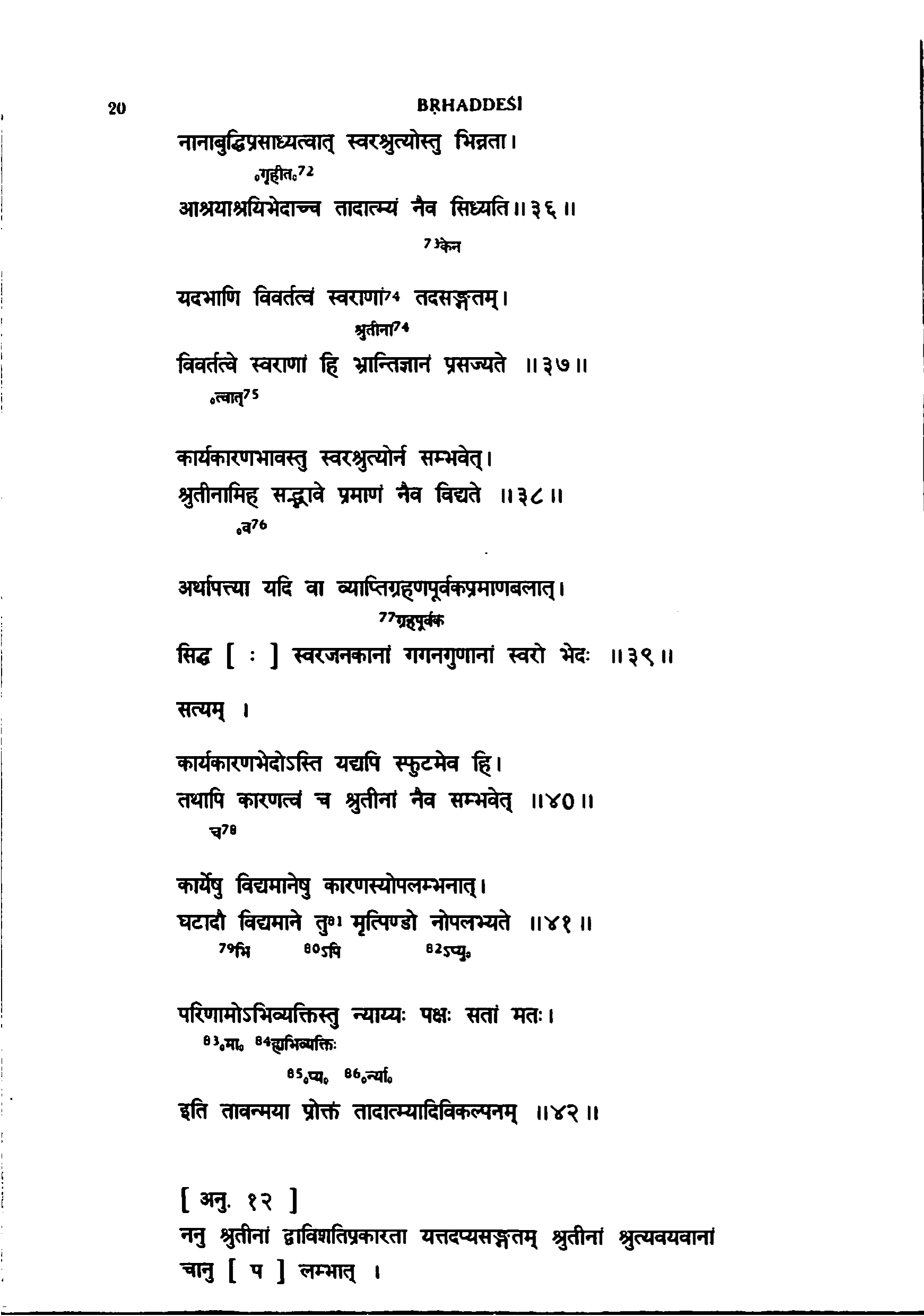
नानाबुद्धिप्रसाध्यत्वात्₀गृहीत。72 स्वरश्रुत्योस्तु भिन्नता।81 आश्रयाश्रयिभेदाच्च तादात्म्यं नैव7 अकेन सिध्यति4 ॥३६॥
यदभाणि विवर्तत्वं स्वराणांश्रुतीना74 न तदसङ्गतम्।
विवर्तत्वे₀त्वात्75 स्वराणां हि भ्रान्तिज्ञानं प्रसज्यते ॥३७॥ कार्यकारणभावस्तु स्वरश्रुत्योर्न सम्भवेत्।
श्रुतीनामिह₀व76 सद्भावे प्रमाणं नैव विद्यते9 ।।३८।।
अर्थापत्त्या यदि वा व्याप्तिग्रहणपूर्वकप्रमाणबलात्77ग्रहपूर्वक52 सिद्ध [:] स्वरजनकानां गगनगुणानां स्वरो भेदः ॥३९॥
सत्यम् ।
कार्यकारणभेदोऽस्ति यद्यपि स्फुटमेव हि। तथापि कारणत्वं च श्रुतीनां नैव सम्भवेत्6 ॥४०॥ ਚ78
कार्येषु विद्यमानेषु कारणस्योपलम्भनात्।
घटादौ विद्यमाने तुः मृत्पिण्डो नोपलभ्यते ॥४१॥ 79fH 8054 825023° परिणामोऽभिव्यक्तिस्तु83्मा<sub>॰</sub> 84ह्यभिव्यक्तिः न्याय्यः पक्षः सतां मतः।7 65,च्यः      ६६,न्यि इति तावन्मया प्रोक्तं तादात्म्यादिविकल्पनम्3 ॥४२॥
[अनु. १२]
ननु श्रुतीनां द्वाविशतिप्रकारता यत्तदप्यसङ्गतम् श्रुतीनां श्रुत्यवयवानां
चानु [प]लम्भात्।
English — Sharma (translation)
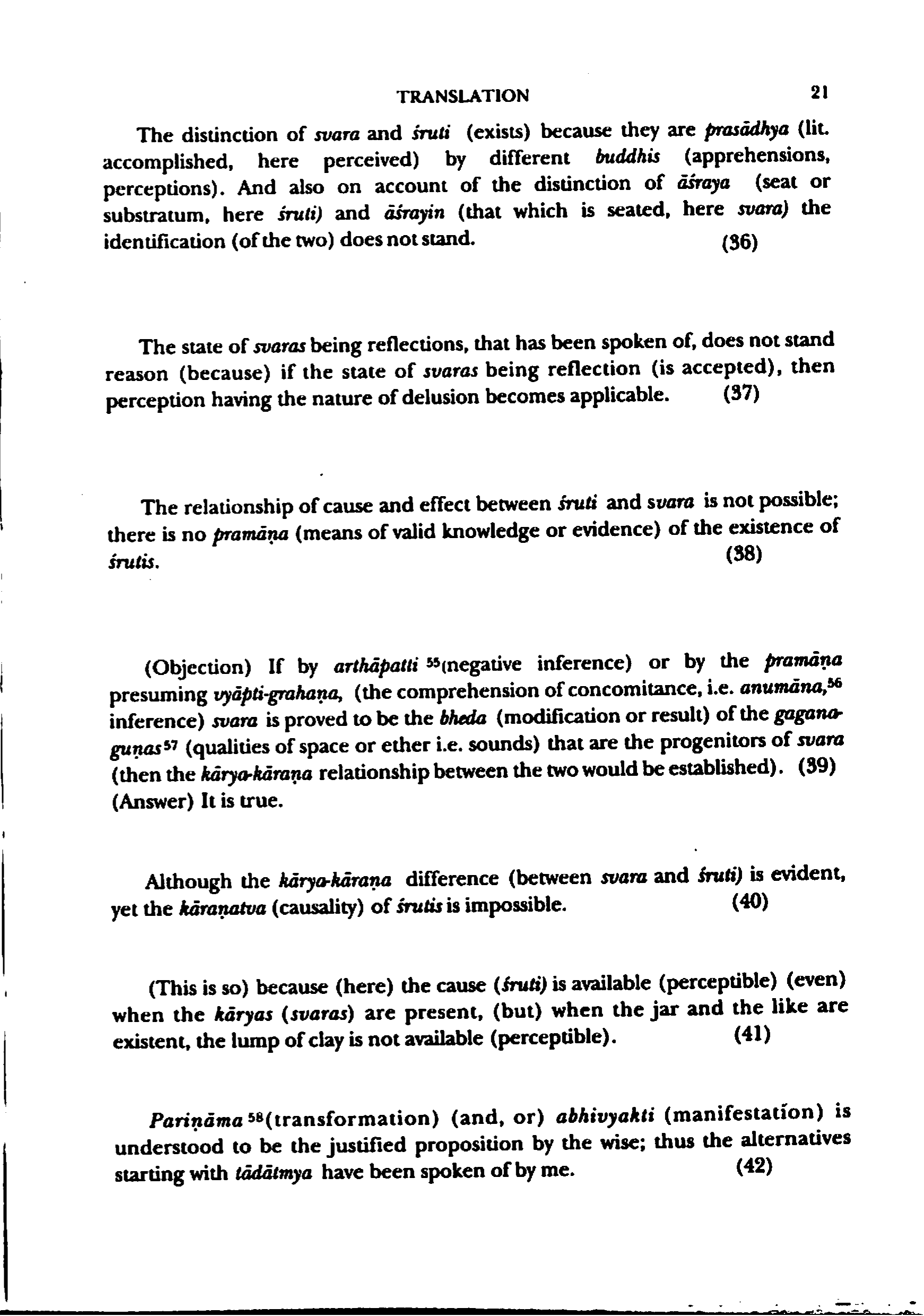
The distinction of svara and śruti (exists) because they are prasādhya (lit. accomplished, here perceived) by different buddhis1 (apprehensions, perceptions).8 And also on account of the distinction of aśraya (seat or substratum, here śruti) and āśrayin (that which is seated, here svara) the identification (of the two) does not stand.4
(36)
The state of svaras being reflections, that has been spoken of, does not stand reason (because) if the state of svaras being reflection (is accepted), then perception having the nature of delusion becomes applicable.
(37)
The relationship of cause and effect between śruti and svara is not possible; there is no pramana (means of valid knowledge or evidence) of the existence of
(38)
śrulis. (Objection) If by arthāpatti 55 (negative inference) or by the pramāņa presuming vyāpti-grahaņa5, (the comprehension of concomitance, i.e. anumāna,56 inference)2 svara is proved to be the bheda (modification or result) of the gagana- gunas57 (qualities of space or ether i.e. sounds) that are the progenitors of svara (then the kārya-kāraņa relationship between the two would be established). (39) (Answer) It is true. Although the kārya-kāraņa difference (between svara and śruti) is evident, (40) yet the kāraņatva (causality) of śrutis is impossible.6 (This is so) because (here) the cause (śruti) is available (perceptible) (even) when the kāryas (svaras) are present, (but) when the jar and the like are existent, the lump of clay is not available (perceptible).
(41)
Pariņāma 58 (transformation) (and, or) abhivyakti (manifestation) is understood to be the justified proposition by the wise7; thus the alternatives (42) starting with tādātmya have been spoken of by me.3
1.[definition] Prasādhya means 'accomplished' or 'perceived', describing how svara and śruti are distinguished through different perceptionsनानाबुद्धिप्रसाध्यत्वात् स्वरश्रुत्योस्तु भिन्नता।
2.[definition] Vyāpti-grahaņa (comprehension of concomitance) is a pramāņa used in inference (anumāna) to establish relationshipsव्याप्तिग्रहणपूर्वकप्रमाणबलात्।
3.[enumeration] Tādātmya is part of a series of alternative explanations (vikalpana) presented by the author for understanding svara-śruti relationshipइति तावन्मया प्रोक्तं तादात्म्यादिविकल्पनम्
4.[relation] Tādātmya (identification) between śruti and svara cannot be established on account of the distinction between aśraya (substratum) and āśrayin (that which is seated)आश्रयाश्रयिभेदाच्च तादात्म्यं नैव सिध्यति
5.[relation] Arthāpatti (negative inference) is presented as one possible means of establishing the relationship between svara and śrutiअर्थापत्त्या यदि वा व्याप्तिग्रहणपूर्वकप्रमाणबलात्।
6.[relation] The causality (kāraņatva) of śrutis is impossible even though the kārya-kāraņa difference between svara and śruti is evidentकार्यकारणभेदोऽस्ति यद्यपि स्फुटमेव हि। तथापि कारणत्वं च श्रुतीना नैव सम्भवेत्
7.[relation] Abhivyakti (manifestation) is presented as one of two justified propositions by the wise for explaining svara-śruti relationship, alongside pariņāmaपरिणामोऽभिव्यक्तिस्तु न्याय्यः पक्षः सता मतः।
8.[relation]The distinction (bhinna) of svara and śruti derives from their being accomplished or perceived (prasādhya) through different mental apprehensions (buddhis)नानाबुद्धिप्रसाध्यत्वात् स्वरश्रुत्योस्तु भिन्नता।
9.[relation] The relationship of cause and effect (kārya-kāraņa) between śruti and svara is not possibleकार्यकारणभावस्तु स्वरश्रुत्योर्न सम्भवेत्। श्रुतीनामिह सद्भावे प्रमाणं नैव विद्यते
10.[structural] A cause (kāraņa) is not perceptible when its effects (kāryas) are present, as illustrated by the example that clay lump is not perceptible when a jar existsकार्येषु विद्यमानेषु कारणस्योपलम्भनात्। घटादौ विद्यमाने तु मृत्पिण्डो नोपलभ्यते
1.[definition]Prasādhya means 'accomplished' or 'perceived', describing how svara and śruti are distinguished through different perceptionsThe distinction of svara and śruti (exists) because they are prasādhya (lit. accomplished, here perceived) by different buddhis
2.[definition]Vyāpti-grahaņa (comprehension of concomitance) is a pramāņa used in inference (anumāna) to establish relationshipsby the pramāņa presuming vyāpti-grahaņa, (the comprehension of concomitance, i.e. anumāna,56 inference)
3.[enumeration]Tādātmya is part of a series of alternative explanations (vikalpana) presented by the author for understanding svara-śruti relationshipthus the alternatives (42) starting with tādātmya have been spoken of by me.
4.[relation]Tādātmya (identification) between śruti and svara cannot be established on account of the distinction between aśraya (substratum) and āśrayin (that which is seated)And also on account of the distinction of aśraya (seat or substratum, here śruti) and āśrayin (that which is seated, here svara) the identification (of the two) does not stand.
5.[relation]Arthāpatti (negative inference) is presented as one possible means of establishing the relationship between svara and śruti(Objection) If by arthāpatti 55 (negative inference) or by the pramāņa presuming vyāpti-grahaņa
6.[relation]The causality (kāraņatva) of śrutis is impossible even though the kārya-kāraņa difference between svara and śruti is evidentAlthough the kārya-kāraņa difference (between svara and śruti) is evident, (40) yet the kāraņatva (causality) of śrutis is impossible.
7.[relation]Abhivyakti (manifestation) is presented as one of two justified propositions by the wise for explaining svara-śruti relationship, alongside pariņāmaPariņāma 58 (transformation) (and, or) abhivyakti (manifestation) is understood to be the justified proposition by the wise
8.[relation] The distinction (bhinna) of svara and śruti derives from their being accomplished or perceived (prasādhya) through different mental apprehensions (buddhis)The distinction of svara and śruti (exists) because they are prasādhya (lit. accomplished, here perceived) by different buddhis (apprehensions, perceptions).
9.[relation]The relationship of cause and effect (kārya-kāraņa) between śruti and svara is not possibleThe relationship of cause and effect between śruti and svara is not possible; there is no pramana (means of valid knowledge or evidence) of the existence of (38) śrutis.
10.[structural]A cause (kāraņa) is not perceptible when its effects (kāryas) are present, as illustrated by the example that clay lump is not perceptible when a jar existsbecause (here) the cause (śruti) is available (perceptible) (even) when the kāryas (svaras) are present, (but) when the jar and the like are (41) existent, the lump of clay is not available (perceptible).