yati technical_term
Generative rules (2) ↗ filter all
yati_definition_and_typesenumeration · 2 att.
Yati = splits/pauses in metre; in tāla context = order/sequence of layas; three varieties: samā (constant), gopucchā (fast→slow), srotogatā (slow→fast).yati_temporal_componentrelation · 1 att.
Yati is one of the temporal components (with tāla, gīti, laya, mārga) whose predominance manifests in vṛttis.
Pseudocode (DSL v1.1) ↗ full DSL (raw text)
RULE id: yati (cluster 179)
SCOPE: technical_term family
STATUS: empirical
CONFIDENCE: empirical
PROTECT: false
Essence pseudocode — identity + RECORD. The page citations for each slot value are in the Grammar record table above (audit trail). The full DSL adds ASSERTIONS with verbatim quotes (see Affirmations below) and CITED_RULES (see Graph relations).
Graph relations
Outgoing (7)
--[relation]--> mārga (1)--[enumeration]--> gopucchā yati (1)--[relation]--> gīti (1)--[enumeration]--> Samā yati (1)--[enumeration]--> Srotogatā yati (1)--[definition]--> tāla (1)--[relation]--> tāla (1)
Incoming (4)
citra mārga --[structural]--> (1)birudas --[structural]--> (1)vārtika mārga --[structural]--> (1)स्रोतोगता --[relation]--> (1)
Affirmations (3)
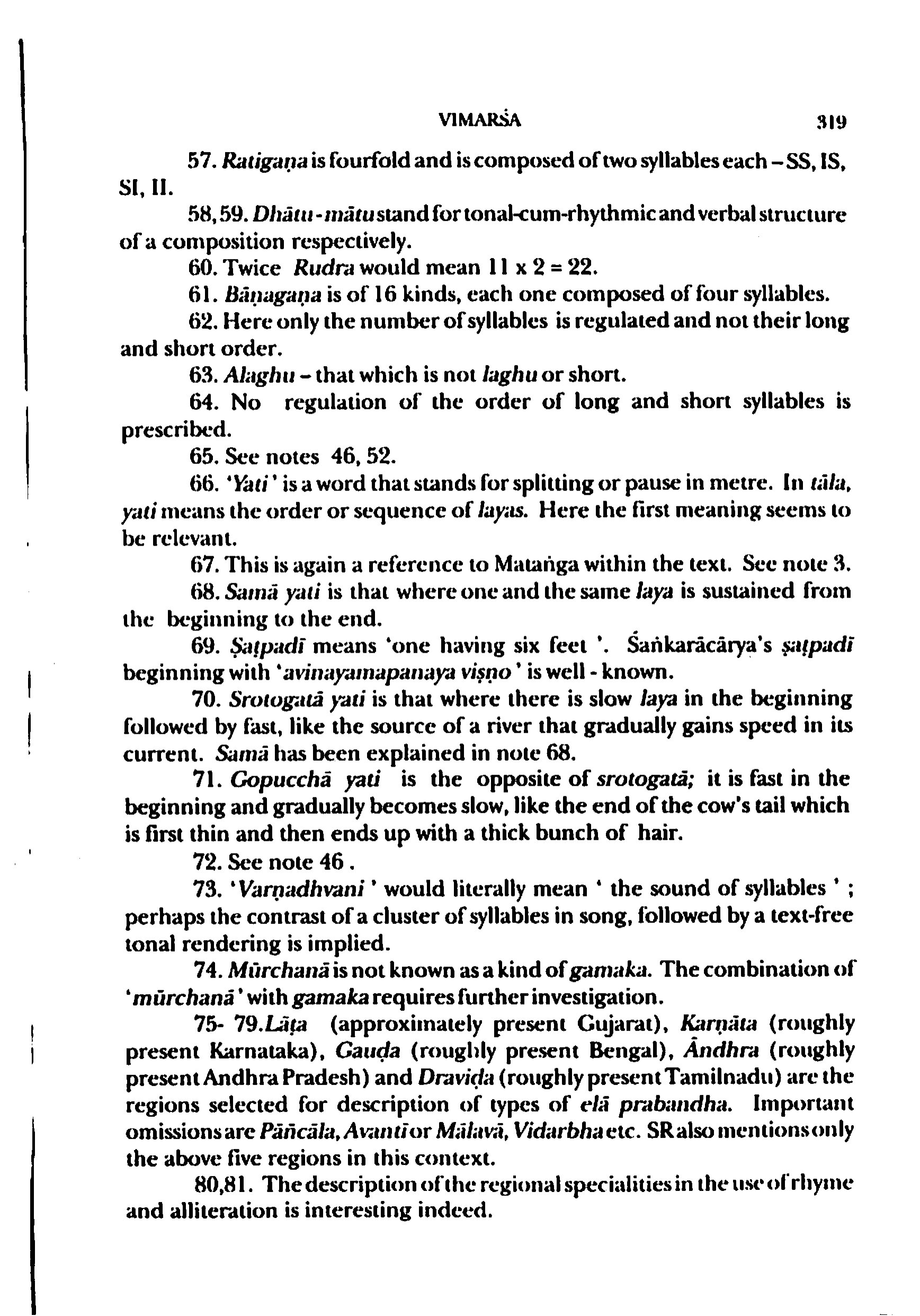
Yati refers to splits or pauses in metre; in tāla context, it denotes the order or sequence of layas
"'Yati' is a word that stands for splitting or pause in metre. In tāla,
yati means the order or sequence of layas. Here the first meaning seems to
be relevant."
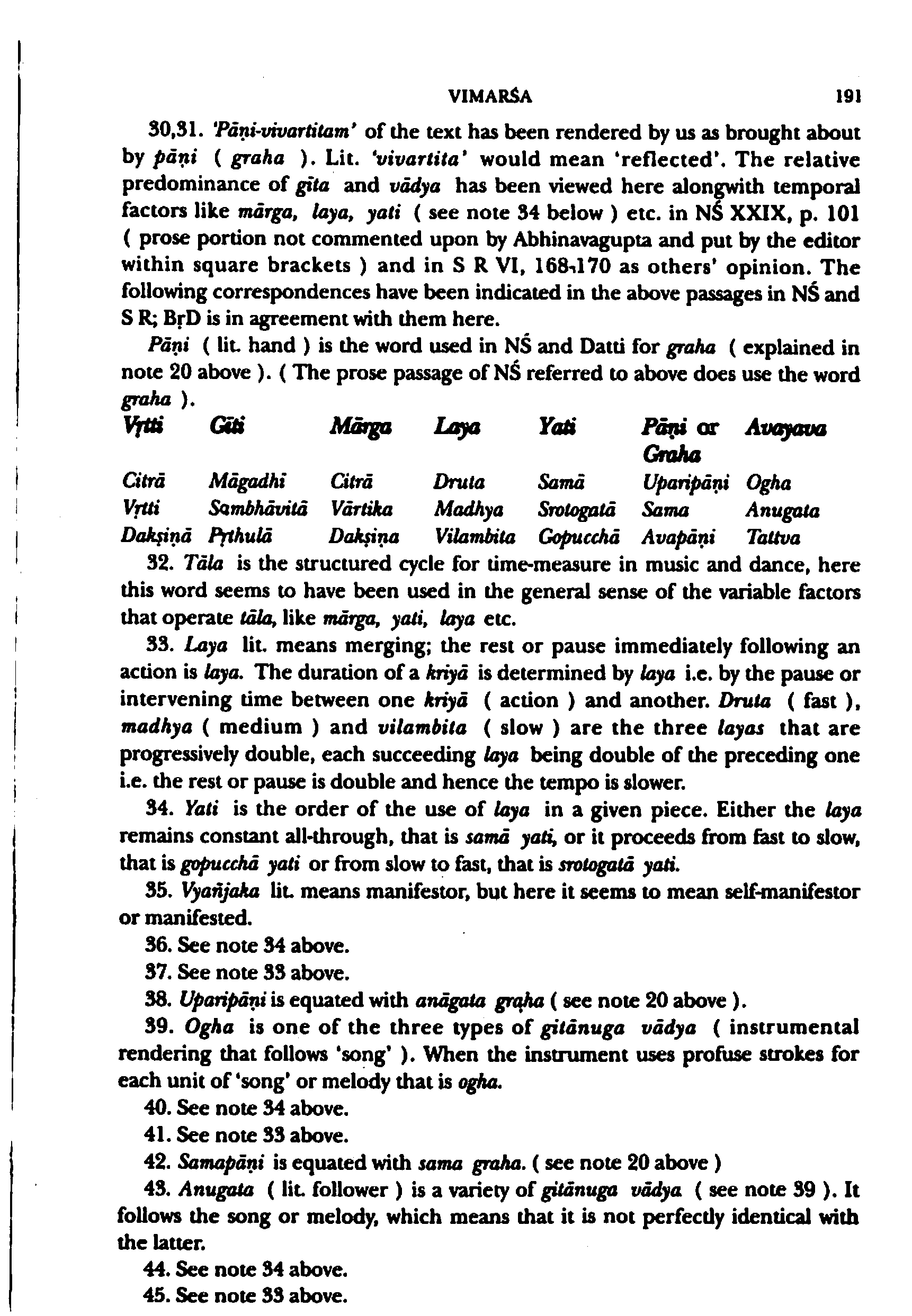
Yati is the order of use of laya in a given piece, with three varieties: samā yati (constant), gopucchā yati (fast to slow), srotogatā yati (slow to fast)
"Yati is the order of the use of laya in a given piece. Either the laya remains constant all-through, that is samā yati, or it proceeds from fast to slow, that is gopucchā yati or from slow to fast, that is srotogatā yati."
yati is one of the temporal components whose predominance manifests in vittis according to its own form
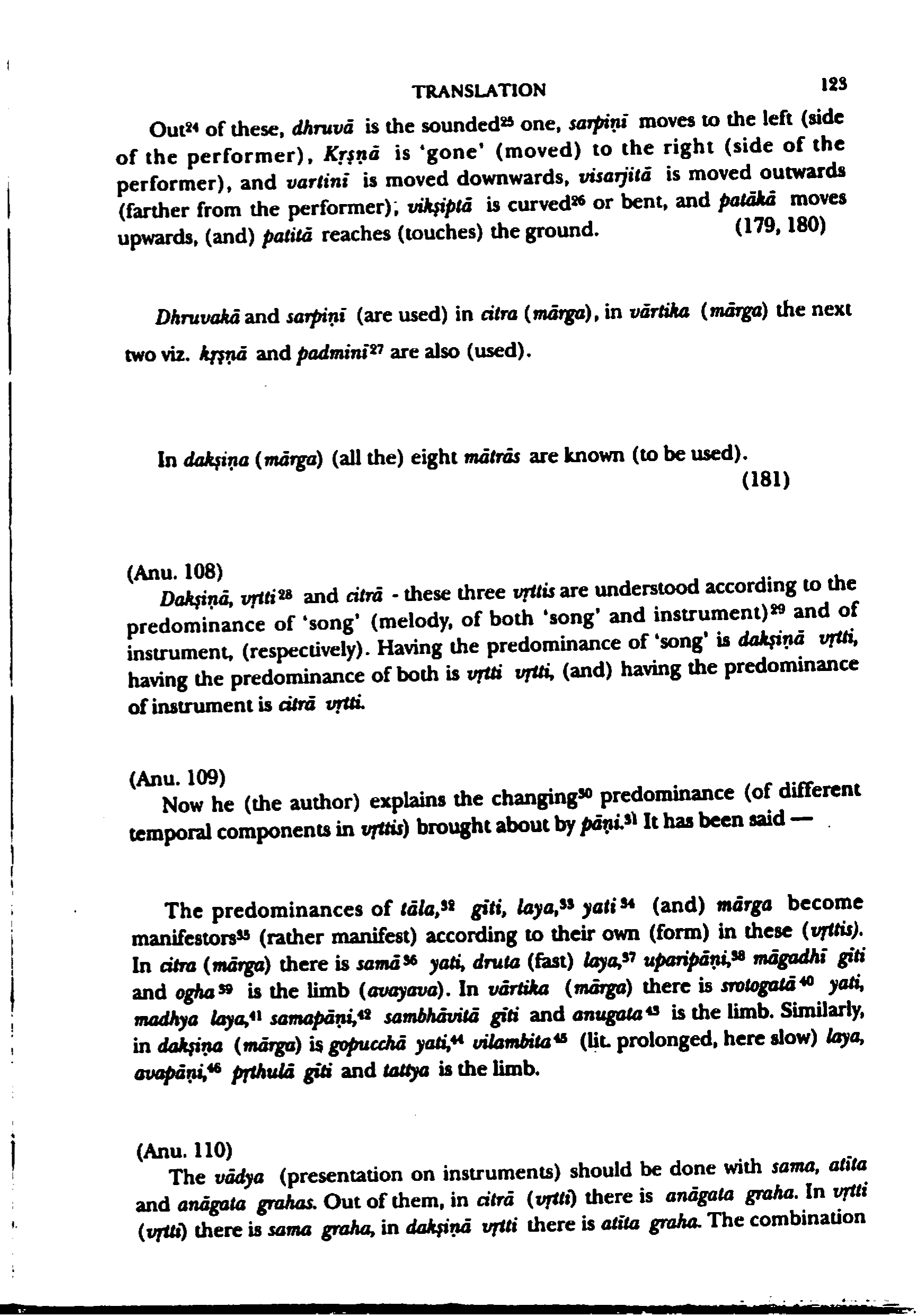
"The predominances of tāla,32 giti, laya,33 yati 34 (and) mārga become
manifesters35 (rather manifest) according to their own (form) in these (vyttis)."