Bhāṣāgīti technical_term
Generative rules (1) ↗ filter all
R_819_bhasa_giti_definitiondefinition · 3 att.
Bhāṣā gīti is a song-type with smooth, kāku-coloured, shaken, soft, brilliant prayogas combined with mālavīkāku; 16 varieties
Pseudocode (DSL v1.1) ↗ full DSL (raw text)
RULE id: bhāṣāgīti (cluster 197)
SCOPE: technical_term family
STATUS: empirical
CONFIDENCE: empirical
PROTECT: false
Essence pseudocode — identity + RECORD. The page citations for each slot value are in the Grammar record table above (audit trail). The full DSL adds ASSERTIONS with verbatim quotes (see Affirmations below) and CITED_RULES (see Graph relations).
Graph relations
Outgoing (3)
Incoming (0)
none
Affirmations (4)
Bhāṣāgīti is recognized in both Kasyapa's and Śārdūla's doctrines
"Bhāṣāgīti and vibhāṣā have been spoken of even by Kaśyapa. Similarly,
bhāṣāgīti alone is accepted in the opinion of Śārdūla."
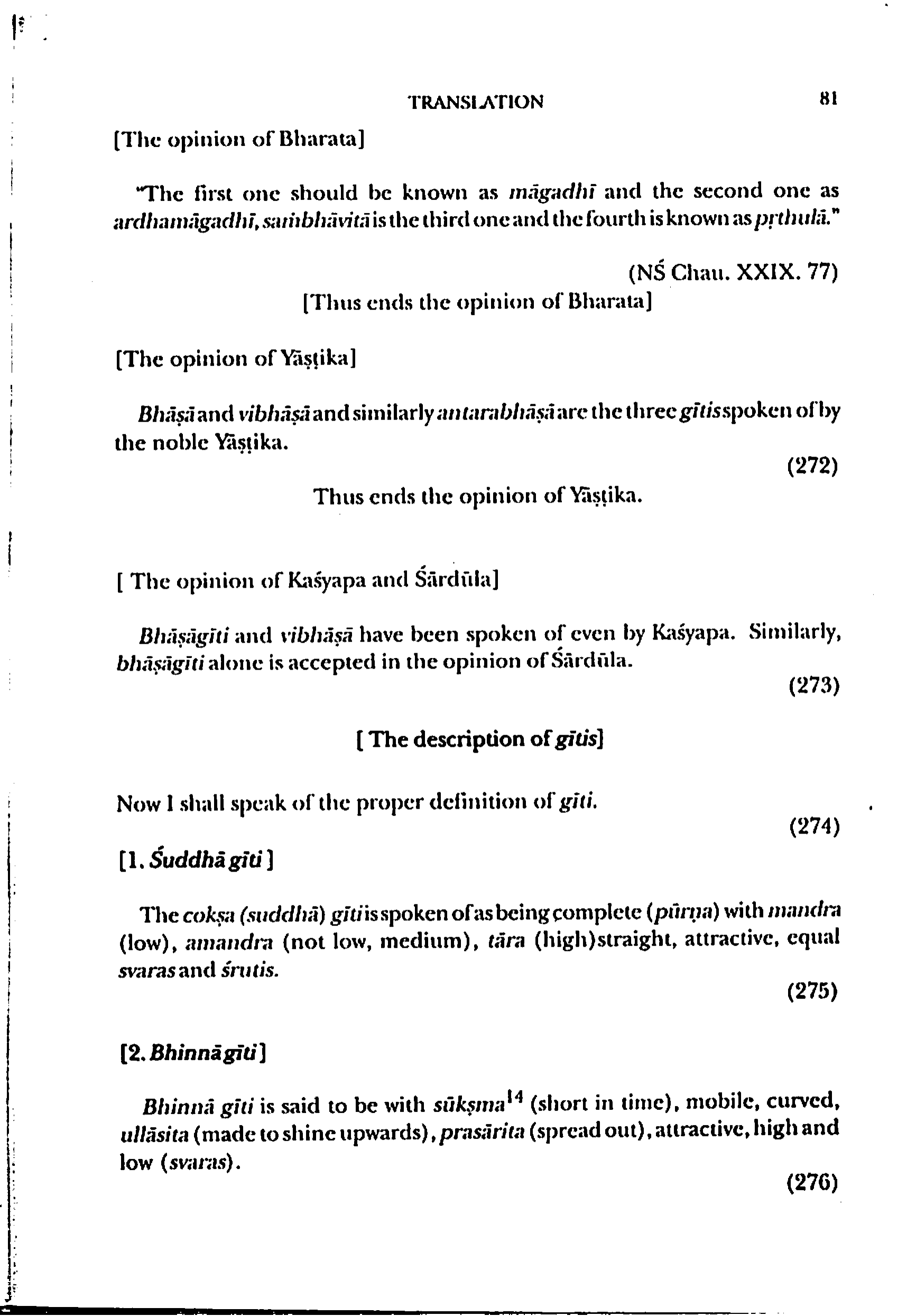
Bhāṣā gīti consists of prayogas that are smooth, colourful with kākus, well composed, shaken, soft, brilliant, combined with mālavīkāku, attractive, and graceful
"This bhāṣā gīti is described by the experts in gīti as consisting of prayogas
(melodic phrases?) that are rendered by the body (voice), are smooth,
colourful with kākus, well composed, shaken, soft, brilliant, combined with
mālavīkāku"
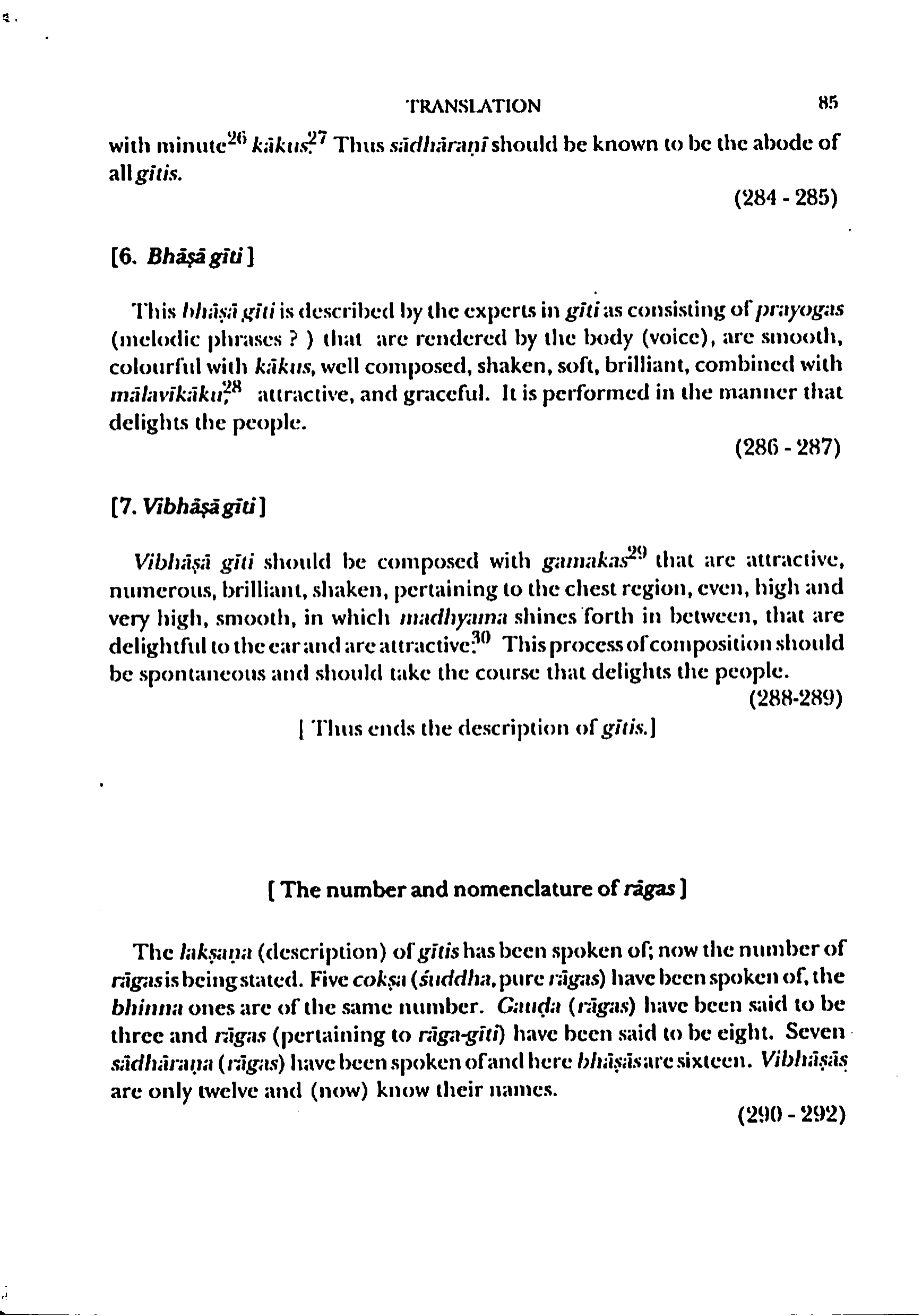
Bhāṣā gīti is enumerated as sixteen varieties in the rāga classification system
"Seven-
sādhāraņa (rāgas) have been spoken of and here bhāṣās are sixteen."
Bhāṣā gīti is performed in a manner that delights the people
"It is performed in the manner that
delights the people."