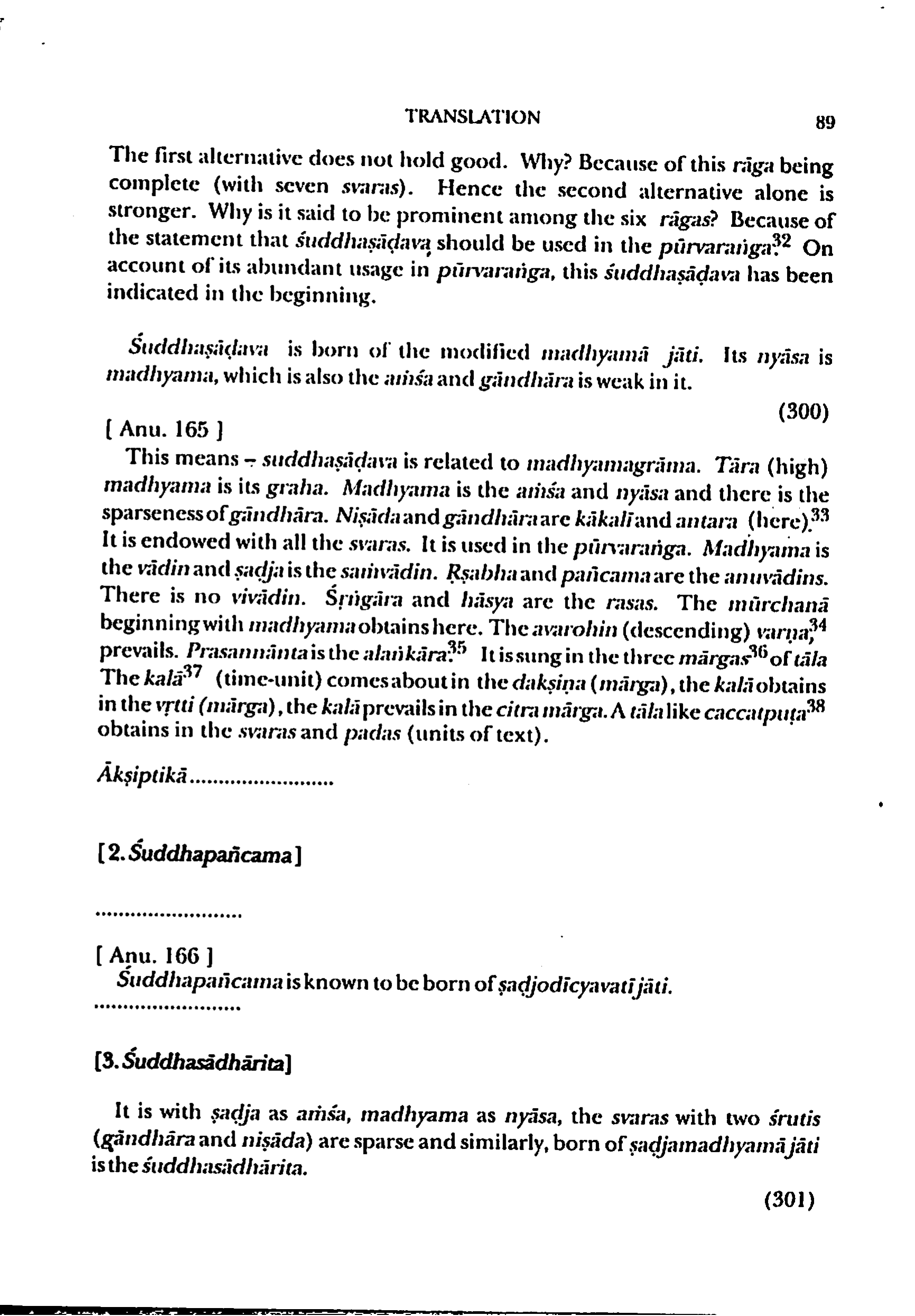
Vivādin represents a relationship of vivāda (dissonance) among svaras
"The samvādin, anuvādin and vivādin svaras represent the relationship
of samvāda (roughly consonance), anuvāda (assonance) and vivāda
(dissonance) among svaras."
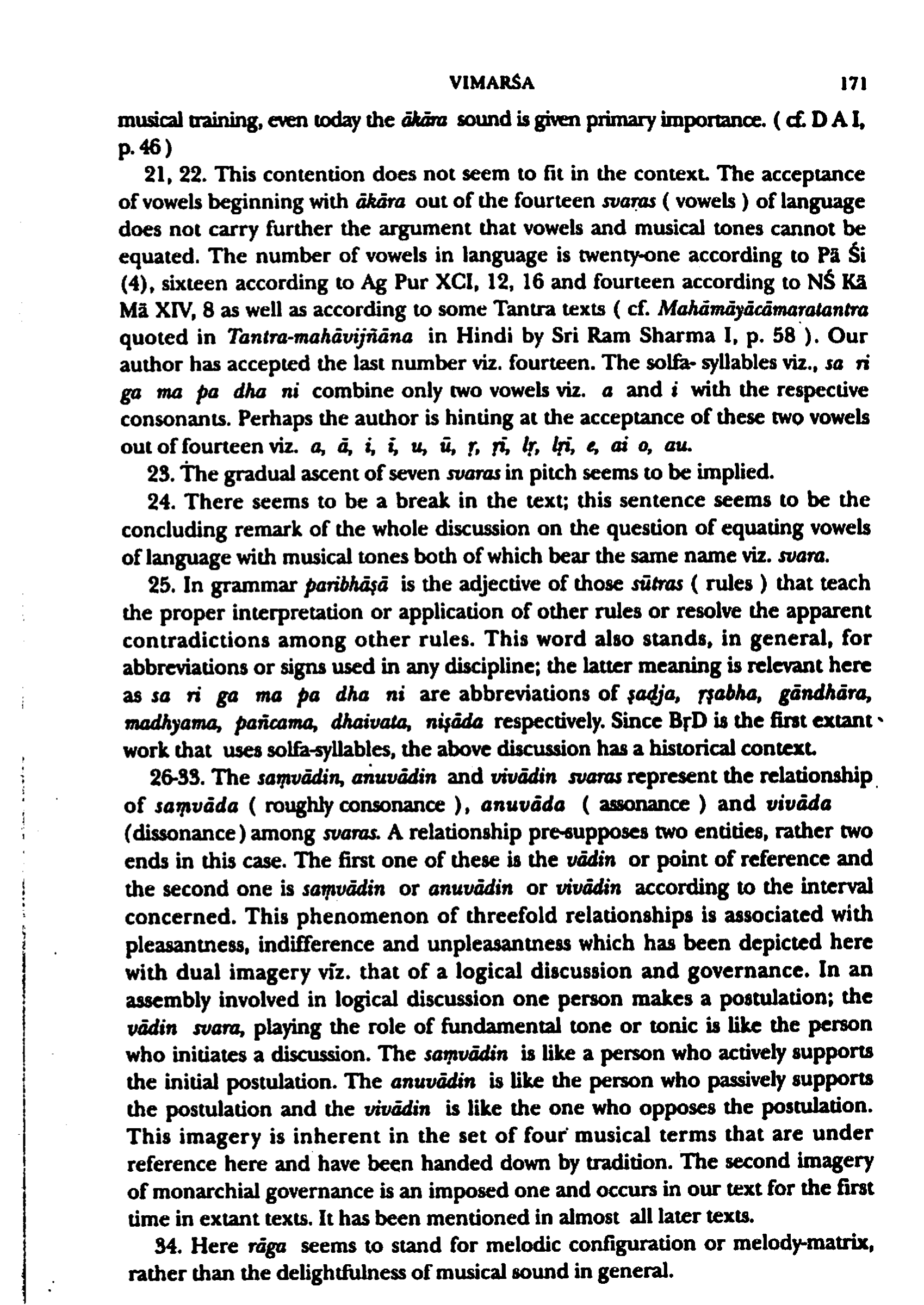
VIMARŚA
<sup>171</sup>
musical training, even today the ākāra sound is given primary importance. (cf. DAI,
p. 46)
21, 22. This contention does not seem to fit in the context. The acceptance
of vowels beginning with ākāra out of the fourteen svaras (vowels) of language
does not carry further the argument that vowels and musical tones cannot be
equated. The number of vowels in language is twenty-one according to Pa Si
(4), sixteen according to Ag Pur XCI, 12, 16 and fourteen according to NŚ Kā
Mā XIV, 8 as well as according to some Tantra texts (cf. Mahāmāyācāmaratantra
quoted in Tantra-mahāvijāāna in Hindi by Sri Ram Sharma I, p. 58). Our
author has accepted the last number viz. fourteen. The solfa-syllables viz., sa ri
ga ma pa dha ni combine only two vowels viz. a and i with the respective
consonants. Perhaps the author is hinting at the acceptance of these two vowels
out of fourteen viz. a, ā, i, i, u, ū, r, rī, lr, lrī, e, ai o, au.
23. The gradual ascent of seven svaras in pitch seems to be implied.
24. There seems to be a break in the text; this sentence seems to be the
concluding remark of the whole discussion on the question of equating vowels
of language with musical tones both of which bear the same name viz. svara.
25. In grammar paribhāṣā is the adjective of those sūtras (rules) that teach
the proper interpretation or application of other rules or resolve the apparent
contradictions among other rules. This word also stands, in general, for
abbreviations or signs used in any discipline; the latter meaning is relevant here
as sa ri ga ma pa dha ni are abbreviations of şadja, rşabha, gāndhāra,
madhyama, pañcama, dhaivata, nisāda respectively. Since BrD is the first extant .
work that uses solfa-syllables, the above discussion has a historical context.
26-33. The samvādin, anuvādin and vivādin svaras represent the relationship
of samvāda (roughly consonance), anuvāda (assonance) and vivāda
(dissonance) among svaras. A relationship pre-supposes two entities, rather two
ends in this case. The first one of these is the vādin or point of reference and
the second one is samvādin or anuvādin or vivādin according to the interval
concerned. This phenomenon of threefold relationships is associated with
pleasantness, indifference and unpleasantness which has been depicted here
with dual imagery viz. that of a logical discussion and governance. In an
assembly involved in logical discussion one person makes a postulation; the
vādin svara, playing the role of fundamental tone or tonic is like the person
who initiates a discussion. The samvadin is like a person who actively supports
the initial postulation. The anuvadin is like the person who passively supports
the postulation and the vivadin is like the one who opposes the postulation.
This imagery is inherent in the set of four musical terms that are under
reference here and have been handed down by tradition. The second imagery
of monarchial governance is an imposed one and occurs in our text for the first
time in extant texts. It has been mentioned in almost all later texts.
34. Here raga seems to stand for melodic configuration or melody-matrix,
rather than the delightfulness of musical sound in general.