Dattilam tradition_name
Pseudocode (DSL v1.1) ↗ full DSL (raw text)
RULE id: dattilam (cluster 30)
SCOPE: tradition_name family
STATUS: canonical
CONFIDENCE: canonical
PROTECT: true
Essence pseudocode — identity + RECORD. The page citations for each slot value are in the Grammar record table above (audit trail). The full DSL adds ASSERTIONS with verbatim quotes (see Affirmations below) and CITED_RULES (see Graph relations).
Graph relations
Outgoing (6)
--[attribution]--> tāna (4)--[attribution]--> mūrchanā (2)--[attribution]--> svaras (2)--[attribution]--> pravesa (1)--[attribution]--> nigraha (1)--[attribution]--> kriyā (1)
Incoming (0)
none
Affirmations (3)
Dattila is attributed a statement on twofold kriyā of tana on the string comprising pravesa and nigraha
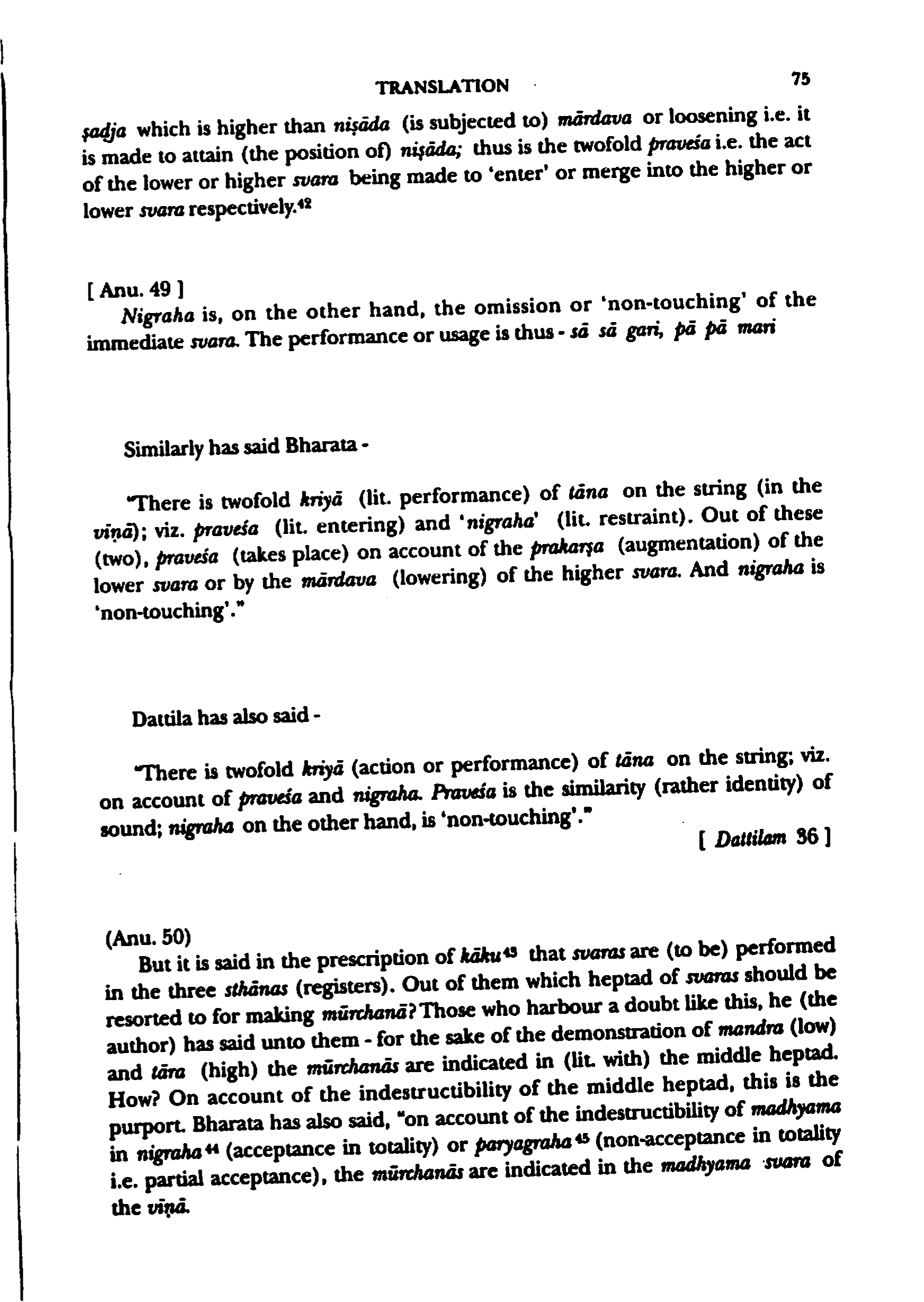
"Dattila has also said -
There is twofold kniyā (action or performance) of tāna on the string; viz. on account of pravesa and nigraha."
Dattila is cited as an authority on recognizing murchanas through counting omitted svaras
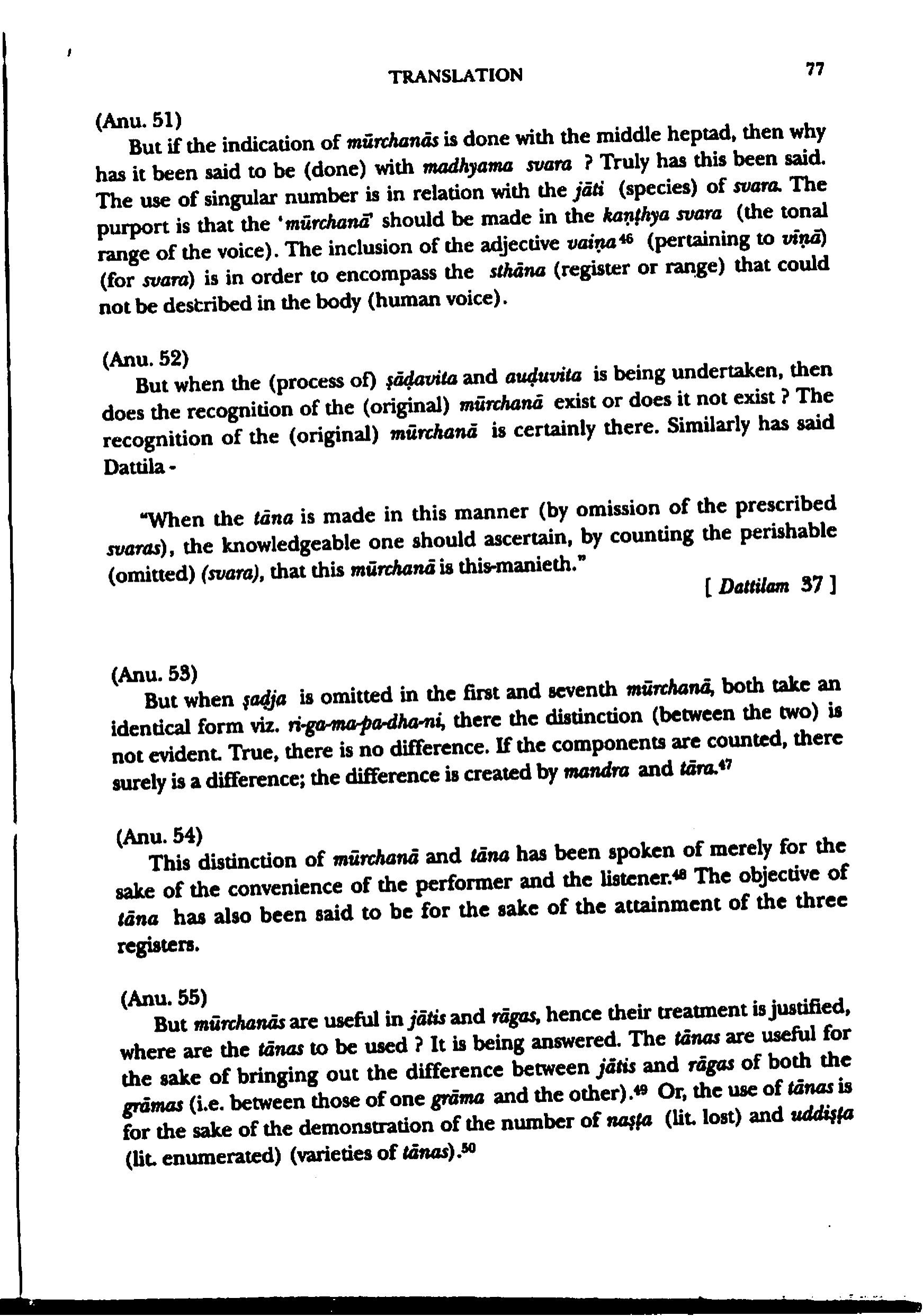
"Similarly has said
Dattila -
"When the tana is made in this manner (by omission of the prescribed
svaras), the knowledgeable one should ascertain, by counting the perishable
(omitted) (svara), that this murchana is this-manieth.""
Dattila is cited as an authority on tāna enumeration and calculation methods
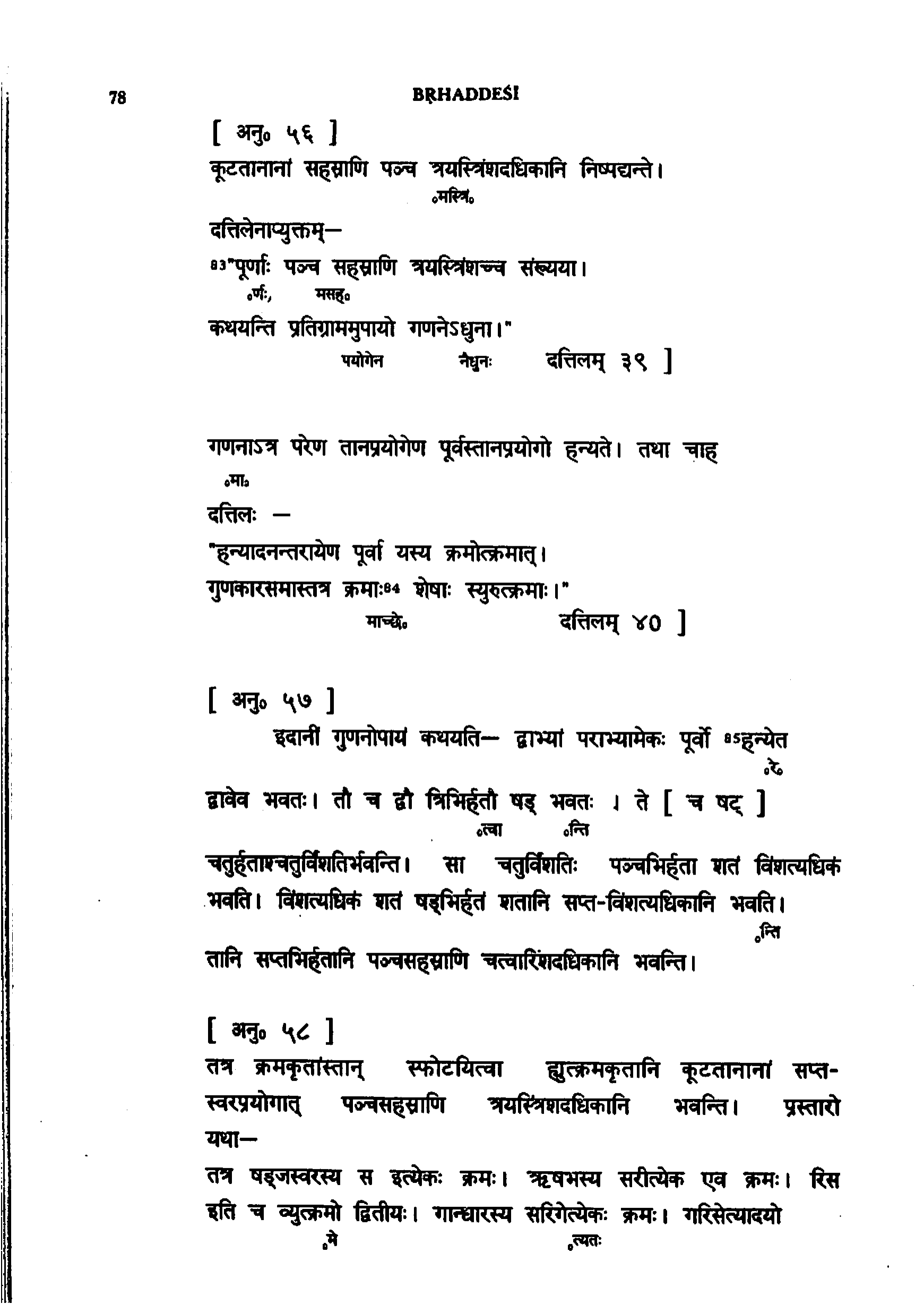
"दत्तिलेनाप्युक्तम्—"