vamsa technical_term
Generative rules (2) ↗ filter all
R_4p0_013structural · 4 att.
vamsa (flute bambou) = 9 śrutis reparties en groupes de 2, 3 et 4 śrutis, produits par ouverture/secouage/demi-ouverture des trousR_1723_vamsa_rsi_ri_dhaenumeration · 1 att.
Ṛṣabha and dhaivata belong to the vaṃśa of ṛṣis
Pseudocode (DSL v1.1) ↗ full DSL (raw text)
RULE id: vamsa (cluster 530)
SCOPE: technical_term family
STATUS: empirical
CONFIDENCE: empirical
PROTECT: false
Essence pseudocode — identity + RECORD. The page citations for each slot value are in the Grammar record table above (audit trail). The full DSL adds ASSERTIONS with verbatim quotes (see Affirmations below) and CITED_RULES (see Graph relations).
Graph relations
Outgoing (4)
--[structural]--> śrutis (3)--[structural]--> svaras (2)--[relation]--> śrutis (1)--[relation]--> svaras (1)
Incoming (1)
Bharata --[citation]--> (1)
Affirmations (5)
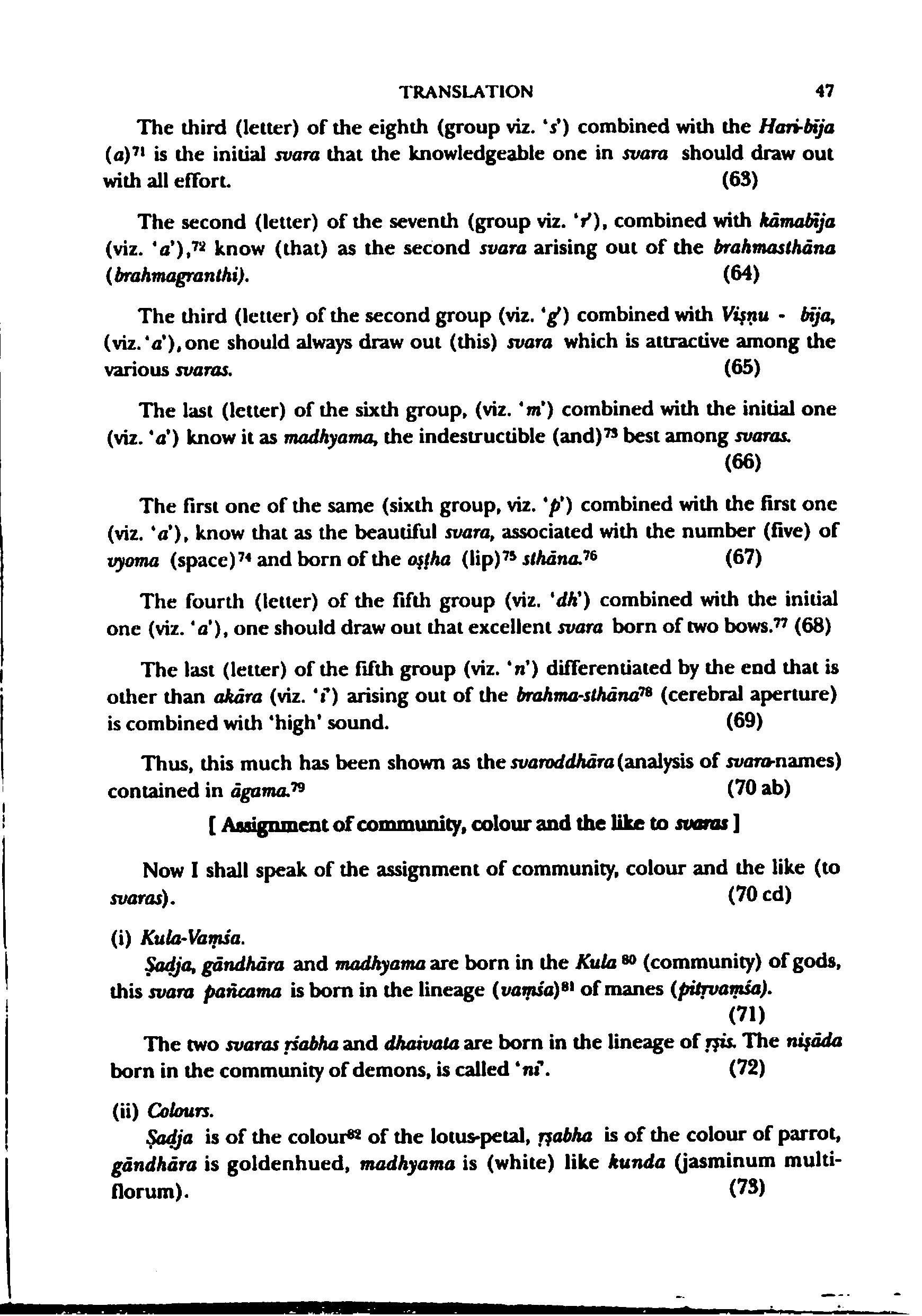
Ṛṣabha and dhaivata are born in the vaṃśa (lineage) of ṛṣis (sages)
"The two svaras ršabha and dhaivata are born in the lineage of rsis."
The nine śrutis group has been associated with the vamsa (flute) because the production of svaras can be clearly described there in terms of opening, shaking, and half-opening holes
"This group of nine śrutis has been associated with the vamsa (flute) because the production of the svaras of four, three and two śrutis has been clearly described there in terms of 'opening' the hole (removing the finger), shaking the finger and half-opening of the hole"
Svaras in the vamsa (flute) should be known as forming groups of two, three and four śrutis
"The svaras situated in the vamsa (flute) should be known as (forming)
groups of two, three and four śrutis."
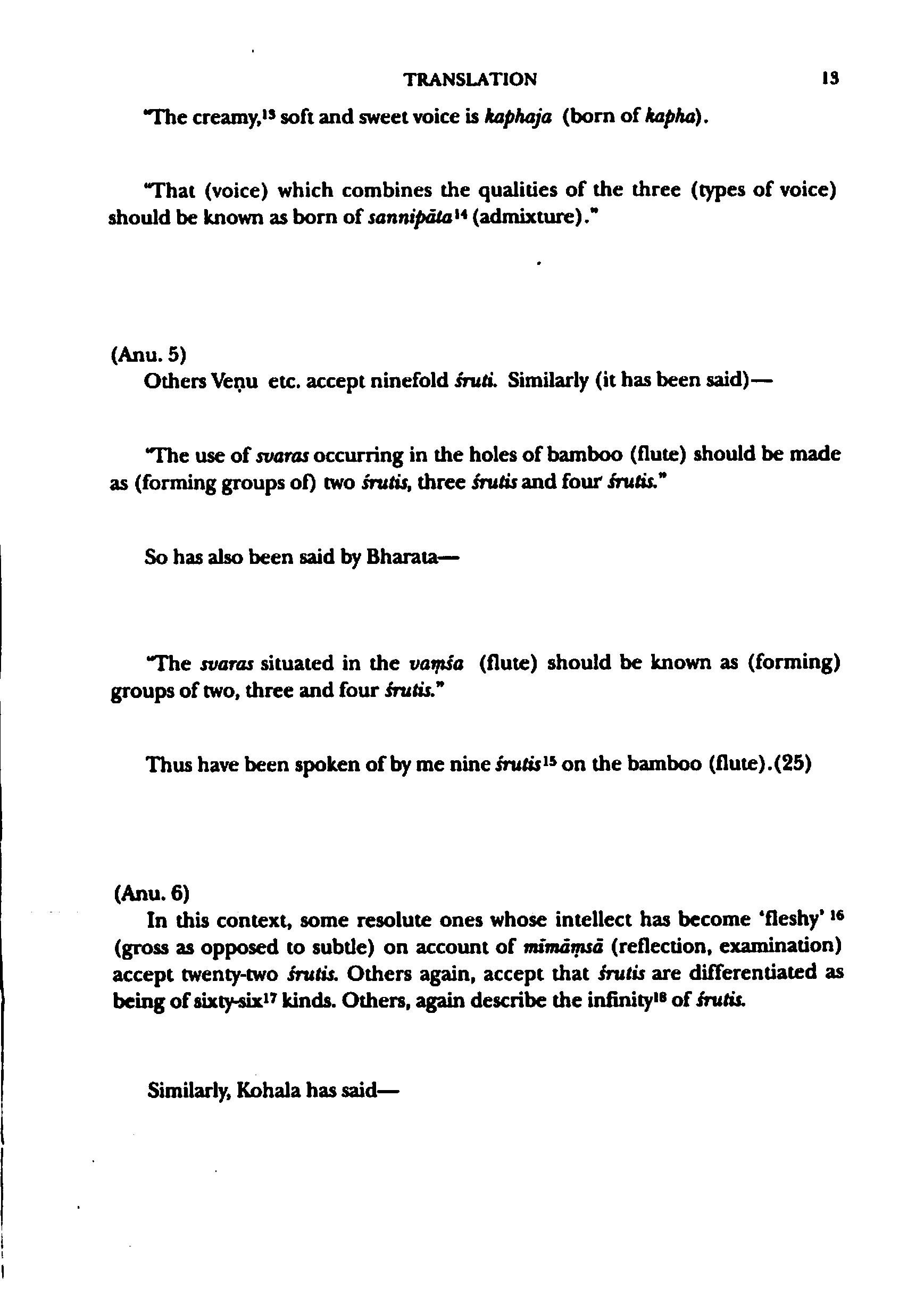
The use of svaras in holes of bamboo flute forms groups of two, three and four śrutis
"The use of svaras occurring in the holes of bamboo (flute) should be made
as (forming groups of) two srutis, three srutis and four srutis."
Nine śrutis are associated with the bamboo flute (vamsa)
"Thus have been spoken of by me nine śrutis 15 on the bamboo (flute).(25)"