Bharata proper_name
Generative rules (1) ↗ filter all
r_brd_457_bharati_defdefinition · 2 att.
Bhāratī = first of four dramatic vṛttis, marked by predominance of verbal expression; combined with Bhadrāvatī elā
Pseudocode (DSL v1.1) ↗ full DSL (raw text)
RULE id: bharata (cluster 10)
SCOPE: proper_name family
STATUS: canonical
CONFIDENCE: canonical
PROTECT: true
Essence pseudocode — identity + RECORD. The page citations for each slot value are in the Grammar record table above (audit trail). The full DSL adds ASSERTIONS with verbatim quotes (see Affirmations below) and CITED_RULES (see Graph relations).
Graph relations
Outgoing (46)
--[attribution]--> aṁśa (2)--[attribution]--> jāti (2)--[citation]--> jāti (2)--[attribution]--> tāra (2)--[attribution]--> nyāsa (1)--[citation]--> nyāsa (1)--[attribution]--> Matanga (1)--[citation]--> Matanga (1)--[attribution]--> apanyāsa (1)--[attribution]--> graha (1)--[attribution]--> auduvita (1)--[citation]--> sadjagrāma (1)--[attribution]--> lakṣaṇa (1)--[attribution]--> alaṅkāra (1)--[citation]--> śrutis (1)--[citation]--> antara (1)--[attribution]--> tāna (1)--[citation]--> mārga (1)--[attribution]--> antaramārga (1)--[citation]--> antaramārga (1)--[definition]--> vṛtti (1)--[relation]--> vṛtti (1)--[attribution]--> anga (1)--[attribution]--> viņā (1)--[relation]--> Elā (1)--[attribution]--> geya (1)--[attribution]--> şādava (1)--[attribution]--> aṁśa svara (1)--[relation]--> bhadrāvatī (1)--[citation]--> dhaivata (1)--[citation]--> Nāṭyaśāstra (1)--[attribution]--> Sārngadeva (1)--[citation]--> vamsa (1)--[citation]--> ṛṣabha (1)--[attribution]--> pravesa (1)--[attribution]--> nigraha (1)--[attribution]--> avakṛṣṭā dhruvās (1)--[attribution]--> jāti-lakṣaṇas (1)--[attribution]--> samnyāsa-vinyāsa (1)--[attribution]--> svaras (1)--[citation]--> svaras (1)--[attribution]--> Gati (1)--[citation]--> Anu. 129 (1)--[citation]--> rāga (1)--[attribution]--> kriyā (1)--[attribution]--> praveša (1)
Incoming (15)
Matanga --[attribution]--> (2)jāti --[attribution]--> (1)sambhāvitā --[enumeration]--> (1)māgadhī --[enumeration]--> (1)pṛthulā --[enumeration]--> (1)ardhamāgadhī --[enumeration]--> (1)mukha --[attribution]--> (1)pratimukha --[attribution]--> (1)garbha --[attribution]--> (1)avamarsa --[attribution]--> (1)gīti --[relation]--> (1)Sārngadeva --[attribution]--> (1)NŚ XXVIII.72 --[citation]--> (1)jāti-lakṣaṇas --[relation]--> (1)भरतमतेनालङ्कारनिरूपणम् --[definition]--> (1)
Affirmations (17)
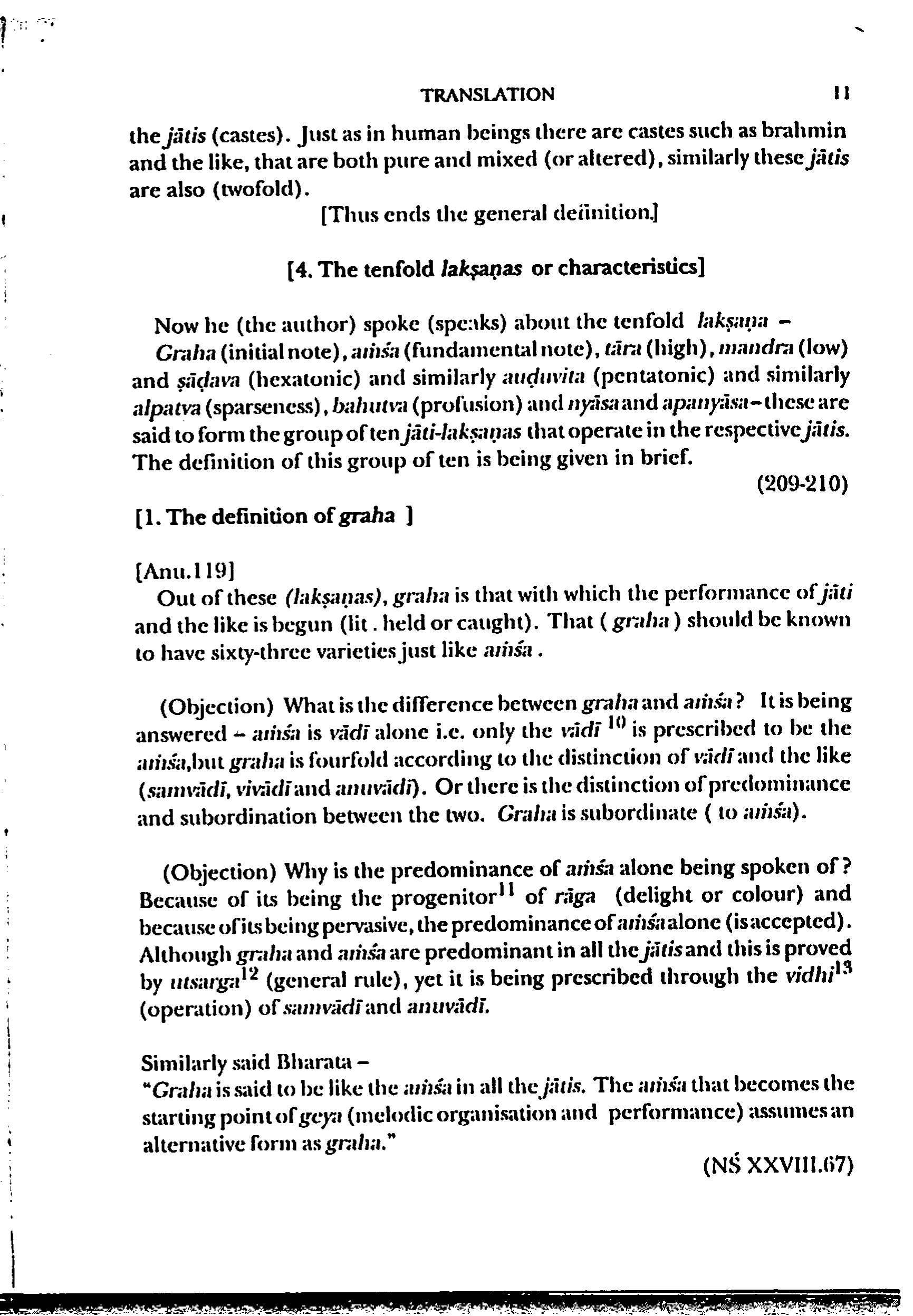
Bharata stated that graha is said to be like the aṁśa in all jātis, with aṁśa becoming graha when serving as the starting point of geya
""Graha is said to be like the amsa in all the jātis. The amsa that becomes the
starting point of geya (melodic organisation and performance) assumes an
alternative form as graha.""
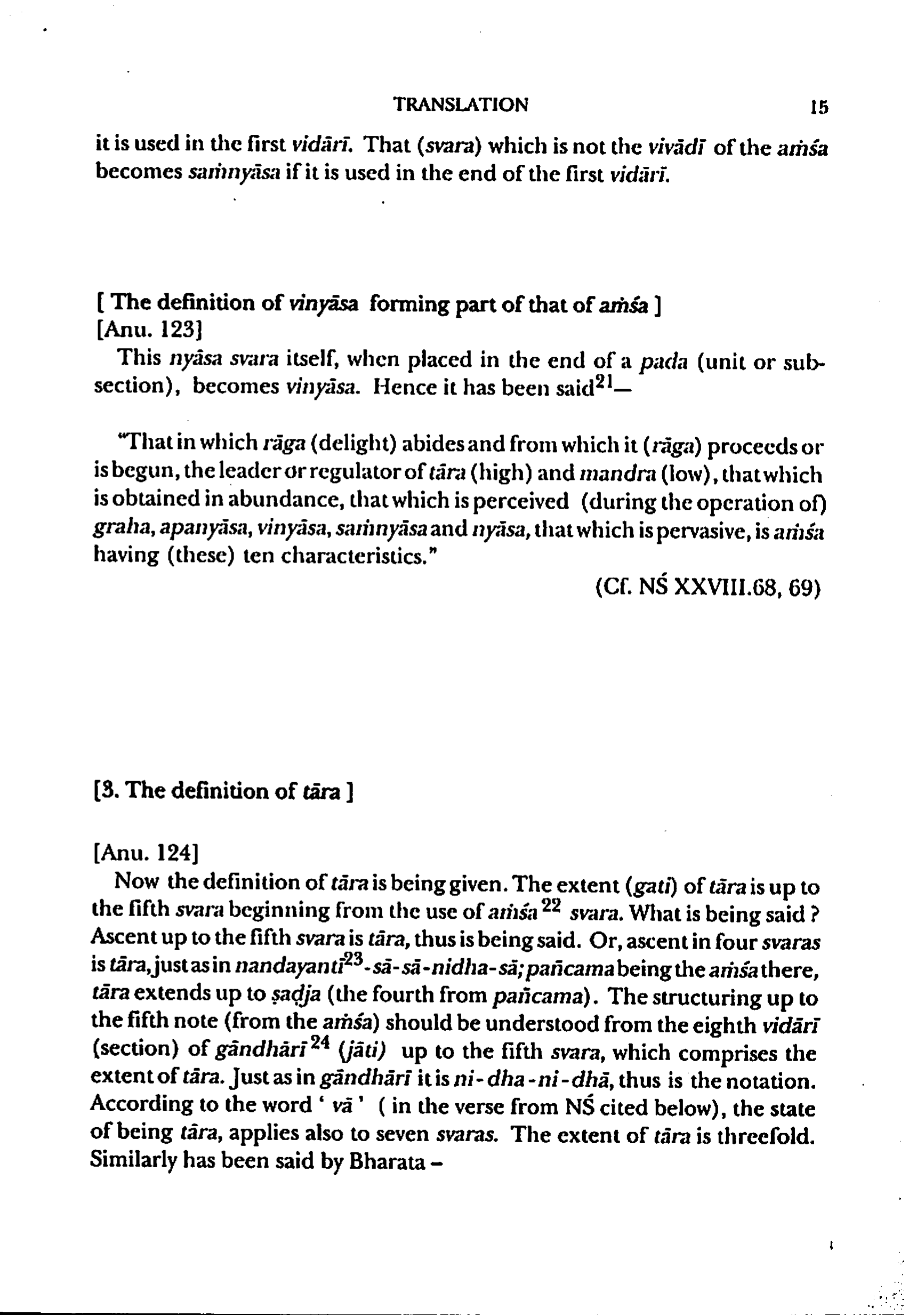
Bharata is cited as an authority on tara doctrine
"Similarly has been said by Bharata"
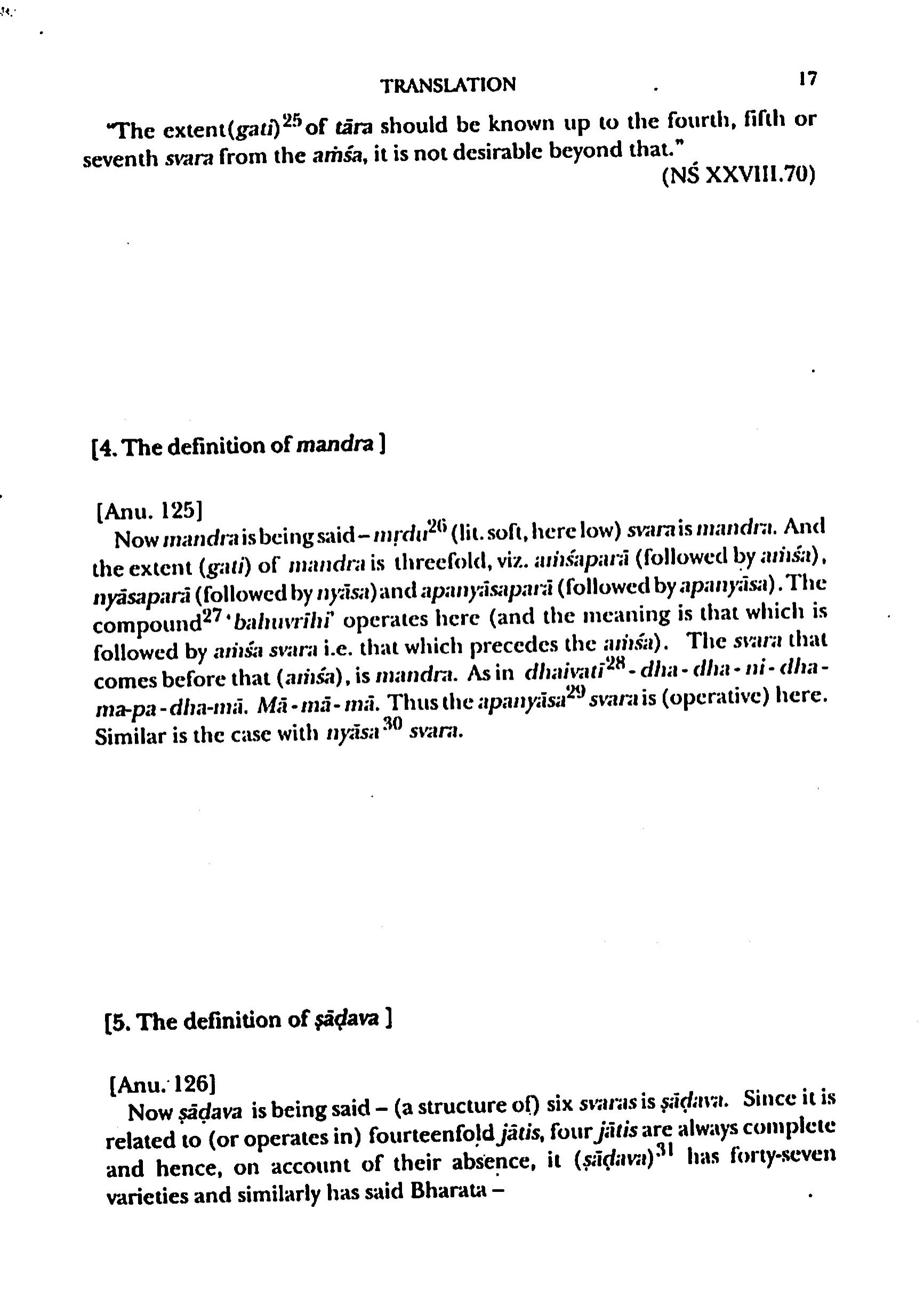
Bharata is cited as an authority on the nature of tāra gati and şādava
"Similarly has said Bharata -"
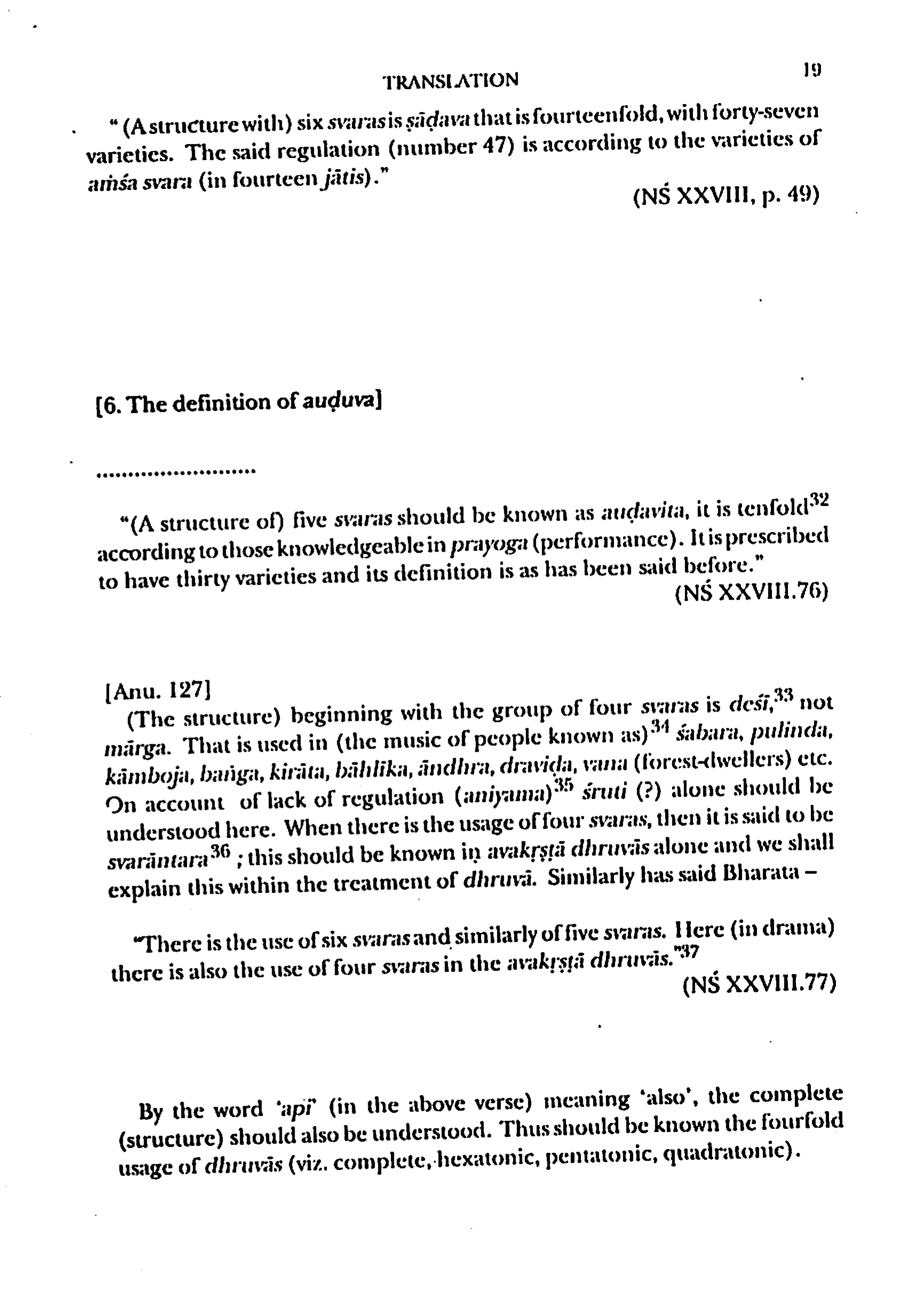
Bharata is cited as an authority who confirmed that there is usage of six, five, and four svaras in drama
"Similarly has said Bharata -
"There is the use of six svaras and similarly of five svaras. Here (in drama)
there is also the use of four svaras in the avakṛṣṭā dhruvās.""
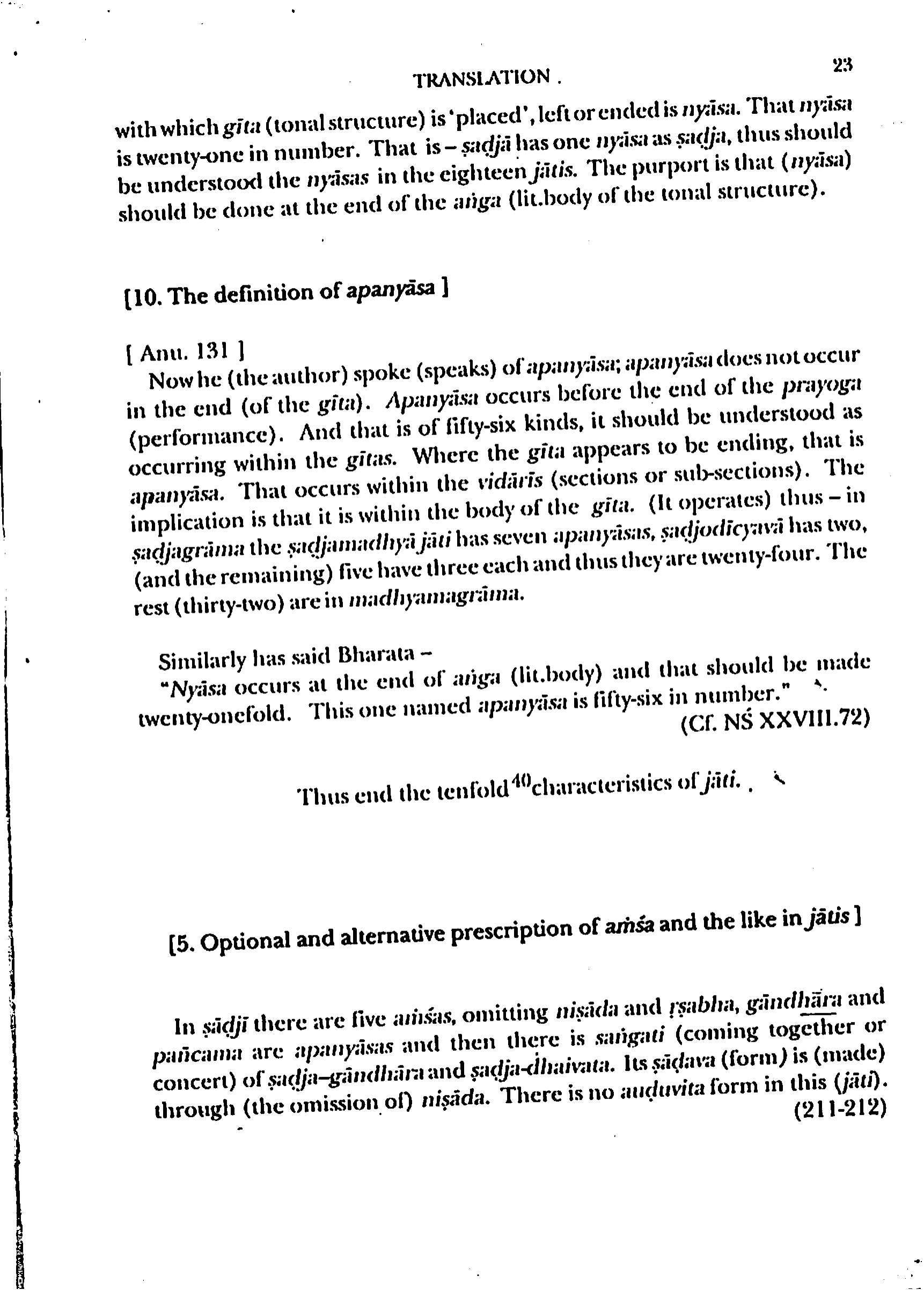
Bharata is quoted as an authoritative source on nyāsa and apanyāsa doctrine
"Similarly has said Bharata -
"Nyāsa occurs at the end of anga (lit.body) and that should be made
twenty-onefold. This one named apanyāsa is fifty-six in number.""
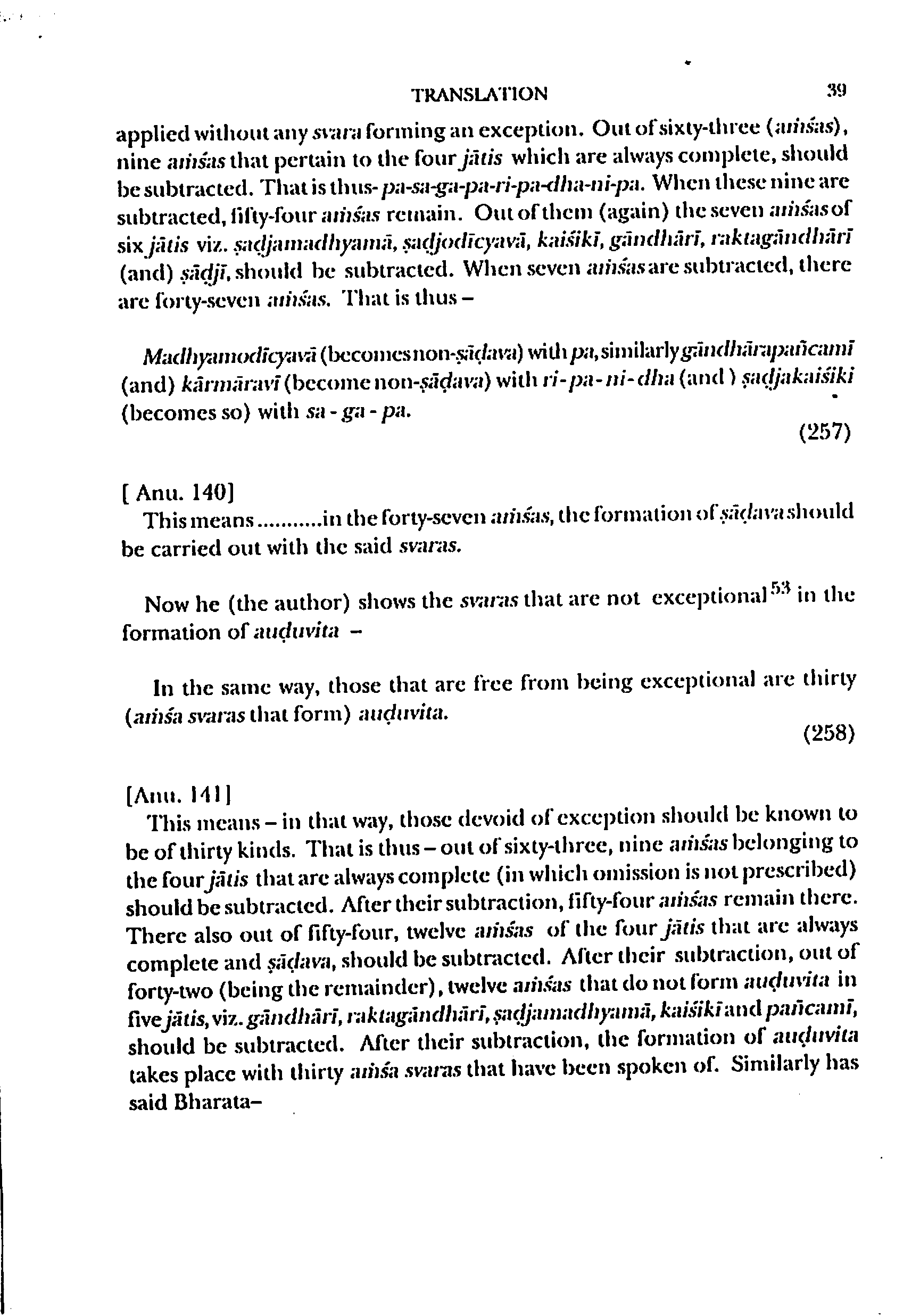
Bharata is cited as an authority for the teaching about auduvita formation with thirty amsa svaras
"Similarly has
said Bharata-"
Bharata is credited with establishing ten lakṣaṇas for jāti classification
"the inclusion of samnyāsa-vinyāsa and antaramārga in
jāti-lakṣaṇas by Śārṅgadeva in addition to the ten lakṣaṇas accepted by
Bharata and Matanga is noticed and justified."
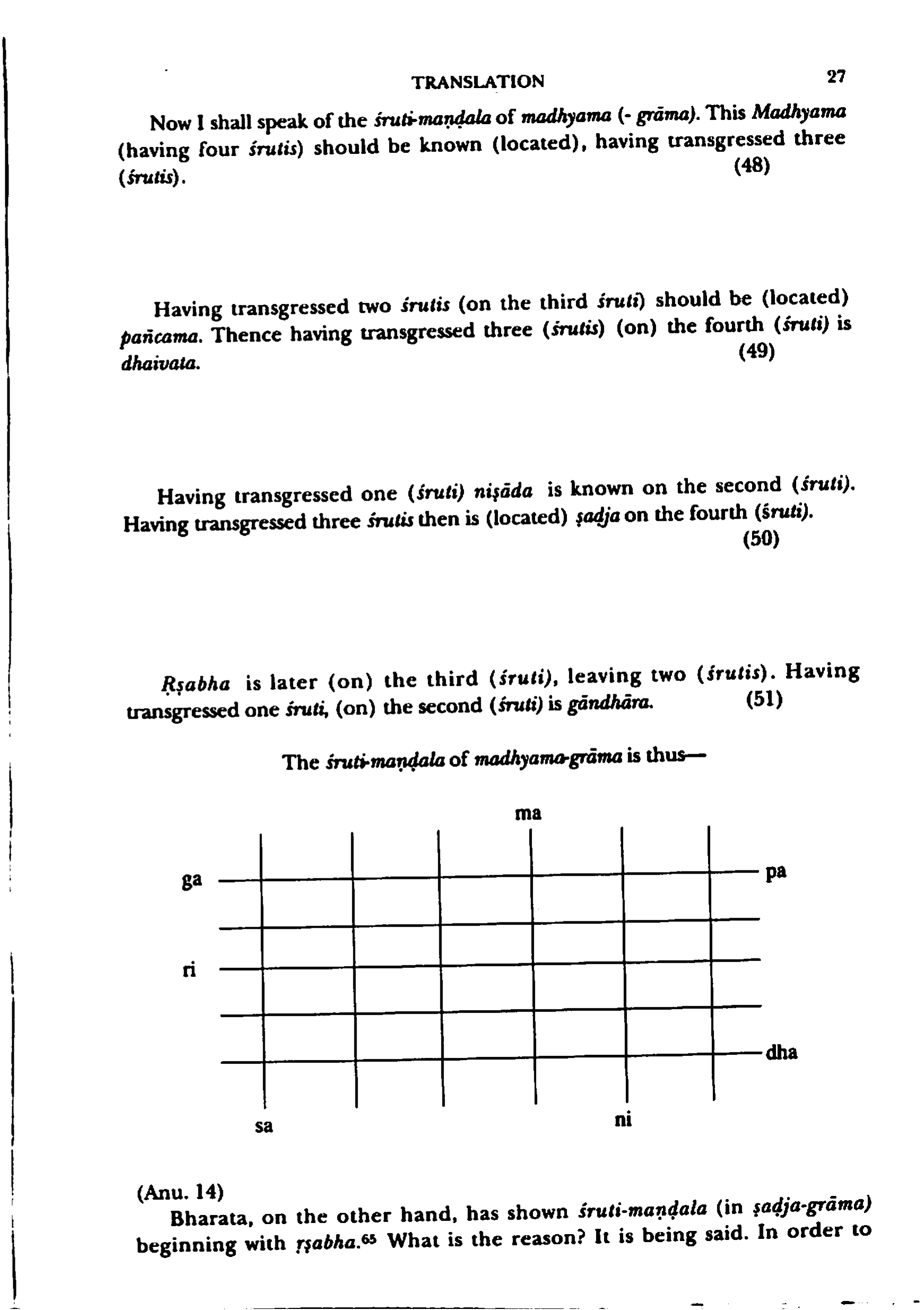
Bharata presents an alternative śruti-maṇḍala system for ṣaḍja-grāma
"Bharata, on the other hand, has shown śruti-maṇḍala (in ṣaḍja-grāma)
beginning with ṛṣabha."
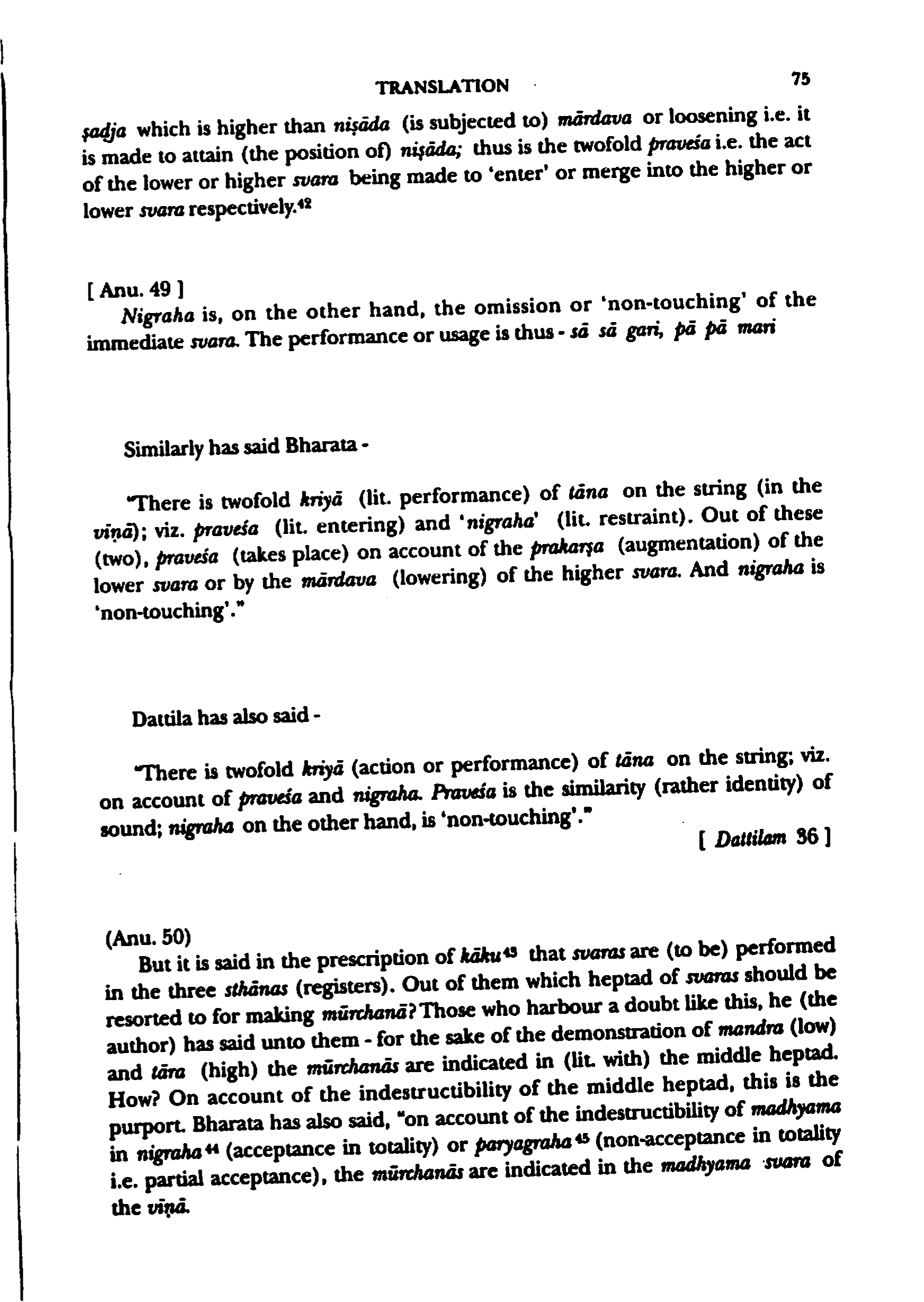
Bharata is attributed the statement on twofold kriyā of tana comprising pravesa and nigraha
"Similarly has said Bharata -
"There is twofold kriyā (lit. performance) of tana on the string (in the viņā); viz. praveša (lit. entering) and 'nigraha' (lit. restraint)."
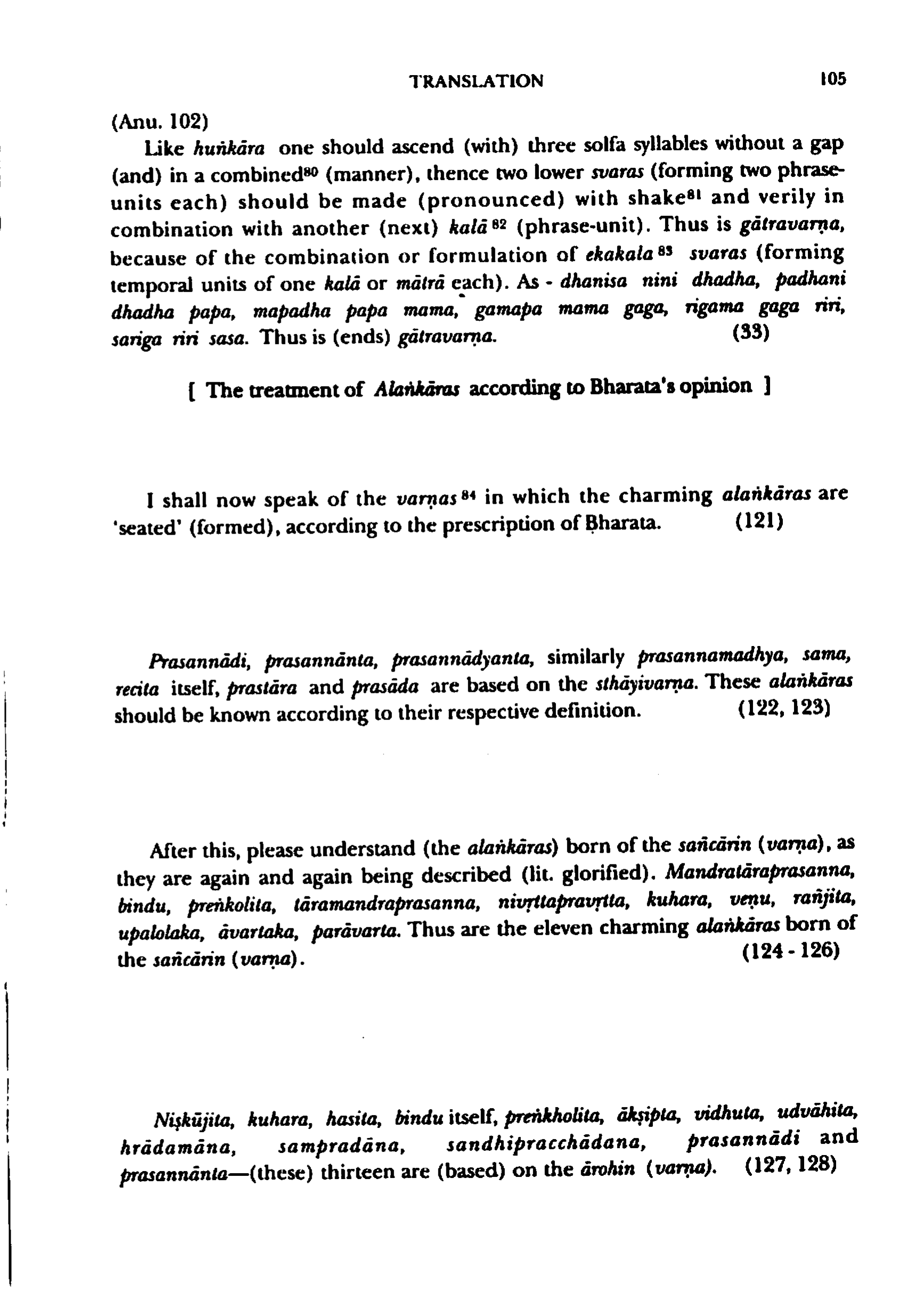
Bharata's opinion on alankaras is being presented and explained in this section
"The treatment of Alankaras according to Bharata's opinion"
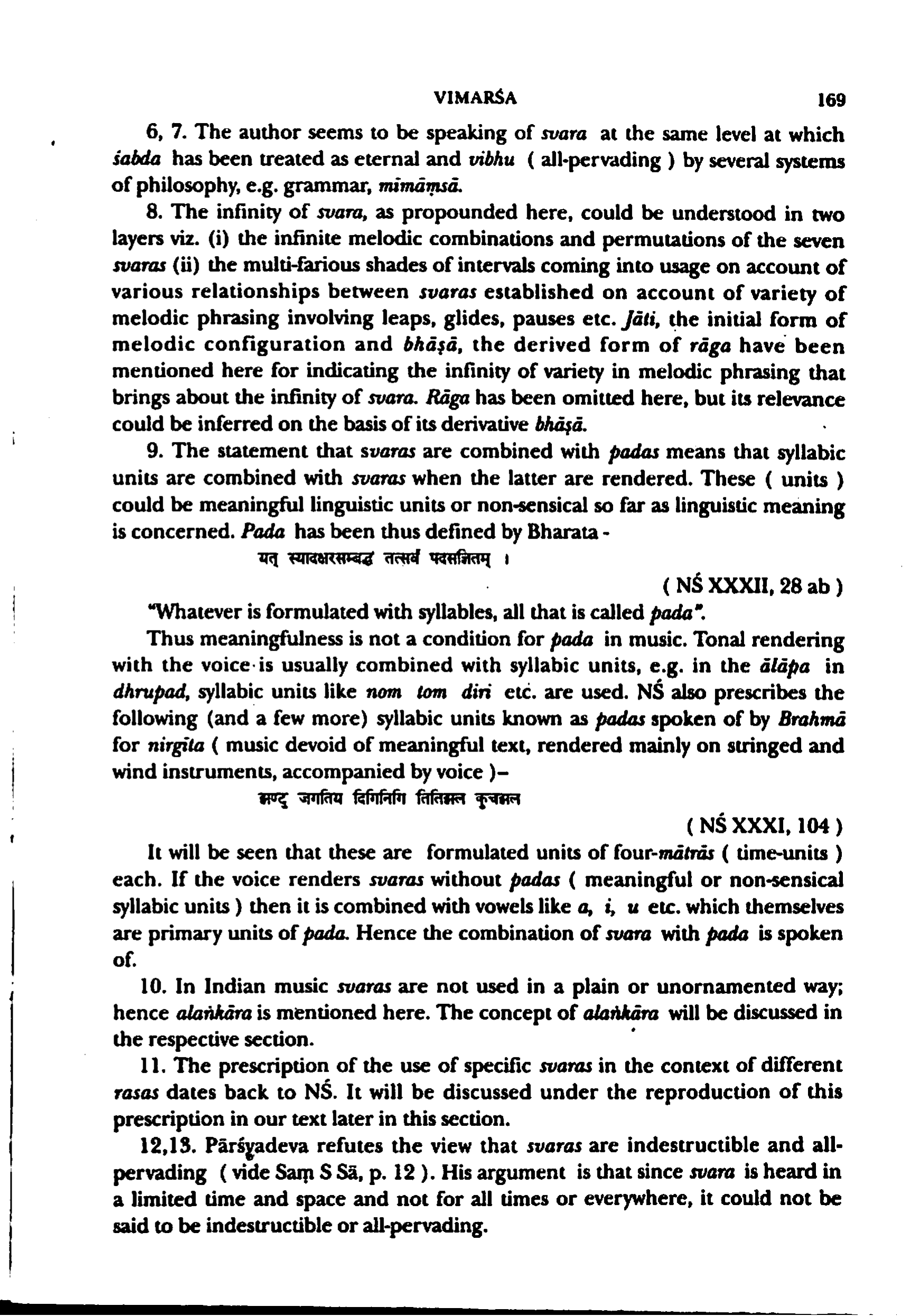
Bharata defined pada as whatever is formulated with syllables in the Natyashastra
"Pada has been thus defined by Bharata -
यत् स्यादक्षरसम्बद्धं तत्सर्वं पदसन्नितम् ।
( NŚ XXXII, 28 ab )"
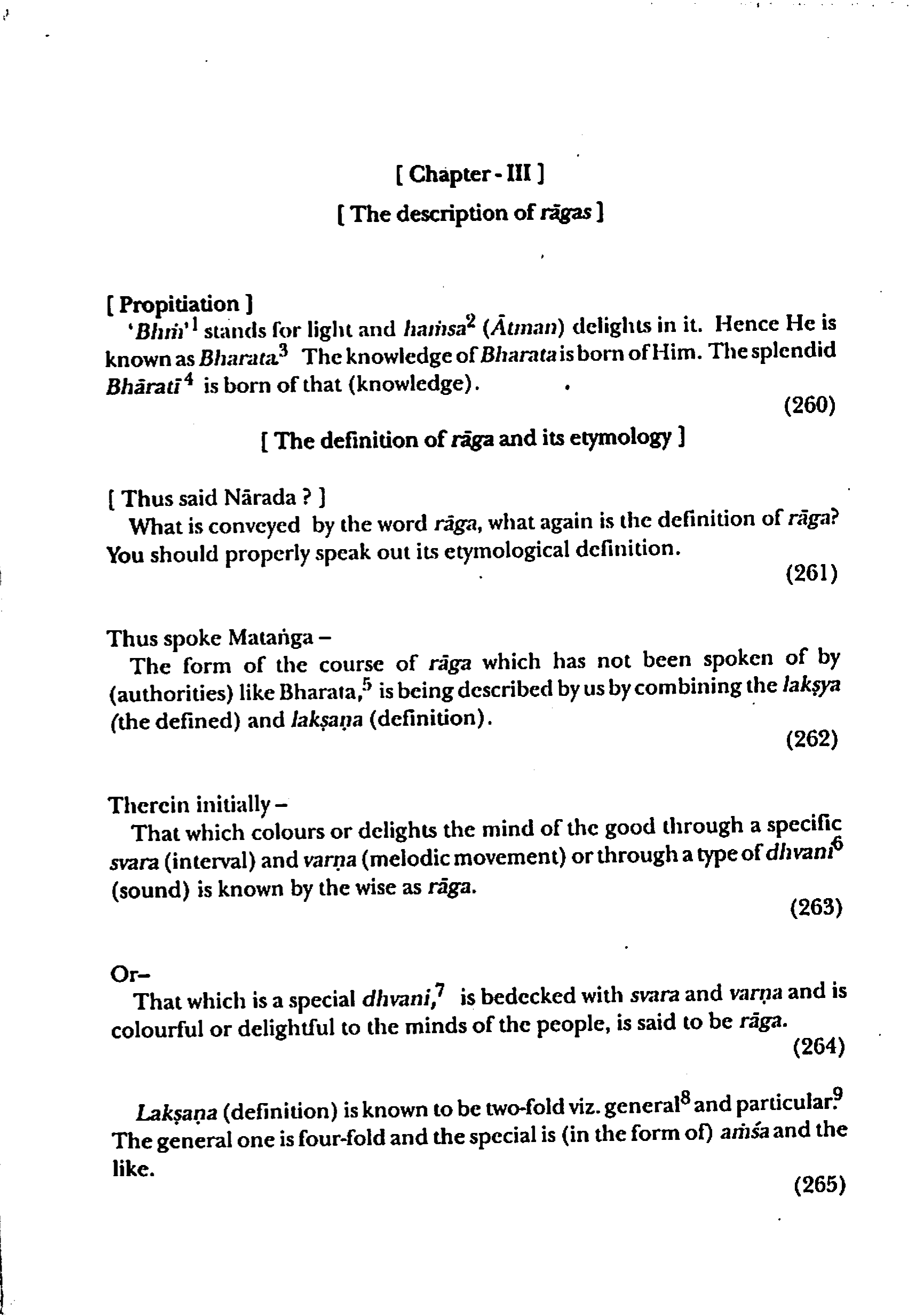
Bharata is cited as a prior authority whose formulations of rāga are contrasted with Matanga's approach
"The form of the course of raga which has not been spoken of by
(authorities) like Bharata, 5 is being described by us"
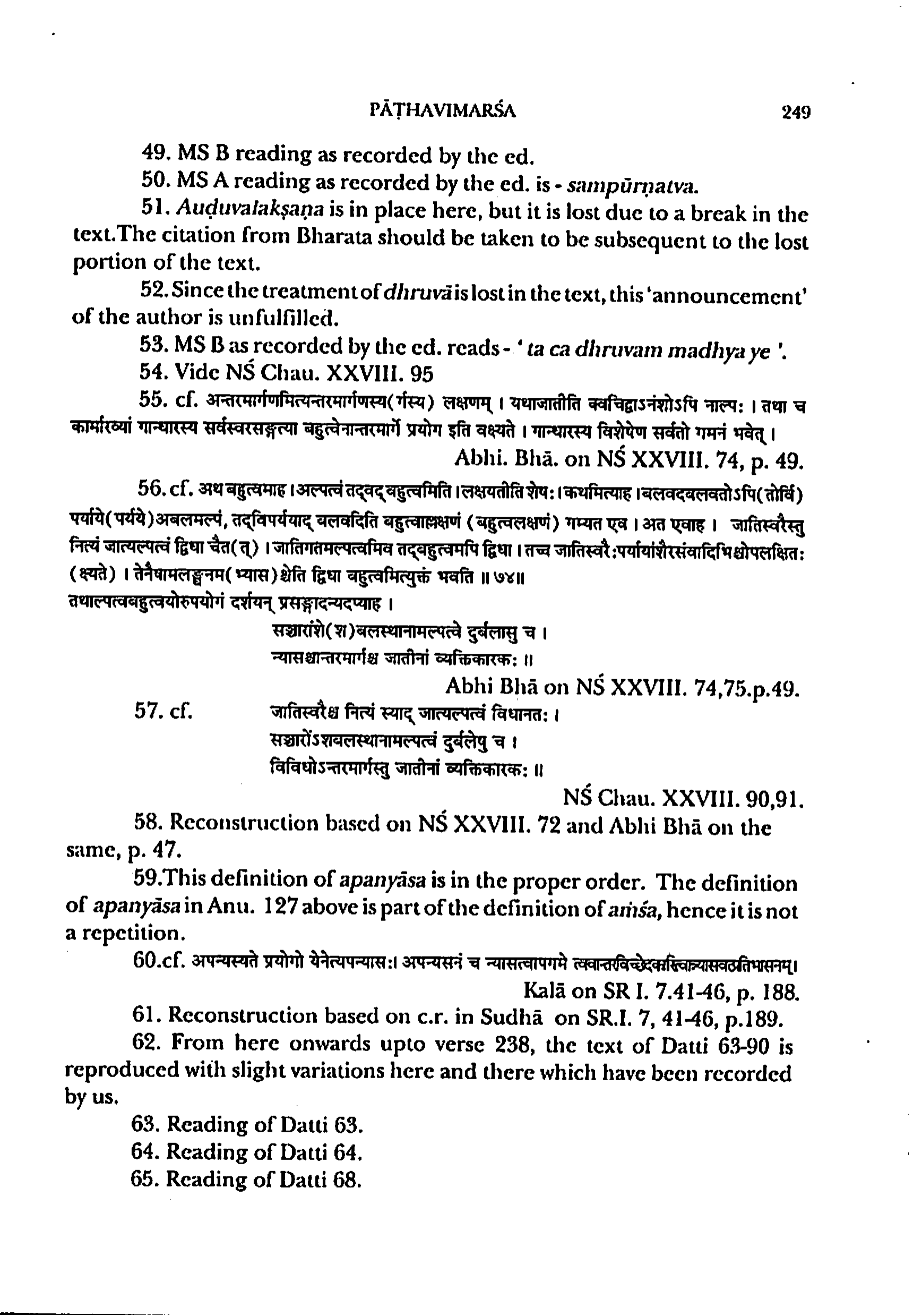
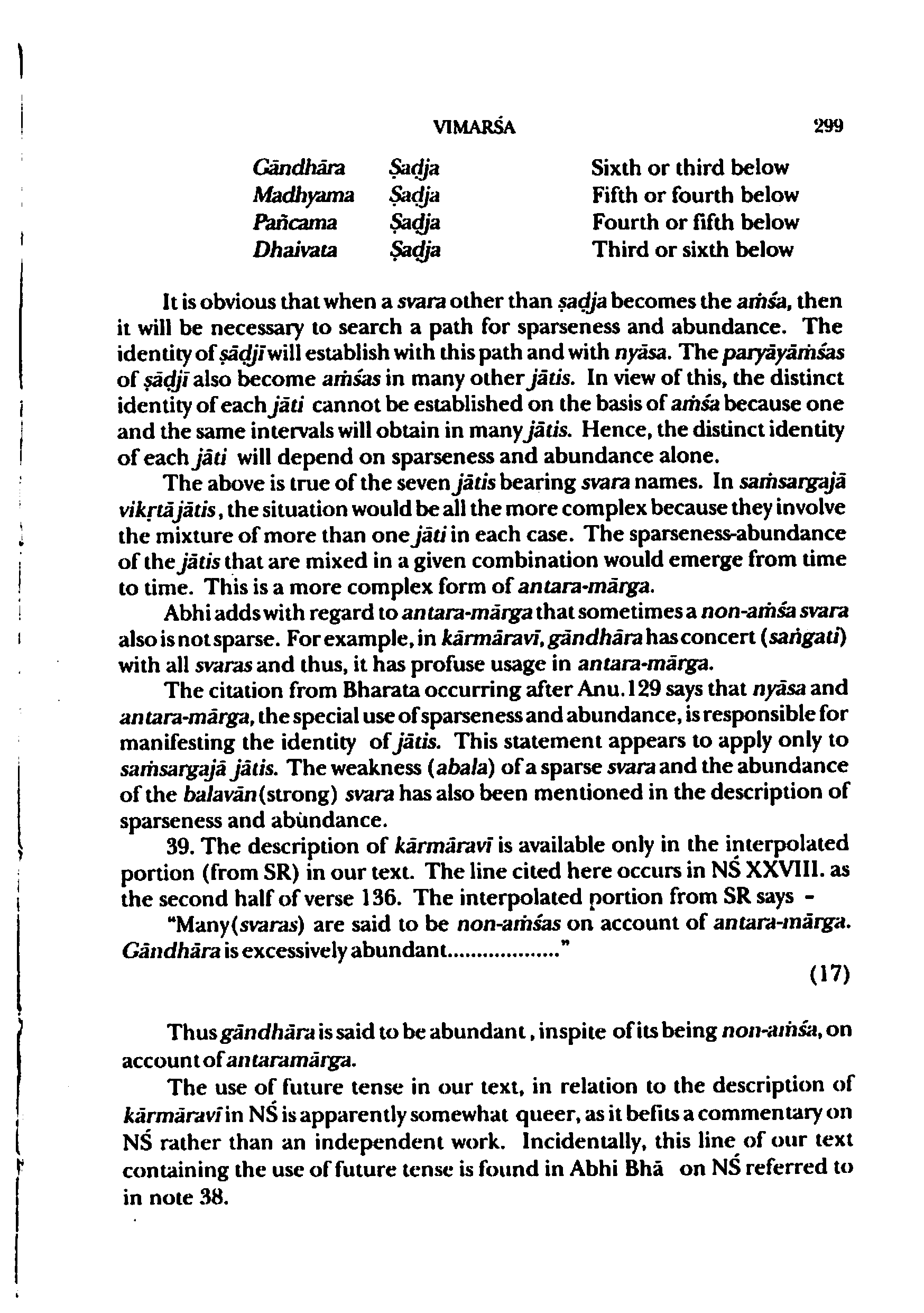
Bharata is cited as a source authority regarding the role of nyāsa and antara-marga in manifesting jāti identity
"The citation from Bharata occurring after Anu. 129 says that nyāsa and antara-mārga, the special use of sparseness and abundance, is responsible for manifesting the identity of jātis."
Bharata's Nāṭyaśāstra does not contain a statement that dhaivata and ṛṣabha should not be omitted in ṣadjagrāma
"Bharata's text does not contain any statement to the effect that
dhaivata and ṛṣabha should not be omitted in ṣadjagrāma."
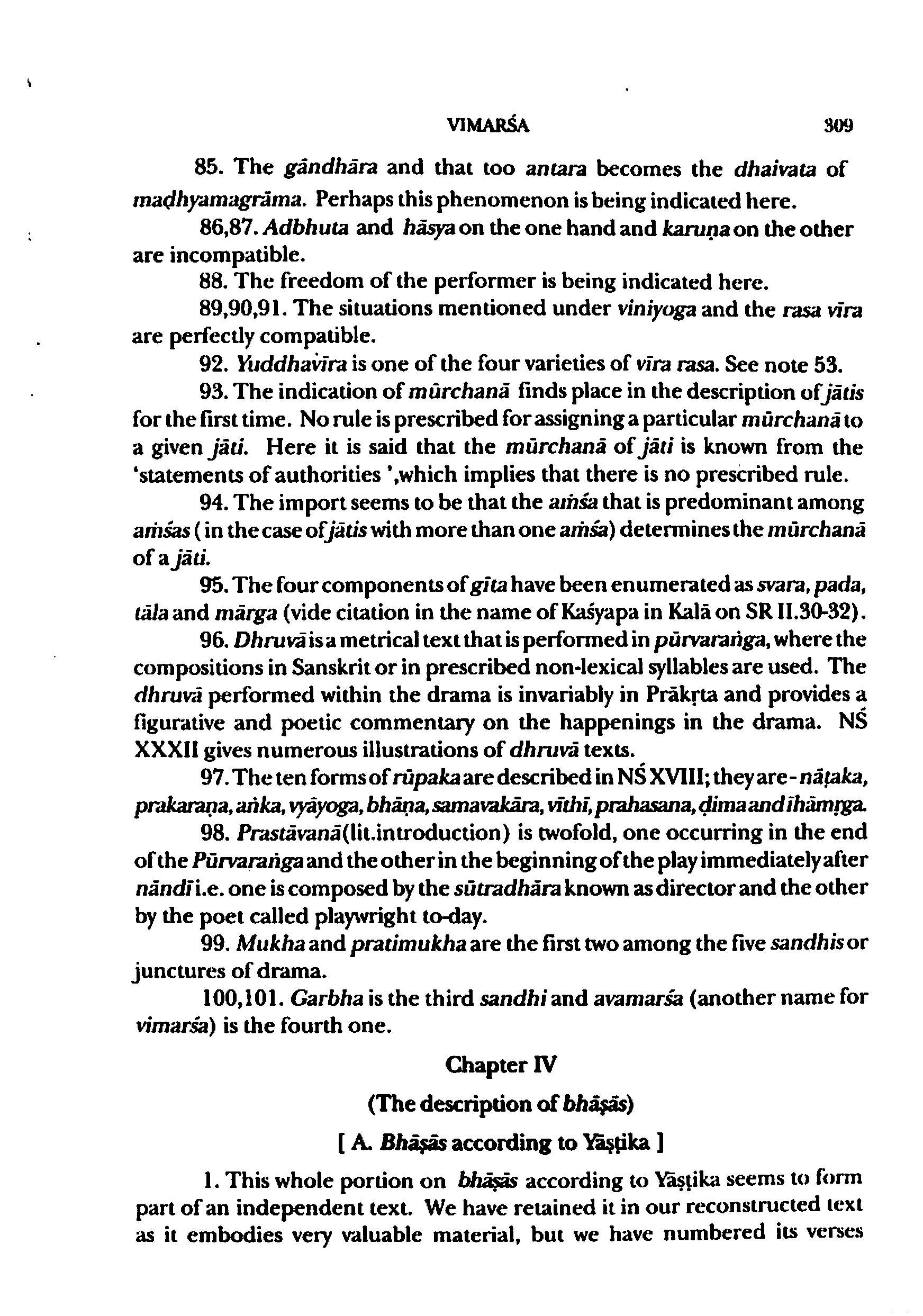
Bharata is cited as an authority on the classification of svaras in the vamsa
"So has also been said by Bharata—
"The svaras situated in the vamsa (flute) should be known as (forming)
groups of two, three and four śrutis.""
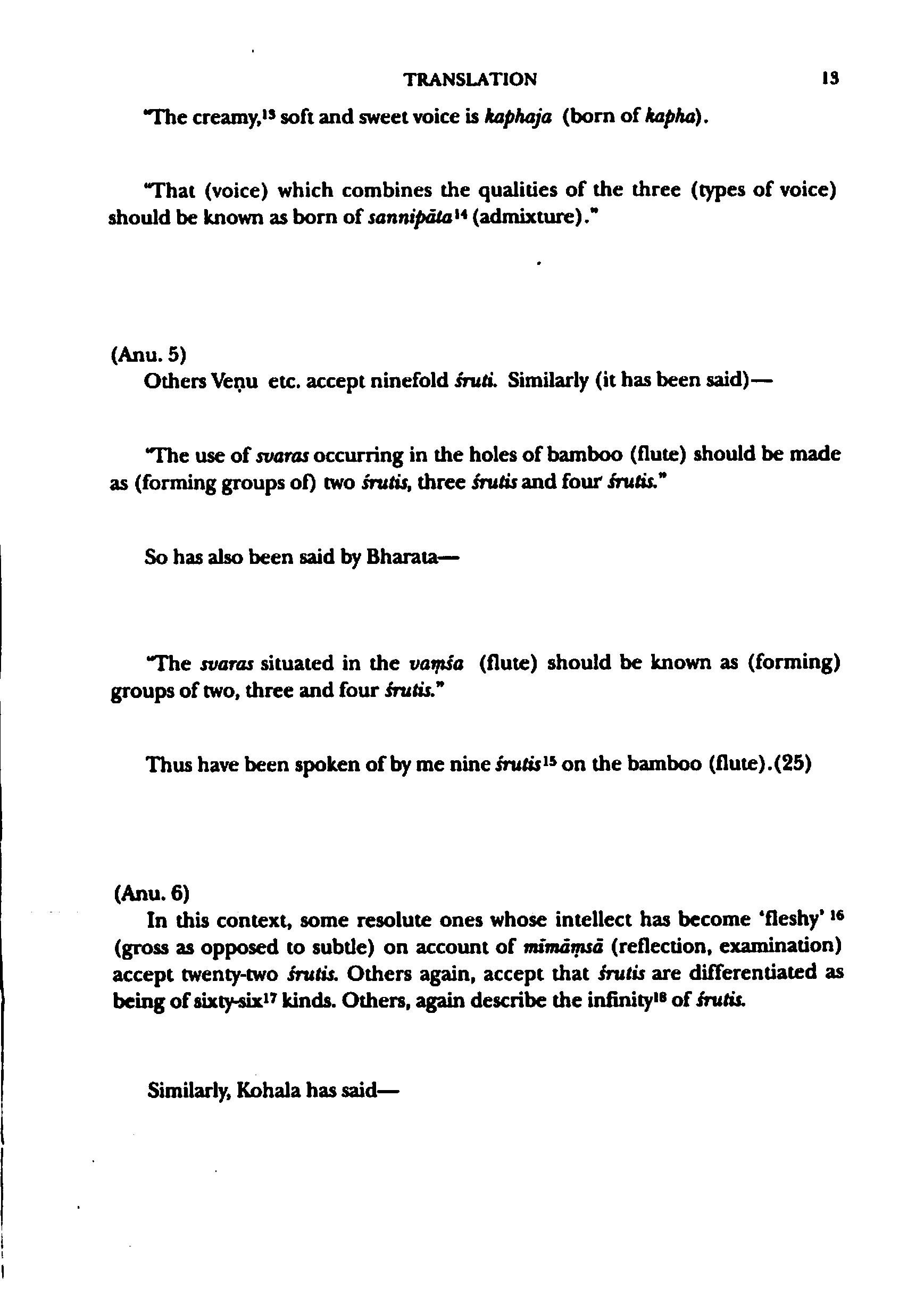
Bhāratī is the first among the four vṛttis of drama, characterized by predominance of verbal expression
"Bhāratī is the first among the four vṛttis of drama, characterised
by the predominance of verbal expression."
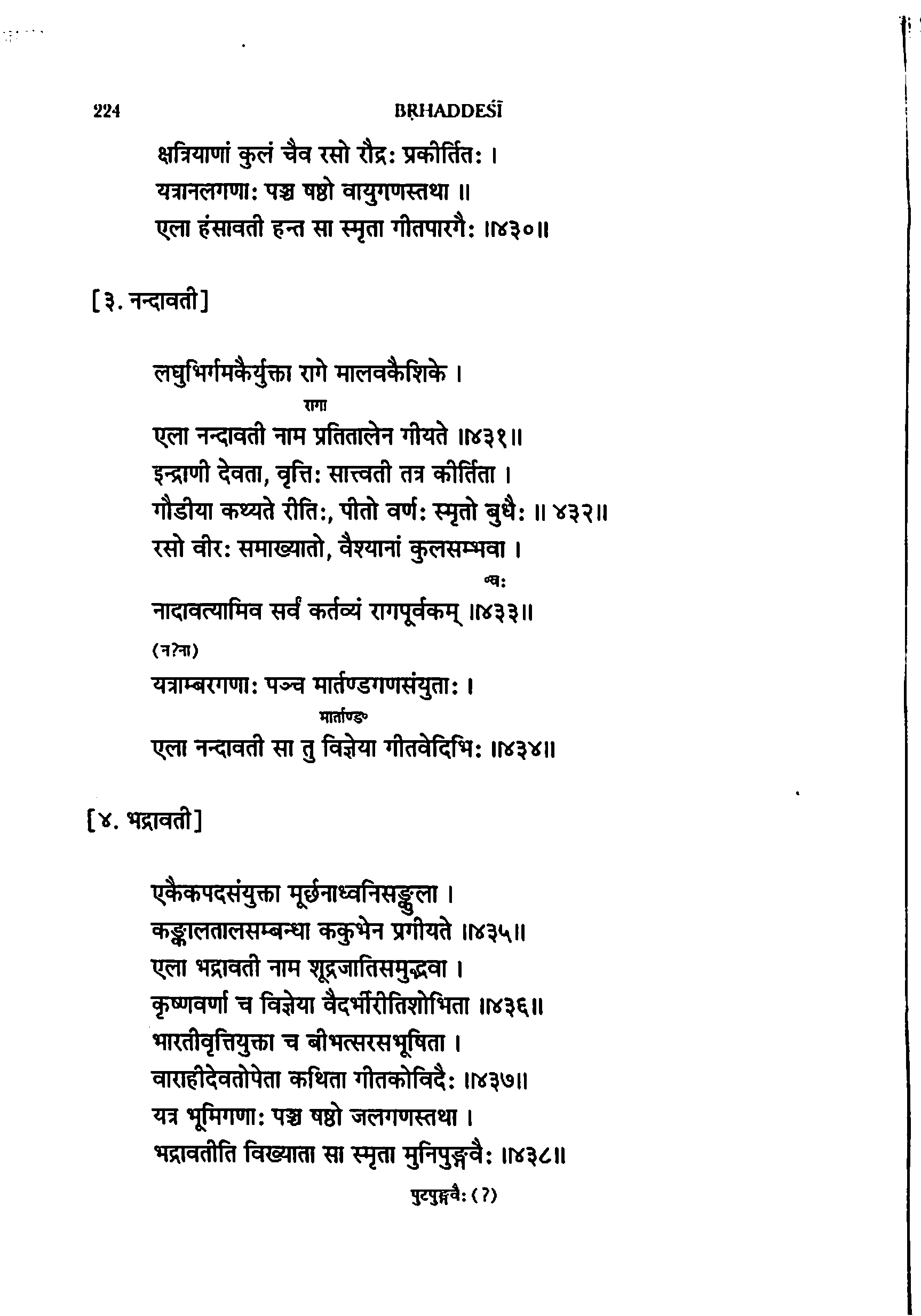
Bhadrāvatī elā is combined with bhāratī vṛtti
"भारतीवृत्तियुक्ता च"