Šuddhā gīti technical_term
Generative rules (1) ↗ filter all
shuddha_giti_coksha_featuresdefinition · 1 att.
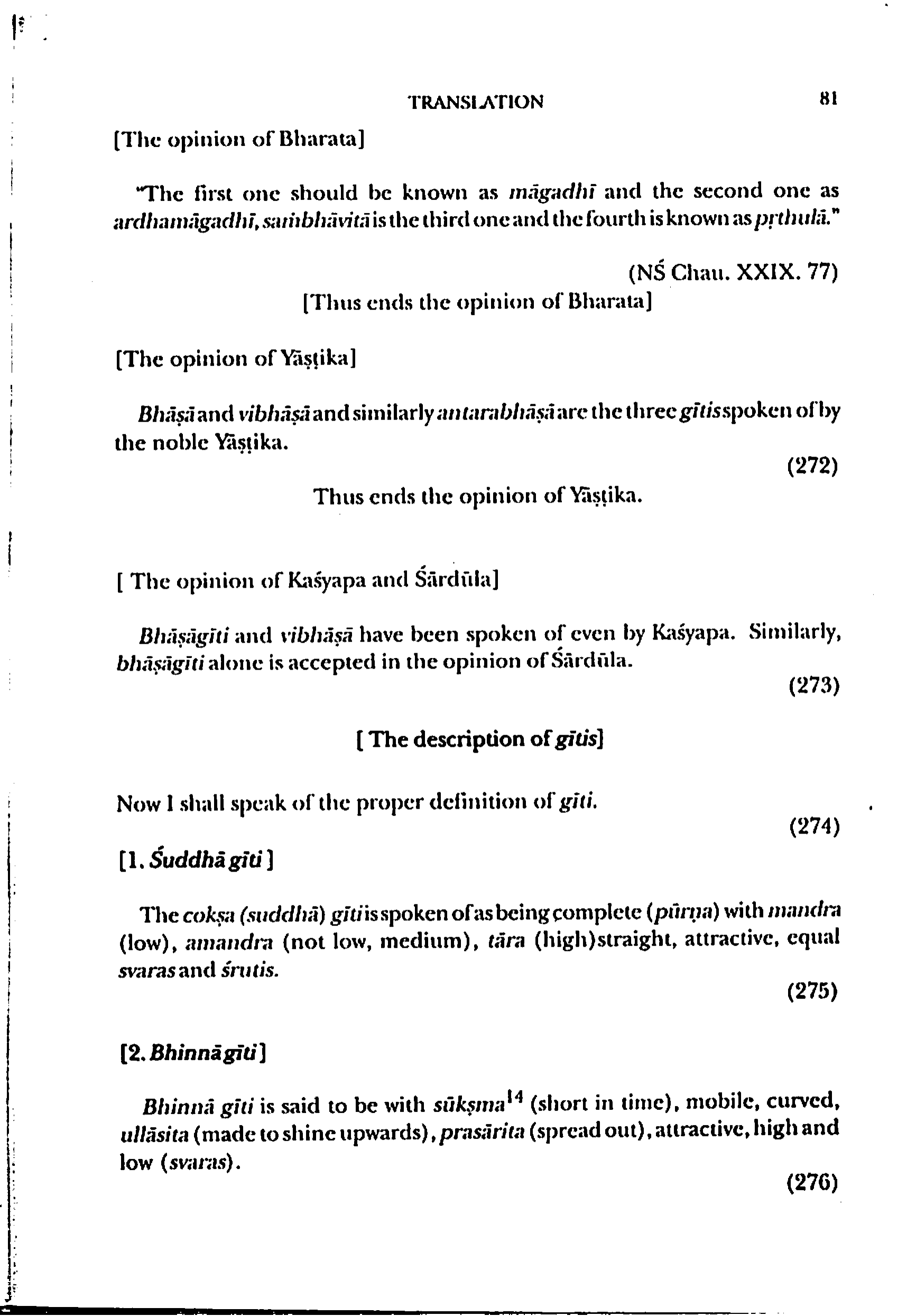
Śuddhā gīti (alias cokṣa) is complete (pūrṇā) with mandra, amandra, tāra ranges, straight, attractive, and equal svaras/śrutis.
Pseudocode (DSL v1.1) ↗ full DSL (raw text)
RULE id: šuddhā gīti (cluster 806)
SCOPE: technical_term family
STATUS: empirical
CONFIDENCE: empirical
PROTECT: false
Essence pseudocode — identity + RECORD. The page citations for each slot value are in the Grammar record table above (audit trail). The full DSL adds ASSERTIONS with verbatim quotes (see Affirmations below) and CITED_RULES (see Graph relations).
Graph relations
Outgoing (8)
--[definition]--> śrutis (2)--[definition]--> svaras (2)--[definition]--> mandra (1)--[definition]--> tāra (1)--[definition]--> śuddhā (1)--[definition]--> cokṣa (1)--[definition]--> gīti (1)--[definition]--> amandra (1)
Incoming (0)
none
Affirmations (1)
Suddhā gīti (also called cokṣa) is characterized by completeness with specific svara and śruti qualities
"The cokṣa (suddhā) gīti is spoken of as being complete (pūrṇa) with mandra
(low), amandra (not low, medium), tāra (high)straight, attractive, equal
svaras and śrutis."