tāra register
Generative rules (2) ↗ filter all
R_4p0_018definition · 3 att.
tāra = extent (gati) commencant depuis aṁśa svara jusqu'a la 5e svara (ou 4 svaras alternativement); l'extent est tripleR_64_tara_extentstructural · 3 att.
Tāra (upper register) extends 4th, 5th or 7th svara above the aṁśa; beyond is undesirable; properly begins from octave of 'ga'
Pseudocode (DSL v1.1) ↗ full DSL (raw text)
RULE id: tāra (cluster 64)
SCOPE: register family
STATUS: canonical
CONFIDENCE: canonical
PROTECT: true
Essence pseudocode — identity + RECORD. The page citations for each slot value are in the Grammar record table above (audit trail). The full DSL adds ASSERTIONS with verbatim quotes (see Affirmations below) and CITED_RULES (see Graph relations).
Graph relations
Outgoing (8)
--[enumeration]--> svaras (2)--[definition]--> aṁśa (1)--[structural]--> aṁśa (1)--[definition]--> aṁśa svara (1)--[definition]--> svaras (1)--[structural]--> svaras (1)--[definition]--> Gati (1)--[structural]--> Gati (1)
Incoming (17)
Bharata --[attribution]--> (2)nandayantī --[relation]--> (2)mūrchanā --[structural]--> (1)nyāsa --[structural]--> (1)gāndhārī --[relation]--> (1)sadjagrāma --[structural]--> (1)prasannānta --[definition]--> (1)prasannādi --[attribution]--> (1)bindu --[definition]--> (1)lakṣaṇa --[enumeration]--> (1)sthāna --[definition]--> (1)bhinnakaiśika --[structural]--> (1)Māngālī --[structural]--> (1)mandratāraprasanna --[definition]--> (1)NŚ XXVIII.72 --[citation]--> (1)Šuddhā gīti --[definition]--> (1)tāramandra-prasanna --[definition]--> (1)
Affirmations (6)
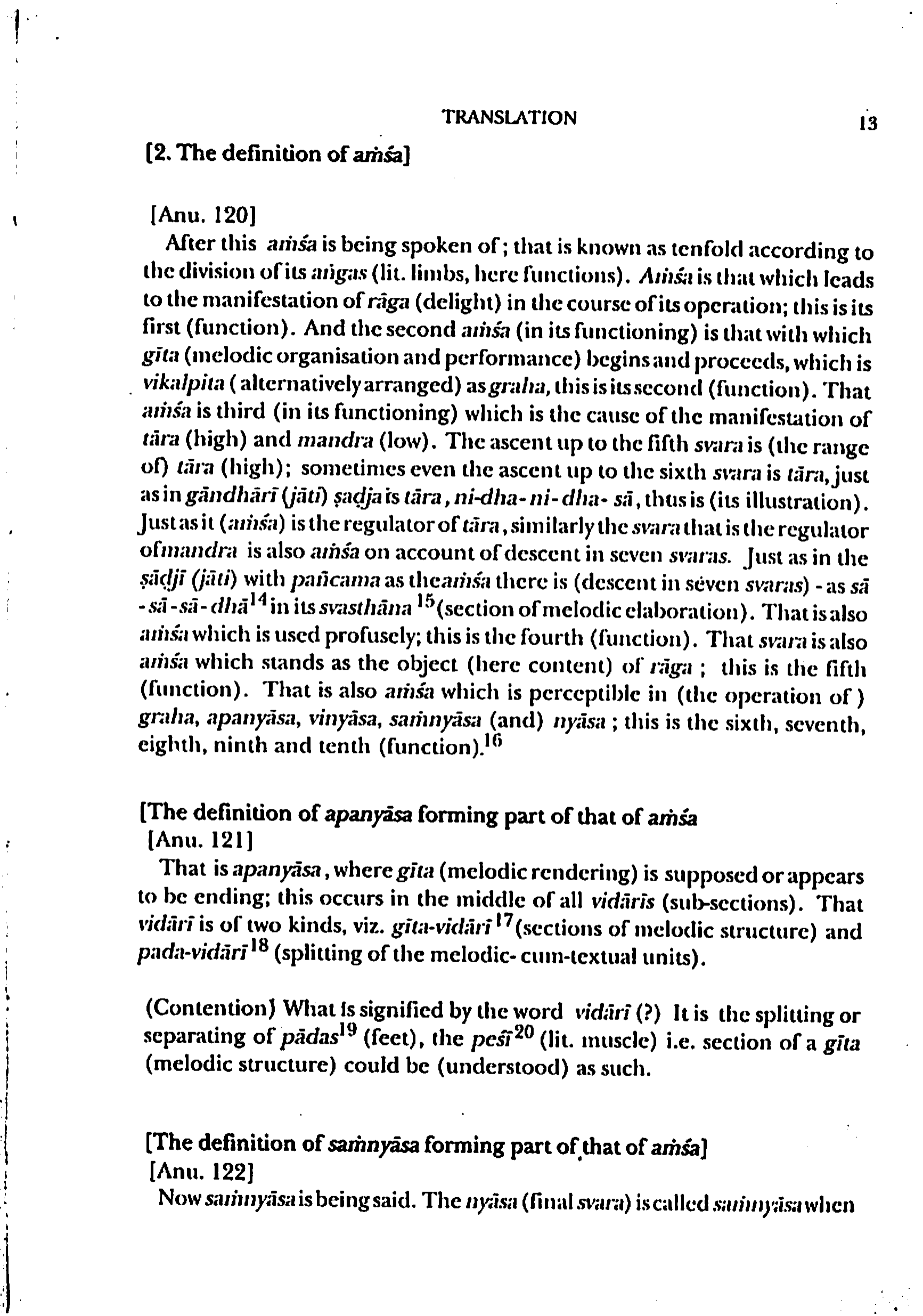
Tara (high) is ascent up to the fifth svara, and sometimes even ascent up to the sixth svara
"The ascent up to the fifth svara is (the range of) tāra (high); sometimes even the ascent up to the sixth svara is tāra"
tara is defined as the extent or gati beginning from the use of aṁśa svara
"Now the definition of tara is being given. The extent (gati) of tara is up to
the fifth svara beginning from the use of amsa 22 svara."
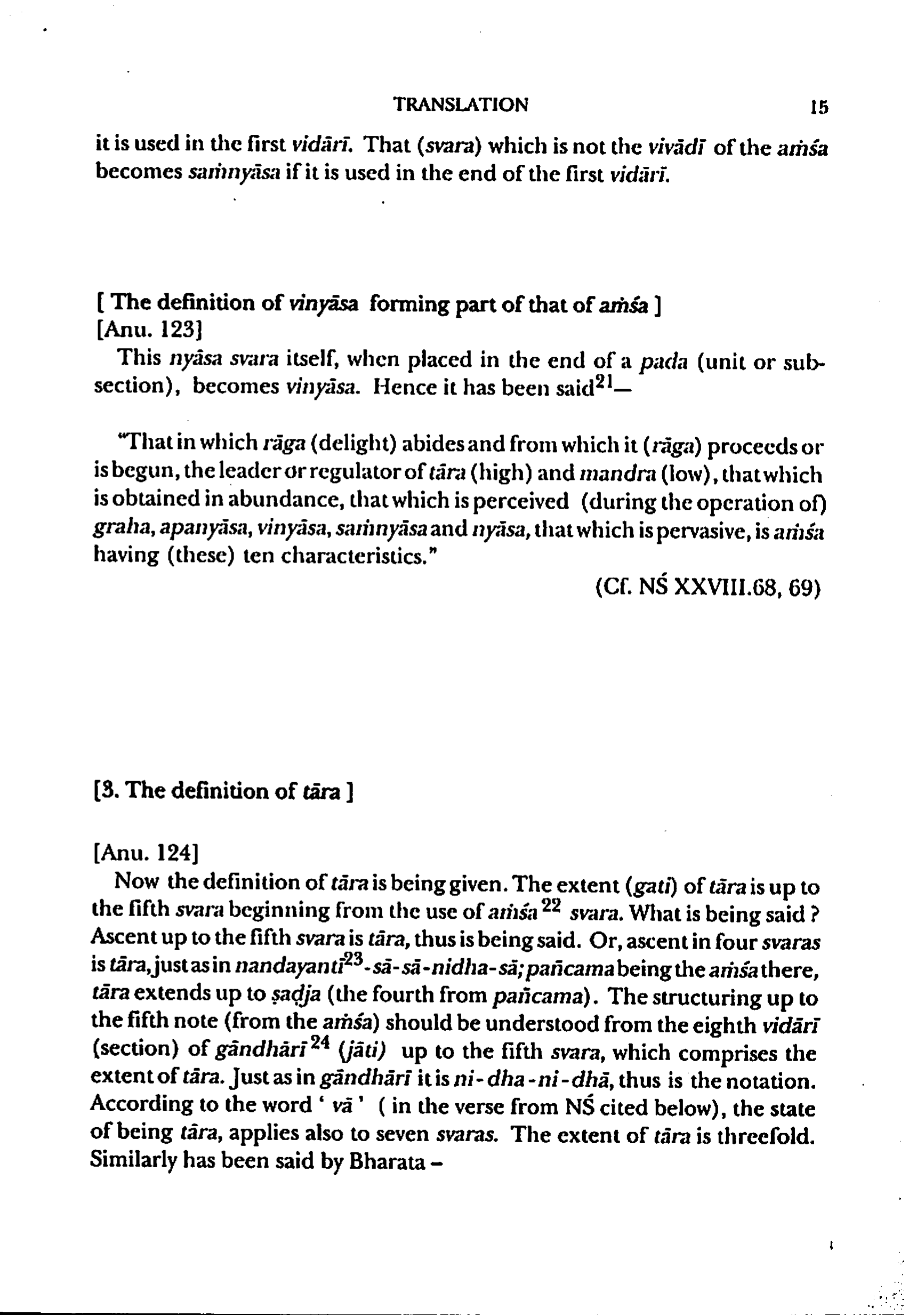
tara has ascent up to the fifth svara as one characteristic, or ascent in four svaras as an alternative
"Ascent up to the fifth svara is tāra, thus is being said. Or, ascent in four svaras
is tāra"
tara extent is threefold
"The extent of tara is threefold."
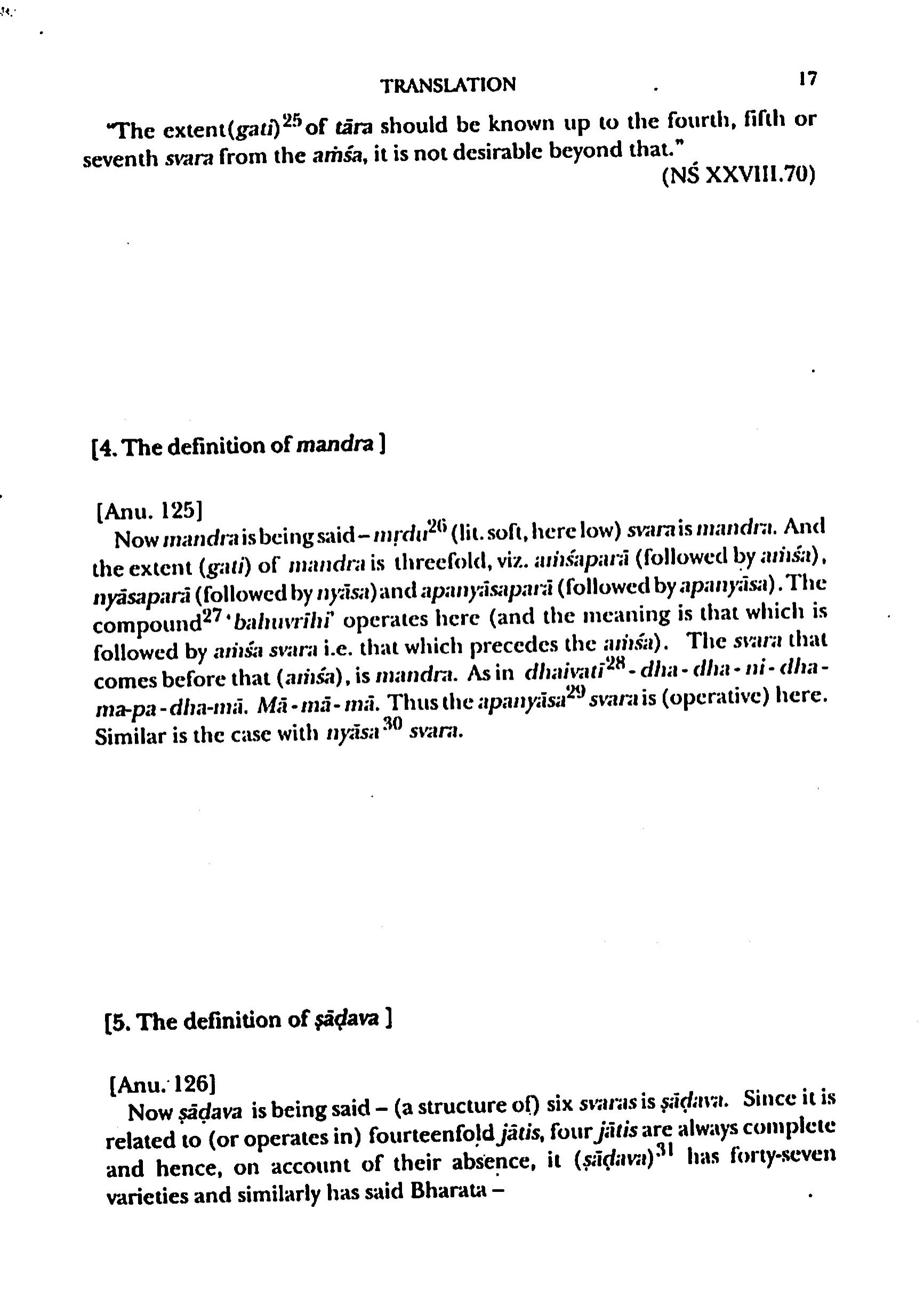
The extent of tāra should be known up to the fourth, fifth or seventh svara from the aṁśa
"The extent(gati)25 of tāra should be known up to the fourth, fifth or
seventh svara from the aṁśa, it is not desirable beyond that."
Tāra (upper octave) should properly begin from the octave of 'ga', as indicated by vertical strokes marking tāra positions in texts.
"Really speaking, the tāra should begin from the octave of 'ga'."