1: BRHADDEŚĨ
2: 38
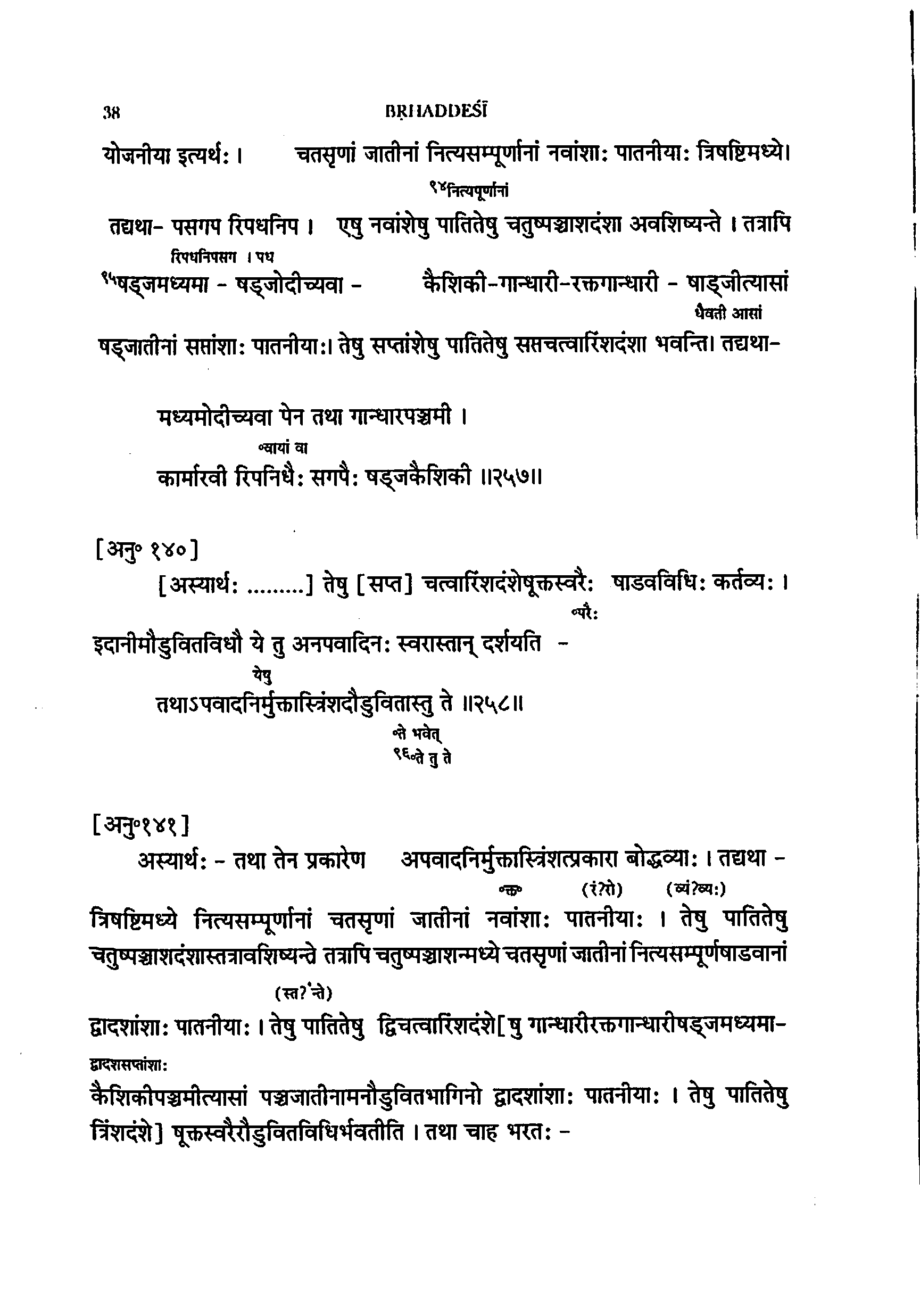
3: योजनीया इत्यर्थः। चतसृणां जातीनां नित्यसम्पूर्णानां नवांशाः पातनीयाः त्रिषष्टिमध्ये।
4: <sup>९४</sup>नित्यपूर्णानां
5: तद्यथा- पसगप रिपधनिप । एषु नवांशेषु पातितेषु चतुष्पञ्चाशदंशा अवशिष्यन्ते । तत्रापि
6: रिपधनिपसग । पध
7: ९५षड्जमध्यमा - षड्जोदीच्यवा - कैशिकी-गान्धारी-रक्तगान्धारी - षाड्जीत्यासां
8: धैवती आसां
9: षङ्जातीनां सप्तांशाः पातनीयाः। तेषु सप्तांशेषु पातितेषु सप्तचत्वारिंशदंशा भवन्ति। तद्यथा-
10: मध्यमोदीच्यवा पेन तथा गान्धारपञ्चमी ।
11: ॰सायां वा
12: कार्मारवी रिपनिधै: सगपै: षड्जकैशिकी ॥२५७॥
13: [अनु॰ १४०]
14: [अस्यार्थ: ......] तेषु [सप्त] चत्वारिंशदंशेषूक्तस्वरै: षाडवविधि: कर्तव्य: ।
15: व्यरे:
16: इदानीमौडुवितविधौ ये तु अनपवादिन: स्वरास्तान् दर्शयति -
17: येषु
18: तथाऽपवादनिर्मुक्तास्त्रिंशदौडुवितास्तु ते ॥२५८॥
19: न्ते भवेत्
20: ९६०ते तु ते
21: [अनु•१४१]
22: अस्यार्थ: - तथा तेन प्रकारेण अपवादिनर्मुक्तास्त्रिंशत्प्रकारा बोद्धव्या: । तद्यथा -
23: (व्यं?व्य:)
24: (रं?रो)
25: त्रिषष्टिमध्ये नित्यसम्पूर्णानां चतसृणां जातीनां नवांशाः पातनीयाः । तेषु पातितेषु
26: चतुष्पञ्चाशदंशास्तत्रावशिष्यन्ते तत्रापि चतुष्पञ्चाशन्मध्ये चतसृणां जातीनां नित्यसम्पूर्णषाडवानां
27: (स्त? ने)
28: द्वादशांशा: पातनीया: । तेषु पातितेषु द्विचत्वारिंशदंशे[षु गान्धारीरक्तगान्धारीषड्जमध्यमा-
29: द्वादशसप्तांशा:
30: कैशिकीपञ्चमीत्यासां पञ्चजातीनामनौडुवितभागिनो द्वादशांशा: पातनीया: । तेषु पातितेषु
31: त्रिंशदंशे] षूक्तस्वरैरौडुवितविधिर्भवतीति । तथा चाह भरतः -
Crop image (token + contexte)
Pas de crop disponible (Layer B n'a pas tourne sur ce token).
Page complete
Cote token (LEFT) — line ?, token surligne en jaune
Contexte semantique (RIGHT)
39
TRANSLATION
applied without any svara forming an exception. Out of sixty-three (anisas),
nine amsas that pertain to the four jātis which are always complete, should
be subtracted. That is thus-pa-sa-ga-pa-ri-pa-dha-ni-pa. When these nine are
subtracted, fifty-four amsas remain. Out of them (again) the seven amsas of
six jātis viz. ṣadjamadhyamā, ṣadjodīcyavā, kaišikī, gāndhārī, raktagāndhārī
(and) ṣādjī, should be subtracted. When seven ainsas are subtracted, there
are forty-seven anisas. That is thus -
Madhyamodicyavā (becomes non-ṣāḍava) with pa, similarly gāndhārapañcamī
(and) kārmāravī (become non-ṣāḍava) with ri-pa-ni-dha (and ) ṣaḍjakaiśiki
(becomes so) with sa - ga - pa.
(257)
[ Anu. 140]
This means .....in the forty-seven anisas, the formation of ṣāḍava should
be carried out with the said svaras.
Now he (the author) shows the svaras that are not exceptional <math>^{53}</math> in the
formation of auduvita -
In the same way, those that are free from being exceptional are thirty
(amśa svaras that form) auduvita.
(258)
[Anu. 141]
This means - in that way, those devoid of exception should be known to
be of thirty kinds. That is thus - out of sixty-three, nine anisas belonging to
the four jātis that are always complete (in which omission is not prescribed)
should be subtracted. After their subtraction, fifty-four amsas remain there.
There also out of fifty-four, twelve amsas of the four jātis that are always
complete and ṣāḍava, should be subtracted. After their subtraction, out of
forty-two (being the remainder), twelve anisas that do not form auduvita in
five jātis, viz. gāndhārī, raktagāndhārī, ṣaḍjamadhyamā, kaiśikī and pañcamī,
should be subtracted. After their subtraction, the formation of auduvita
takes place with thirty amśa svaras that have been spoken of. Similarly has
said Bharata-
Voir figures de la page (diagrammes / tables)
Pas de figure detectee sur cette page (Surya layout n'a rien identifie).
Pourquoi flagué
- Tres proche d'un mot connu du dico Sanskrit (1 lettre de difference)
Vu par
OCR Surya Translitterateur Dico Sanskrit IA visuelle
Raisonnement IA visuelle
(aucun reasoning Layer B disponible)