1: BRHADDEŚĪ
2: 134
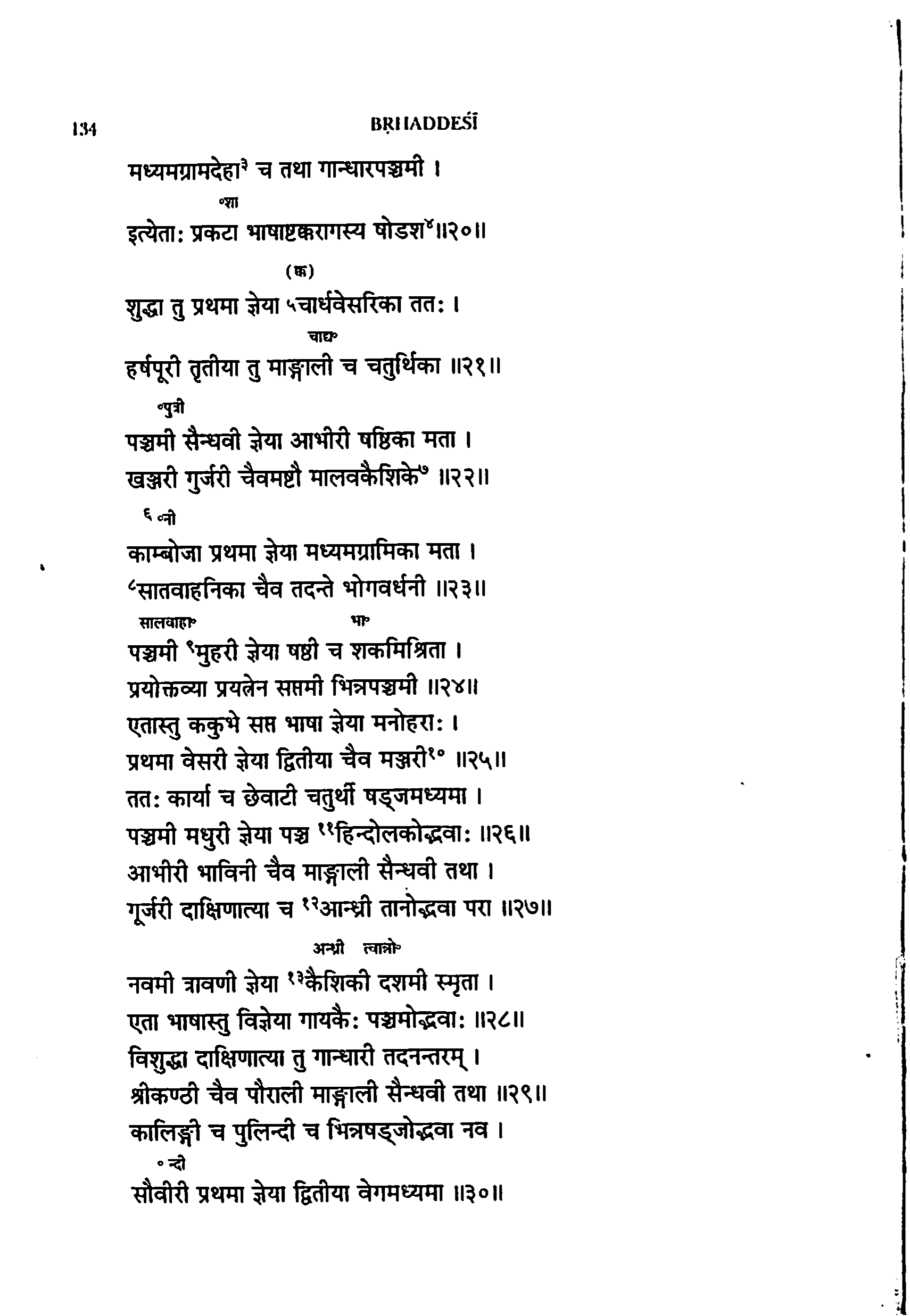
3: मध्यमग्रामदेहा<sup>३</sup> च तथा गान्धारपञ्चमी ।
4: इत्येता: प्रकटा भाषाष्टकरागस्य षोडश<sup>४</sup>॥२०॥
5: (田)
6: शुद्धा तु प्रथमा ज्ञेया ५चार्धवेसरिका तत:।
7: हर्षपूरी तृतीया तु माङ्गाली च चतुर्थिका ॥२१॥
8: ॰पुत्री
9: पञ्चमी सैन्धवी ज्ञेया आभीरी षष्टिका मता।
10: खञ्जरी गुर्जरी चैवमष्टौ मालवकैशिके ॥२२॥
11: ६ नी
12: काम्बोजा प्रथमा ज्ञेया मध्यमग्रामिका मता ।
13: ५सातवाहनिका चैव तदन्ते भोगवर्धनी ॥२३॥
14: чP
15: सालवाहा
16: पञ्चमी ९मुहरी ज्ञेया षष्ठी च शकमिश्रिता ।
17: प्रयोक्तव्या प्रयत्नेन सप्तमी भित्रपञ्चमी ॥२४॥
18: एतास्तु ककुभे सप्त भाषा ज्ञेया मनोहरा:।
19: प्रथमा वेसरी ज्ञेया द्वितीया चैव मञ्जरी १० ॥२५॥
20: ततः कार्या च छेवाटी चतुर्थी षड्जमध्यमा।
21: पञ्चमी मधुरी ज्ञेया पञ्च <sup>११</sup>हिन्दोलकोद्भवाः ॥२६॥
22: आभीरी भाविनी चैव माङ्गाली सैन्धवी तथा।
23: गूर्जरी दाक्षिणात्या च <sup>१२</sup>आन्ध्री तानोद्भवा परा ॥२७॥
24: अन्ध्री त्वात्रो॰
25: नवमी त्रावणी ज्ञेया १३कैशिकी दशमी स्मृता ।
26: एता भाषास्तु विज्ञेया गायकै: पञ्चमोद्भवा: ॥२८॥
27: विशुद्धा दाक्षिणात्या तु गान्धारी तदनन्तरम् ।
28: श्रीकण्ठी चैव पौराली माङ्गाली सैन्धवी तथा ॥२९॥
29: कालिङ्गी च पुलिन्दी च भित्रषड्जोद्भवा नव।
30: ॰ न्दो
31: सौवीरी प्रथमा ज्ञेया द्वितीया वेगमध्यमा ॥३०॥
Crop image (token + contexte)
Pas de crop disponible (Layer B n'a pas tourne sur ce token).
Page complete
Cote token (LEFT) — line ?, token surligne en jaune
Contexte semantique (RIGHT)
135
TRANSLATION
vesarī is the ninth one. The one named pañcamī is the tenth one, similarly
ravicandrā is there, ambāherī and lalitā and then kolāhalī is known.
Madhyamagrāmadehā and similarly gāndhārapañcamī-thus are manifested
the sixteen bhāṣās of ṭakkarāga.
<math>(16-20)</math>
Śuddhāshould be known as the first one and then ardhavesarikā, harṣapūrī
is the third one and māngālī the fourth. The fifth one should be known as
saindhavī, ābhirī is accepted as the sixth one. Khañjarī and gūrjarī, thus are
the eight (bhāṣās) in mālavakaišika.
<math>(21-22)</math>
Kāmbojā should be known as the first one, madhyamagrāmikā is
accepted and sātavāhanikā and after that is bhogavardhani.
(23)
Muharī should be known as the fifth and śakamiśritā as the sixth.
Bhinnapañcami is the seventh one to be performed with care. These should
be known as the seven charming bhāṣās of kakubha.
<math>(24-25b)</math>
Vesari should be known as the first one and manjari as the second. Then
should be accomplished chevāṭī, ṣaḍjamadhyamā is the fourth one, madhurī
should be known as the fifth. Five are born of hindolaka.
(25c-26)
Ābhīrī, bhāvinī and māṅgālī, similarly saindhavī, gūrjarī and dākṣiṇātyā,
āndhrī and the next one is tānodbhavā. Trāvaņī should be known as the ninth
one (and) kaišiki is known as the tenth one. These bhāṣās are known by the
singers to be born of pañcama.
<math>(27-28)</math>
Visuddhā, dākṣiṇātyā and after that gāndhārī, śrīkaṇṭhī and paurālī,
similarly māngāli and saindhavī, kālingī and pulindī are the nine born of
bhinnaşadja.
<math>(29-30 b)</math>
TRANSLATION
vesarī is the ninth one. The one named pañcamī is the tenth one, similarly
ravicandrā is there, ambāherī and lalitā and then kolāhalī is known.
Madhyamagrāmadehā and similarly gāndhārapañcamī-thus are manifested
the sixteen bhāṣās of ṭakkarāga.
<math>(16-20)</math>
Śuddhāshould be known as the first one and then ardhavesarikā, harṣapūrī
is the third one and māngālī the fourth. The fifth one should be known as
saindhavī, ābhirī is accepted as the sixth one. Khañjarī and gūrjarī, thus are
the eight (bhāṣās) in mālavakaišika.
<math>(21-22)</math>
Kāmbojā should be known as the first one, madhyamagrāmikā is
accepted and sātavāhanikā and after that is bhogavardhani.
(23)
Muharī should be known as the fifth and śakamiśritā as the sixth.
Bhinnapañcami is the seventh one to be performed with care. These should
be known as the seven charming bhāṣās of kakubha.
<math>(24-25b)</math>
Vesari should be known as the first one and manjari as the second. Then
should be accomplished chevāṭī, ṣaḍjamadhyamā is the fourth one, madhurī
should be known as the fifth. Five are born of hindolaka.
(25c-26)
Ābhīrī, bhāvinī and māṅgālī, similarly saindhavī, gūrjarī and dākṣiṇātyā,
āndhrī and the next one is tānodbhavā. Trāvaņī should be known as the ninth
one (and) kaišiki is known as the tenth one. These bhāṣās are known by the
singers to be born of pañcama.
<math>(27-28)</math>
Visuddhā, dākṣiṇātyā and after that gāndhārī, śrīkaṇṭhī and paurālī,
similarly māngāli and saindhavī, kālingī and pulindī are the nine born of
bhinnaşadja.
<math>(29-30 b)</math>
Voir figures de la page (diagrammes / tables)
Pas de figure detectee sur cette page (Surya layout n'a rien identifie).
Pourquoi flagué
- Tres proche d'un mot connu du dico Sanskrit (1 lettre de difference)
Vu par
OCR Surya Translitterateur Dico Sanskrit IA visuelle
Raisonnement IA visuelle
(aucun reasoning Layer B disponible)