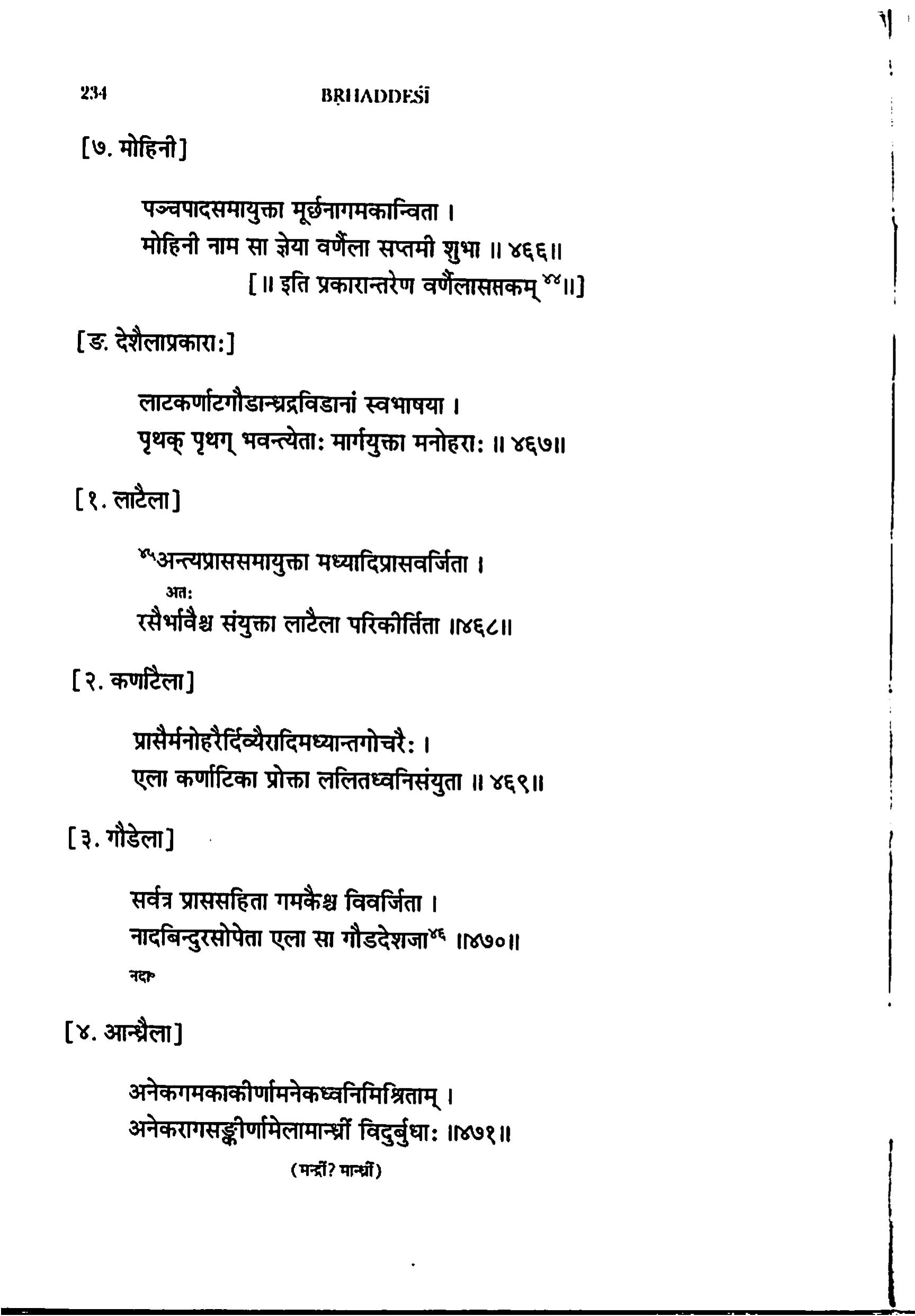
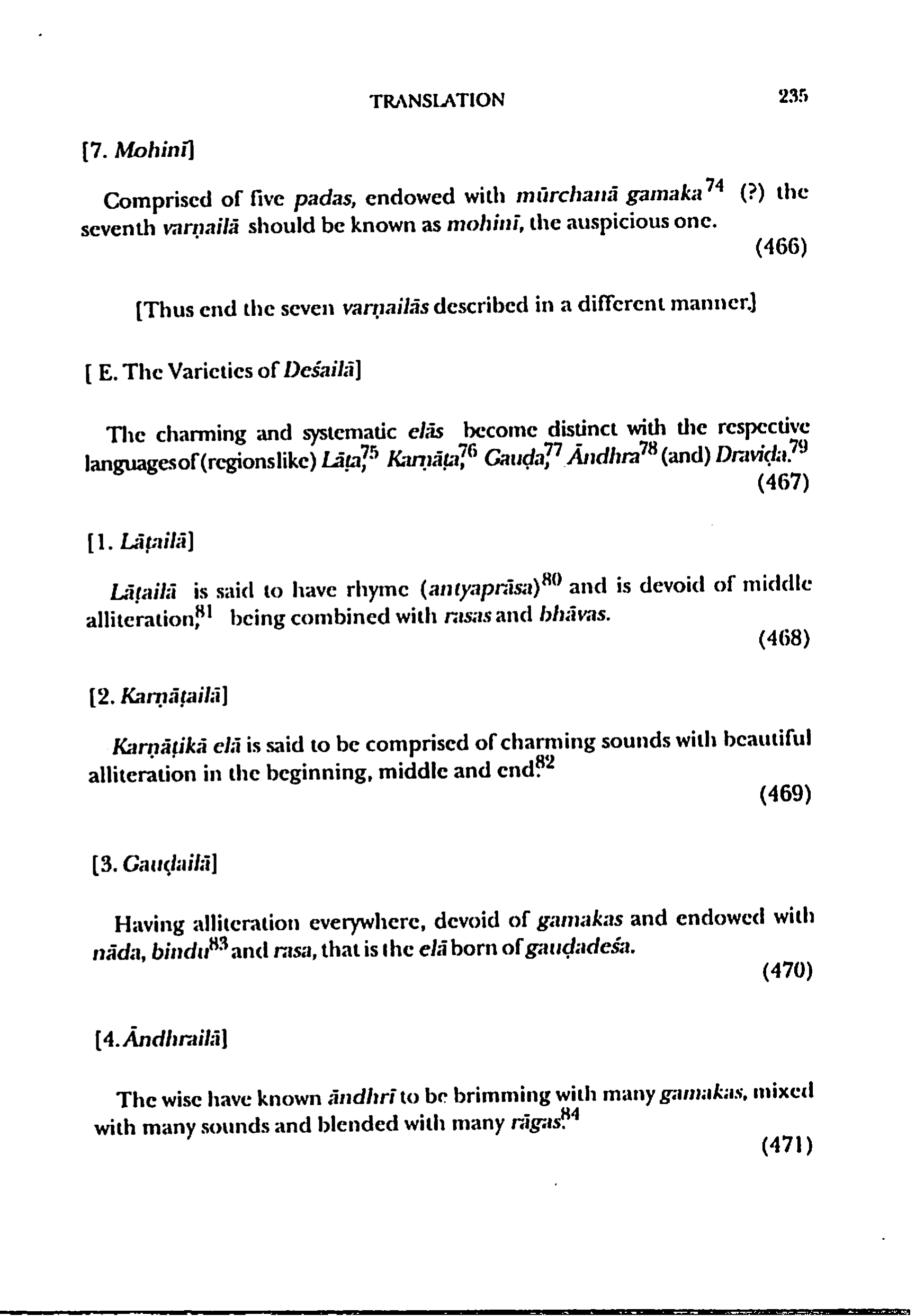
[7. Mohini]
Comprised of five padas, endowed with mūrchanā gamaka 74 (?) the
seventh varņailā should be known as mohinī104, the auspicious one.1
(466)
[Thus end the seven varņailās described in a different manner.]
[E. The Varieties of Deśailā]
The charming and systematic elās become distinct with the respective
languages of (regions like) Lāṭa, 75 Karnāṭa, 6 Gauda, 77 Āndhra 78 (and) Dravida.2 79
(467)
[1, Lāţailā]
Lāṭailā is said to have rhyme (antyaprāsa)80 and is devoid of middle
alliteration3,81 being combined with rasas and bhāvas.6
(468)
Karņāţikā elā is said to be comprised of charming sounds with beautiful
alliteration in the beginning, middle and end.827
(469)
[3. Gauḍailā]
Having alliteration everywhere, devoid of
gamakas and endowed with
nāda, bindu
83 and rasa, that is the elā born of gauḍadeśa.
(470)
The wise have known andhri to be brimming with many gamakas, mixed
with many sounds and blended with many rāgas.849
(471)
And the second of the second of the second of the second of the second of the second of the second of the second of the second of the second of the second of the second of the second of the second of the second of the seco
. . .