Source scans · vol_I_p068
recto · open full
scan recto
verso · open full
scan verso
Bṛhaddeśī · Volume I
pp. 118–119folio 068
Devanāgarī (Bṛhaddeśī)
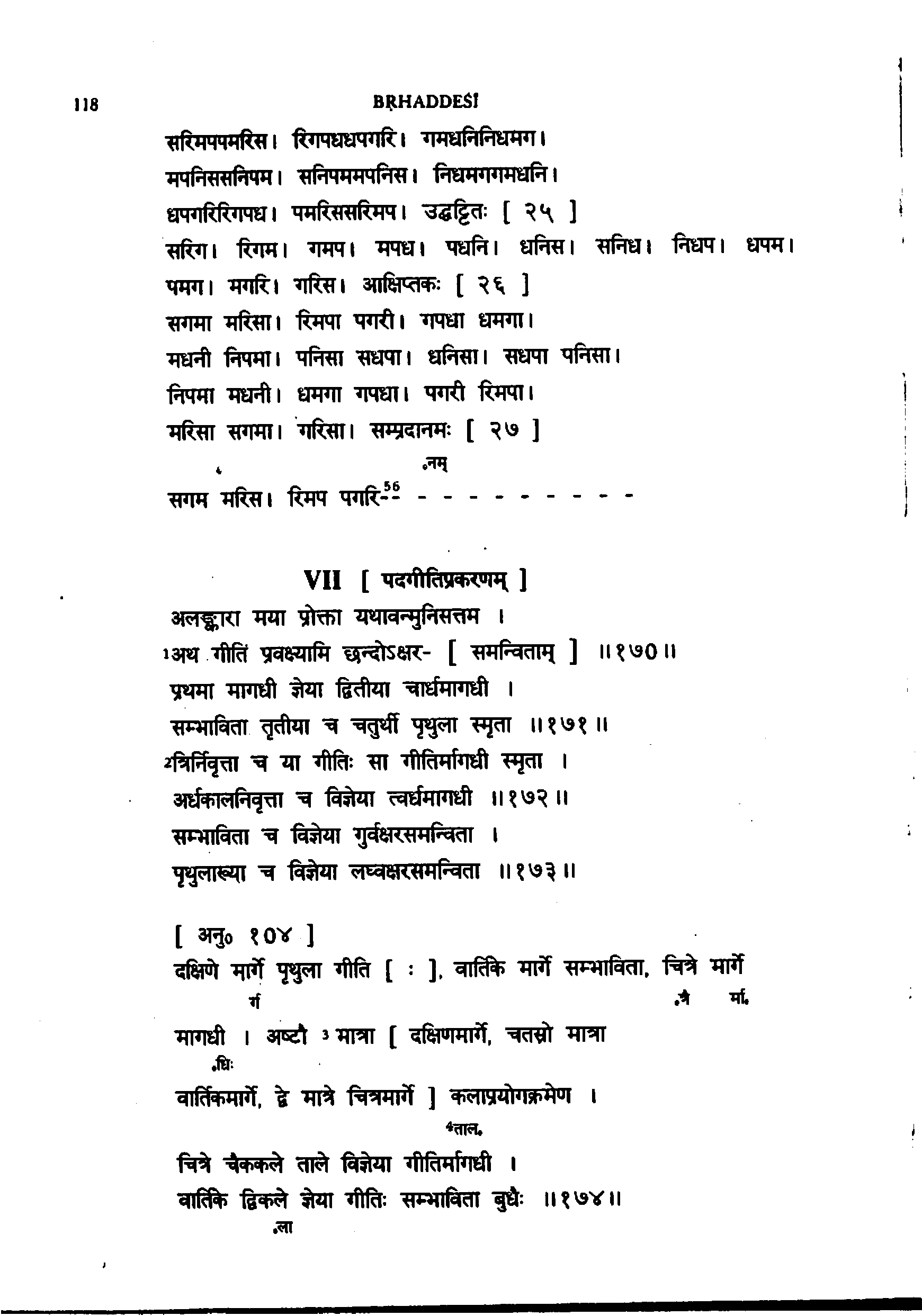
सरिमपपमरिस । रिगपधधपगरि । गमधनिनिधमग ।
मपनिससनिपम। सनिपममपनिस। निधमगगमधनि।
धपगरिरिगपध। पमरिससरिमप। उद्घट्टितः [ २५ ]
सिरिग्। रिग्म। गमप्। मप्ध। पधनि। धनिस। सनिध। निधप। धपम।
पमग्। मगरि। गरिस। आक्षिप्तकः [ २६ ]
सगमा मरिसा। रिमपा पगरी। गपधा धमगा।
मधनी निपमा। पनिसा सधपा। धनिसा। सधपा पनिसा।
निपमा मधनी। धमगा गपधा। पगरी。नम् रिमपा।
मरिसा सगमा। गरिसा। सम्प्रदानमः [ २७ ] सगम मरिस। रिमप पगरि-- - - - - - - VII [ पदगीतिप्रकरणम् ] अलङ्कारा मया प्रोक्ता यथावन्मुनिसत्तम 1अथ गीतिं प्रवक्ष्यामि छन्दोऽक्षर- [ समन्विताम् ] ॥१७०॥3
प्रथमा मागधी जेया द्वितीया चार्धमागधी ।
सम्भाविता तृतीया च चतुर्थी पृथुला स्मृता ॥१७१॥
थित्रिर्निवृत्ता च या गीतिः सा गीतिर्मागधी स्मृता ।
अर्धकालनिवृत्ता च विज्ञेया त्वर्धमागधी ॥१७२॥
सम्भाविता च विज्ञेया गुर्वक्षरसमन्विता ।
पृथुलास्यार्गा.धिः च विज्ञेया लघ्वक्षरसमन्विता⁴ताल.१७३र्मा.
[अनु₀ १०४]
दक्षिणे मार्गे पृथुला गीति [:], वार्तिक मार्गे सम्भाविता, चित्रे मार्गे ,† मागधी । अष्टौ ३ मात्रा [ दक्षिणमार्गे, चतस्रो मात्रा
वार्तिकमार्गे, द्वे मात्रे चित्रमार्गे ] कलाप्रयोगक्रमेण ।
चित्रे चैककले.ला ताले विज्ञेया गीतिर्मागधी ।
वार्तिक द्विकले ज्ञेया गीतिः सम्भाविता बुधैः ॥१७४॥
English — Sharma
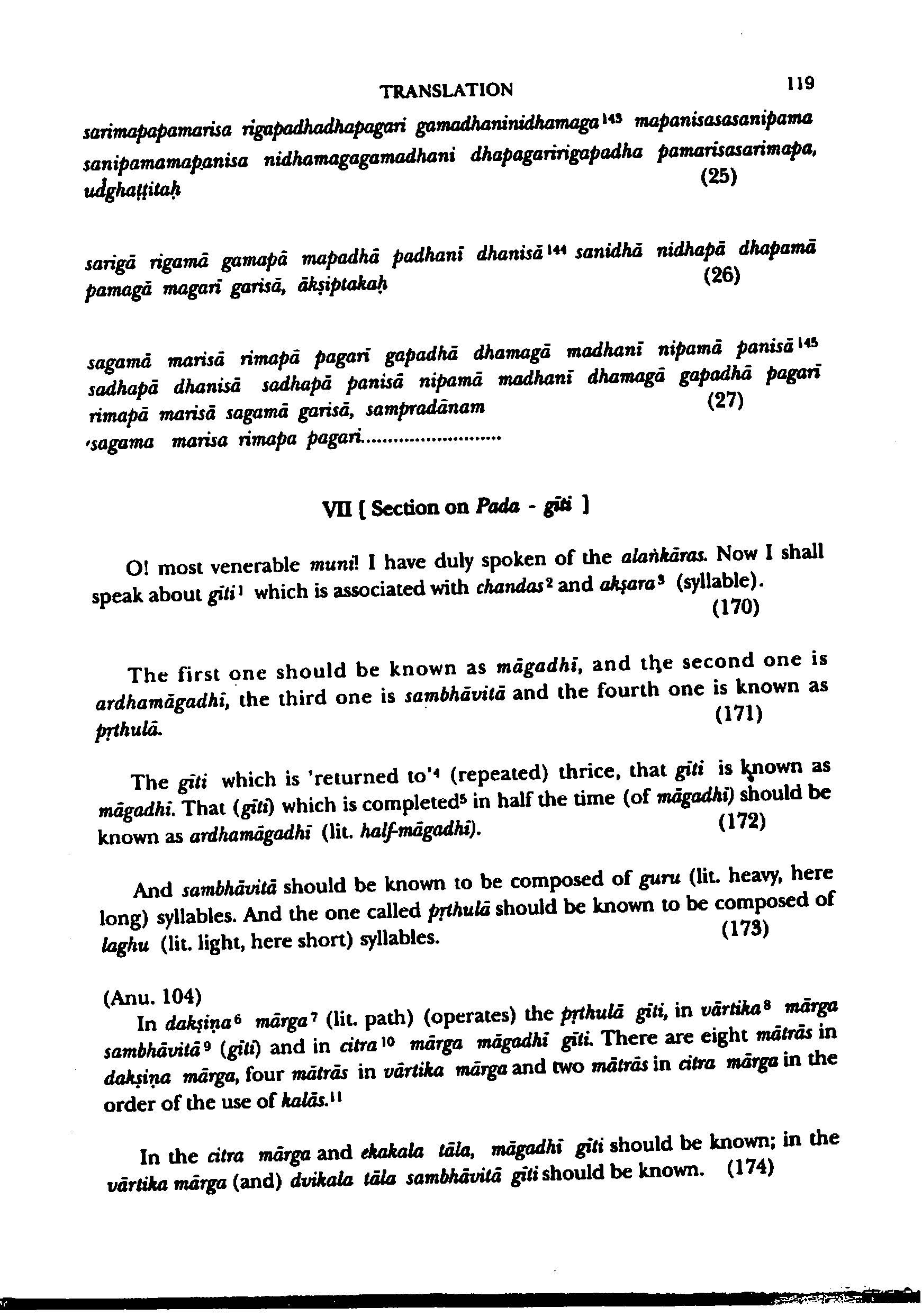
sarimapapamarisa rigapadhadhapagari gamadhaninidhamaga 143 mapanisasasanipama sanipamamapanisa nidhamagagamadhani dhapagaririgapadha pamarisasarimapa,
(25)
udghattitah sarigā rigamā gamapā mapadhā padhanī dhanisā 144 sanidhā nidhapā dhapamā (26) pamagā magarī garisā, āksiptakah sagamā marisā rimapā pagarī gapadhā dhamagā madhanī nipamā panisā 145 sadhapā dhanisā sadhapā panisā nipamā madhanī dhamagā gapadhā pagarī (27) rimapā marisā sagamā garisā, sampradānam5 sagama marisa rimapa pagari..... VII [ Section on Pada - giti ] O! most venerable muni! I have duly spoken of the alankaras. Now I shall speak about giti1 which is associated with chandas2 and akṣara3 (syllable).
(170)
The first one should be known as māgadhī, and the second one is ardhamāgadhī, the third one is sambhāvitā and the fourth one is known as
(171)
pṛthulā. The giti which is 'returned to'4 (repeated) thrice, that giti is known as māgadhī. That (gītī) which is completed5 in half the time (of māgadhī) should be
(172)
known as ardhamāgadhī (lit. half-māgadhī). And sambhāvitā should be known to be composed of guru (lit. heavy, here long) syllables.11 And the one called pṛthulā should be known to be composed of
(173)
laghu (lit. light, here short) syllables. (Anu. 104) In dakṣiṇa 6 mārga 7 (lit. path) (operates) the pṛthulā gīti, in vārtika 8 mārga sambhāvitā (gīti) and in citra 10 mārga māgadhī gīti. There are eight mātrās in dakṣiṇa mārga, four mātrās in vārtika mārga and two mātrās in citra mārga in the order of the use of kalās.11 In the citra mārga and ekakala tāla, māgadhī gīti should be known6; in the vārtika mārga (and) dvikala tāla sambhāvitā gīti should be known.7 (174) ___
1.[definition] māgadhī is a giti that is returned to or repeated thriceथित्रिर्निवृत्ता च या गीति सा गीतिर्मागधी स्मृता
3.[definition] giti is associated with chandas and akṣara (syllable)अथ गीति प्रवक्ष्यामि छन्दोऽक्षर- [ समन्विताम् ] ॥१७०॥
5.[enumeration]Three ornamental categories of melodic patterns are distinguished: udghattitah, āksiptakah, and sampradānamudghattitah [ २५ ] ... āksiptakah [ २६ ] ... sampradānam [ २७ ]
1.[definition]māgadhī is a giti that is returned to or repeated thriceThe giti which is 'returned to'⁴ (repeated) thrice, that giti is known as māgadhī.
2.[definition]ardhamāgadhī is a giti completed in half the time of māgadhīThat (gīti) which is completed⁵ in half the time (of māgadhī) should be known as ardhamāgadhī (lit. half-māgadhī).
3.[definition]giti is associated with chandas and akṣara (syllable)Now I shall speak about giti¹ which is associated with chandas² and akṣara³ (syllable).
4.[enumeration]There are four types of giti: māgadhī (first), ardhamāgadhī (second), sambhāvitā (third), and pṛthulā (fourth)The first one should be known as māgadhī, and the second one is ardhamāgadhī, the third one is sambhāvitā and the fourth one is known as pṛthulā.
5.[enumeration] Three ornamental categories of melodic patterns are distinguished: udghattitah, āksiptakah, and sampradānamudghattitah sarigā rigamā gamapā mapadhā padhanī dhanisā 144 sanidhā nidhapā dhapamā (26) pamagā magarī garisā, āksiptakah sagamā marisā rimapā pagarī gapadhā dhamagā madhanī nipamā panisā 145 sadhapā dhanisā sadhapā panisā nipamā madhanī dhamagā gapadhā pagarī (27) rimapā marisā
6.[relation]māgadhī giti should be known in citra mārga with ekakala tālaIn the citra mārga and ekakala tāla, māgadhī gīti should be known
7.[relation]sambhāvitā giti should be known in vārtika mārga with dvikala tālain the vārtika mārga (and) dvikala tāla sambhāvitā gīti should be known.
8.[relation]pṛthulā giti operates in dakṣiṇa mārga and contains eight mātrāsIn dakṣiṇa⁶ mārga⁷ (lit. path) (operates) the pṛthulā gīti... There are eight mātrās in dakṣiṇa mārga
9.[relation]sambhāvitā giti operates in vārtika mārga and contains four mātrāsin vārtika⁸ mārga sambhāvitā (gīti)... four mātrās in vārtika mārga
10.[relation]māgadhī giti operates in citra mārga and contains two mātrāsand in citra¹⁰ mārga māgadhī gīti... two mātrās in citra mārga
11.[structural]sambhāvitā is composed of guru (long) syllablesAnd sambhāvitā should be known to be composed of guru (lit. heavy, here long) syllables.
12.[structural]pṛthulā is composed of laghu (short) syllablesAnd the one called pṛthulā should be known to be composed of laghu (lit. light, here short) syllables.