Source scans · vol_I_p070
recto · open full
scan recto
verso · open full
scan verso
Bṛhaddeśī · Volume I
pp. 1–123folio 070
Devanāgarī
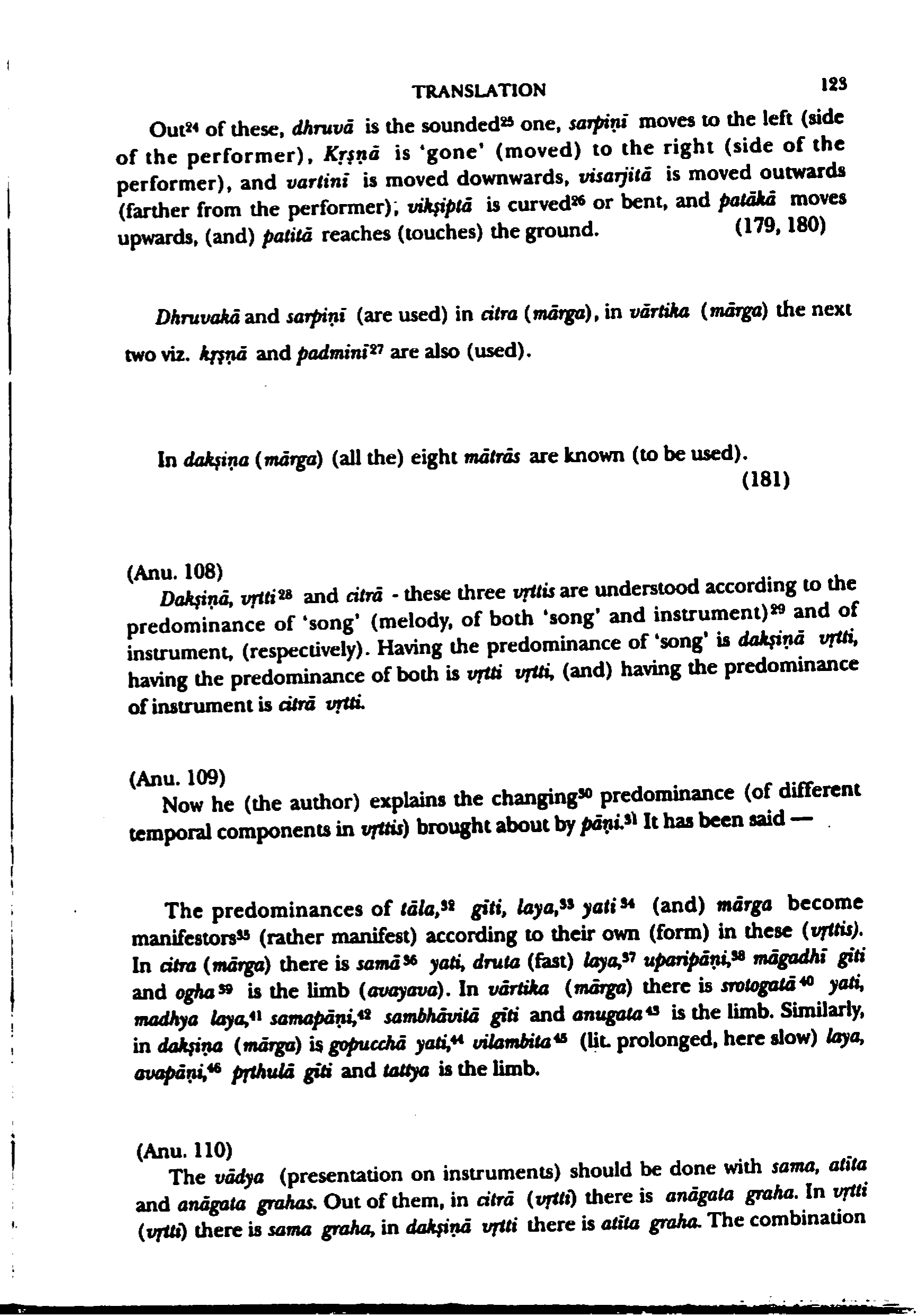
तत्र ध्रुवा सशब्दाध्वका च गब्दस्याः स्यात्1 सर्पिणी वामगा भवेत्8
कृष्णा दक्षिणतो याता9(ना?ता) वर्तिनी चाप्यधोगता.ताः ॥१७९॥
विसर्जिता•वर्ति₀10 बहिर्याता12 विक्षिप्ता कुञ्चिता भवेत्13
पताका चोर्ध्वगा14 जेया पतिता भूमिगा भवेत्12 ॥१८०॥ ( का ?गा ) 11वनि, भूम्मिगा (?)
ध्वका सर्पिणी चित्रे5 वार्तिक च परेऽपि द्वे ।
कृष्णापिद्मिनीनाम्न्यश्चाः.नाम्न्यो दक्षिणेऽष्टौ स्मृता मात्राः ॥१८१॥
[अनु॰ १०८]
14दक्षिणावृतिषिचत्रेति वृत्तयो गीतोभयवाद्यप्राधान्यवशात्प्रतीताः । वृत्तिः,दक्षिणा उभयप्रधाना वृत्तिवृत्तिः, वाद्यप्रधाना चित्रा गीतप्रधानावृत्तिः।
[अनु॰ १०९]
इदानी प्राधान्यं ज्ञापयति पाणिकृतं विवर्तितम्।
तदुक्तम्•क्ताम् :- "15ताल [ गीतिलय - ] यतिमार्गप्राधान्यान्यासां यथास्वं व्यञ्जकानि7 (न ?) न्यादासा .संस्य स्वरं (र) ( ? ) भवन्ति। 16चित्रे समा यतिः,याति+ द्वतो लयः, उपरिपाणिः, मागधीगीति - रोघोऽवयवः.पनामुस्रो,। वार्तिक स्रोतोगता यतिर्मध्यो लयः, समपाणिः, सम्भाविता „Ц गीतिरनुगतंगवोबलयवः----- चावयवः । तद्वद्क्षिणेउदाद. गोपुच्छा यतिर्विलम्बितो लयः. अवपाणिः,अधम, पृथुला गीतिस्तत्त्वं चावयवः।" ÷ ₽.
[अनु॰ ११०]
वृत्तीनां च वाद्यं.पा 17समानागतातीतग्रहैः कार्यम्। तत्र .ম.
English — Sharma
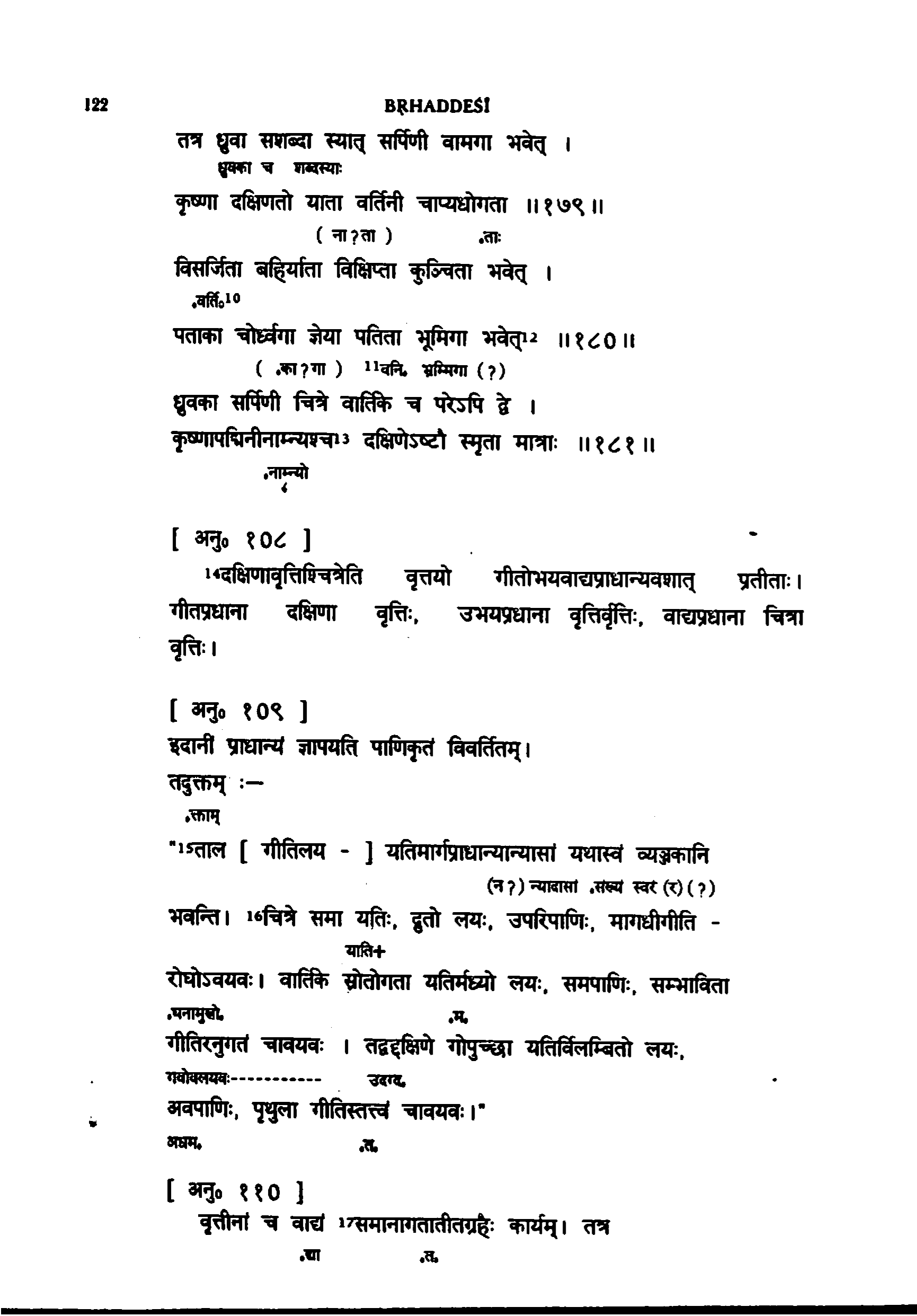
Out24 of these, dhruvā is the sounded25 one1, sarpiņī moves to the left (side of the performer)8, Kṛṣṇā is 'gone' (moved) to the right (side of the performer)9, and vartini is moved downwards, visarjitā is moved outwards (farther from the performer)12, vikşiptā is curved26 or bent13, and patākā moves (179, 180) upwards, (and) patită reaches (touches) the ground. Dhruvakā and sarpiņī (are used) in citra (mārga)5, in vārtika (mārga) the next two viz. kṛṣṇā and padmini27 are also (used).6 In dakṣiṇa (mārga) (all the) eight mātrās are known (to be used).2
(181)
(Anu. 108) Daksiņā, vrtti28 and citrā - these three vrttis are understood according to the predominance of 'song' (melody, of both 'song' and instrument)29 and of instrument, (respectively). Having the predominance of 'song' is dakṣiṇā vṛtti, having the predominance of both is vitti vitti, (and) having the predominance of instrument is citrā vṛtti.3 (Anu. 109) Now he (the author) explains the changing50 predominance (of different temporal components in vittis) brought about by pāņi.51 It has been said — The predominances of tāla,32 giti, laya,33 yati 34 (and) mārga become manifestors35 (rather manifest) according to their own (form) in these (vyttis). In citra (mārga) there is samā 36 yati, druta (fast) laya,57 uparipāņi,38 māgadhī giti and ogha 59 is the limb (avayava).10 In vārtika (mārga) there is srotogatā 40 yati, madhya laya,41 samapāṇi,42 sambhāvitā gīti and anugata45 is the limb. Similarly, in dakṣiṇa (mārga) is gopucchā yati,44 vilambita45 (lit. prolonged, here slow) laya, avapāņi,46 pṛthulā gīti and tattya is the limb.11 (Anu. 110) The vādya (presentation on instruments) should be done with sama, atīta and anagata grahas. Out of them, in citra (vytti) there is anagata graha. In vytti (vytti) there is sama graha, in daksiņā vytti there is atīta graha.4 The combination
1.[definition] dhruvā is the sounded one among the group of technical termsतत्र ध्रुवा सशब्दा स्यात्
2.[enumeration] Eight mātrās (hand positions/movements) exist and are enumerated across three mārgas (paths)कृष्णापिद्मिनीनाम्न्यश्चा दक्षिणेऽष्टौ स्मृता मात्रा
3.[enumeration] Three vrttis exist: dakṣiṇā vrtti, vitti vitti, and citrā vrtti, distinguished by predominance of song, both song and instrument, or instrument respectivelyदक्षिणावृतिषिचत्रेति वृत्तयो गीतोभयवाद्यप्राधान्यवशात् प्रतीता
5.[relation] dhruvakā and sarpiņī are used in citra mārgaध्वका सर्पिणी चित्रे
7.[relation] yati is one of the temporal components whose predominance manifests in vittis according to its own formताल [ गीतिलय - ] यतिमार्गप्राधान्यान्यासा यथास्वं व्यञ्जकानि
8.[structural] sarpiņī moves to the left side of the performerसर्पिणी वामगा भवेत्
9.[structural] kṛṣṇā is moved to the right side of the performerकृष्णा दक्षिणतो याता
12.[structural] visarjitā is moved outwards, farther from the performerविसर्ज?िता बहिर्याता
13.[structural] vikşiptā is curved or bentविक्षिप्ता कुञ्चिता भवेत्
14.[structural] patākā moves upwardsपताका चोर्ध्वगा
1.[definition]dhruvā is the sounded one among the group of technical termsdhruvā is the sounded25 one
2.[enumeration]Eight mātrās (hand positions/movements) exist and are enumerated across three mārgas (paths)In dakṣiṇa (mārga) (all the) eight mātrās are known (to be used).
3.[enumeration]Three vrttis exist: dakṣiṇā vrtti, vitti vitti, and citrā vrtti, distinguished by predominance of song, both song and instrument, or instrument respectivelyDaksiņā, vrtti28 and citrā - these three vrttis are understood according to the predominance of 'song' (melody, of both 'song' and instrument)29 and of instrument, (respectively). Having the predominance of 'song' is dakṣiṇā vṛtti, having the predominance of both is vitti vitti,
4.[enumeration]Three types of grahas are employed in vādya: anagata graha in citra vytti, sama graha in vytti, and atīta graha in dakṣiṇā vyttiThe vādya (presentation on instruments) should be done with sama, atīta and anagata grahas. Out of them, in citra (vytti) there is anagata graha. In vytti (vytti) there is sama graha, in daksiņā vytti there is atīta graha.
5.[relation]dhruvakā and sarpiņī are used in citra mārgaDhruvakā and sarpiņī (are used) in citra (mārga)
6.[relation]kṛṣṇā and padmini are used in vārtika mārgain vārtika (mārga) the next two viz. kṛṣṇā and padmini27 are also (used).
7.[relation]yati is one of the temporal components whose predominance manifests in vittis according to its own formThe predominances of tāla,32 giti, laya,33 yati 34 (and) mārga become manifesters35 (rather manifest) according to their own (form) in these (vyttis).
8.[structural]sarpiņī moves to the left side of the performersarpiņī moves to the left (side of the performer)
9.[structural]kṛṣṇā is moved to the right side of the performerKṛṣṇā is 'gone' (moved) to the right (side of the performer)
10.[structural]citra mārga is characterized by samā yati, druta (fast) laya, uparipāņi, māgadhī giti, with ogha as its limbIn citra (mārga) there is samā 36 yati, druta (fast) laya,57 uparipāņi,38 māgadhī giti and ogha 59 is the limb (avayava).
11.[structural]dakṣiṇa mārga is characterized by gopucchā yati, vilambita (slow) laya, avapāņi, pṛthulā gīti, with tattya as its limbin dakṣiṇa (mārga) is gopucchā yati,44 vilambita45 (lit. prolonged, here slow) laya, avapāņi,46 pṛthulā gīti and tattya is the limb.
12.[structural]visarjitā is moved outwards, farther from the performervisarjitā is moved outwards (farther from the performer)
13.[structural]vikşiptā is curved or bentvikşiptā is curved26 or bent
14.[structural]patākā moves upwardspatākā moves (upwards)
15.[structural]vārtika mārga is characterized by srotogatā yati, madhya laya, samapāņi, sambhāvitā gīti, with anugata as its limbIn vārtika (mārga) there is srotogatā 40 yati, mradhya laya,41 samapāņi,42 sambhāvitā gīti and anugata45 is the limb.