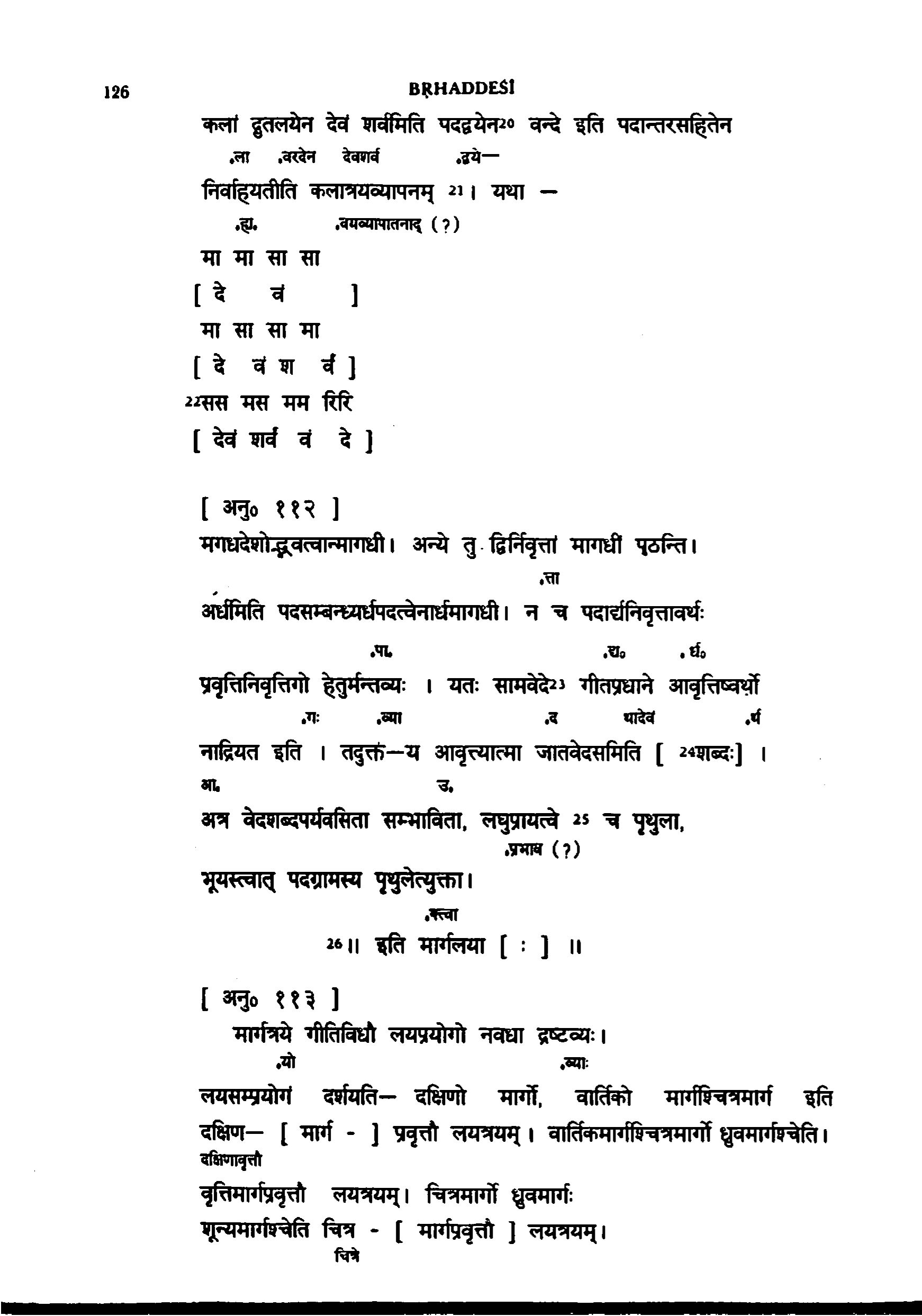
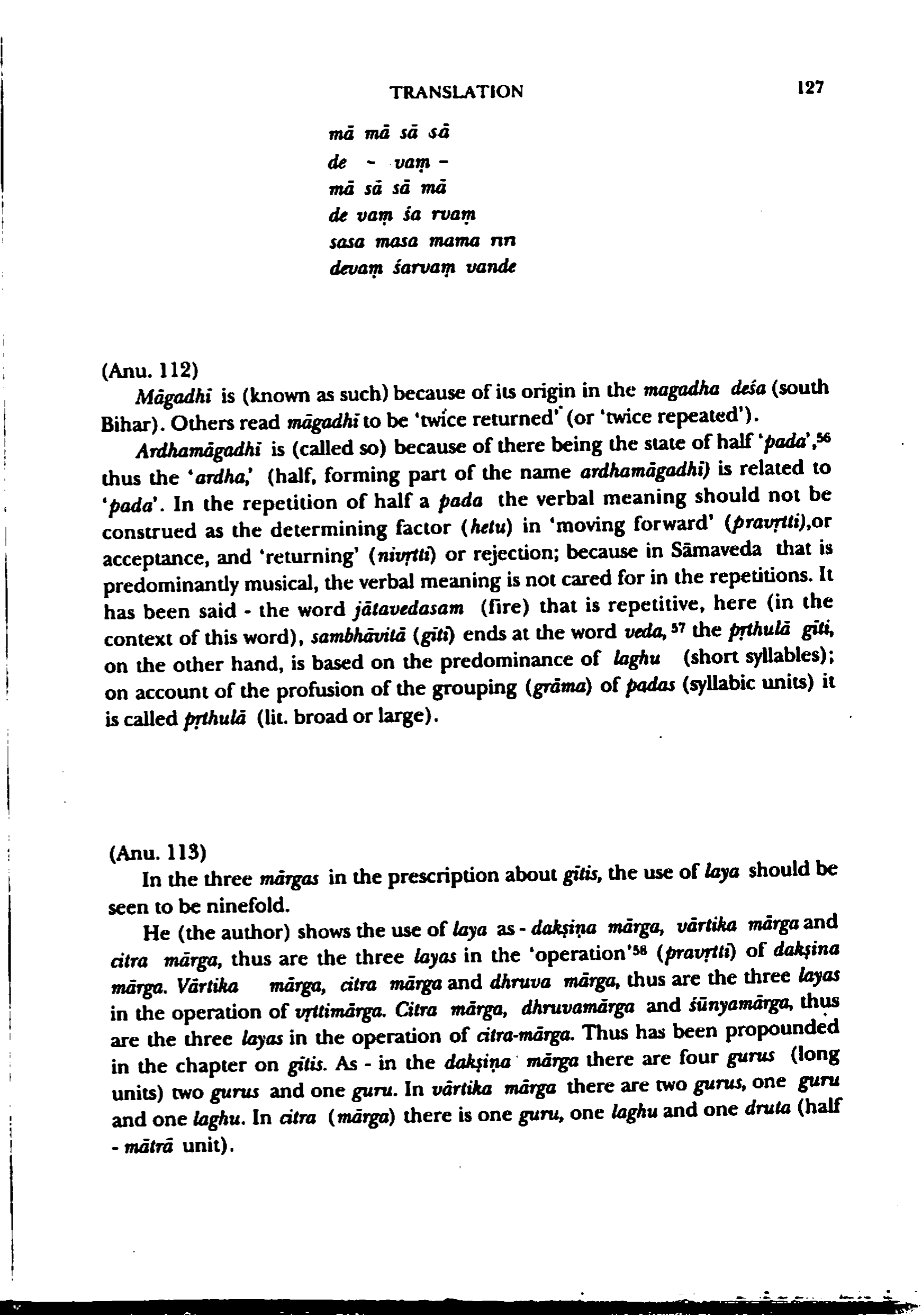
mā mā sā sā
de - vam -
mā sā sā mā
de vam sa rvam
sasa masa mama nn
devam sarvam vande
(Anu. 112)
Māgadhī is (known as such) because of its origin in the magadha deśa (south
Bihar).3 Others read
māgadhī to be 'twice returned' (or 'twice repeated').
Ardhamāgadhi is (called so) because of there being the state of half 'pada',456
thus the 'ardha,' (half, forming part of the name
ardhamāgadhī) is related to
'pada'. In the repetition of half a pada the verbal meaning should not be
construed as the determining factor (hetu) in 'moving forward' (pravṛtti),or
acceptance, and 'returning' (niviti) or rejection;
because in Sāmaveda that is
predominantly musical, the verbal meaning is not cared for in the repetitions.1 It
has been said - the word
jātavedasam (fire) that is repetitive, here (in the
context of this word),
sambhāvitā (gītī) ends at the word veda, 57 the
pṛthulā gītī,
on the other hand, is based on the predominance of laghu (short syllables);
on account of the profusion of the grouping (grāma) of padas (syllabic units) it
is called
pṛthulā (lit. broad or large).
(Anu. 113)
In the three margas in the prescription about gitis, the use of laya should be
seen to be ninefold.5
He (the author) shows the use of laya as -
daksina marga, vartika marga and
citra mārga, thus are the three layas in the 'operation'58 (pravṛtti) of dakṣina
mārga.8 Vārtika mārga, citra mārga and dhruva mārga, thus are the three layas
in the operation of vrttimārga.6 Citra mārga, dhruvamārga and śūnyamārga, thus
are the three layas in the operation of citra-marga.7 Thus has been propounded
in the chapter on gitis. As -
in the daksina marga there are four gurus (long
units) two gurus and one guru.10 In vārtika mārga there are two gurus, one guru
and one laghu.11 In citra (mārga) there is one guru, one laghu and one druta (half
- mātrā unit).12