Viśālā technical_term
Generative rules (1) ↗ filter all
R_4p0_024structural · 3 att.
Viśālā = bhāṣā: pañcama aṁśa, dhaivata concluding, sampūrṇa svaras, sañcāra ṣaḍja-dhaivata, qualite charmante
Pseudocode (DSL v1.1) ↗ full DSL (raw text)
RULE id: viśālā (cluster 1010)
SCOPE: technical_term family
STATUS: empirical
CONFIDENCE: empirical
PROTECT: false
Essence pseudocode — identity + RECORD. The page citations for each slot value are in the Grammar record table above (audit trail). The full DSL adds ASSERTIONS with verbatim quotes (see Affirmations below) and CITED_RULES (see Graph relations).
Graph relations
Outgoing (5)
--[structural]--> dhaivata (3)--[structural]--> pañcama as aṁśa (2)--[structural]--> aṁśa (1)--[structural]--> pañcama (1)--[structural]--> svaras (1)
Incoming (3)
bhinnapañcama --[enumeration]--> (2)Kinnaras --[relation]--> (1)Dhaivatabhūṣitā --[structural]--> (1)
Affirmations (3)
Viśālā has pañcama as its aṁśa (characteristic note) and dhaivata as its concluding note
"Viśālā has pañcama as aṁśa and dhaivata as the concluding note"
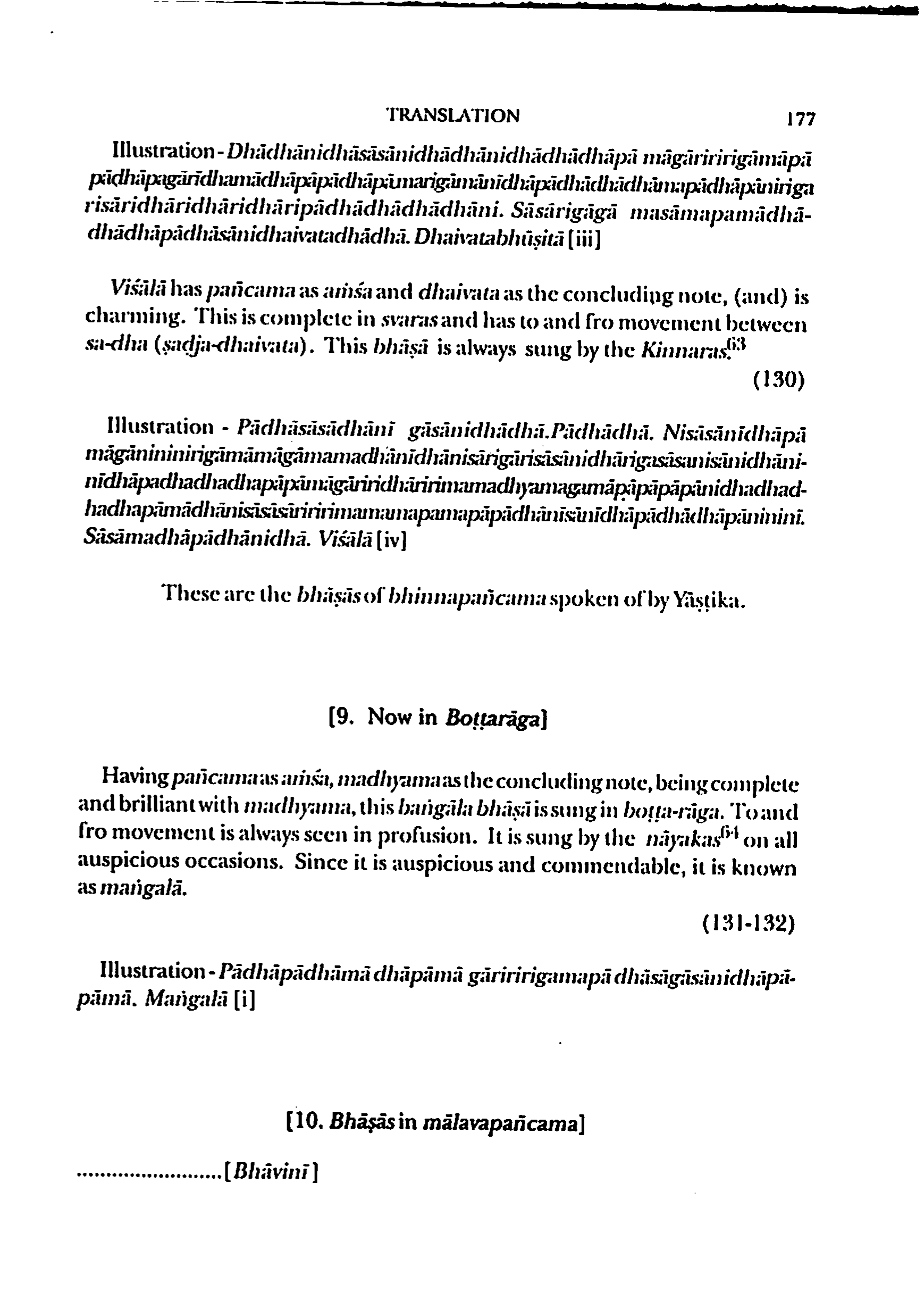
Viśālā is complete in svaras and exhibits to and fro movement between sa and dhaivata
"This is complete in svaras and has to and fro movement between sa-dha (ṣaḍja-dhaivata)."
Viśālā is charming or attractive in quality
"Viśālā has pañcama as aṁśa and dhaivata as the concluding note, (and) is
charming."