Bhairava technical_term
Generative rules (1) ↗ filter all
R_1786_01enumeration · 1 att.
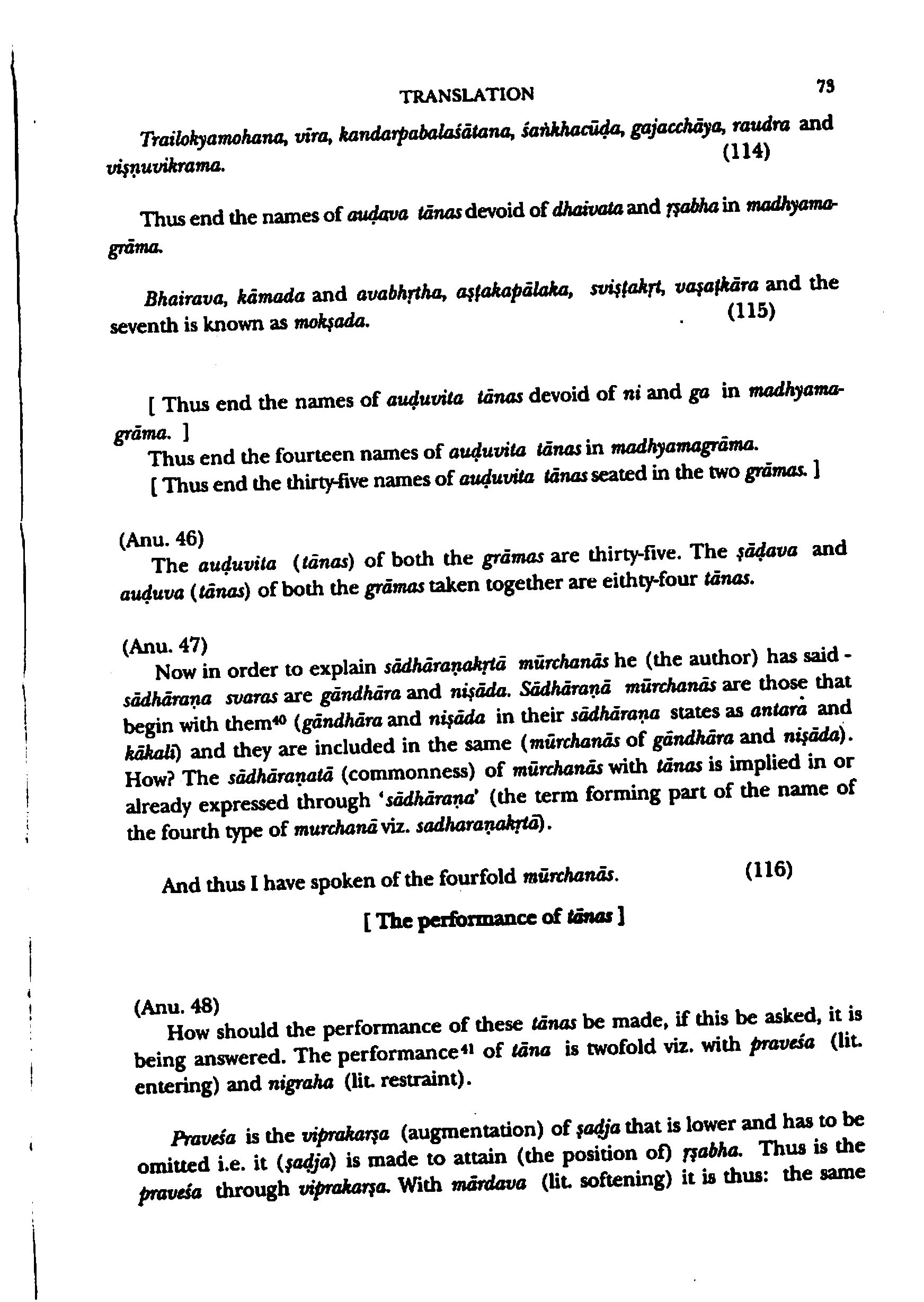
Bhairava is one of seven auduvita tānas devoid of ni and ga in madhyama-grāma
Pseudocode (DSL v1.1) ↗ full DSL (raw text)
RULE id: bhairava (cluster 1786)
SCOPE: technical_term family
STATUS: empirical
CONFIDENCE: empirical
PROTECT: false
Essence pseudocode — identity + RECORD. The page citations for each slot value are in the Grammar record table above (audit trail). The full DSL adds ASSERTIONS with verbatim quotes (see Affirmations below) and CITED_RULES (see Graph relations).
Graph relations
Outgoing (7)
--[enumeration]--> madhyamagrāma (1)--[enumeration]--> auduvita (1)--[enumeration]--> grāma (1)--[enumeration]--> tāna (1)--[enumeration]--> madhyama (1)--[enumeration]--> auduvita tanas (1)--[enumeration]--> mokşada (1)
Incoming (1)
BhaKo --[citation]--> (1)
Affirmations (1)
Bhairava is a name of auduvita tana devoid of ni and ga in madhyama-grama
"Bhairava, kāmada and avabhṛtha, aṣṭakapālaka, sviṣṭakṛt, vaṣaṭkāra and the
seventh is known as mokşada.
[ Thus end the names of auduvita tanas devoid of ni and ga in madhyama-
grāma.]"