vṛtta technical_term
Generative rules (1) ↗ filter all
R_vrtta_prabandhastructural · 3 att.
Vṛtta = 2nd prabandha; no tāla regulation when composed in metres {āryā, dvipatha, vṛtta, gāthā, dodhaka, toṭaka}; svara placing prescribed at the end (or absen
Pseudocode (DSL v1.1) ↗ full DSL (raw text)
RULE id: vṛtta (cluster 435)
SCOPE: technical_term family
STATUS: empirical
CONFIDENCE: empirical
PROTECT: false
Essence pseudocode — identity + RECORD. The page citations for each slot value are in the Grammar record table above (audit trail). The full DSL adds ASSERTIONS with verbatim quotes (see Affirmations below) and CITED_RULES (see Graph relations).
Graph relations
Outgoing (8)
--[structural]--> svaras (2)--[structural]--> prabandha (1)--[structural]--> Dodhaka (1)--[structural]--> totaka (1)--[structural]--> āryā (1)--[structural]--> dvipathaka (1)--[structural]--> gāthā (1)--[structural]--> tāla (1)
Incoming (0)
none
Affirmations (4)
The prominence of metre in vṛtta has been clearly specified by the munis.
"The prominence of metre has been clearly specified in them, by the munis."
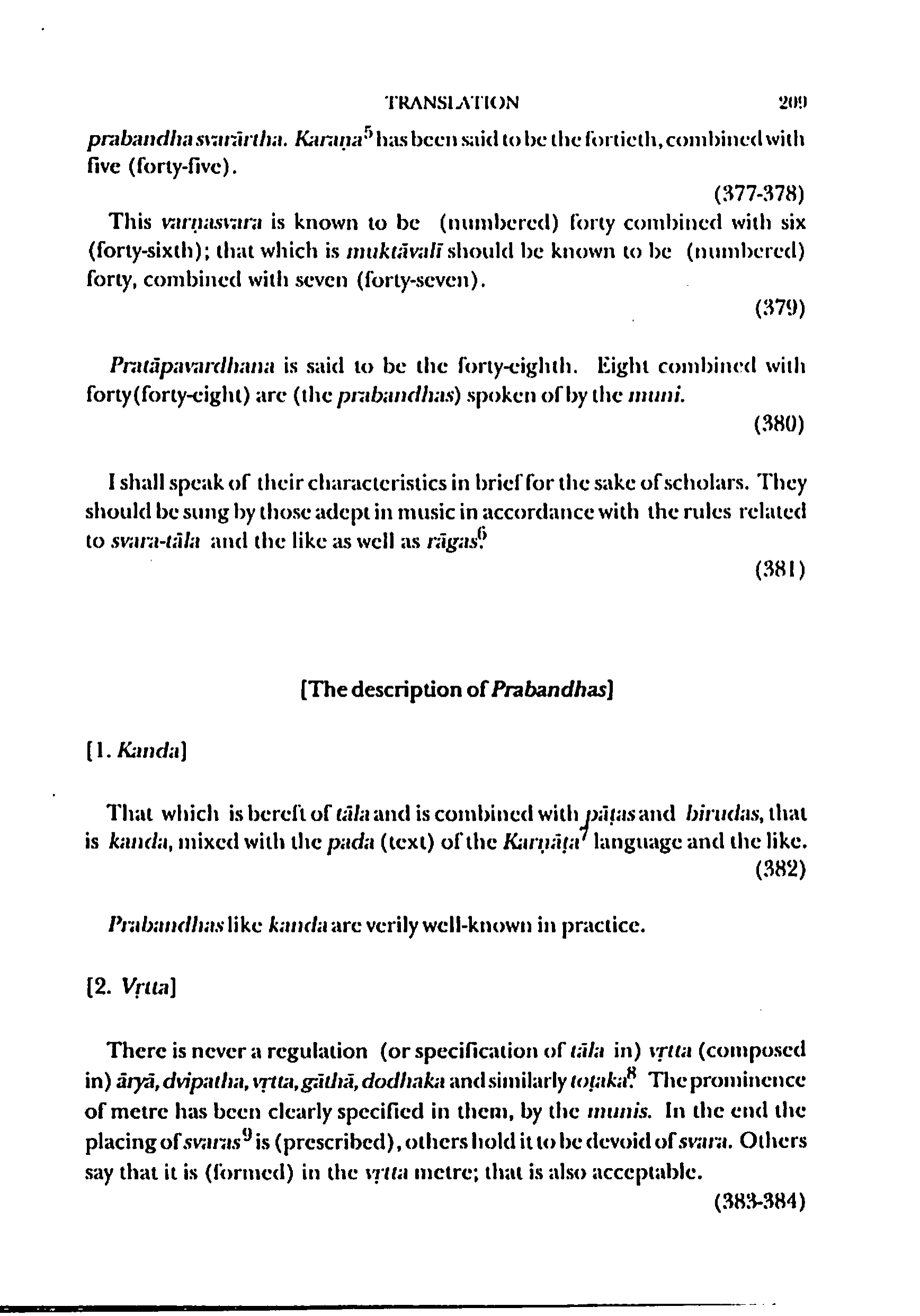
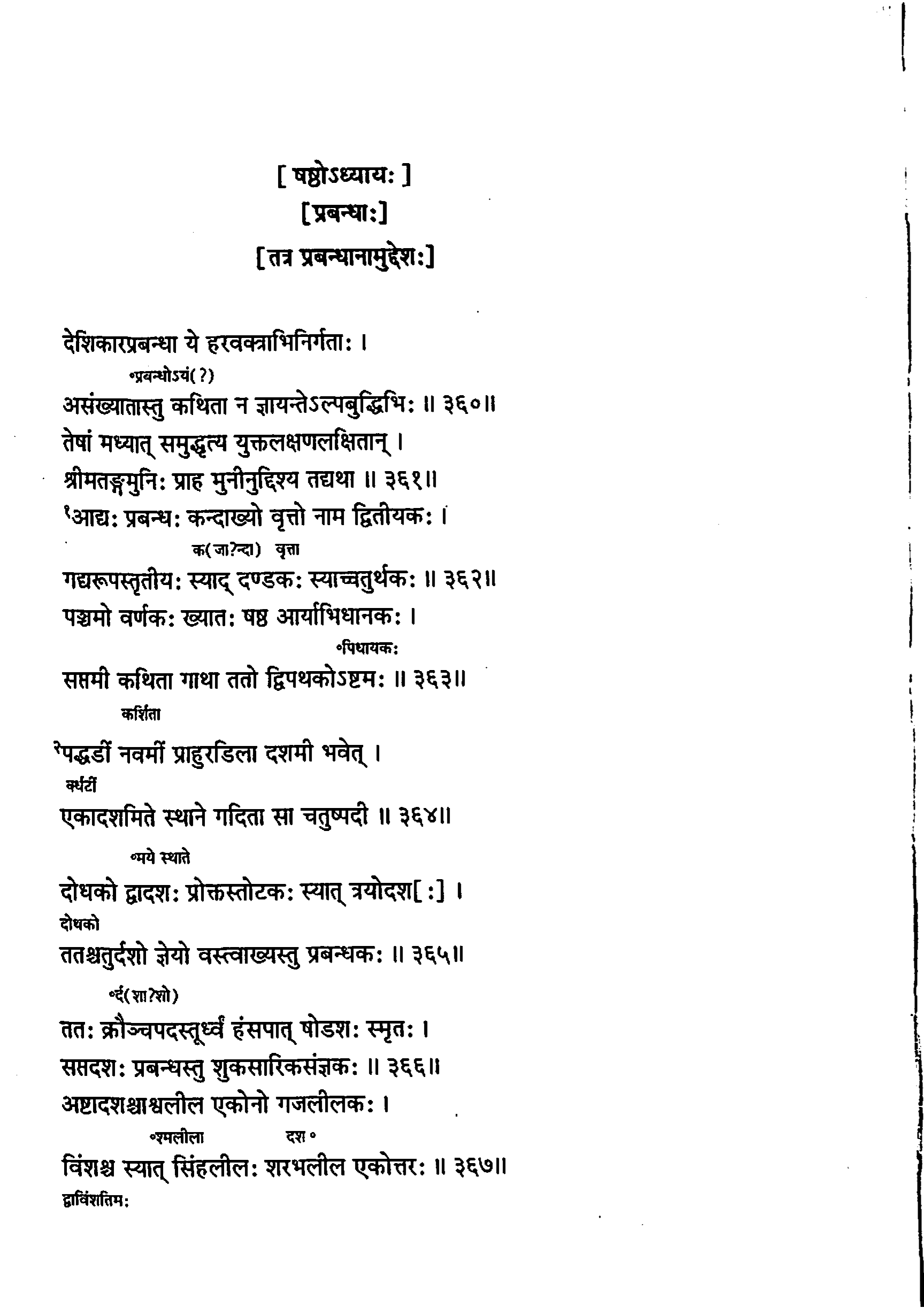
Vṛtta is the second prabandha
"वृत्तो नाम द्वितीयकः"
Vṛtta has no regulation or specification of tāla when composed in āryā, dvipatha, vṛtta, gāthā, dodhaka, and toṭaka metres.
"There is never a regulation (or specification of tāla in) vṛtta (composed
in) āryā, dvipatha, vṛtta, gāthā, dodhaka and similarly toṭaka."
In vṛtta, the placing of svaras is prescribed at the end, though some hold it to be devoid of svara.
"In the end the
placing of svaras is (prescribed), others hold it to be devoid of svara."