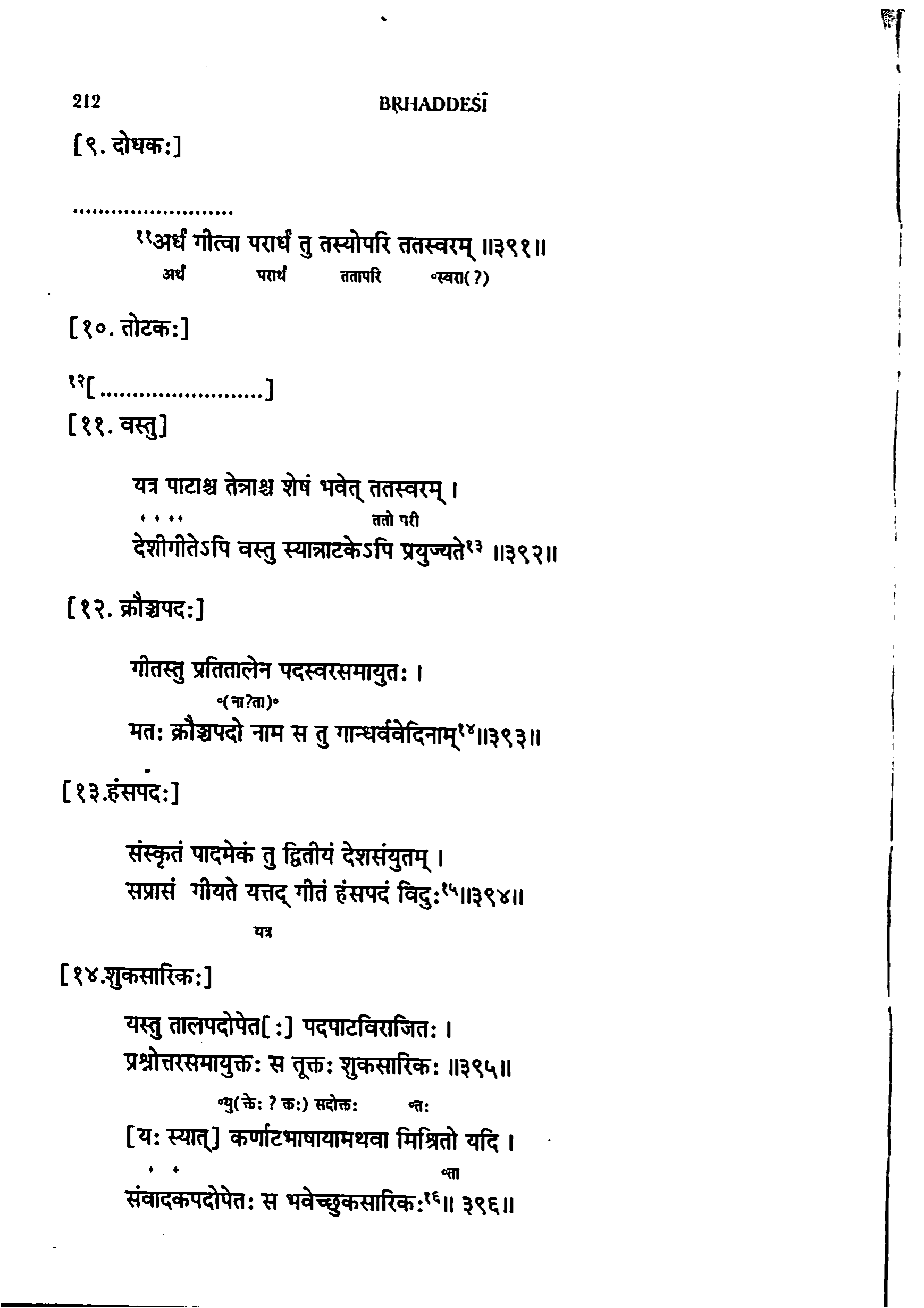
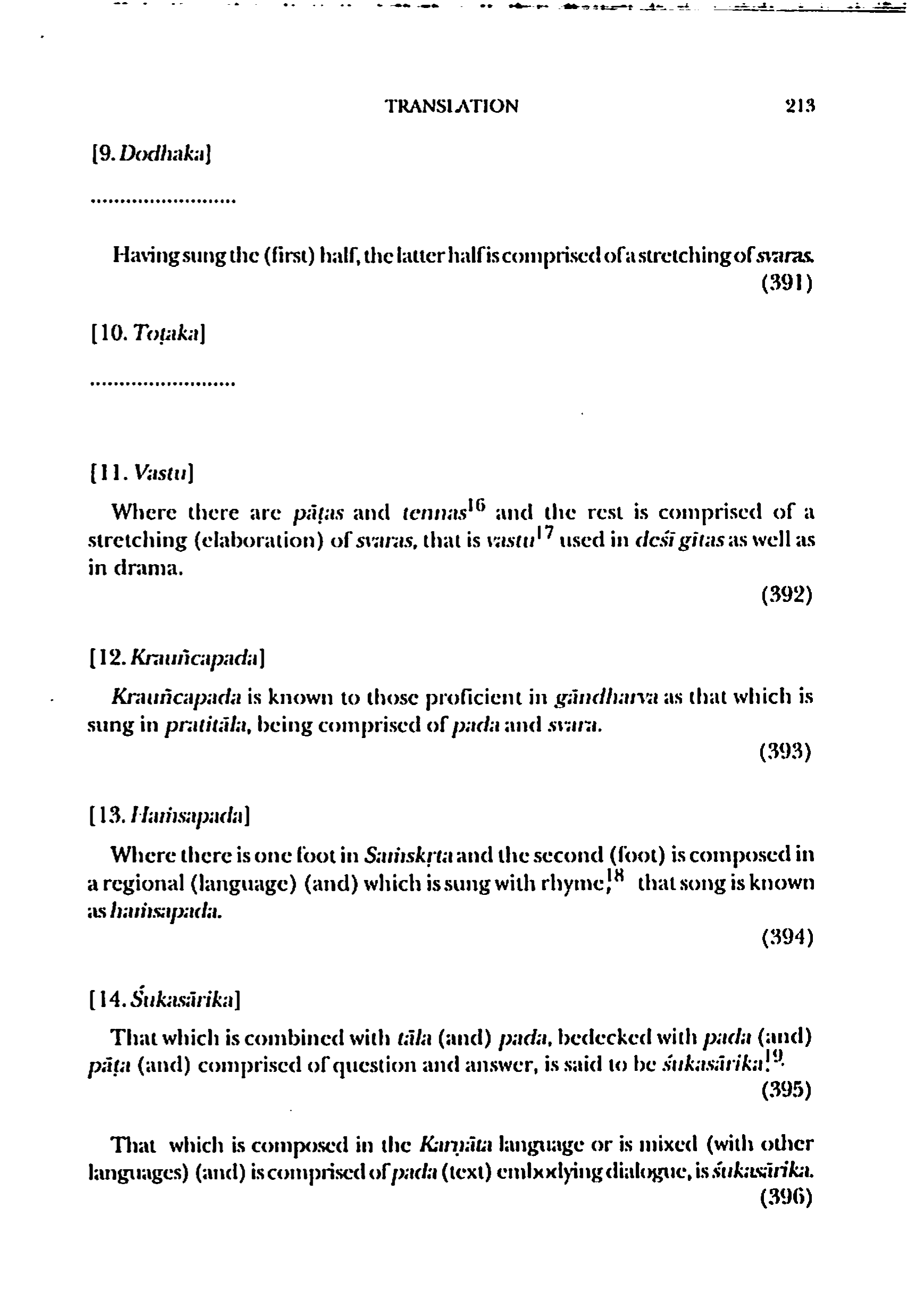
Having sung the (first) half, the latter half is comprised of a stretching of svaras.
(391)
[10. Totaka]
[11. Vastu]
Where there are pāṭas and tennas 16 and the rest is comprised of a
stretching (elaboration) of svaras3, that is vastu717 used in desī gītas as well as
in drama.51
(392)
Krauñcapada is known to those proficient in gandharva2 as that which is
sung in pratitāla, being comprised of pada and svara.84
(393)
Where there is one foot in Sainskṛta and the second (foot) is composed in
a regional (language)9 (and)
which is sung with rhyme, that song is known
as hamsapada.10
(394)
That which is combined with
tāla (and)
pada, bedecked with
pada (and)
pāṭa (and) comprised of question and answer, is said to be śukaśārika. 19.
(395)
That which is composed in the Karnāta language or is mixed (with other
languages)12 (and)
is comprised of pada (text) embodying dialogue, is śukasārika.13
(396)