Source scans · vol_II_p135
recto · open full
scan recto
verso · open full
scan verso
Bṛhaddeśī · Volume II
pp. 252–253folio 135
Devanāgarī (Bṛhaddeśī)
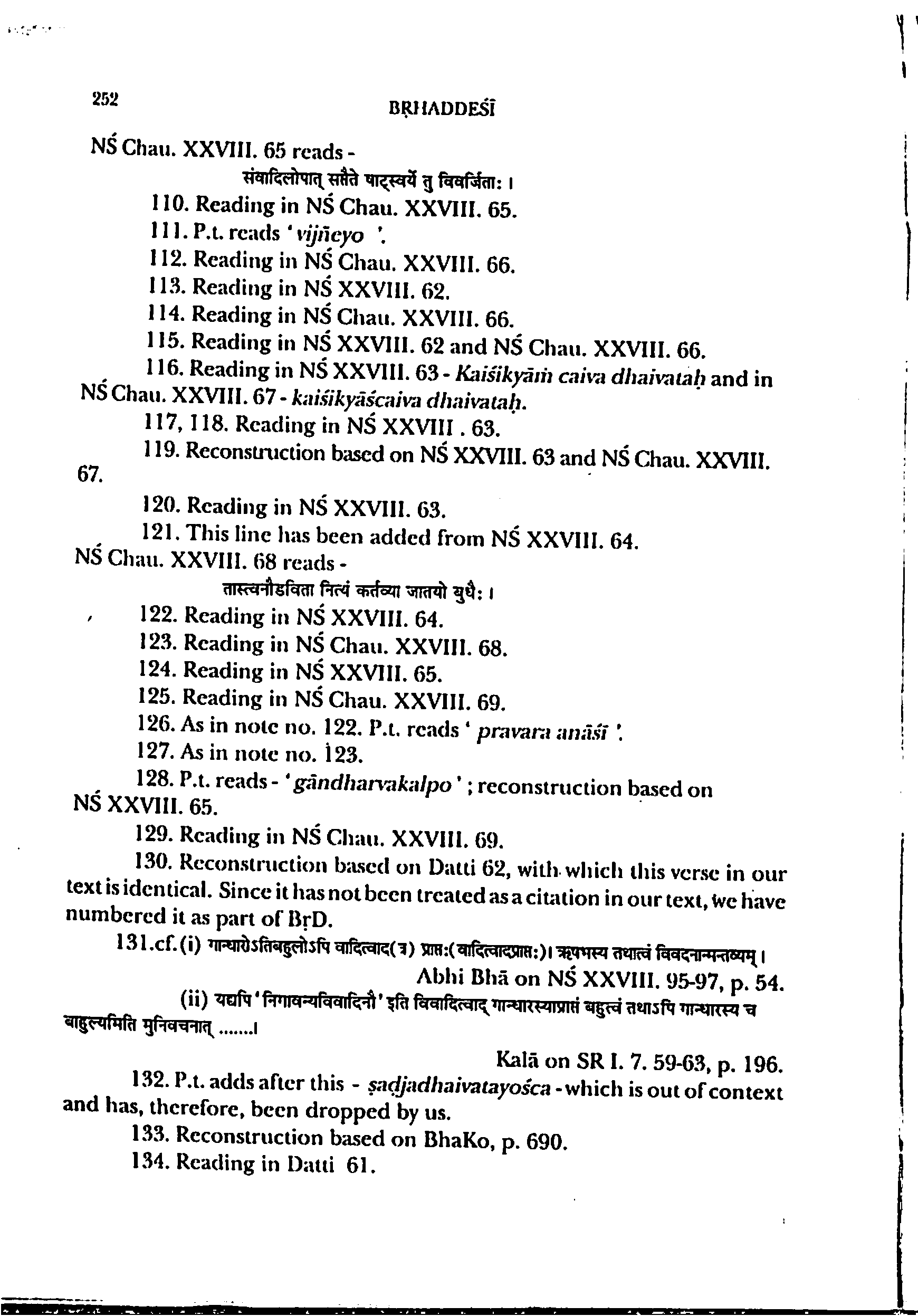
NŚ Chau. XXVIII. 65 reads -2
संवादिलोपात् सप्तैते षाट्स्वर्ये तु विवर्ज?िताः।
110. Reading in NS Chau. XXVIII. 65. 111. P.t. reads 'vijneyo'.7 112. Reading in NŠ Chau. XXVIII. 66. 113. Reading in NŚ XXVIII. 62. 114. Reading in NS Chau. XXVIII. 66. 115. Reading in NŚ XXVIII. 62 and NŚ Chau. XXVIII. 66. 116. Reading in NŚ XXVIII. 63 - Kaiśikyām caiva dhaivataḥ and in NŚ Chau. XXVIII. 67 - kaiśikyāścaiva dhaivataḥ. 117, 118. Reading in NS XXVIII . 63. 119. Reconstruction based on NŚ XXVIII. 63 and NŚ Chau. XXVIII. 67. 120. Reading in NŚ XXVIII. 63. 121. This line has been added from NŚ XXVIII. 64. NŠ Chau. XXVIII. 68 reads -
तास्त्वनौडविता नित्यं कर्तव्या ज?ातयो युधैः।
122. Reading in NŚ XXVIII. 64. 123. Reading in NŚ Chau. XXVIII. 68. 124. Reading in NŚ XXVIII. 65. 125. Reading in NS Chau. XXVIII. 69. 126. As in note no. 122. P.t. reads ' pravara anāšī '. 127. As in note no. 123. 128. P.t. reads - 'gandharvakalpo'; reconstruction based on NŚ XXVIII. 65. 129. Reading in NŚ Chau. XXVIII. 69. 130. Reconstruction based on Datti 62, with which this verse in our text is identical. Since it has not been treated as a citation in our text, we have numbered it as part of BrD.
131.cf.(i) गान्यारोऽतिबहुलोऽपि वादित्वाद(त्र) प्राप्तः(वादित्वादप्राप्तः)। ऋषभस्य तथात्वं विवदनान्मन्तस्यम् ।
Abhi Bhā on NŚ XXVIII. 95-97, p. 54.5 (ii) यद्यपि 'निगावन्यविवादिनौ' इति विवादित्वाद् गान्धारस्याप्राप्तं बहुत्वं तथाऽपि गान्धारस्य
बाहुल्यमिति मुनिवचनात् .....।
Kalā on SR I. 7. 59-63, p. 196. 132. P.t. adds after this - şadjadhaivatayośca - which is out of context and has, therefore, been dropped by us. 133. Reconstruction based on BhaKo, p. 690. 134. Reading in Datti 61. the first control of the control of the control of the control of the control of the control of the control of the control of the control of the control of the control of the control of the control of the control of the co
English — Sharma
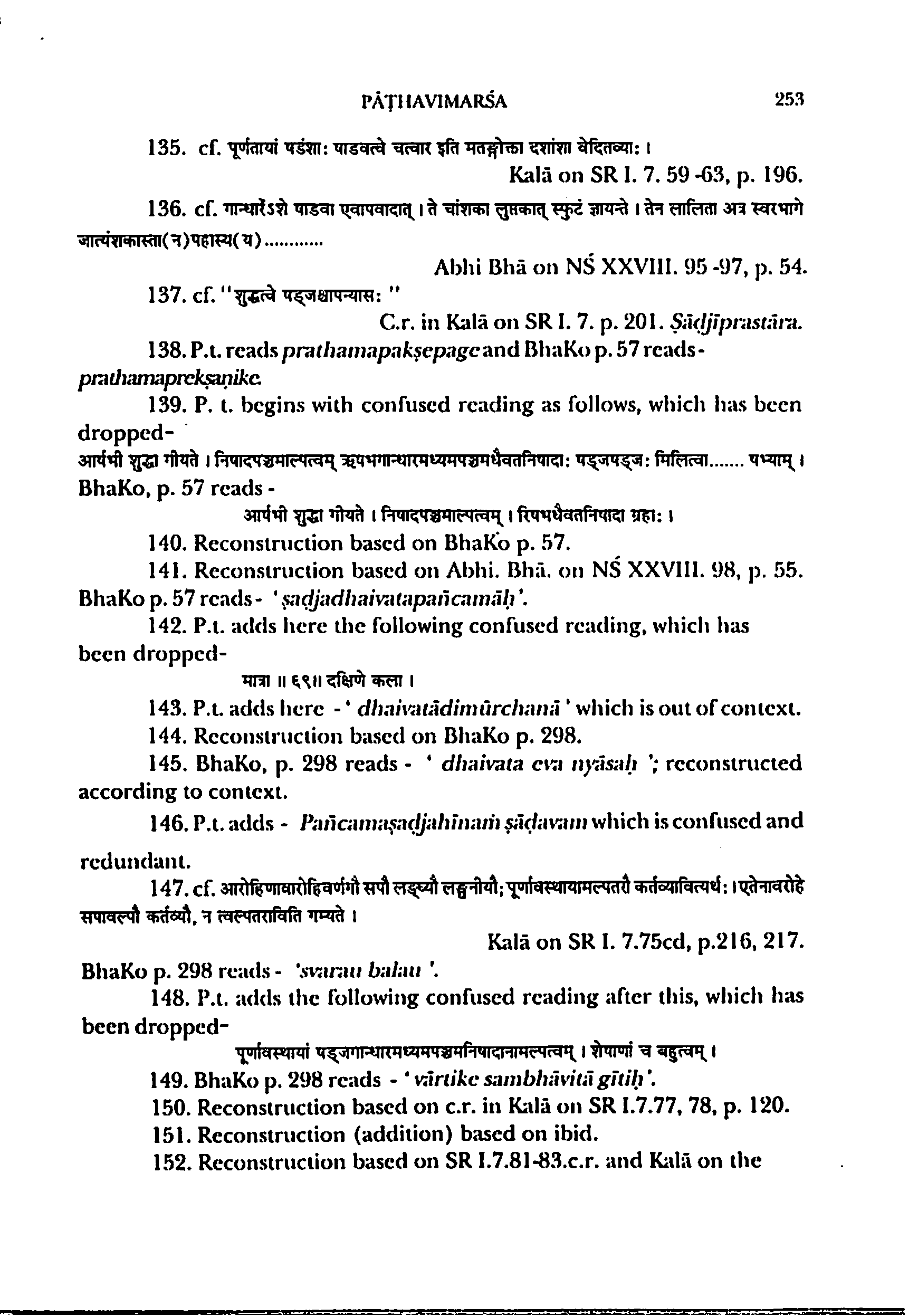
135. cf. पूर्णतायां पडंशा: पाडवत्वे चत्वार इति मतङ्गोक्ता दशांशा वेदितव्या: ।
Kalā on SR I. 7. 59 -63, p. 196. 136. cf. गान्धारें ऽशे पाडवा एवापवादात् । ते चांशका लुप्तकात् स्फुटं ज्ञायन्ते । तेन लालिता अत्र स्वरभागे जात्यंशकास्ता(न)पहास्य(य)..... Abhi Bhā on NŚ XXVIII. 95-97, p. 54.5 137. cf. "शुद्धत्वे पड्जधापन्यास: " C.r. in Kalā on SR I. 7. p. 201. Ṣādjīprastāra.10 138. P.t. reads prathamapaksepage and BhaKo p. 57 reads- prathamaprekşanike. 139. P. t. begins with confused reading as follows, which has been dropped-
आर्यभी शुद्धा गीयते । निपादपञ्चमाल्पत्वम् ऋषभगान्धारमध्यमपञ्चमधैवतनिपादा: पङ्जपङ्ज: मिलित्वा...... पध्याम् ।
BhaKo, p. 57 reads -4
आर्पभी शुद्धा गीयते । निषादपञ्चमाल्पत्वम् । रिषभधैवतनिषादा ग्रहा: ।
140. Reconstruction based on BhaKo p. 57. 141. Reconstruction based on Abhi. Bhā. on NŚ XXVIII. 98, p. 55. BhaKo p. 57 reads - ‘ṣaḍjadhaivatapañcamāḥ’. 142. P.t. adds here the following confused reading, which has been dropped-
मात्रा ॥६९॥ दक्षिणे कला ।
143. P.t. adds here - 'dhaivatādimūrchanā' which is out of context. 144. Reconstruction based on BhaKo p. 298. 145. BhaKo, p. 298 reads - ' dhaivata eva nyāsalı'; reconstructed according to context. 146. P.t. adds - Pañcamaṣadjahīnam ṣāḍavam which is confused and redundant. 147. cf. आरोहिणाबारोहिवर्णगौ सपौ लङ्घ्यौ लङ्घनीयौ; पूर्णावस्थायामल्पतरौ कर्तव्यावित्यर्थ:।एतेनावरोहे
सपावल्पौ कर्तव्यौ, न त्वल्पतराविति गम्यते ।
Kalā on SR I. 7.75cd, p.216, 217. BhaKo p. 298 reads - 'svarau balau '. 148. P.t. adds the following confused reading after this, which has been dropped-
पूर्णावस्थायां षड्जगान्धारमध्यमपञ्चमनिषादानामल्पत्वम् । शेषाणां च बहुत्वम् ।
149. BhaKo p. 298 reads - ‘vārtike sambhāvitā gītiḥ’. 150. Reconstruction based on c.r. in Kalā on SR I.7.77, 78, p. 120. 151. Reconstruction (addition) based on ibid. 152. Reconstruction based on SR I.7.81-83.c.r. and Kalā on the
1.[attribution] Brihaddesi is the primary text being edited and commented upon in this scholarly apparatusBRHADDEŚĪ
2.[citation] Natyasastra Chaukhamba edition is cited as a comparative textual source for establishing readingsNŚ Chau. XXVIII. 65 reads -
5.[citation] Abhinavabharati is cited as a commentarial authority on Natyasastra passagesAbhi Bhā on NŚ XXVIII. 95-97, p. 54.
7.[citation] P.t. (Pratimakosa or similar printed text) is used as a comparative manuscript source with variant readings that are sometimes rejected111. P.t. reads 'vijneyo'.
8.[enumeration]Pancama is enumerated as one of the notes discussed in conjunction with other svaras in musical compositionsṛषभगान्धारमध्यमपञ्चमधैवतनिषादाः
9.[relation]Murchana is a musical concept related to scale operations or melodic modes in classical Indian musicdhaivatādimūrchanā
10.[relation]Sadjiprastara is a technical concept related to svara arrangements in their pure form"शुद्धत्वे पड्जधापन्यासः " C.r. in Kalā on SR I. 7. p. 201. Ṣādjīprastāra.
11.[structural]Nyasa refers to a musical structural concept that can have specific note assignmentsdhaivata eva nyāsalı
1.[attribution]Brihaddesi is the primary text being edited and commented upon in this scholarly apparatusBRHADDEŚĪ
2.[citation]Natyasastra Chaukhamba edition is cited as a comparative textual source for establishing readingsNŚ Chau. XXVIII. 65 reads -
3.[citation]Kalānidhi is cited as a commentarial source interpreting musical concepts from SangitaratnakaraKalā on SR I. 7. 59-63, p. 196.
4.[citation]Bhagavadajjuka is used as a textual parallel for reconstruction of difficult passagesBhaKo, p. 57 reads -
5.[citation]Abhinavabharati is cited as a commentarial authority on Natyasastra passagesAbhi Bhā on NŚ XXVIII. 95-97, p. 54.
6.[citation]Sangitaratnakara is referenced as a fundamental musical treatise alongside BrihaddesiKalā on SR I. 7. 59-63, p. 196.
7.[citation]P.t. (Pratimakosa or similar printed text) is used as a comparative manuscript source with variant readings that are sometimes rejectedP.t. reads 'vijneyo'.
9.[relation] Murchana is a musical concept related to scale operations or melodic modes in classical Indian musicP.t. adds here - 'dhaivatādimūrchanā' which is out of context.
10.[relation] Sadjiprastara is a technical concept related to svara arrangements in their pure formcf. "शुद्धत्वे पड्जधापन्यासः " C.r. in Kalā on SR I. 7. p. 201. Ṣādjīprastāra.
11.[structural] Nyasa refers to a musical structural concept that can have specific note assignmentsBhaKo, p. 298 reads - ' dhaivata eva nyāsalı'; reconstructed according to context.