Source scans · vol_II_p154
recto · open full
scan recto
verso · open full
scan verso
Bṛhaddeśī · Volume II
pp. 1–291folio 154
Devanāgarī (Bṛhaddeśī)
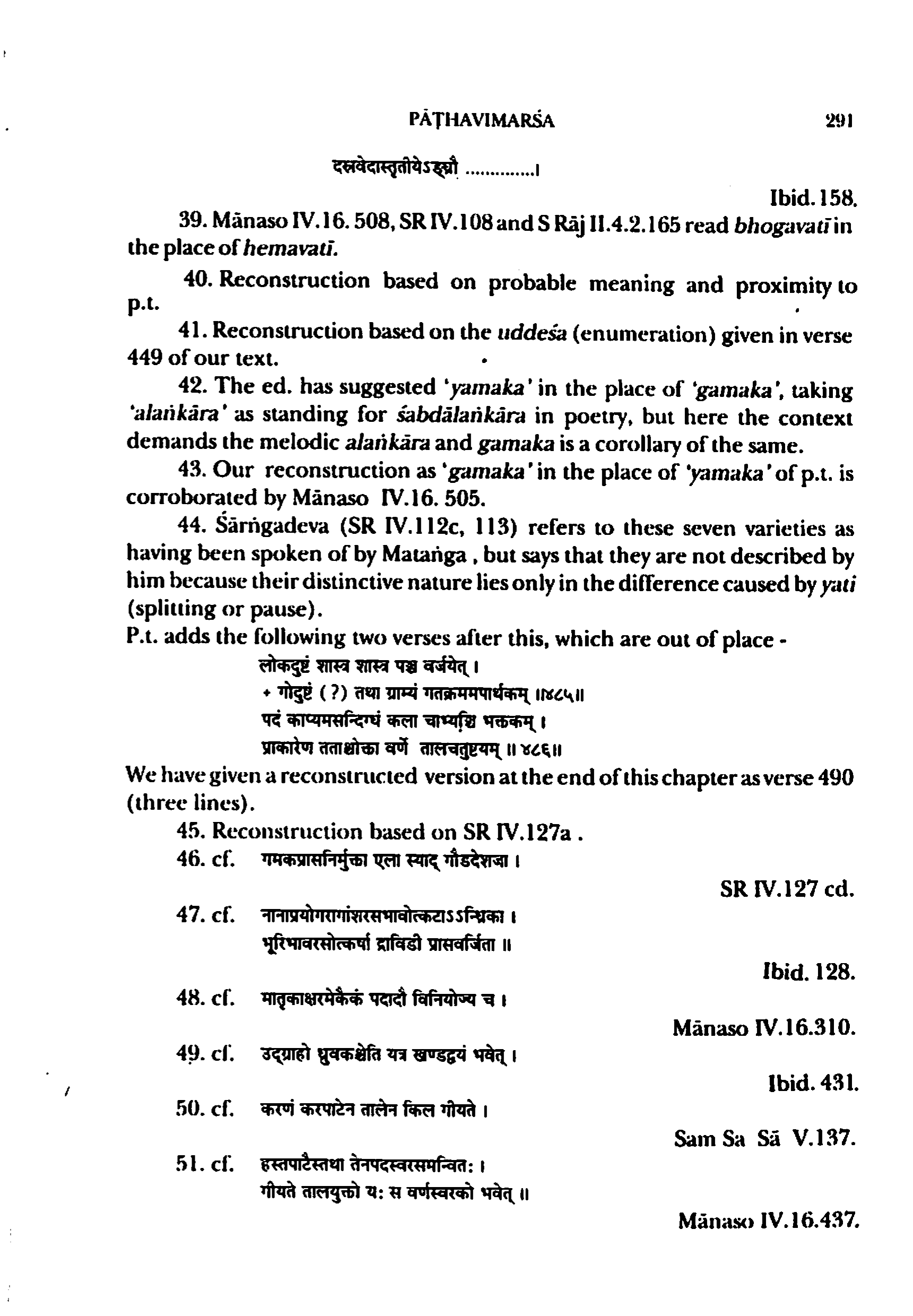
उद्ग्राहस्तथानुद्ग्राहः सम्बोधो ध्रुवकं तथा ।
30. cf.
आभोगः पञ्चपादा स्युरेलाया कश्यपोदिता6
BhaKo. p. 95, citation from Nānyadeva. Bha. Bhā MS folio no. 334 reads 'udgrāhodhrāhadgruvakaḥ' as foota. व्यत्पत्तये निरूप्यन्ते मतङ्गादिमतोदिता।1 31. cf.
अकारे दैवतं विष्णुरिकारे कुसुमायुधः ।
लक्ष्मीलंकार एलानामिति वर्णेषु देवताः॥
SR IV.41 cd - 42.
नादावत्यादिभेदेन शुद्धा ज?्ञेया चतुर्विधा ।
32. cf.
नादावती तथा हंसावती नन्दावतीति च ॥
भद्रावतीति, तासा च क्रमाह्रक्षणमुच्यते ।
आसु यो नियमः प्रोक्तो मतङ्गाधैर्गणादितः ॥
स आद्यचरणस्यात्र पद्दृयसमाश्रयः।
पद्द्वयानन्तरतः स्वेच्छया गणकल्पनम् ॥
S Rāj II.4.2.92 - 94.
हंसा इव गतिश्वास्या विकटा तु पदे यति8[:] ।
33. cf. (i)
हंसी तेनेयमेला स्याद् दूतमध्यविलम्बितैः॥
Bha Bhā folio 339. हंसाबत्या गतिर्भव्या ..... (ii) Mānaso IV.16.460.
मतङ्गोऽपि च मात्रैलाचतुष्टयमभाषत ।
34. cf.
रतेः कामा च बाणा च चन्द्रा लेखा रवे परे(गणैः परैः) ॥
अश्विरामैर्युगरसै ऋतुनन्दैरनुक्रमात् ।
वसुदक्षेन्द्रभिश्चैताश्चतस्रः स्युः[कलाः] करैः ॥
S Rāj II.4.2.154.
आद्ये पादे द्वितीये च यस्या रुद्रकलाः पृथक् ।
35. cf.
तृतीये दिङ्गता सा स्याद् रतिलेखा रतेर्गणैः ॥
S Rāj 11.4.2.155. The above description is according to the opinion of Matanga; the same applies to notes 36 -38 below.
कामलेखा कामगणैः पादयोराद्ययोः पृथक् ।
36. cf.
मात्रा द्वाविंशतिः शेषे चरणे यत्र विंशतिः ॥
Ibid. 156.
युग्मबह्मिता मात्रा यस्या प्रत्यिङ् घ्रसंस्थिता ।
37. cf.
बाणलेखा बाणगणैः सा बाणा रिगणोञ्झिता7
Ibid. 157.
चन्द्रलेखा मिश्रगणैः तस्या द्रृमः कलाविधिम् ।
38. cf.
आद्यपादद्वये चहित्वेदमात्राः पृथक् पृथक् ॥
English — Sharma
ŀ
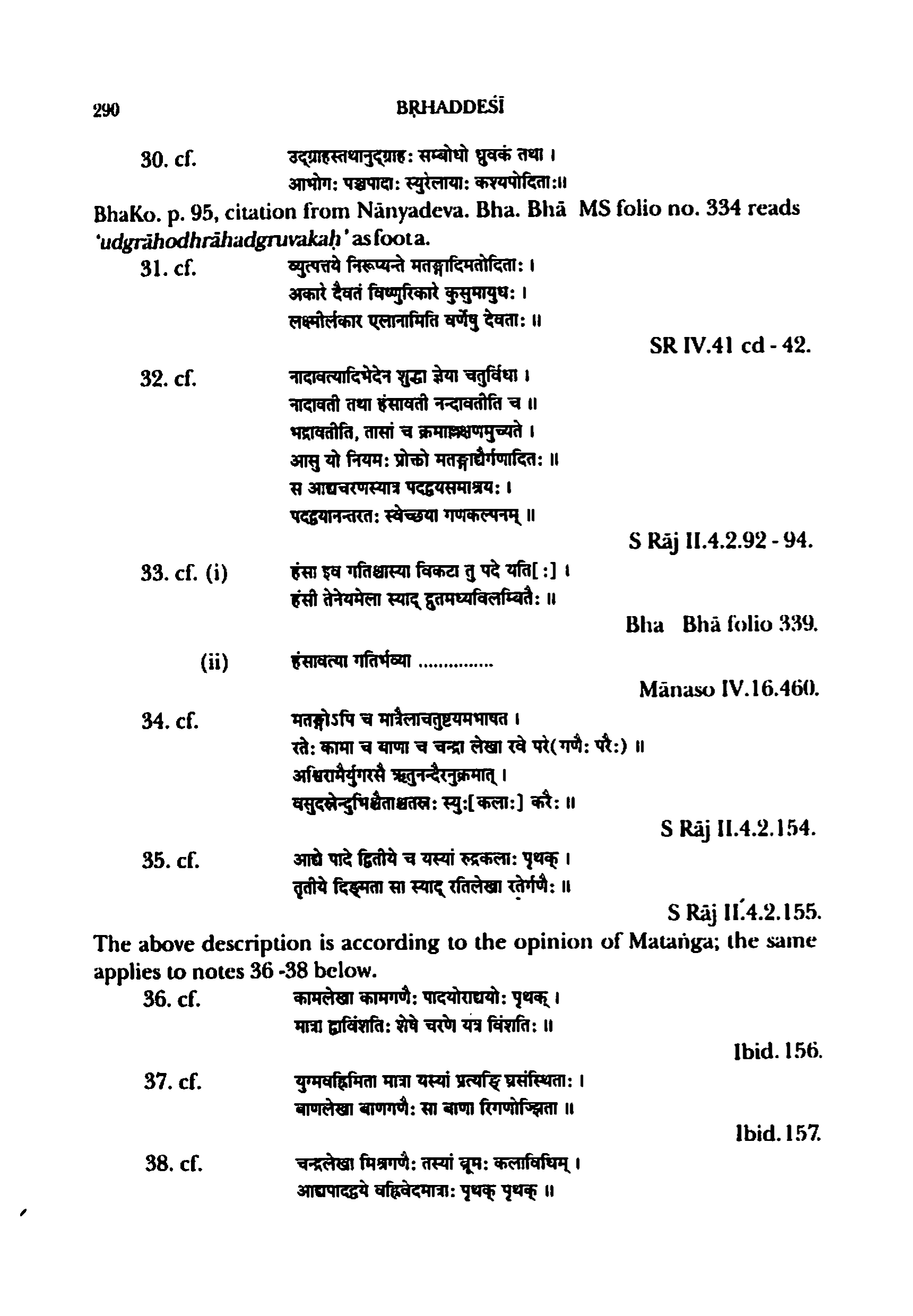
दस्रवेदास्तृतीयेऽङ्ग्री .....।
Ibid. 158. 39. Mānaso IV.16. 508, SR IV.108 and S Rāj II.4.2.165 read bhogavatī in the place of hemavatī. 40. Reconstruction based on probable meaning and proximity to p.t. 41. Reconstruction based on the uddeśa (enumeration) given in verse 449 of our text. 42. The ed. has suggested 'yamaka' in the place of 'gamaka', taking 'alankāra' as standing for śabdālankāra in poetry, but here the context demands the melodic alankāra and gamaka is a corollary of the same. 43. Our reconstruction as 'gamaka' in the place of 'yamaka' of p.t. is corroborated by Mānaso IV.16. 505. 44. Śārngadeva (SR IV.112c, 113) refers to these seven varieties as having been spoken of by Matanga, but says that they are not described by him because their distinctive nature lies only in the difference caused by yati (splitting or pause). P.t. adds the following two verses after this, which are out of place -
लोकदुष्टं शास्त्र शास्त्र पञ्च वर्जयेत्।
+ गोदुष्टं (?) तथा ग्राम्यं गतक्रममपार्थकम् ॥४८५॥
पदं काप्यमसन्दिग्धं कला चाभ्यश्चि भक्तकम् ।
प्राकारेण तताश्चोका वर्णे तालचतुष्टयम् ॥४८६॥ We have given a reconstructed version at the end of this chapter as verse 490 (three lines). 45. Reconstruction based on SR IV.127a.
46. cf. गमकप्रासिनमुक्ता एला स्याद गौडदेशजा।
SR IV.127 cd.
ानाप्रयोगरागांशरसभावोत्कटाऽऽन्धिका ।
47. cf.
भूरिभावरसोत्कर्षा द्राविडी प्रासवर्जिता ॥
Ibid. 128.
48. cf. मातृकाक्षरमेकैकं पदादौ विनियोज्य च।
Mānaso IV.16.310.
49. cf. उद्ग्राहो ध्रुवकश्चेति यत्र खण्डद्वयं भवेत्।
Ibid. 431.
50. cf. करणं करपाटेन तालेन किल गीयते ।
Sam Sa Sā V.137.
51. cf. हस्तपाटैस्तथा तेनपदस्वरसमन्वित: ।
गीयते तालयुक्तो य: स वर्णस्वरको भवेत् ॥
Mānaso IV.16.437.
1.[attribution]Bṛhaddeśī contains teachings attributed to Mātaṅga on ēlāya classification and constructionव्यत्पत्तये निरूप्यन्ते मतङ्गादिमतोदिता।
4.[enumeration]Four varieties of nādāvatī are enumerated: Nādāvatī, Hamsāvatī, Nandāvatī, and Bhadrāvatīनादावती तथा हंसावती नन्दावतीति च । भद्रावतीति
6.[structural]Ābhoga and pañcapāda are described as types of ēlāya according to Kāśyapa's doctrineआभोगः पञ्चपादा स्युरेलाया कश्यपोदिता
7.[structural]Bāṇalēkhā is constructed with bāṇagaṇa and is associated with ṛgaṇaबाणलेखा बाणगणैः सा बाणा रिगणोञ्झिता
8.[structural]Vikaṭā moves with a specific gait related to the foot pattern in ēlāyaविकटा तु पदे यति
9.[structural]Kāmalēkhā is constructed with kāmagaṇa in the first two feet, with twenty-two mātrā in the remaining foot and twenty mātrā in the last footकामलेखा कामगणैः पादयोराद्ययोः पृथक् । मात्रा द्वाविंशतिः शेषे चरणे यत्र विंशतिः
10.[structural]Chandralēkhā is constructed with miśragaṇa with a specific kālā pattern in the first two feetचन्द्रलेखा मिश्रगणैः तस्या द्रृमः कलाविधिम् । आद्यपादद्वये चहित्वेदमात्राः पृथक् पृथक्
2.[citation]Nānyadeva is cited as a source for teachings on ēlāya in the Bṛhaddeśī traditioncf. 30. cf. BhaKo. p. 95, citation from Nānyadeva.
3.[citation]Multiple treatises (Sārangadevapaddhati, Saṅgītarāja, Mānasolāsa) provide parallel and corroborating evidence for Mātaṅga's ēlāya doctrineS Rāj II.4.2.92 - 94. Mānaso IV.16.460.
5.[relation]The seven varieties of ēlāya are distinguished only by differences in yati (splitting or pause)these seven varieties as having been spoken of by Matanga, but says that they are not described by him because their distinctive nature lies only in the difference caused by yati (splitting or pause).