śakabhāṣā technical_term
Generative rules (1) ↗ filter all
R_1026_sakabhasa_structuralstructural · 3 att.
Śakabhāṣā has ṛṣabha as aṁśa, madhyama as nyāsa, is complete, has abundant gāndhāra-pañcama; born of śakarāga within pañcamaṣāḍava
Pseudocode (DSL v1.1) ↗ full DSL (raw text)
RULE id: śakabhāṣā (cluster 1026)
SCOPE: technical_term family
STATUS: empirical
CONFIDENCE: empirical
PROTECT: false
Essence pseudocode — identity + RECORD. The page citations for each slot value are in the Grammar record table above (audit trail). The full DSL adds ASSERTIONS with verbatim quotes (see Affirmations below) and CITED_RULES (see Graph relations).
Graph relations
Outgoing (7)
--[structural]--> aṁśa (1)--[relation]--> bhāṣā (1)--[relation]--> pañcamaṣāḍava (1)--[structural]--> ṛṣabha (1)--[structural]--> gändhära-pañcama (1)--[relation]--> śakarāga (1)--[structural]--> madhyama (1)
Incoming (2)
pañcamaṣāḍava --[relation]--> (1)dhaivata-ṛṣabha --[structural]--> (1)
Affirmations (3)
Śakabhāṣā is born of śakarāga in the context of pañcamaṣāḍava
"(This) bhāṣā (subsists) in
pancamaṣāḍava, being born of śakarāga."
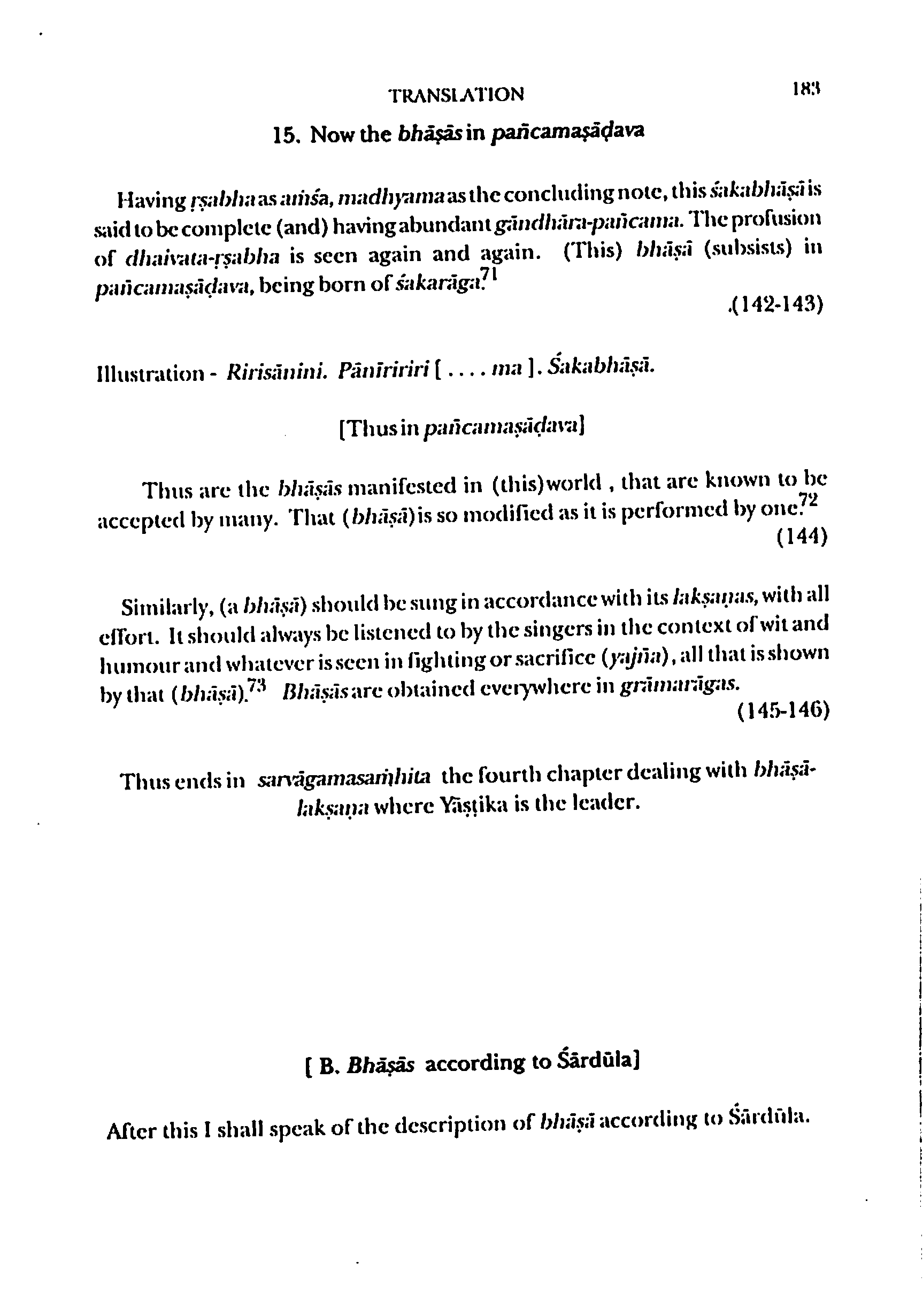
Śakabhāṣā is characterized by having ṛṣabha as aṁśa and madhyama as the concluding note
"Having ṛṣabha as aṁśa, madhyama as the concluding note, this śakabhāṣā is
said to be complete"
Śakabhāṣā is characterized by abundant gändhära-pañcama
"this śakabhāṣā is
said to be complete (and) having abundant gändhära-pañcama."