bāhyaṣāḍavā technical_term
Generative rules (1) ↗ filter all
R_4p0_031structural · 2 att.
bāhyaṣāḍavā = bhāṣā hexatonique: madhyama aniśa, dhaivata concluding, sans ṛṣabha; chantee a l'occasion du yajña
Pseudocode (DSL v1.1) ↗ full DSL (raw text)
RULE id: bāhyaṣāḍavā (cluster 247)
SCOPE: technical_term family
STATUS: empirical
CONFIDENCE: empirical
PROTECT: false
Essence pseudocode — identity + RECORD. The page citations for each slot value are in the Grammar record table above (audit trail). The full DSL adds ASSERTIONS with verbatim quotes (see Affirmations below) and CITED_RULES (see Graph relations).
Graph relations
Outgoing (5)
--[structural]--> hexatonic (1)--[structural]--> aniśa (1)--[structural]--> dhaivata (1)--[structural]--> ṛṣabha (1)--[structural]--> madhyama (1)
Incoming (2)
vesaraṣāḍava --[enumeration]--> (1)vesaraṣāḍava --[relation]--> (1)
Affirmations (3)
bāhyaṣāḍavā is illustrated with the melodic phrase: Mādhā, Mānini pāmāpādhādhā, etc.
"Illustration - Mādhā. Mānini pāmāpādhādhā.
Mādhāmāgā
gāgāgāmāmamanidhā. Māpāpāni. Dhādhādhā. Bāhyaṣāḍavā"
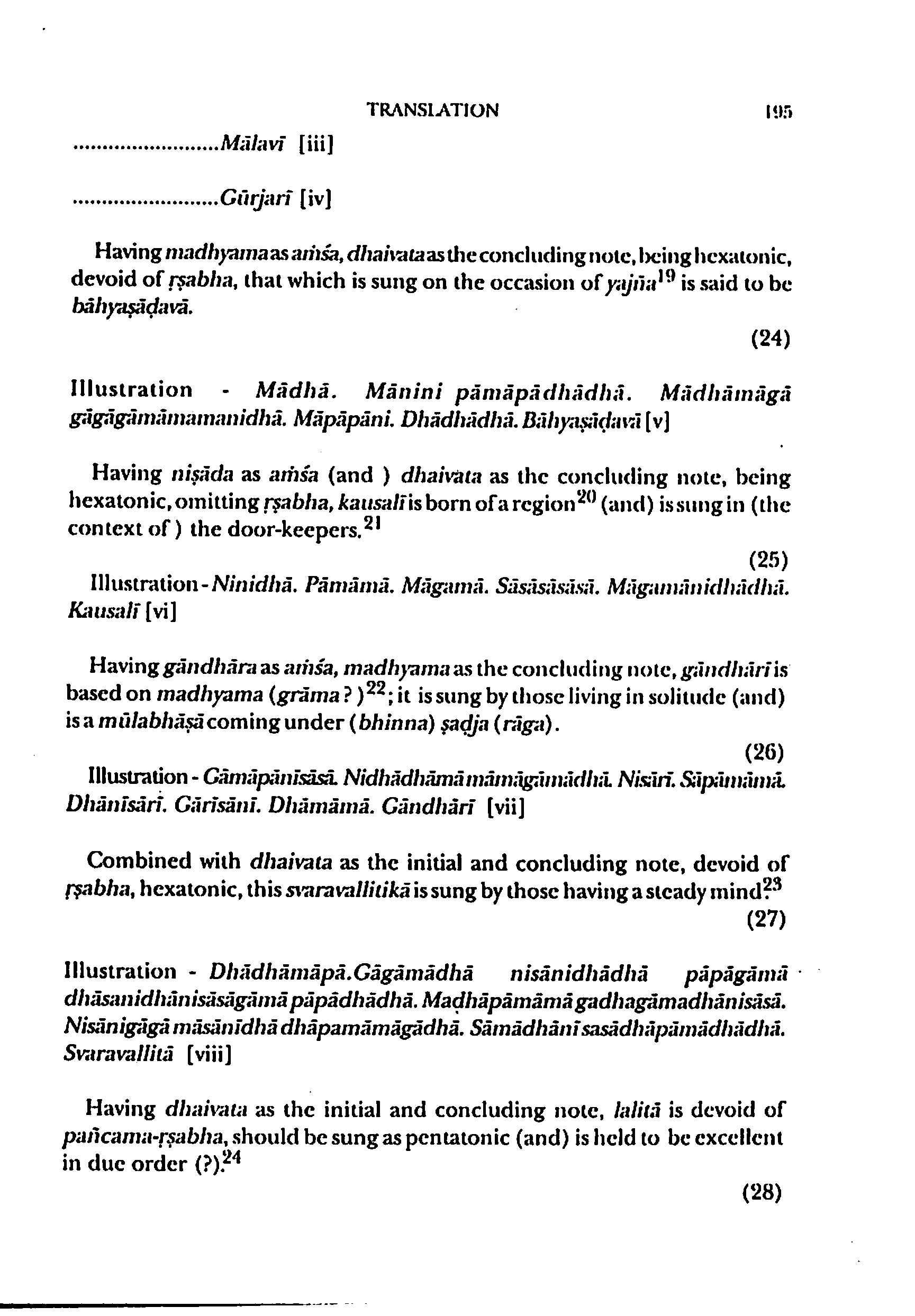
bāhyaṣāḍavā is hexatonic, has madhyama as aniśa, dhaivata as concluding note, and is devoid of ṛṣabha
"Having madhyama as aniśa, dhaivata as the concluding note, being hexatonic,
devoid of ṛṣabha, that which is sung on the occasion of yajña is said to be
bāhyaṣāḍavā."
bāhyaṣāḍavā is sung on the occasion of yajña (ritual sacrifice)
"that which is sung on the occasion of yajña is said to be
bāhyaṣāḍavā."