ākṣiptaka technical_term
Generative rules (2) ↗ filter all
R_c299_aksiptakacomposition · 3 att.
ākṣiptaka = forme construite par groupes de 3 svaras ascendants, durée croissant de 1 à 6 kalās par phrase, séparateur 'nu'aksiptika_definitiondefinition · 2 att.
Ākṣiptikā est une phrase musicale construite à partir de mots à sens sémantique combinés avec des svaras (commençant par pada), ornée des trois mārgas via cacca
Pseudocode (DSL v1.1) ↗ full DSL (raw text)
RULE id: ākṣiptaka (cluster 299)
SCOPE: technical_term family
STATUS: empirical
CONFIDENCE: empirical
PROTECT: false
Essence pseudocode — identity + RECORD. The page citations for each slot value are in the Grammar record table above (audit trail). The full DSL adds ASSERTIONS with verbatim quotes (see Affirmations below) and CITED_RULES (see Graph relations).
Graph relations
Outgoing (4)
--[structural]--> Kalā (2)--[structural]--> svaras (2)--[relation]--> Kalā (1)--[definition]--> pada (1)
Incoming (0)
none
Affirmations (5)
Ākṣiptikā is defined as musical phrases constructed with metrical and tonal elements arranged according to three modes
"चच्चत्पुटादितालेन मार्गत्रयविभूपिता।
आक्षिप्तिका स्वरपदग्रथिता कथिता बुधैः"
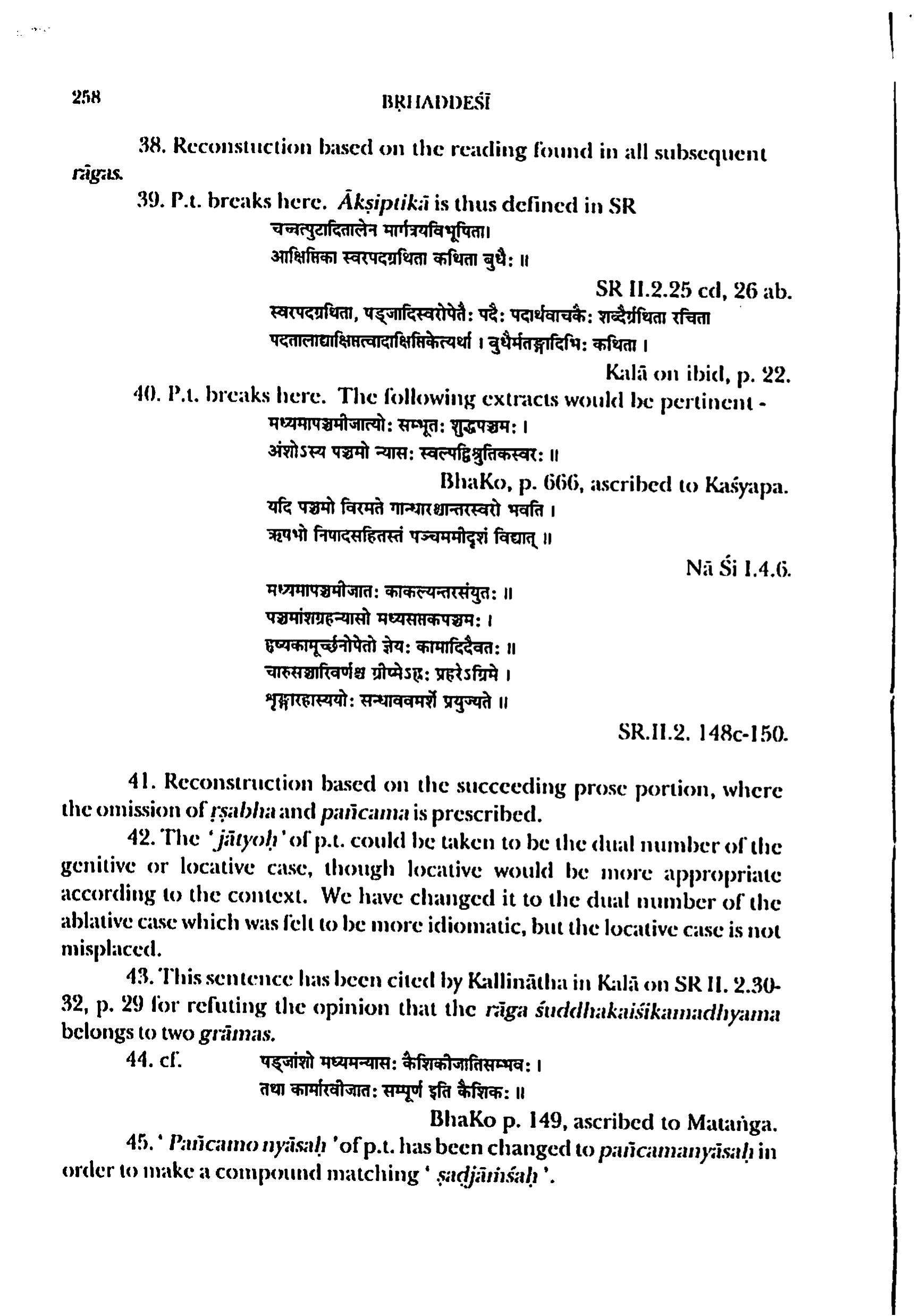
Ākṣiptikā is constructed from words denoting semantic meaning combined with tonal notes beginning with pada
"स्वरपदग्रधिता, पड्ज?ादिस्वरोपेतैः पदैः पदार्थवाचकैः शब्दैग्रंथिता रचिता"
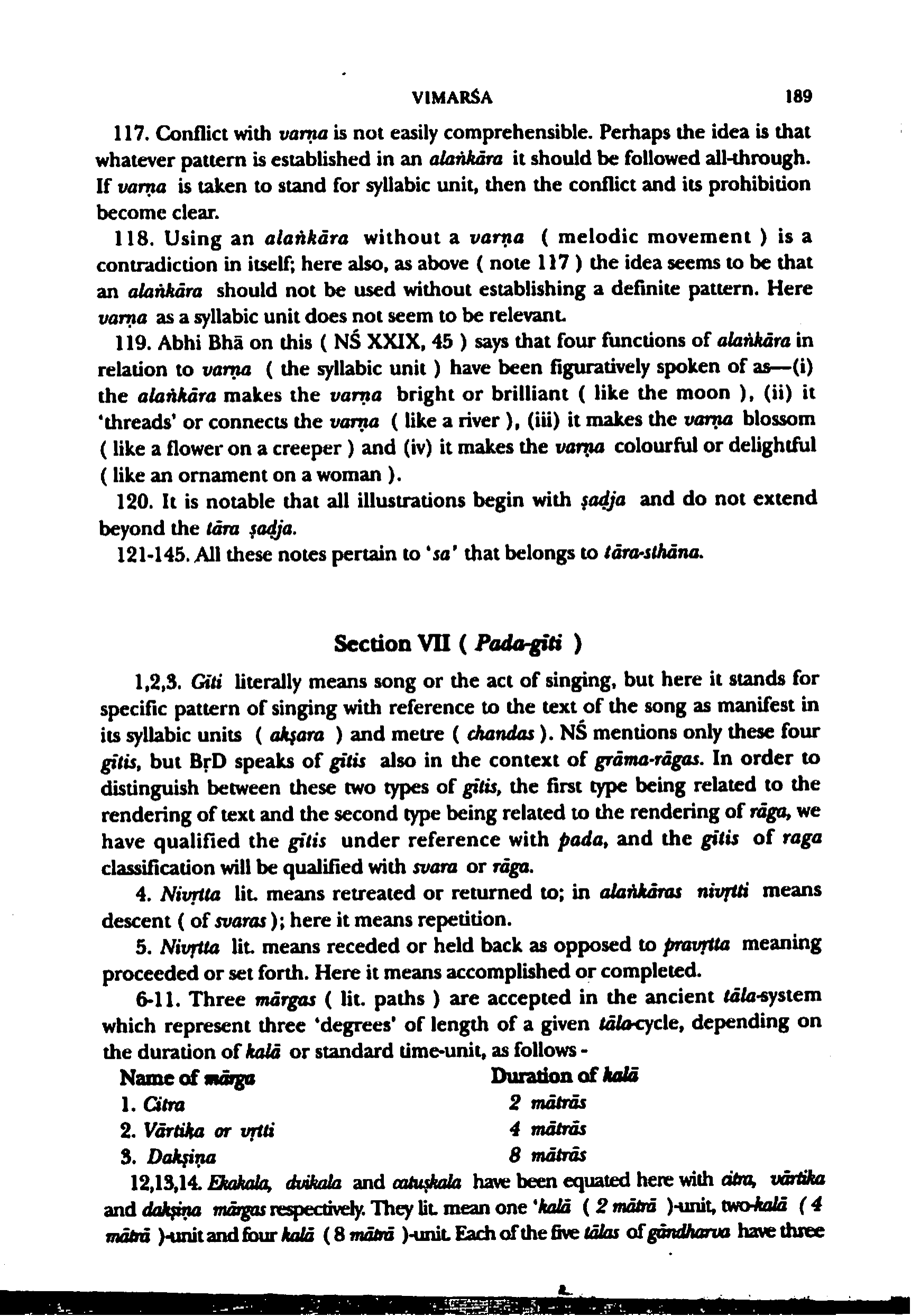
The gradual increase in the duration of phrases from one to six kalās is implied, like ākṣiptaka
"The gradual increase in the duration of each phrase seems to be
prescribed, like ākṣiptaka.( see note 67 above )"
Ākṣiptaka is formed with the measure of kalās starting with one-kalā-unit up to six-kalā-unit with three svaras in the ascending order in each phrase
"Aksiptaka (is formed) with the measure of kalās (time-units) starting with
one-kalā-unit 67 (and extending) upto six-kalā - unit with three svaras in the
ascending order (in each phrase)."
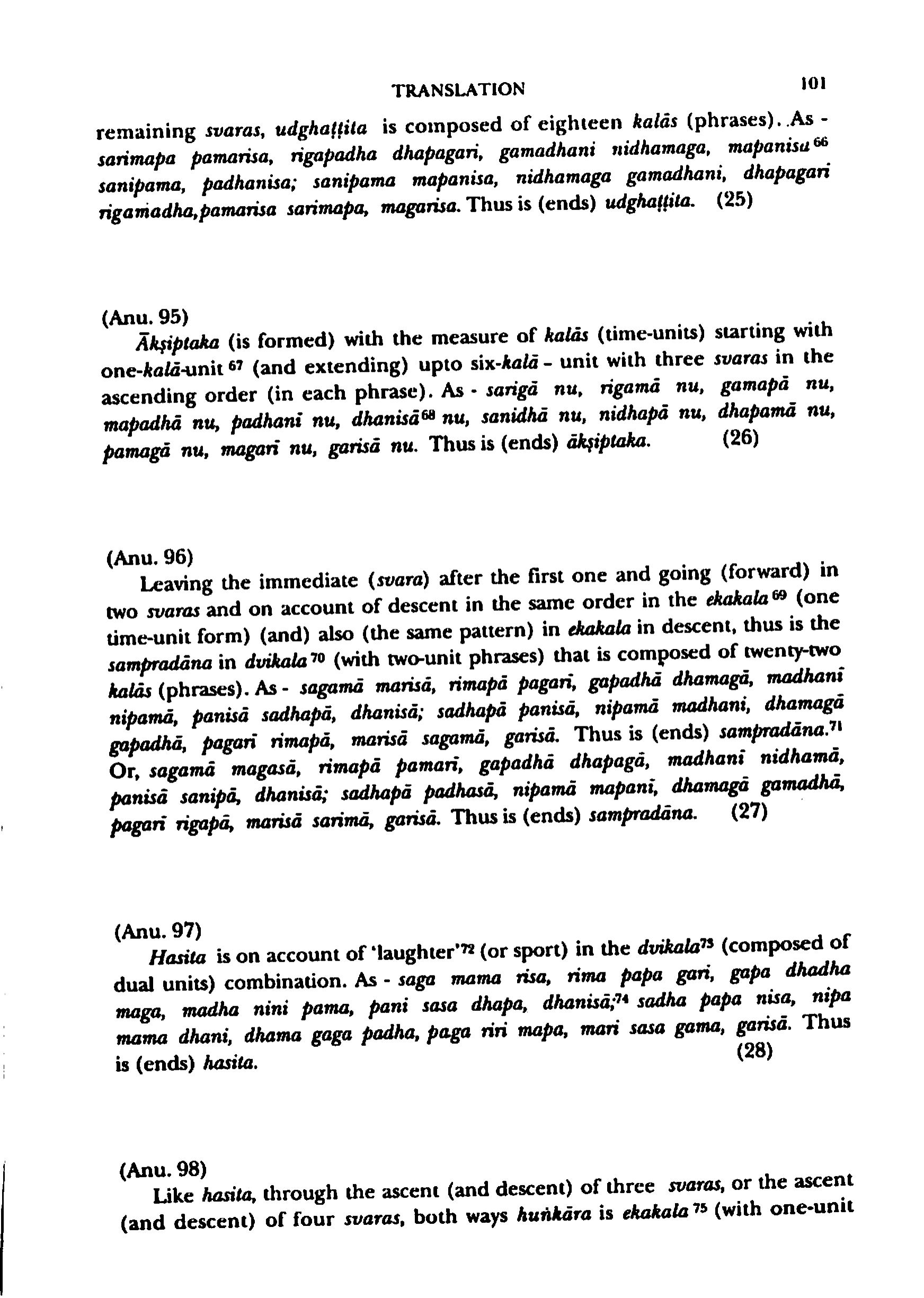
Ākṣiptaka examples use three svaras with the marker 'nu' separating ascending phrases
"sarigā nu, rigamā nu, gamapā nu,
mapadhā nu, padhani nu, dhanisā 68 nu, sanidhā nu, nidhapā nu, dhapamā nu,"