Durgaśakti proper_noun
Pseudocode (DSL v1.1) ↗ full DSL (raw text)
RULE id: durgaśakti (cluster 99)
SCOPE: proper_noun family
STATUS: empirical
CONFIDENCE: empirical
PROTECT: false
Essence pseudocode — identity + RECORD. The page citations for each slot value are in the Grammar record table above (audit trail). The full DSL adds ASSERTIONS with verbatim quotes (see Affirmations below) and CITED_RULES (see Graph relations).
Graph relations
Outgoing (10)
--[attribution]--> dhaivatī (1)--[attribution]--> gāndhārapañcama (1)--[attribution]--> śuddhā (1)--[attribution]--> sādhāritā (1)--[attribution]--> bhinna (1)--[attribution]--> vesara (1)--[attribution]--> gīti (1)--[attribution]--> sadjakaisika (1)--[attribution]--> gaudi (1)--[attribution]--> rāga (1)
Incoming (5)
şadjagrāma --[attribution]--> (1)vesaraṣāḍava --[attribution]--> (1)śuddhā --[structural]--> (1)vesara --[attribution]--> (1)sadjakaisika --[attribution]--> (1)
Affirmations (3)
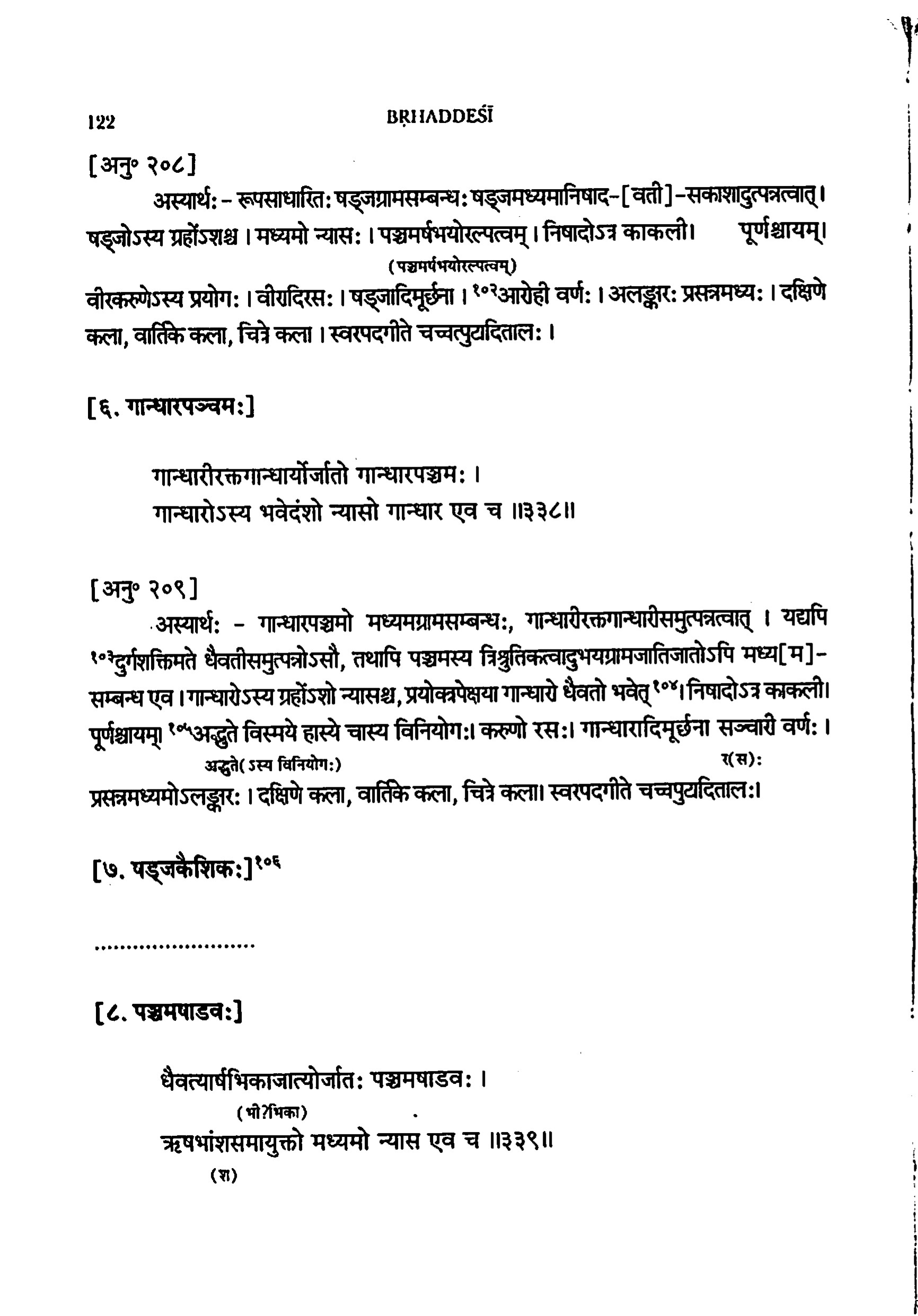
Durgaśakti presents an alternative doctrine of five gītis
"[The opinion of Durgaśakti]
Gītis should be known to be five viz. śuddhā, then bhinnā, vesarā, gauḍī
(and) sādhāritā; this is the opinion of Durgā (Durgaśakti)."
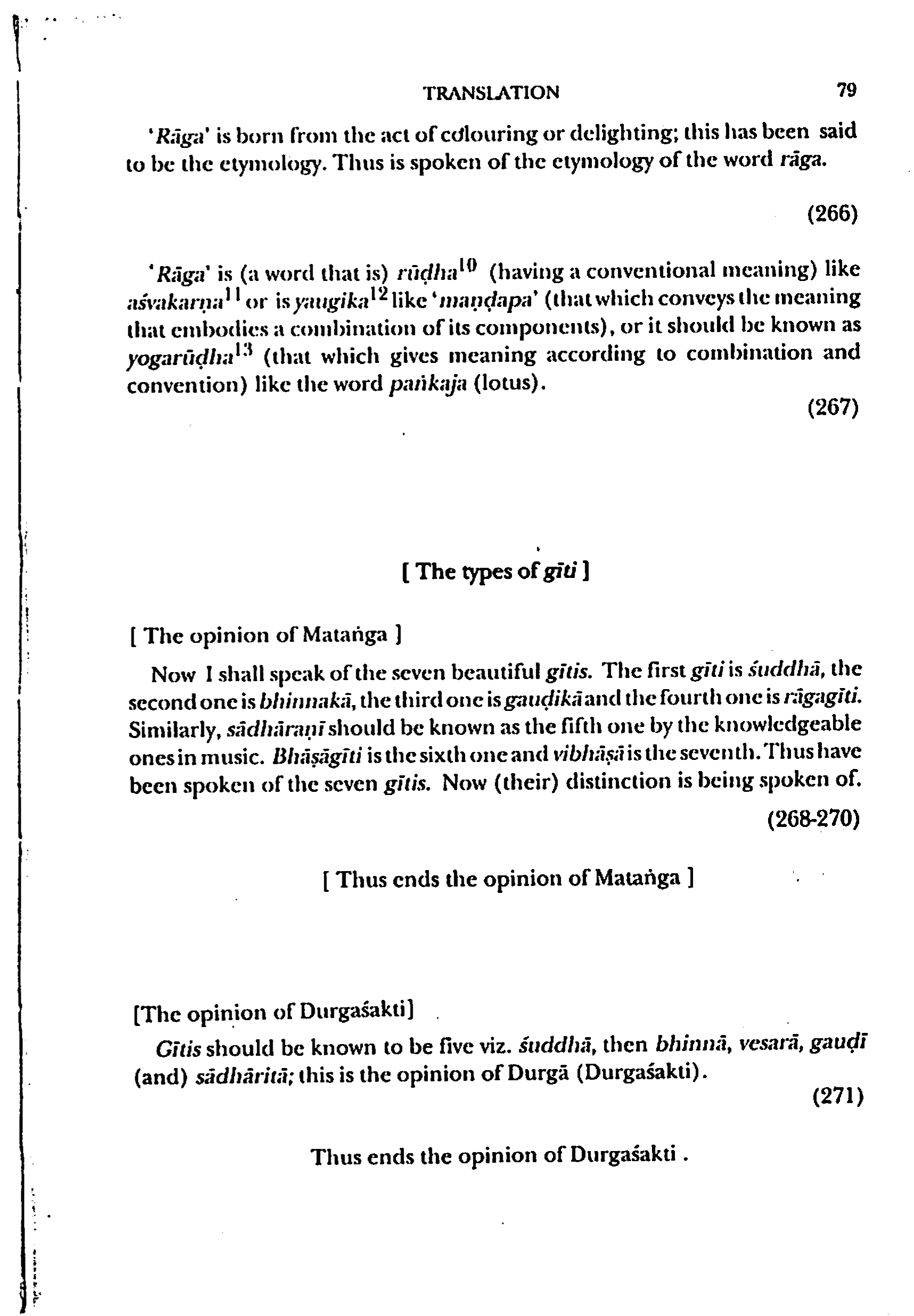
Durgaśakti claims that sadjakaisika alone is prominent in classification of rāgas
"In the opinion of Durgaśakti, on the other hand,
sadjakaisika alone is prominent."
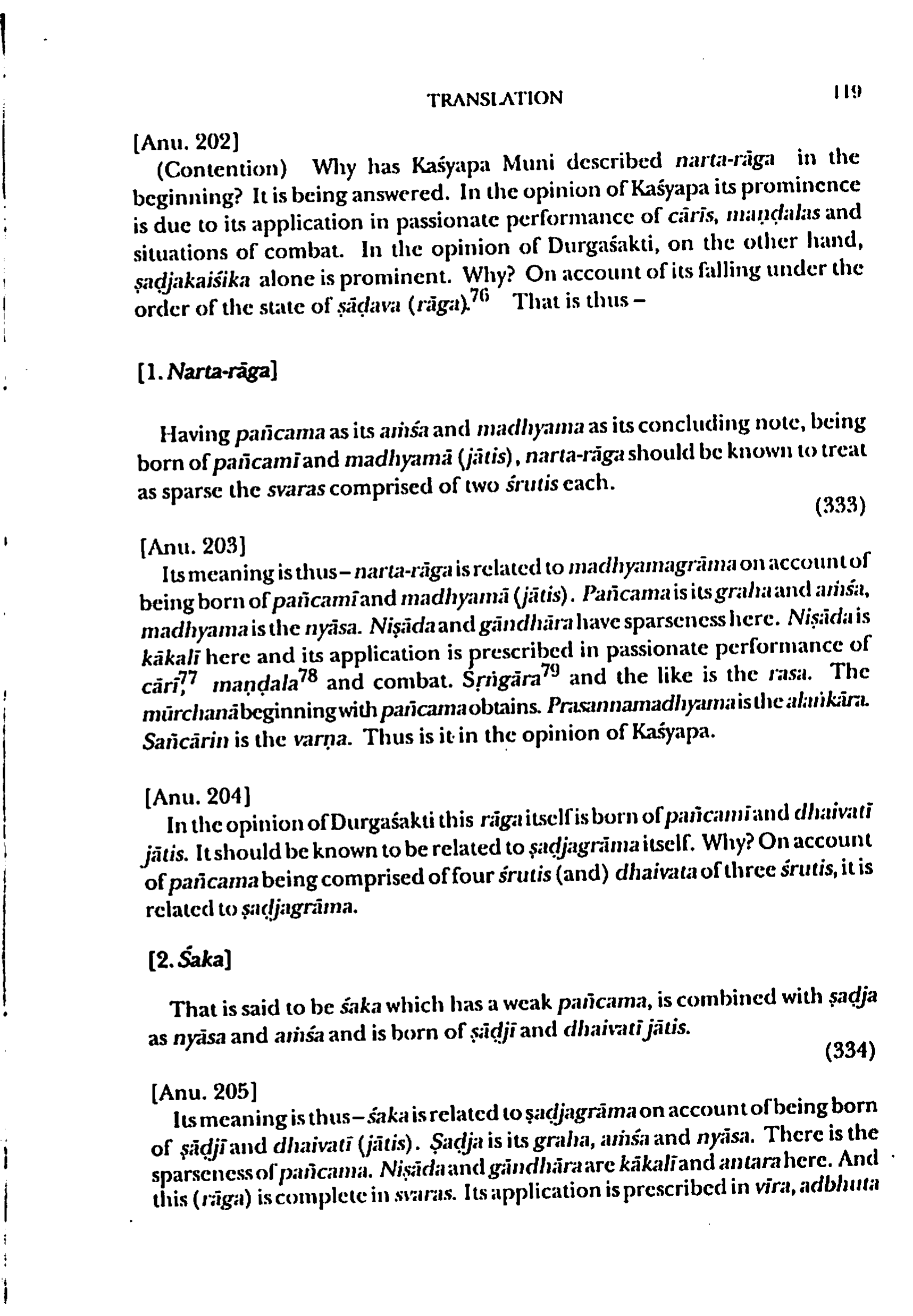
Durgaśakti holds an alternative view that Gāndhārapañcama is born of dhaivatī
"यद्यपि
१॰३दुर्गशक्तिमते धैवतीसमुत्पत्रोऽसौ"