dhaivatī jati
Grammar record (family: jati)
| amsa_svaras | ṛṣabha and dhaivata | p.vol_II_p021, conf 0.95 |
| apanyasa_svaras | These two alongwith madhyama are apanyāsas | p.vol_II_p021, conf 0.90 |
| graha_svaras | dhaivata and ṛṣabha | p.vol_II_p033, conf 0.95 |
Generative rules (5) ↗ filter all
dhaivati_amsa_setenumeration · 2 att.
In dhaivatī jāti, ṛṣabha and dhaivata are designated as aṁśas, and these two together with madhyama are apanyāsas.dhaivati_grahas_amsas_structuralassignment · 1 att.
Dhaivatī (jāti) has dhaivata and ṛṣabha as both grahas and aṁśas.dhaivati_rasa_dramatic_useassignment · 1 att.
Dhaivatī's rasas are vīra, bībhatsa, and bhayānaka; prescribed in dhruvā of the first scene.dhaivati_sevenfold_amsa_structureenumeration · 1 att.
Dhaivatī is seven-fold with seven aṁśas: one śuddhā, two vikṛtās in complete state, and two each of ṣāḍava-auḍuva.dhaivati_prastara_eighth_vidaristructural · 1 att.
Dhaivatī (as gāndhārī) has a prastāra whose eighth vidārī reads 'nidha pani mā mapari gā gā gā gā'.
Pseudocode (DSL v1.1) ↗ full DSL (raw text)
RULE id: dhaivatī (cluster 84)
SCOPE: jati family
STATUS: canonical
CONFIDENCE: canonical
PROTECT: true

RECORD:
  amsa_svaras     = ṛṣabha and dhaivata
  apanyasa_svaras = These two alongwith madhyama are apanyāsas
  graha_svaras    = dhaivata and ṛṣabha
Essence pseudocode — identity + RECORD. The page citations for each slot value are in the Grammar record table above (audit trail). The full DSL adds ASSERTIONS with verbatim quotes (see Affirmations below) and CITED_RULES (see Graph relations).
Graph relations
Outgoing (18)
--[enumeration]--> aṁśa (2)--[citation]--> Sañcārin (2)--[relation]--> rasa (2)--[structural]--> aṁśa (1)--[structural]--> prastāra (1)--[enumeration]--> ṣāḍava (1)--[structural]--> gāndhārī (1)--[relation]--> dhruvā (1)--[citation]--> Varņa (1)--[structural]--> vidārī (1)--[enumeration]--> auduva (1)--[citation]--> varṇa (1)--[enumeration]--> śuddhā (1)--[relation]--> bhayānaka (1)--[relation]--> Vīra (1)--[relation]--> Bībhatsa (1)--[structural]--> dhaivata (1)--[structural]--> ṛṣabha (1)
Incoming (16)
mūrchanā --[relation]--> (1)nyāsa --[structural]--> (1)apanyāsa --[relation]--> (1)şadjagrāma --[attribution]--> (1)pañcamaṣāḍava --[relation]--> (1)Varņa --[enumeration]--> (1)Durgaśakti --[attribution]--> (1)ṭakkarāga --[relation]--> (1)षड्जमध्यमा --[enumeration]--> (1)निषादवत्यार्षभी --[enumeration]--> (1)vikrtā state --[relation]--> (1)ṣāḍava formation --[structural]--> (1)auduva formation --[structural]--> (1)गौडपञ्चमः --[relation]--> (1)Ţakkakaiśika --[definition]--> (1)śaka --[definition]--> (1)
Affirmations (7)
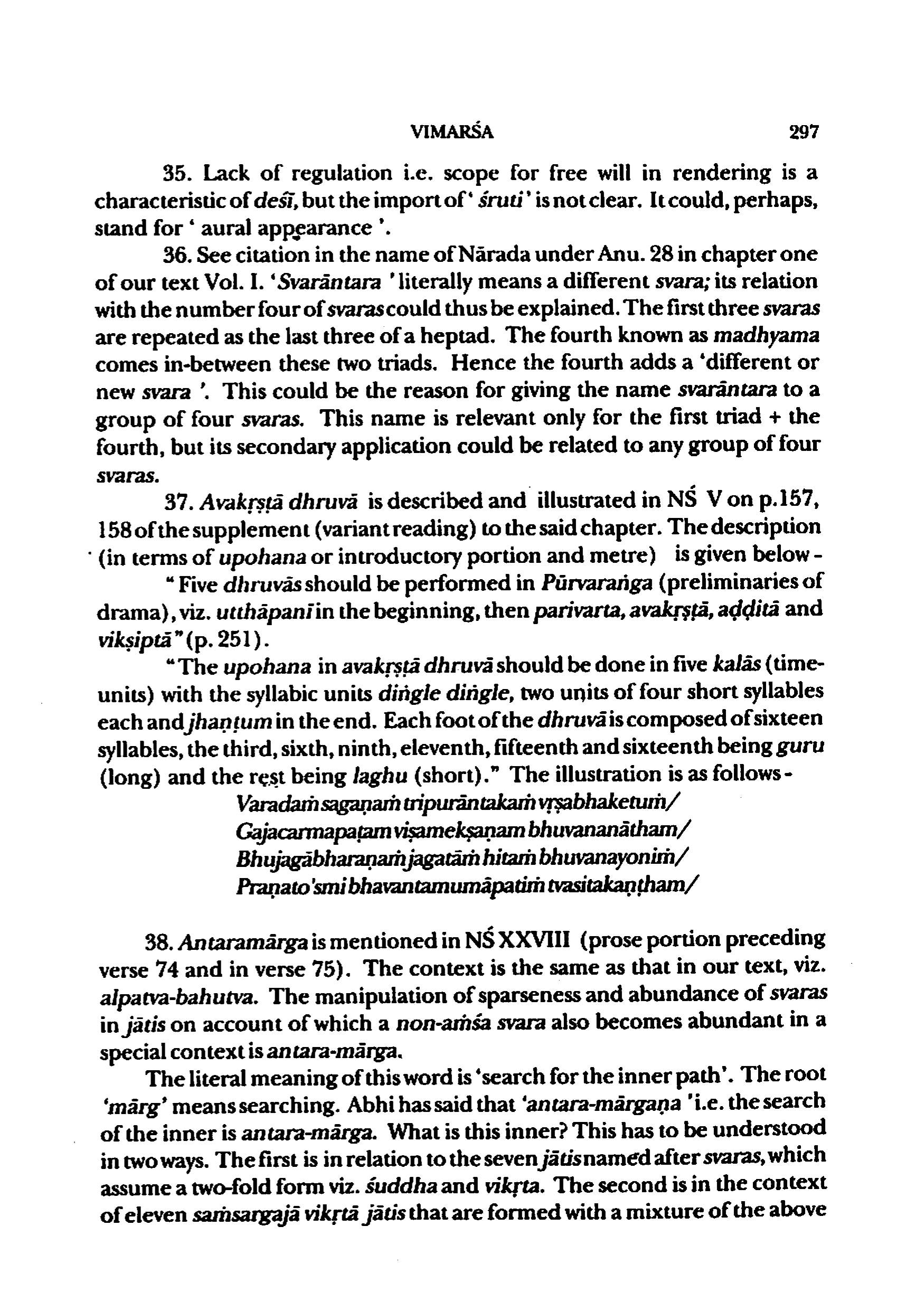
Dhaivatī jātī provides an example of sañcārin varṇa illustrated by the phrase dhā dhā nidha padha mā mā mā.
"Sancārin (circulatory varņa) is there, as in dhaivatī (jātī) — dhā dhā nidha
padha mā mā mā."
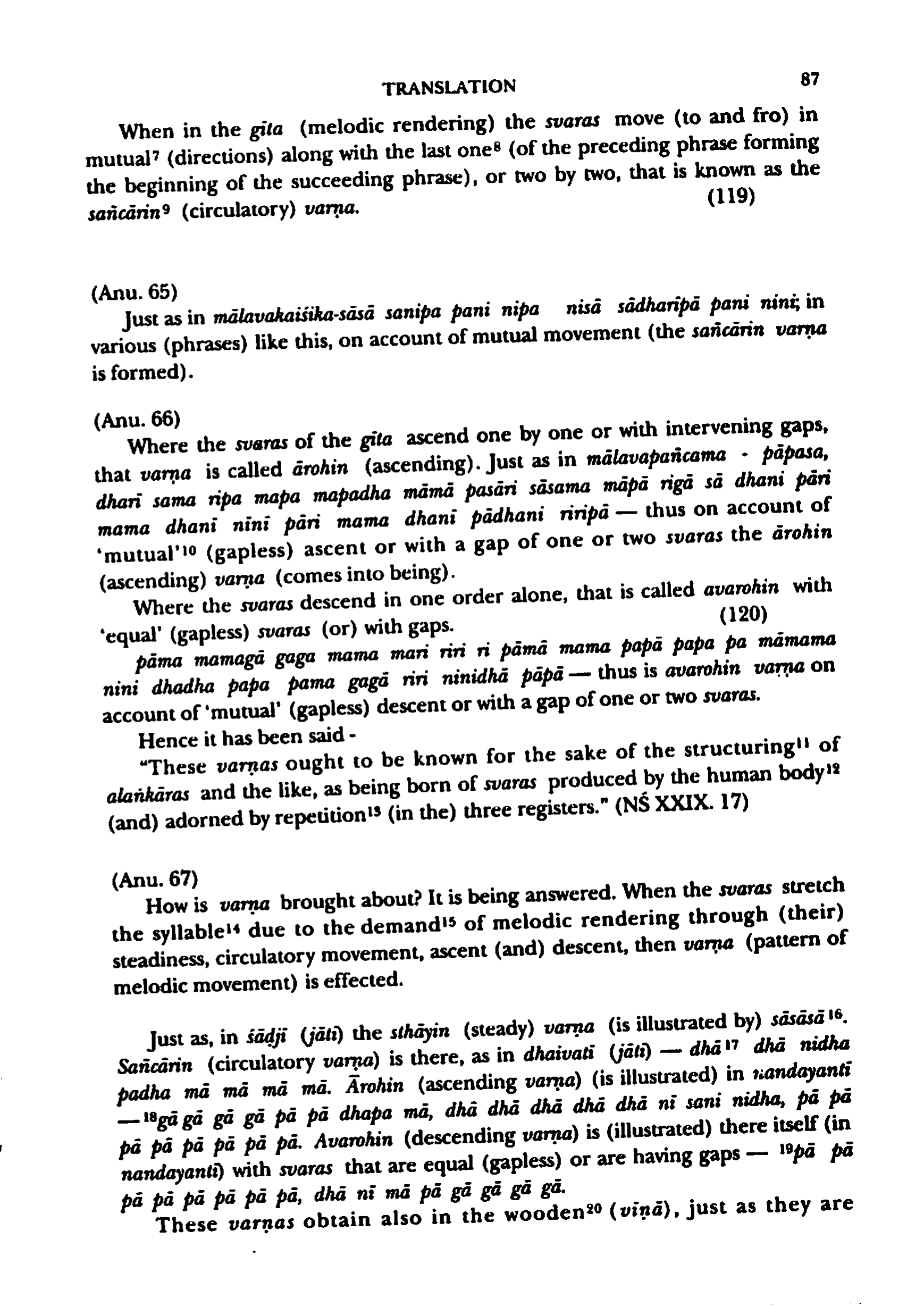
Dhaivati is seven-fold with seven aṁśas: śuddhā, two vikṛtās in complete state, and two each of ṣāḍava-auḍuva
"It (dhaivatī) is seven-fold. There are seven amśas. Śuddhā (is one), vikṛtās
in the complete state are two and ṣāḍava-auḍuva are two each."
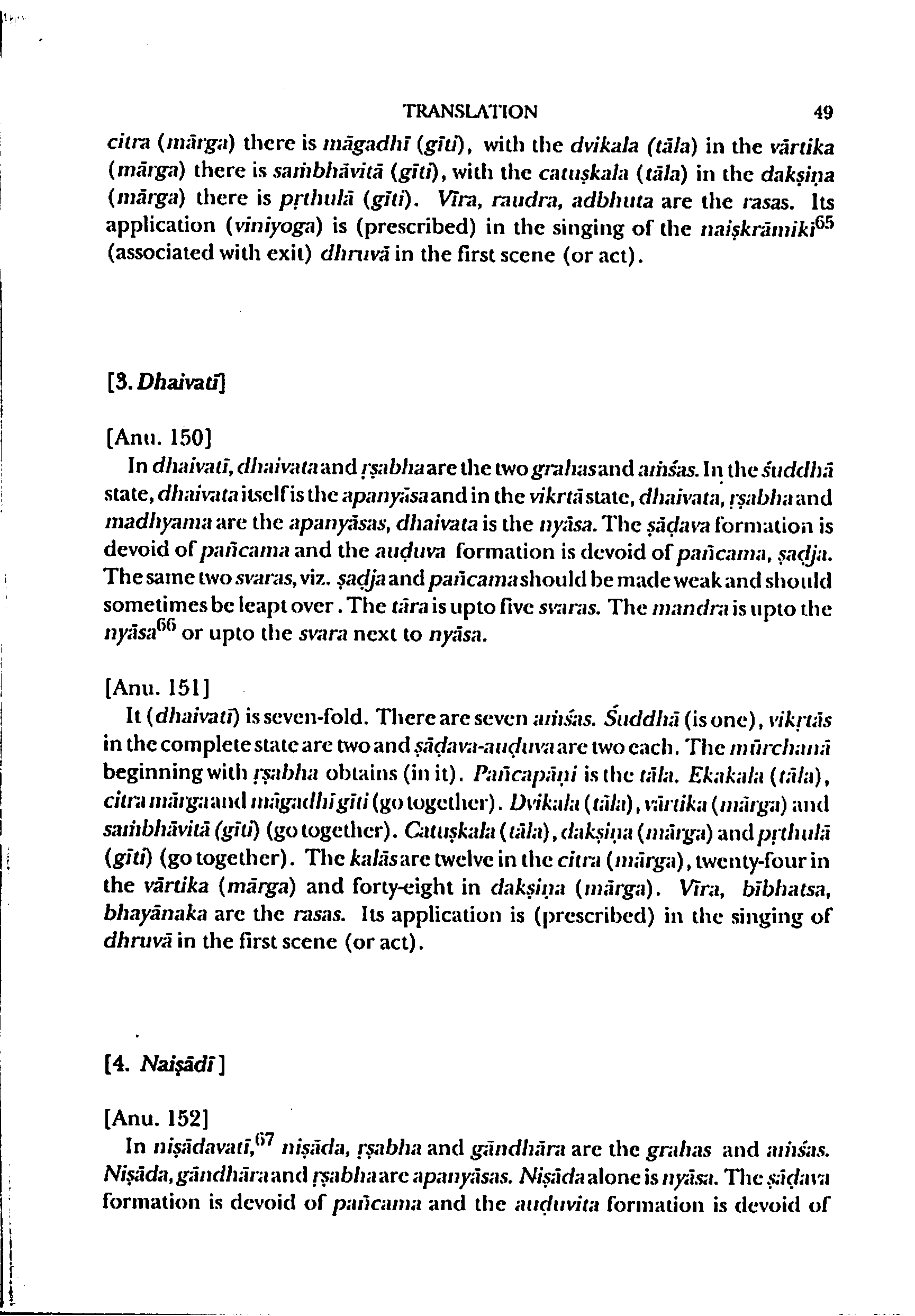
Dhaivati has rasa of vīra, bībhatsa, and bhayānaka, with application in dhruvā of first scene
"Vīra, bībhatsa,
bhayānaka are the rasas. Its application is (prescribed) in the singing of
dhruvā in the first scene (or act)."
In dhaivatī, ṛṣabha and dhaivata are designated as amsas by the gurus
"In dhaivatī, ṛṣabha and dhaivata have been spoken of as amśas by the gurus."
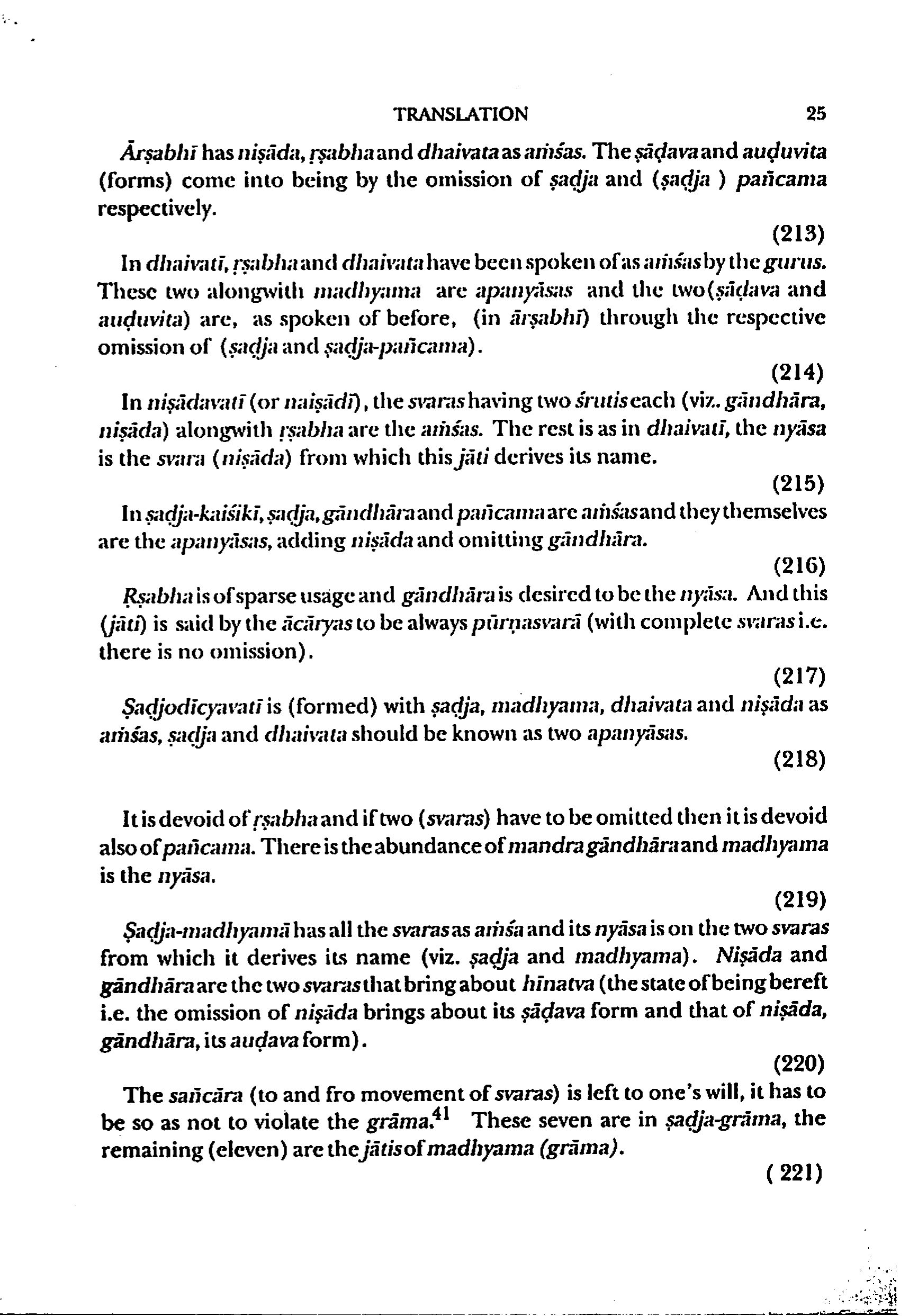
In dhaivatī, ṛṣabha, dhaivata and madhyama together function as apanyāsas
"These two alongwith madhyama are apanyāsas"
Dhaivati has dhaivata and ṛṣabha as grahas and aṁśas
"In dhaivati, dhaivata and ṛṣabha are the two grahas and aṁśas."
Dhaivatī has a prastāra (systematic arrangement) where the eighth vidārī contains the notation 'nidha pani mā mapari gā gā gā gā'.
"The eighth vidārī of gāndhārī reads in SR — nidha pani mā mapari
gā gā gā gā."