Source scans · vol_II_p051
recto · open full
scan recto
verso · open full
scan verso
Bṛhaddeśī · Volume II
pp. 84–85folio 051
Devanāgarī (Bṛhaddeśī)
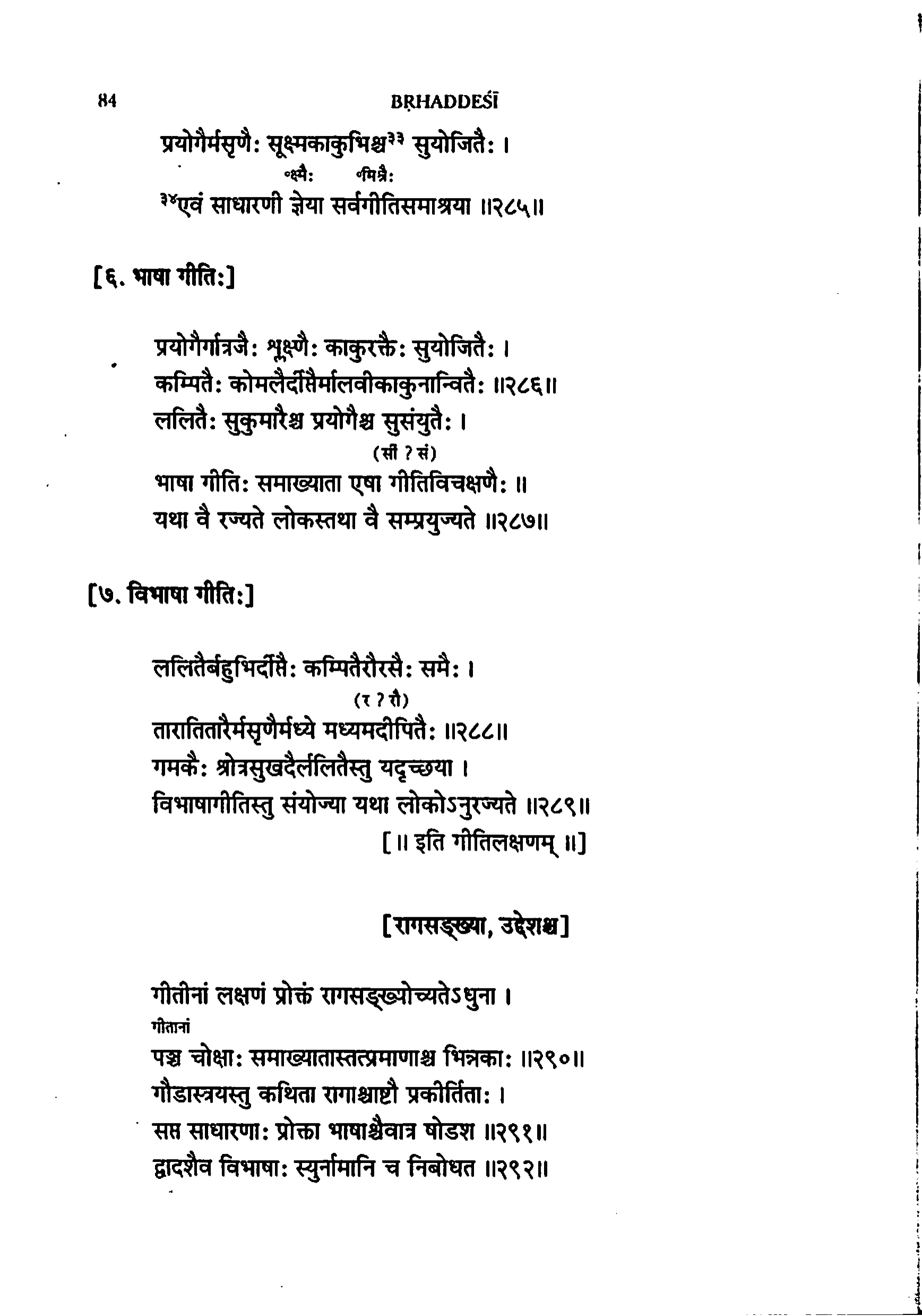
प्रयोगैर्मसृणै: सूक्ष्मकाकुभिश्च३३॰क्ष्मै:॰िमेत्रै: सुयोजितै: ।
३४एवं साधारणी ज्ञेया सर्वगीतिसमाश्रया ॥२८५॥
[६. भाषा गीति:]
प्रयोगैर्गात्रजै: शृक्ष्णै: काकुरक्तै: सुयोजितै: ।
कम्पितैः कोमलैर्दीप्तैर्मालवीकाकुनान्वितैः ॥२८६॥
लितै: सुकुमारैश्च प्रयोगैश्च सुसंयुतै:(सीं ? सं)
भाषा गीति: समाख्याता एषा गीतिविचक्षणै: ॥
यथा वै रज्यते लोकस्तथा वै सम्प्रयुज्यते ॥२८७॥
[७. विभाषा गीति:]
लिलतैर्बहुभिर्दीतै: कम्पितैरौरसै:(र ? रौ) समै:।
तारातितारैर्मसृणैर्मध्ये मध्यमदीपितै: ॥२८८॥
गमकै: श्रोत्रसुखदैर्ललितैस्तु यदुच्छया।
विभाषागीतिस्तु संयोज्या यथा लोकोऽनुरज्यते ॥२८९॥
[॥ इति गीतिलक्षणम् ॥]
[रागसङ्ख्या, उद्देशश्च]
गीतीनांगीतानां लक्षणं प्रोक्तं रागसङ्ख्योच्यतेऽधुना ।
पञ्च चोक्षा: समाख्यातास्तत्प्रमाणाश्च भित्रका:4 ॥२९०॥
गौडास्त्रयस्तु कथिता रागाश्चाष्टौ प्रकीर्तिता:5
सप्त साधारणा: प्रोक्ता भाषाश्चैवात्र षोडश6 ॥२९१॥ द्वादशैव विभाषा: स्युर्नामानि च निबोधत7 ॥२९२॥
English — Sharma (translation)
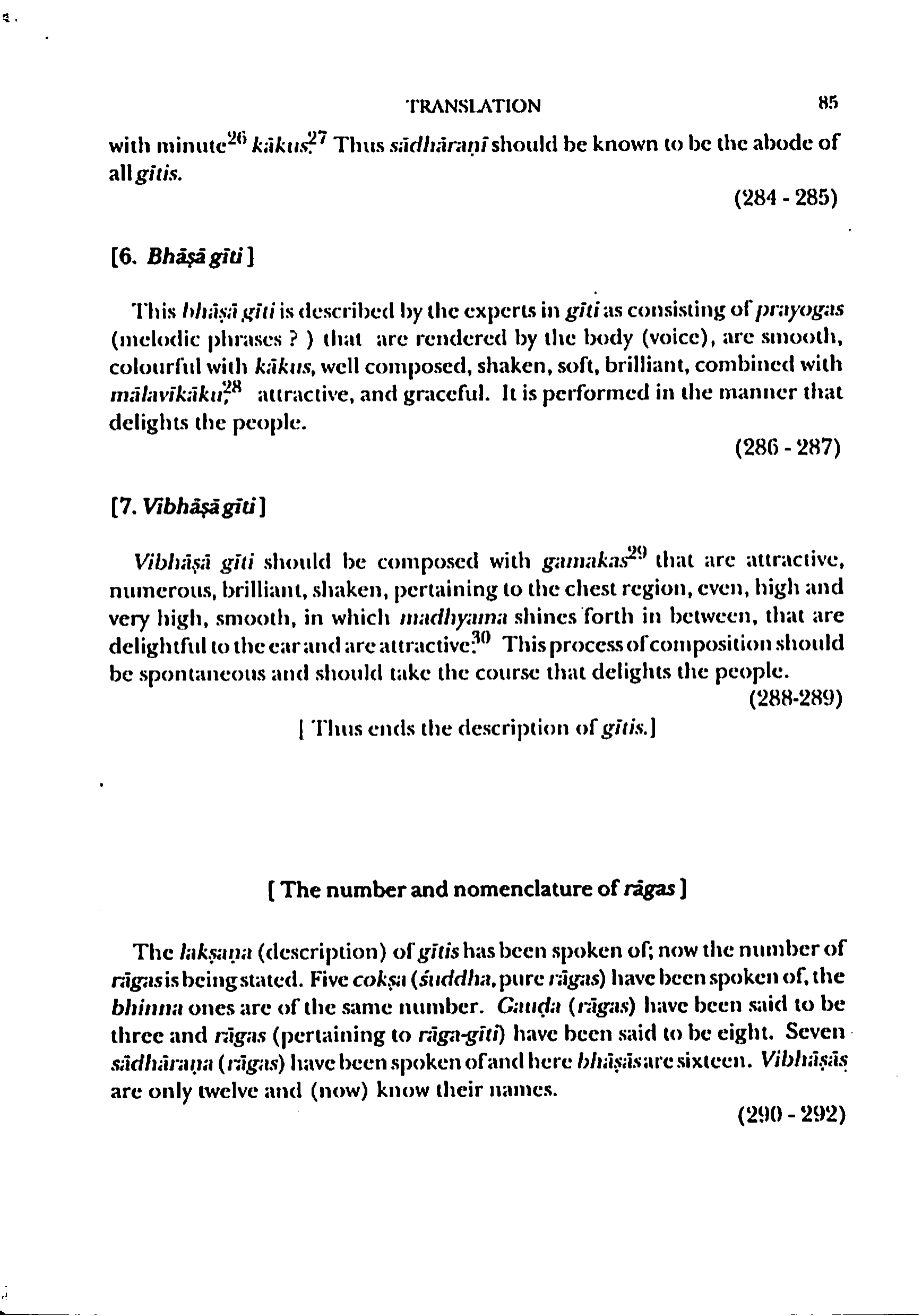
g., with minute26 kākus.27 Thus sādhāraņī should be known to be the abode of all gitis.1 <math>(284 - 285)</math> This bhāṣā gīti is described by the experts in gīti as consisting of prayogas (melodic phrases?) that are rendered by the body (voice), are smooth, colourful with kākus, well composed, shaken, soft, brilliant, combined with mālavīkāku228 attractive, and graceful. It is performed in the manner that delights the people.10 <math>(286 - 287)</math> Vibhāṣā gīti should be composed with gamakas29 that are attractive, numerous, brilliant, shaken, pertaining to the chest region, even, high and very high, smooth, in which madhyama shines forth in between3, that are delightful to the ear8 and are attractive. This process of composition should be spontaneous and should take the course that delights the people.11 (288-289)
[Thus ends the description of gitis.]
[The number and nomenclature of ragas]
The lakṣaṇa (description) of gītis has been spoken of; now the number of rāgas is being stated. Five cokṣa (śuddha, pure rāgas) have been spoken of, the bhinna ones are of the same number.4 Gauda (rāgas) have been said to be three and rāgas (pertaining to rāga-gīti) have been said to be eight.5 Seven- sādhāraņa (rāgas) have been spoken of and here bhāṣās are sixteen.6 Vibhāṣās are only twelve and (now) know their names.7 <math>(290 - 292)</math>
4.[enumeration] Five cokṣa (pure rāgas) have been spoken ofपञ्च चोक्षाः समाख्यातास्तत्प्रमाणाश्च भित्रकाः
5.[enumeration] Gauda rāgas are three in numberगौडास्त्रयस्तु कथिता रागाश्चाष्टौ प्रकीर्तिताः
6.[enumeration] Bhāṣā gīti is enumerated as sixteen varieties in the rāga classification systemसप्त साधारणाः प्रोक्ता भाषाश्चैवात्र षोडश
7.[enumeration] Vibhāṣās are twelve in numberद्वादशैव विभाषाः स्युर्नामानि च निबोधत
9.[relation]Bhāṣā gīti and Vibhāṣā gīti are distinct categories within giti classification[6. Bhāṣā gīti] ... [7. Vibhāṣā gīti]
1.[definition]Sādhāraņī is the abode of all gitisThus sādhāraņī should be known to be the abode of all gitis.
2.[definition]Bhāṣā gīti consists of prayogas that are smooth, colourful with kākus, well composed, shaken, soft, brilliant, combined with mālavīkāku, attractive, and gracefulThis bhāṣā gīti is described by the experts in gīti as consisting of prayogas (melodic phrases?) that are rendered by the body (voice), are smooth, colourful with kākus, well composed, shaken, soft, brilliant, combined with mālavīkāku
3.[definition]Vibhāṣā gīti should be composed with gamakas that are attractive, numerous, brilliant, shaken, pertaining to the chest region, even, high and very high, smooth, with madhyama shining forth in betweenVibhāṣā gīti should be composed with gamakas that are attractive, numerous, brilliant, shaken, pertaining to the chest region, even, high and very high, smooth, in which madhyama shines forth in between
4.[enumeration]Five cokṣa (pure rāgas) have been spoken ofFive cokṣa (śuddha, pure rāgas) have been spoken of, the bhinna ones are of the same number.
5.[enumeration]Gauda rāgas are three in numberGauda (rāgas) have been said to be three and rāgas (pertaining to rāga-gīti) have been said to be eight.
6.[enumeration]Bhāṣā gīti is enumerated as sixteen varieties in the rāga classification systemSeven- sādhāraņa (rāgas) have been spoken of and here bhāṣās are sixteen.
7.[enumeration]Vibhāṣās are twelve in numberVibhāṣās are only twelve and (now) know their names.
8.[relation]Gamakas are delightful to the ear and used in vibhāṣā gītiVibhāṣā gīti should be composed with gamakas that are attractive, numerous, brilliant, shaken, pertaining to the chest region, even, high and very high, smooth, in which madhyama shines forth in between, that are delightful to the ear
9.[relation] Bhāṣā gīti and Vibhāṣā gīti are distinct categories within giti classification[6. Bhāṣā gīti] This bhāṣā gīti is described by the experts in gīti as consisting of prayogas (melodic phrases?) that are rendered by the body (voice), are smooth, colourful with kākus, well composed, shaken, soft, brilliant, combined with mālavīkāku28 attractive, and
10.[structural]Bhāṣā gīti is performed in a manner that delights the peopleIt is performed in the manner that delights the people.
11.[structural]The composition process of Vibhāṣā gīti should be spontaneous and delightful to peopleThis process of composition should be spontaneous and should take the course that delights the people.