Source scans · vol_II_p052
recto · open full
scan recto
verso · open full
scan verso
Bṛhaddeśī · Volume II
pp. 86–87folio 052
Devanāgarī (Bṛhaddeśī)
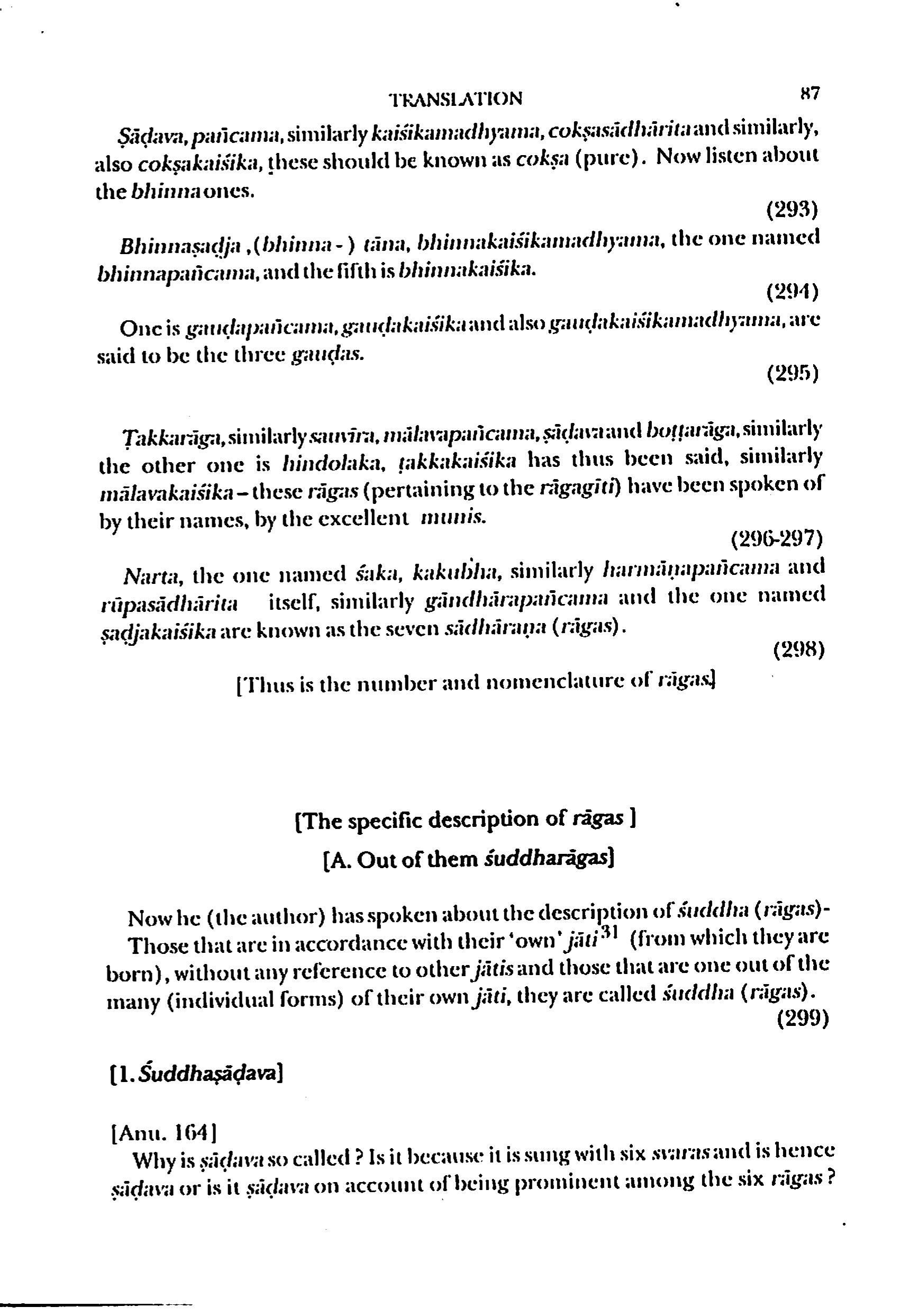
षाडव: पञ्चमश्चैव तथा कैशिकमध्यम:। चोक्षसाधारितश्चैव चोक्षकैशिक इत्यपि ॥ एते चोक्षास्तु विज्ञेया3, भिन्नकान् साम्प्रतं शृणु ॥२९३॥10 भित्रषड्जश्च तानश्च भित्रकैशिकमध्यम:। भित्रपञ्चमसंज्ञश्चभिन्नपञ्चम इत्युक्तस्त्रयो गौडा: पञ्चमो भित्रकैशिक:प्रकीर्तिताः ॥२९४॥4
गौडपञ्चम इत्येको गौडकैशिक इत्यपि ।
गौडकैशिकमध्यमस्त्रयो गौडा: प्रकीर्तिता: ॥२९५॥
टकरागश्चटङ्क सौवीरस्तथा मालवपञ्चम:।
षाडवो बोट्टरागश्च तथा हिन्दोलक: पर: ॥२९६॥
ट[क]ककैशिक इत्युक्तस्तथा मालवकैशिक:।
एते रागाः समाख्याता नामतो मुनिपुङ्गवैः ॥२९७॥ नर्तः(नर्तः) शकाख्यः ककुभस्तथा भम्माणपञ्चमःहमीण रूपसाधारितश्चैव तथा गान्धारपञ्चम: । षड्जकैशिकसंज्ञश्च सप्त साधारणा: स्मृता: ॥२९८॥5
[॥ इति रागसङ्ख्या, उद्देशश्च ॥]
[रागाणां विशेषलक्षणानि]
[क. तत्र शुद्धरागाः]
इदानीं शुद्धानां लक्षणमाह -
३५अनपेक्ष्यान्यजातीर्ये स्वजातिमनुवर्तका:7
३६स्वजा(?)निरपेक्षा॰ स्वजात्यन्यतमाश्चेव ते शुद्धाः परिकीर्तिताः ॥२९९॥
[१.शुद्धषाडव:]
[अनु॰ १६४]
तत्र षाडव इति कस्मात्३७ ? किं षड्भि: स्वरैगीयत इति षाडव:, यद् वा षट्सु रागेषु
English — Sharma (translation)
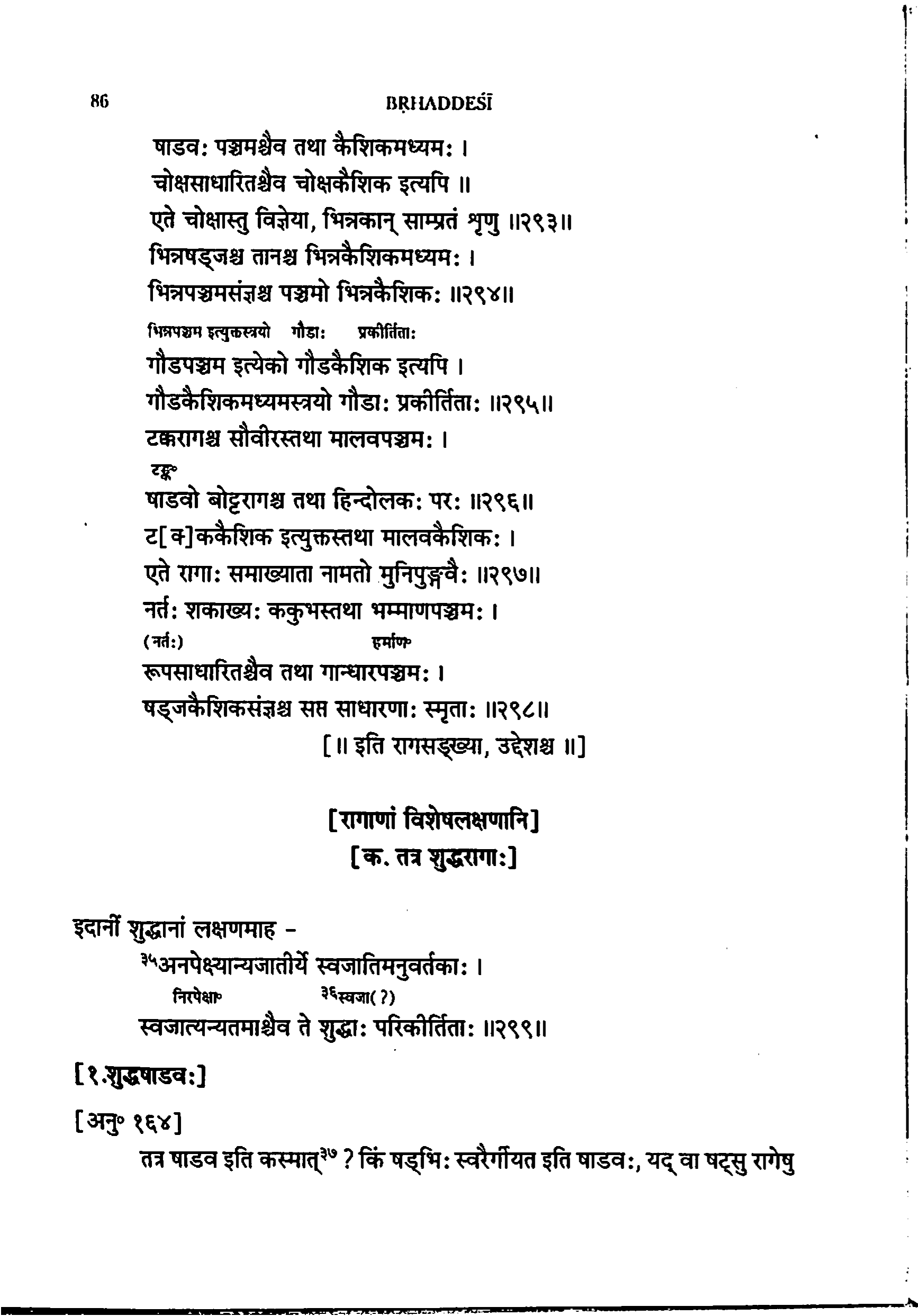
Şāḍava, pañcama, similarly kaiśikamadhyama, cokṣasādhārita and similarly, also cokṣakaiśika, these should be known as cokṣa (pure).3 Now listen about the bhinnaones.10
(293)
Bhinnaṣadja ,(bhinna-) tāna, bhinnakaiśikamadhyama, the one named bhinnapañcama, and the fifth is bhinnakaiśika.
(294)
One is gaudapañcama, gaudakaiśika and also gaudakaiśika madhyama, are said to be the three gaudas.2
(295)
Ţakkarāga, similarly sauvīra, mālavapancama, ṣāḍava and boṭṭarāga, similarly the other one is hindolaka, ţakkakaiśika has thus been said, similarly mālavakaišika - these rāgas (pertaining to the rāgagīti) have been spoken of by their names, by the excellent munis.6 <math>(296-297)</math> Narta, the one named śaka, kakubha, similarly harmāṇapañcama and itself, similarly gändhärapañcama and the one named rūpasādhārita ṣaḍjakaiśika are known as the seven sādhāraṇa (rāgas).
(298)
[Thus is the number and nomenclature of rāgas]
[The specific description of ragas]
[A. Out of them śuddharagas]
Now he (the author) has spoken about the description of suddha (rāgas)-9 Those that are in accordance with their 'own' jāti 31 (from which they are born), without any reference to other jātis7 and those that are one out of the many (individual forms) of their own jāti, they are called śuddha (rāgas).
(299)
[Anu. 164]
Why is sadava so called? Is it because it is sung with six svaras and is hence ṣāḍava or is it ṣāḍava on account of being prominent among the six rāgas?
1.[definition]Śuddharagas are rāgas that conform to their own jāti without reference to other jātis, or represent one individual form among many of their own jātiअनपेक्ष्यान्यजातीर्ये स्वजातिमनुवर्तकाः । स्वजात्यन्यतमाश्चेव ते शुद्धा परिकीर्तिता
2.[enumeration]Gauda comprises three enumerated rāga varieties: gauda-pañcama, gauda-kaiśika, and gauda-kaiśika-madhyamaभिन्नपञ्चम इत्युक्तस्त्रयो गौडाः प्रकीर्तिता गौडपञ्चम इत्येको गौडकैशिक इत्यपि । गौडकैशिकमध्यमस्त्रयो गौडाः प्रकीर्तिताः
3.[enumeration]Cokṣa comprises five enumerated rāga varieties: śāḍava, pañcama, kaiśikamadhyama, cokṣasādhārita, and cokṣakaiśikaषाडवः पञ्चमश्चैव तथा कैशिकमध्यमः। चोक्षसाधारितश्चैव चोक्षकैशिक इत्यपि ॥ एते चोक्षास्तु विज्ञेया
4.[enumeration]Bhinna comprises five enumerated rāga varieties: bhinna-ṣaḍja, bhinna-tāna, bhinnakaiśikamadhyama, bhinnapañcama, and bhinnakaiśikaभित्रषड्जश्च तानश्च भित्रकैशिकमध्यमः। भित्रपञ्चमसंज्ञश्च पञ्चमो भित्रकैशिकः ॥२९४॥
5.[enumeration]Sādhāraṇa comprises seven enumerated rāga varieties: narta, śaka, kakubha, harmāṇapañcama, rūpasādhārita, gāndhārapañcama, and ṣaḍjakaiśikaनर्तः शकाख्यः ककुभस्तथा भम्माणपञ्चमः । रूपसाधारितश्चैव तथा गान्धारपञ्चमः । षड्जकैशिकसंज्ञश्च सप्त साधारणाः स्मृताः ॥२९८॥
6.[relation]Rāgagīti is a category within which certain rāgas are classified (ţakkarāga, sauvīra, mālavapañcama, etc.)एते रागा समाख्याता नामतो मुनिपुङ्गवै ॥२९७॥
7.[relation] Jāti is a classificatory concept from which rāgas originate or are derived; śuddharagas conform to their own jātiअनपेक्ष्यान्यजातीर्ये स्वजातिमनुवर्तकाः
8.[relation] Jāti is the foundational category determining whether a rāga is classified as śuddhā (pure)स्वजात्यन्यतमाश्चेव ते शुद्धा परिकीर्तिता
9.[structural]Śuddharagas form a distinct class within the rāga system, with suddhaṣāḍava being presented as an exemplary instance[क. तत्र शुद्धरागा] इदानी शुद्धाना लक्षणमाह
10.[structural]The term cokṣa is used to categorize a set of pure rāgas as distinguished from bhinna and other categoriesएते चोक्षास्तु विज्ञेया, भिन्नकान् साम्प्रतं शृणु ॥२९३॥
2.[enumeration] Gauda comprises three enumerated rāga varieties: gauda-pañcama, gauda-kaiśika, and gauda-kaiśika-madhyamaOne is gaudapañcama, gaudakaiśika and also gaudakaiśika madhyama, are said to be the three gaudas.
3.[enumeration] Cokṣa comprises five enumerated rāga varieties: śāḍava, pañcama, kaiśikamadhyama, cokṣasādhārita, and cokṣakaiśikaŞāḍava, pañcama, similarly kaiśikamadhyama, cokṣasādhārita and similarly, also cokṣakaiśika, these should be known as cokṣa (pure).
4.[enumeration] Bhinna comprises five enumerated rāga varieties: bhinna-ṣaḍja, bhinna-tāna, bhinnakaiśikamadhyama, bhinnapañcama, and bhinnakaiśikaBhinnaṣaḍja ,(bhinna-) tāna, bhinnakaiśikamadhyama, the one named bhinnapañcama, and the fifth is bhinnakaiśika.
6.[relation] Rāgagīti is a category within which certain rāgas are classified (ţakkarāga, sauvīra, mālavapañcama, etc.)these rāgas (pertaining to the rāgagīti) have been spoken of by their names, by the excellent munis.
7.[relation]Jāti is a classificatory concept from which rāgas originate or are derived; śuddharagas conform to their own jātiThose that are in accordance with their 'own' jāti (from which they are born), without any reference to other jātis
8.[relation]Jāti is the foundational category determining whether a rāga is classified as śuddhā (pure)Those that are one out of the many (individual forms) of their own jāti, they are called śuddha (rāgas).
9.[structural] Śuddharagas form a distinct class within the rāga system, with suddhaṣāḍava being presented as an exemplary instanceNow he (the author) has spoken about the description of suddha (rāgas)-
10.[structural] The term cokṣa is used to categorize a set of pure rāgas as distinguished from bhinna and other categoriesNow listen about the bhinnaones.