Source scans · vol_II_p073
recto · open full
scan recto
verso · open full
scan verso
Bṛhaddeśī · Volume II
pp. 128–129folio 073
Devanāgarī (Bṛhaddeśī)
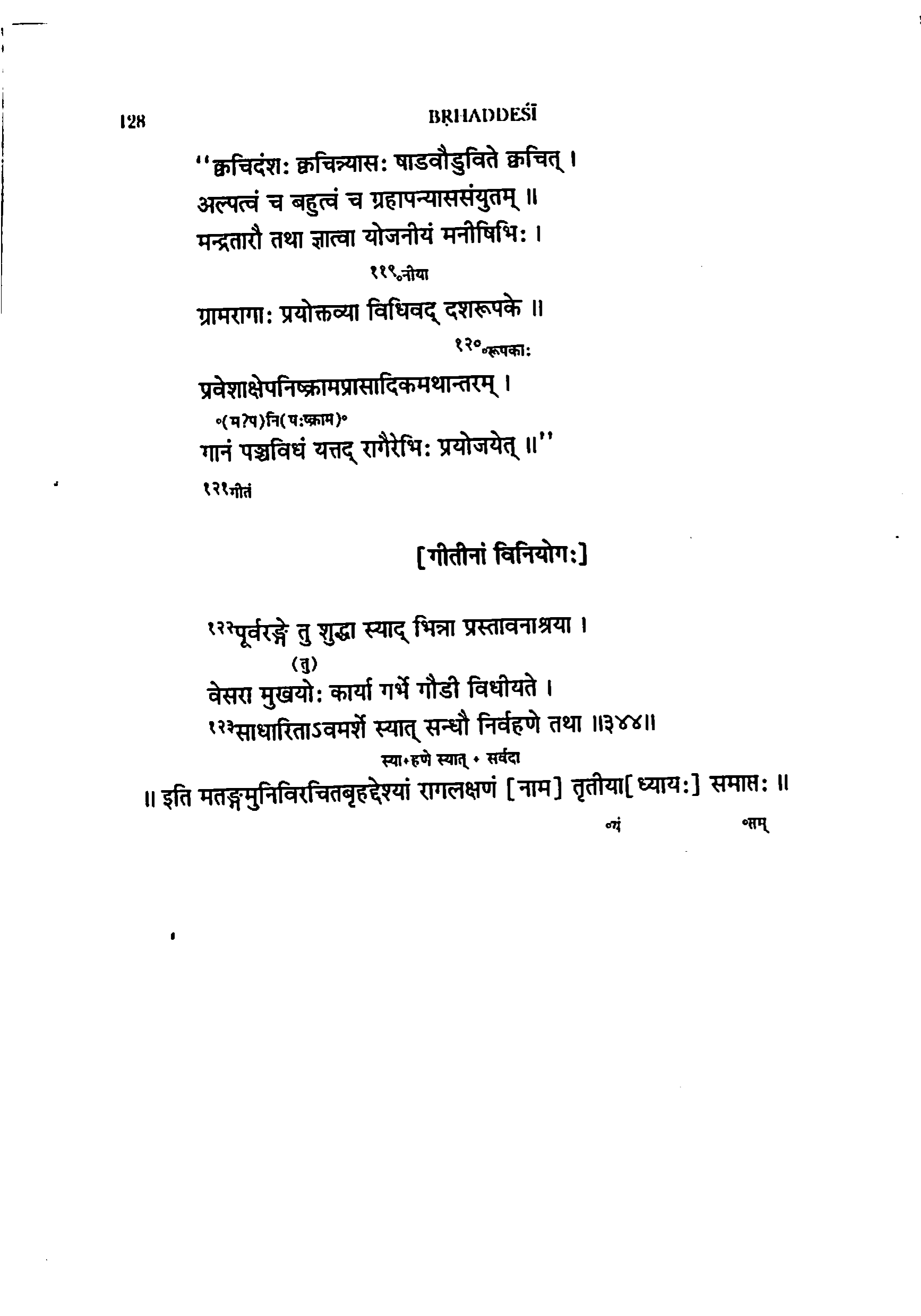
‘‘क्वचिदंशः क्वचित्र्यासः षाडवौडुविते क्वचित्5
अल्पत्वं च बहुत्वं च ग्रहापन्याससंयुतम् ॥
मन्द्रतारौ तथा ज्ञात्वा योजनीयं११९ नीया मनीिषभि:।
ग्रामरागाः प्रयोक्तव्या विधिवद् दशरूपके१२० एरूपकाः
प्रवेशाक्षेपनिष्क्रामप्रासादिकमथान्तरम्4॰(म?प)नि(प:फ्नाम)॰
गानं१२१मीतं पञ्चविधं यत्तद् रागैरेभि: प्रयोजयेत्3 ॥'' ď
[गीतीनां विनियोगः]
१२२पूर्वरङ्गे तु(तु) शुद्धा स्याद्10 भिन्ना प्रस्तावनाश्रया7
वेसरा मुखयो: कार्या11 गर्भे गौडी विधीयते12
१२३साधारिताऽवमर्शे स्यात् सन्धौ निर्वहणे तथा13 ॥३४४॥ स्या+हणे स्यात् + सर्वदा•सम्न्यं
इति मतङ्गमुनिविरचितबृहद्देश्यां रागलक्षणं [नाम] तृतीया[ध्याय:] समाप्त:21
English — Sharma (translation)
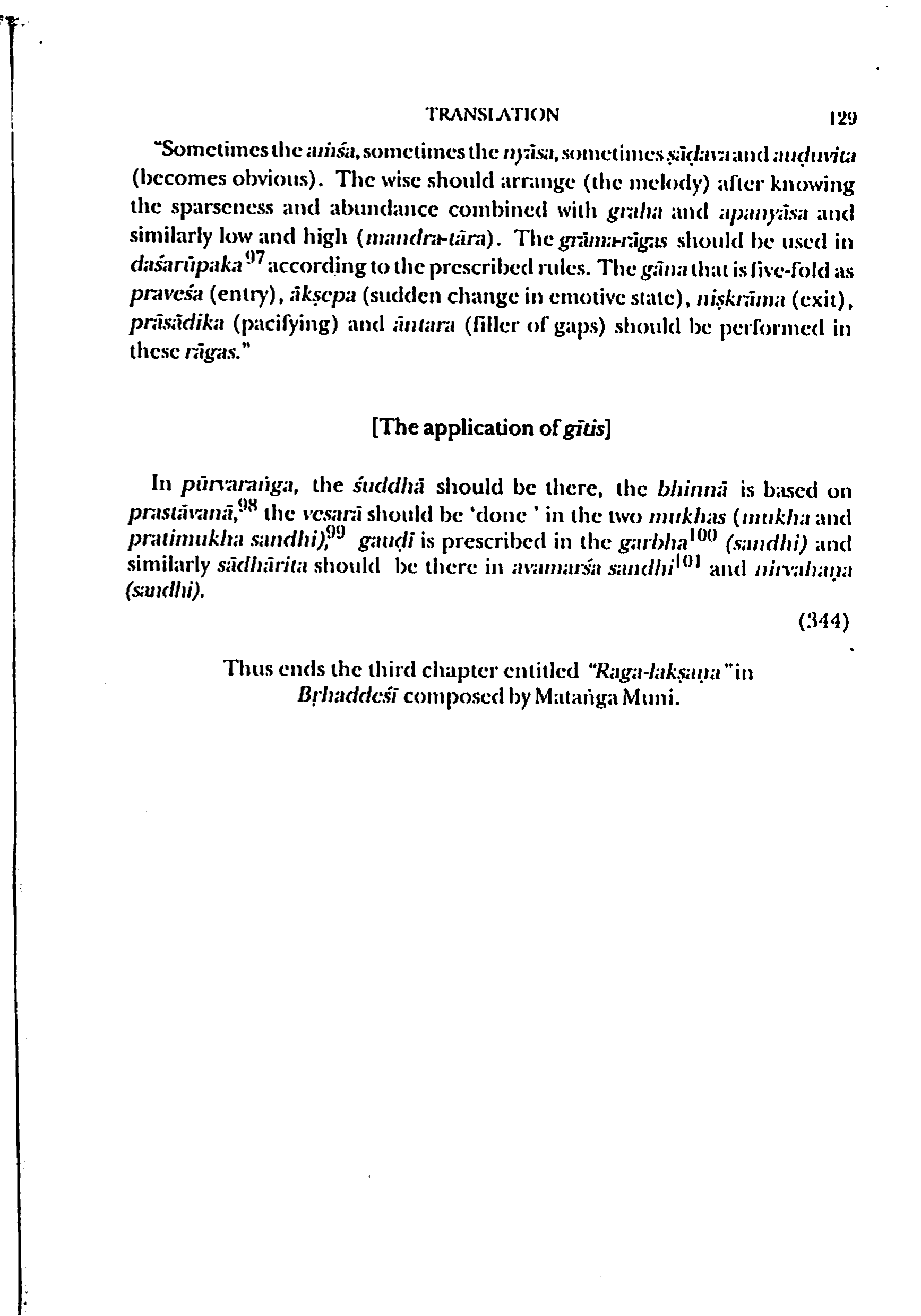
"Sometimes the aniśa, sometimes the nyāsa, sometimes ṣāḍava and auḍuvita (becomes obvious)5. The wise should arrange (the melody) after knowing the sparseness and abundance combined with graha and apanyasa and similarly low and high (mandra-tāra)9. The grāma-rāgas should be used in daśarūpaka 97 according to the prescribed rules8. The gāna that is five-fold as praveśa (entry), ākṣepa (sudden change in emotive state), niṣkrāma (exit), prāsādika (pacifying) and āntara (filler of gaps)4 should be performed in these rāgas3."
[The application of gītis]
In pūrvaraiga, the śuddhā should be there10, the bhinnā is based on prastāvanā7, 98 the vesarā should be 'done ' in the two mukhas (mukha and pratimukha sandhi)11,99 gauḍi is prescribed in the garbha (sandhi) and similarly sādhārita should be there in avamarsa sandhi101 and nirvahana (sandhi)13.
(344)
Thus ends the third chapter entitled "Raga-laksana" in Bṛhaddeśi composed by Matanga Muni.
1.[attribution] Raga-laksana is the title of the third chapter of Bṛhaddeśīइति मतङ्गमुनिविरचितबृहद्देश्या रागलक्षणं [नाम] तृतीया[ध्यायः] समाप्तः
2.[attribution] Bṛhaddeśī is composed by Matanga Muniइति मतङ्गमुनिविरचितबृहद्देश्या रागलक्षणं [नाम] तृतीया[ध्यायः] समाप्तः
3.[enumeration]Gāna is five-fold, consisting of praveśa (entry), ākṣepa (sudden change), niṣkrāma (exit), prāsādika (pacifying), and āntara (filler)गानं पञ्चविधं यत्तद् रागैरेभिः प्रयोजयेत्
4.[enumeration] Five-fold gāna consists of praveśa, ākṣepa, niṣkrāma, prāsādika and āntaraप्रवेशाक्षेपनिष्क्रामप्रासादिकमथान्तरम्
5.[enumeration] Aniśa, nyāsa, ṣāḍava and auḍuvita are sometimes used in melodic arrangementक्वचिदंशः क्वचित्र्यासः षाडवौडुविते क्वचित्
6.[relation]Grāma-rāgas should be performed in daśarūpaka according to prescribed rulesग्रामरागा प्रयोक्तव्या विधिवद् दशरूपके
7.[relation] Bhinnā is based on prastāvanāभिन्ना प्रस्तावनाश्रया
8.[relation] Grāma-rāgas should be used according to prescribed rules in daśarūpakaग्रामरागा प्रयोक्तव्या विधिवद् दशरूपके
10.[structural] In pūrvaraiga, śuddhā should be presentपूर्वरङ्गे तु शुद्धा स्याद्
11.[structural] Vesarā should be performed in the two mukhas (mukha and pratimukha sandhi)वेसरा मुखयोः कार्या
12.[structural] Gauḍī is prescribed in the garbha (sandhi)गर्भे गौडी विधीयते
13.[structural] Sādhārita should be present in avamarsa sandhi and nirvahanaसाधारिताऽवमर्शे स्यात् सन्धौ निर्वहणे तथा
1.[attribution]Raga-laksana is the title of the third chapter of BṛhaddeśīThus ends the third chapter entitled "Raga-laksana" in Bṛhaddeśī composed by Matanga Muni
2.[attribution]Bṛhaddeśī is composed by Matanga MuniThus ends the third chapter entitled "Raga-laksana" in Bṛhaddeśī composed by Matanga Muni
3.[enumeration] Gāna is five-fold, consisting of praveśa (entry), ākṣepa (sudden change), niṣkrāma (exit), prāsādika (pacifying), and āntara (filler)The gāna that is five-fold as praveśa (entry), ākṣepa (sudden change in emotive state), niṣkrāma (exit), prāsādika (pacifying) and āntara (filler of gaps) should be performed in these rāgas
4.[enumeration]Five-fold gāna consists of praveśa, ākṣepa, niṣkrāma, prāsādika and āntarapraveśa (entry), ākṣepa (sudden change in emotive state), niṣkrāma (exit), prāsādika (pacifying) and āntara (filler of gaps)
5.[enumeration]Aniśa, nyāsa, ṣāḍava and auḍuvita are sometimes used in melodic arrangementSometimes the aniśa, sometimes the nyāsa, sometimes ṣāḍava and auḍuvita (becomes obvious)
7.[relation]Bhinnā is based on prastāvanāthe bhinnā is based on prastāvanā
8.[relation]Grāma-rāgas should be used according to prescribed rules in daśarūpakaThe grāma-rāgas should be used in daśarūpaka according to the prescribed rules
9.[relation]Wise musicians should arrange melody after knowing sparseness and abundance combined with graha and apanyasa, and low and high (mandra-tāra)The wise should arrange (the melody) after knowing the sparseness and abundance combined with graha and apanyasa and similarly low and high (mandra-tāra)
10.[structural]In pūrvaraiga, śuddhā should be presentIn pūrvaraiga, the śuddhā should be there
11.[structural]Vesarā should be performed in the two mukhas (mukha and pratimukha sandhi)the vesarā should be 'done ' in the two mukhas (mukha and pratimukha sandhi)
12.[structural]Gauḍī is prescribed in the garbha (sandhi)gauḍī is prescribed in the garbha (sandhi)
13.[structural]Sādhārita should be present in avamarsa sandhi and nirvahanasādhārita should be there in avamarsa sandhi and nirvahana (sandhi)