[Chapter IV]
Now the definition of bhāṣās
[The beginning of the treatment of bhāṣās]
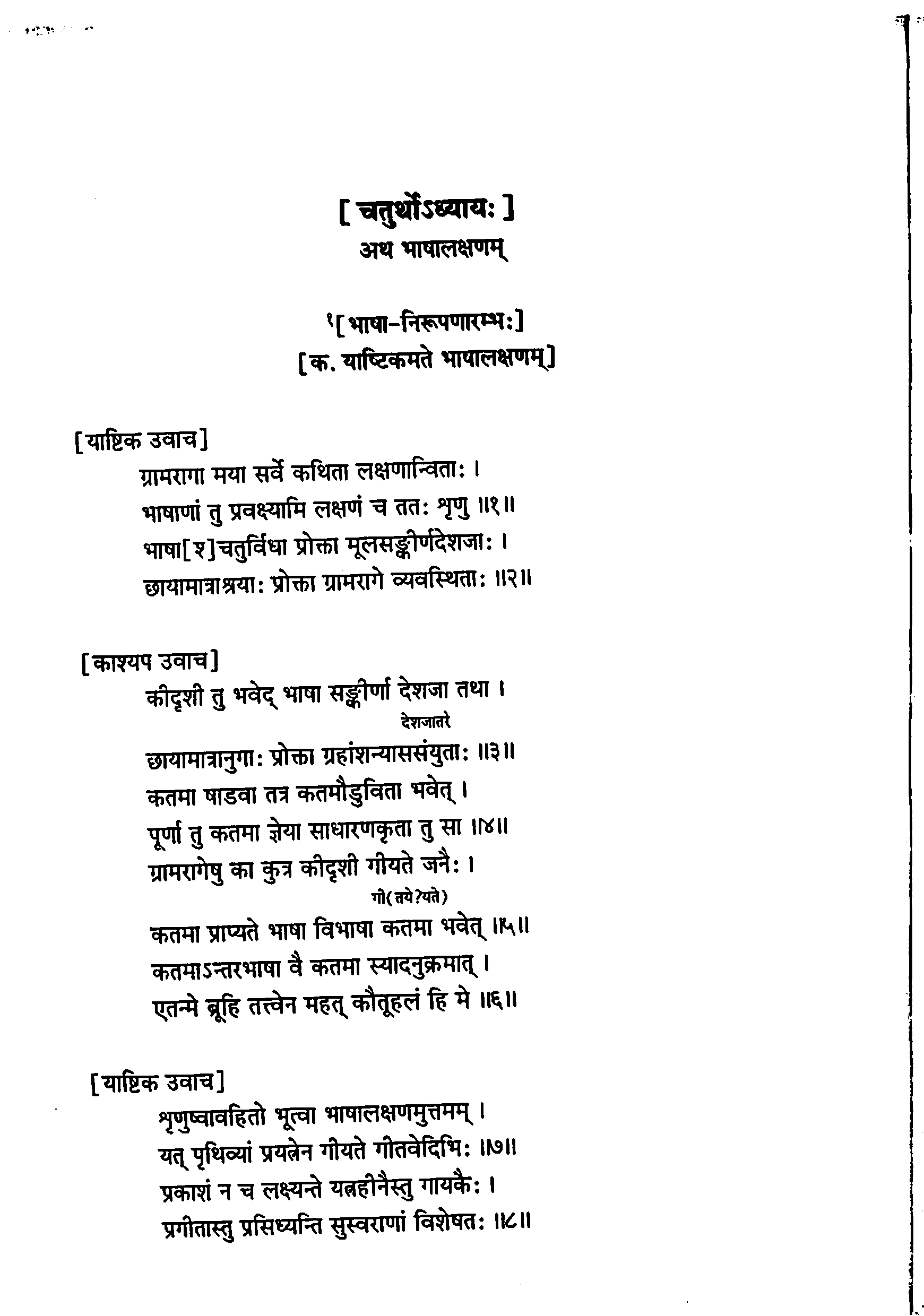
I have spoken of all
grāma-rāgas endowed with characteristics (
lakṣaṇas).
After this, I shall speak of the description of bhāṣās?
Now listen.
(1)
Bhāṣās have been said to be four-fold viz. mūlā (basic)
sankīrņā
(mixed), <math>^4</math> deśajā<math>^5</math> (regional) (and)
chāyāmātrāśrayā<math>^6</math> (based on the chāyā of a
rāga ), arranged in a
grāma-rāga in each case.
(2)
What is the nature of bhāṣā?
Sankīrṇā, deśajā and
chāyāmātrānugā
(exclusively following the
chāyā of a
rāga) have been said to be combined
with graha, amśa and nyāsa.
(3)
Which one is
hexatonic there and which one is
pentatonic? Which one,
on the other hand, is complete and that which has '
sādhāraṇa'??
(4)
Which one, of what nature, where in
grāma-rāgas, is sung by people?
Which one is obtained as bhāṣā and which one is vibhāṣā8 8?
(5)
Which one is antara-bhāṣā 9 and which one falls in sequence?4 Tell me this
in essence; I have great curiosity.
(6)
Thus said Yāşţika -
Listen with attention the excellent description of bhāṣā
which is sung with
effort on the earth by the knowledgeable ones in music.9 10
(7)
These (bhāṣās) are not perceived obviously by the singers who do not put
in effort.10 11
When sung properly, they become well-known, specially to those
who are endowed with a tuneful voice.11
(8)