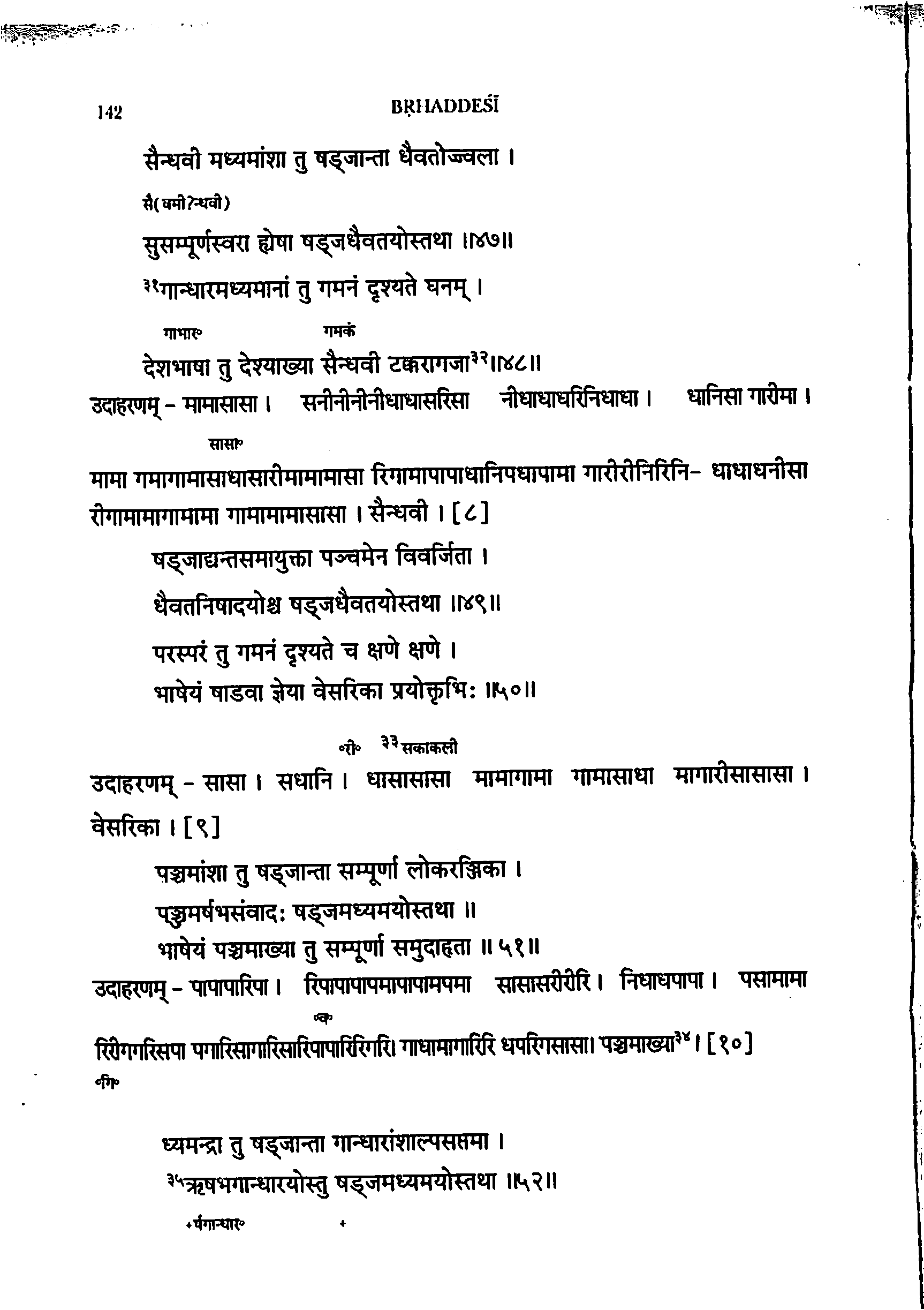
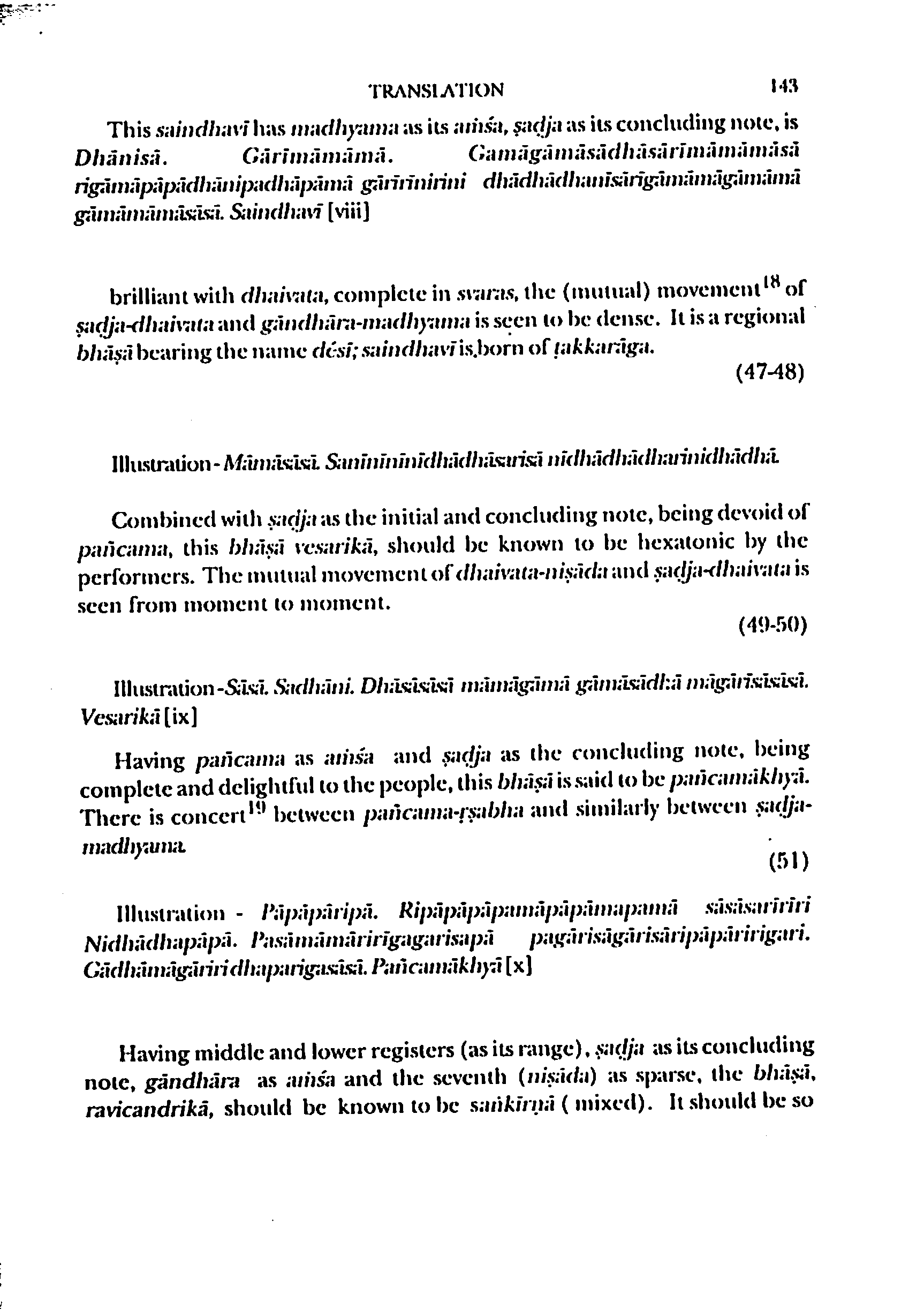
This
saindhavī has
madhyama as its amśa, ṣadja as its concluding note, is
Gamāgāmāsādhāsārīmāmāmāsā
Gārimāmāmā.
Dhānisā.
rigāmāpāpādhānipadhāpāmā gārīrīnirini dhādhādhanīsārīgāmāmāgāmāmā
gāmāmāmāsāsā.
Saindhavī [viii]
brilliant with
dhaivata, complete in svaras, the (mutual) movement 18 of
şadja-
dhaivata and
gāndhāra-
madhyama is seen to be dense.
It is a regional
bhāṣā bearing the name désī; saindhavī is,born of ṭakkarāga.543
<math>(47-48)</math>
Illustration - Māmāsīsā. Sanīnīnīnīdhādhāsurisā nīdhādhādharinidhādhā.
Combined with sadja as the initial and concluding note, being devoid of
pañcama, this bhāṣā vesarikā, should be known to be hexatonic by the
performers.6 The mutual movement of
dhaivata-niṣāda and ṣadja-
dhaivata is
seen from moment to moment.
<math>(49-50)</math>
Illustration-Sāsā. Sadhāni. Dhāsāsāsā māmāgāmā gāmāsādhā māgārīsāsāsā.
Vesarikā [ix]
Having pañcama as amsa and şadja as the concluding note, being
complete and delightful to the people, this bhāṣā is said to be pañcamākhyā.8
There is concert 19 between
pañcama-ṛṣabha and similarly between ṣadja-
madhyama
(51)
Mustration - Pāpāpāripā. Ripāpāpāpamāpāpāmapamā sāsāsarīrīri
Nidhādhapāpā. Pasāmāmārirīgagarisapā pagārisāgārisāripāpāririgari.
Gādhāmāgāriri dhaparigasāsā.
Pañcamākhyā [x]
Having middle and lower registers (as its range), şadja as its concluding
note,
gāndhāra as amśa and the seventh (niṣāda) as sparse,
the bhāṣā,
ravicandrikā, should be known to be sankīrņā (mixed).2 It should be so