gāndhāra svara_name
Grammar record (family: svara_name)
| movement_properties | विशेषेण सर्वतो गमनं | p.vol_II_p019, conf 0.95 |
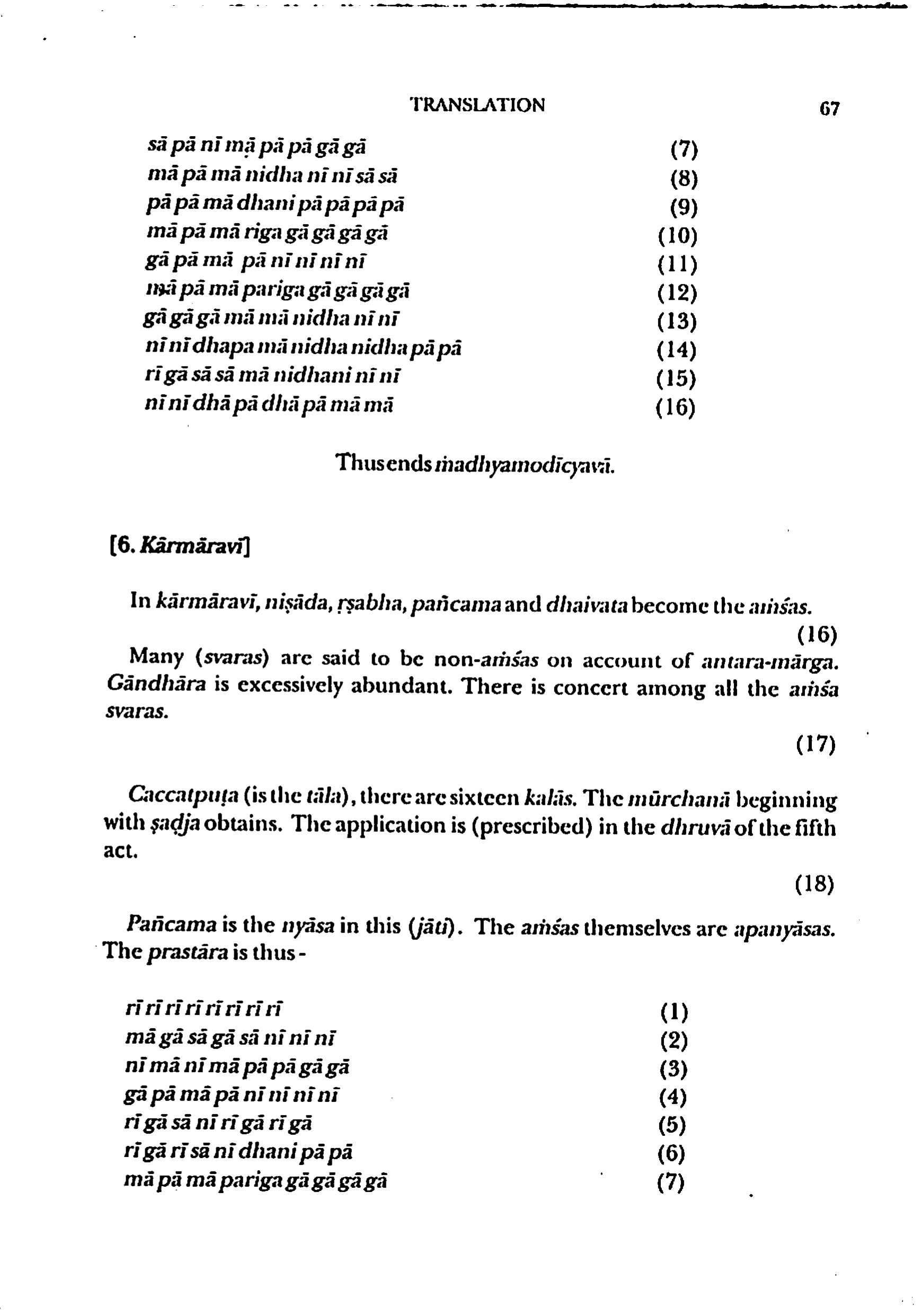
| amsa_status | the state of aṁśa does not obtain in it | p.vol_II_p035, conf 0.90 |
| abundance_characteristic | बाहुत्यम् | p.vol_II_p035, conf 0.85 |
| frequency_in_context | excessively abundant | p.vol_II_p042, conf 0.90 |
Generative rules (4) ↗ filter all
gandhara_abundance_in_karmaraviassignment · 2 att.
Gāndhāra is excessively abundant in Kārmāravi even though it does not attain aṁśa status.gandhara_movement_to_all_svarasrelation · 2 att.
Gāndhāra has the property of moving towards all other svaras, including special use in antaramārga.gandhara_as_amsa_of_bhaviniassignment · 1 att.
In the bhāvinī bhāṣā, gāndhāra functions as the aṁśa.gandhara_identified_as_antara_vikrtaclassification · 1 att.
Gāndhāra is identified as antara (a vikṛta svara) according to Kallinātha's interpretation of antara-śruti.
Pseudocode (DSL v1.1) ↗ full DSL (raw text)
RULE id: gāndhāra (cluster 35)
SCOPE: svara_name family
STATUS: canonical
CONFIDENCE: canonical
PROTECT: true

RECORD:
  movement_properties      = विशेषेण सर्वतो गमनं
  amsa_status              = the state of aṁśa does not obtain in it
  abundance_characteristic = बाहुत्यम्
  frequency_in_context     = excessively abundant
Essence pseudocode — identity + RECORD. The page citations for each slot value are in the Grammar record table above (audit trail). The full DSL adds ASSERTIONS with verbatim quotes (see Affirmations below) and CITED_RULES (see Graph relations).
Graph relations
Outgoing (24)
--[relation]--> svaras (2)--[relation]--> aṁśa (1)--[structural]--> aṁśa (1)--[relation]--> Kalā (1)--[relation]--> nyāsa (1)--[relation]--> kākalī (1)--[relation]--> bhāṣā (1)--[relation]--> Kallinātha (1)--[relation]--> kārmāravī (1)--[relation]--> pañcama (1)--[relation]--> śrutis (1)--[relation]--> antara (1)--[relation]--> antaramārga (1)--[relation]--> bhāvinī (1)--[relation]--> niṣāda (1)--[relation]--> aṁśa svara (1)--[relation]--> concert (1)--[relation]--> gāndhāra as aṁśa (1)--[structural]--> svaras (1)--[relation]--> गान्धारस्य (1)--[structural]--> गान्धारस्य (1)--[relation]--> antara-śruti (1)--[relation]--> vikṛta svaras (1)--[relation]--> SRI (1)
Incoming (62)
kākalī --[structural]--> (4)gāndhārī --[structural]--> (4)nyāsa --[structural]--> (3)kārmāravī --[structural]--> (3)mūrchanā --[structural]--> (2)aṁśa --[structural]--> (2)nyāsa --[relation]--> (2)sangati --[definition]--> (2)sadjagrāma --[structural]--> (2)pulindikā --[structural]--> (2)Ārşabhī --[structural]--> (2)वेरञ्ज?िका --[structural]--> (2)mūrchanā --[relation]--> (1)aṁśa --[definition]--> (1)madhyamagrāma --[relation]--> (1)madhyamagrāma --[structural]--> (1)kākalī --[relation]--> (1)bhāṣā --[definition]--> (1)Kasyapa --[attribution]--> (1)ṣāḍava --[structural]--> (1)raktagāndhārī --[structural]--> (1)auduvita --[attribution]--> (1)bhinnaṣaḍja --[structural]--> (1)sangati --[relation]--> (1)pañcamī --[structural]--> (1)nandayantī --[structural]--> (1)hexatonic --[structural]--> (1)gāndhārapañcama --[structural]--> (1)antara --[structural]--> (1)गान्धारपञ्चमी --[structural]--> (1)ṣāḍjī --[structural]--> (1)गान्धारी --[structural]--> (1)anuvādin --[relation]--> (1)samvādī --[relation]--> (1)samvādī --[structural]--> (1)niṣādavatī --[structural]--> (1)Sauvīrī --[structural]--> (1)Ravicandrā --[structural]--> (1)utkarşa --[definition]--> (1)Brahaspati --[attribution]--> (1)Śruti-bhinna --[definition]--> (1)षड्जकैशिकी --[structural]--> (1)Naisādī --[structural]--> (1)pūrņa --[structural]--> (1)आन्ध्री --[enumeration]--> (1)आन्ध्री --[relation]--> (1)आन्ध्री --[structural]--> (1)Māngālī --[structural]--> (1)NŚ XXVIII.136 --[citation]--> (1)ṣadjamadhyamā jāti --[relation]--> (1)त्रवणोद्भवा --[structural]--> (1)vesarikā --[structural]--> (1)chevāțī --[structural]--> (1)Dākşiņātyā --[structural]--> (1)bāngālī --[structural]--> (1)Bhammānikā --[structural]--> (1)Kārņāţī --[structural]--> (1)Nā Śi --[citation]--> (1)ganatmika vak --[definition]--> (1)sādhāraņakṛtā mūrchanās --[relation]--> (1)sādhāraņa svaras --[definition]--> (1)गान्धारस्य --[structural]--> (1)
Affirmations (6)
Gāndhāra (a non-amsa svara) in Kārmāravī is used abundantly in antaramārga through concert with all svaras
"तथा च कार्मारव्या गान्धारस्य सर्वस्वरसंगत्या
अनंशो
विनास्पः
बहुत्वेनान्तरमार्गे प्रयोग इति"
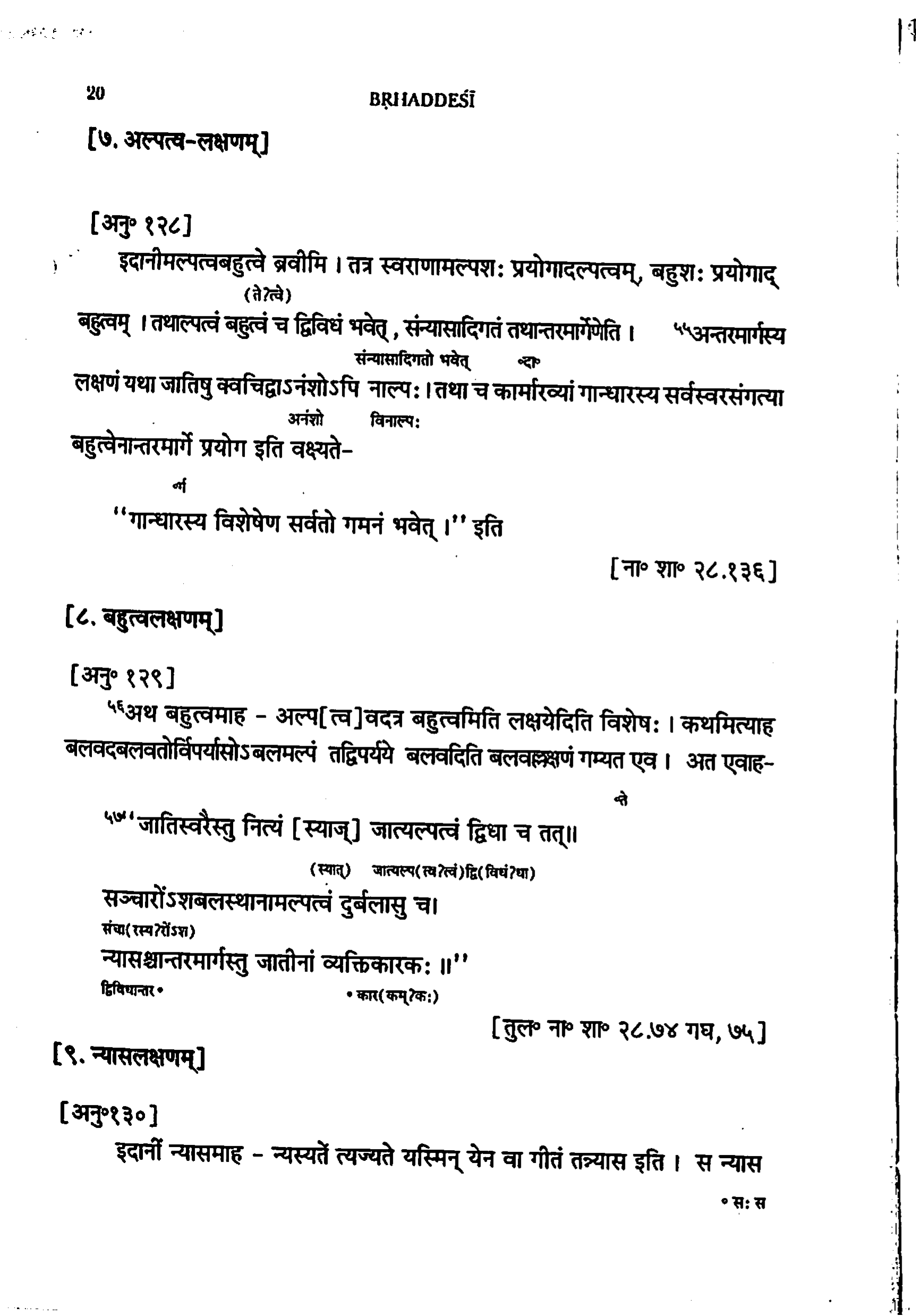
gāndhāra functions as the aṁśa (characteristic note) in the bhāvinī bhāṣā
"Bhāvinī has pañcama as nyāsa, gāndhāra as aṁśa"
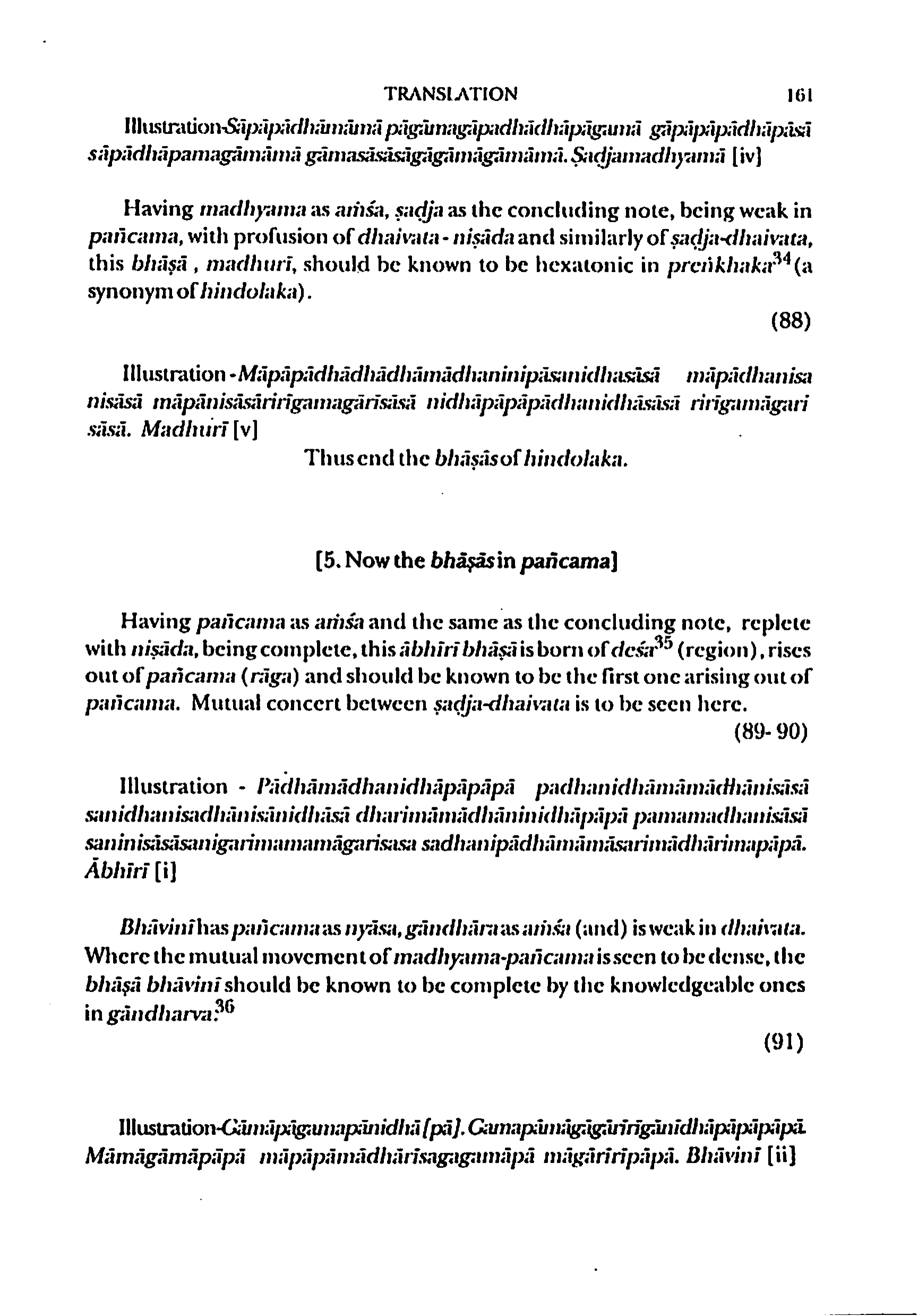
gāndhāra is identified as antara (a vikṛta svara) according to Kallinātha's interpretation
"antara-śruti has been interpreted by Kallinātha (Kalā on
SRI, 3.10-16) as the śrutis situated in vikṛta svaras which term is coventionally
accepted for antara (gāndhāra) and kākalī (niṣāda)."
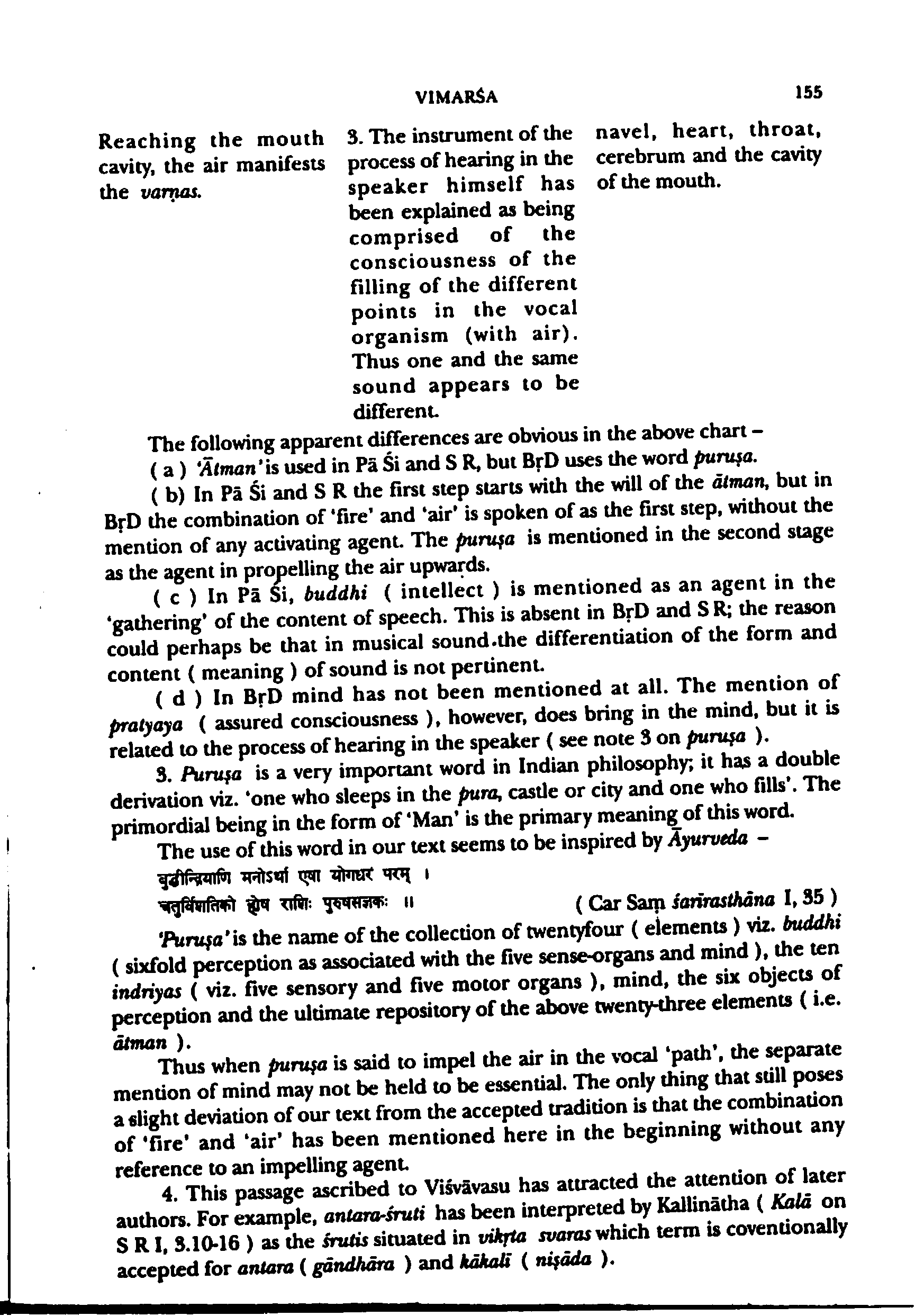
Gāndhāra has special movement towards all svaras
"गान्धारस्य विशेषेण सर्वतो गमनं भवेत्"
There is abundance of gāndhāra although the state of aṁśa does not obtain in it
"गान्धारस्यांशत्वे[ऽ]प्राप्ते[ऽपि] बाहुत्यम्"
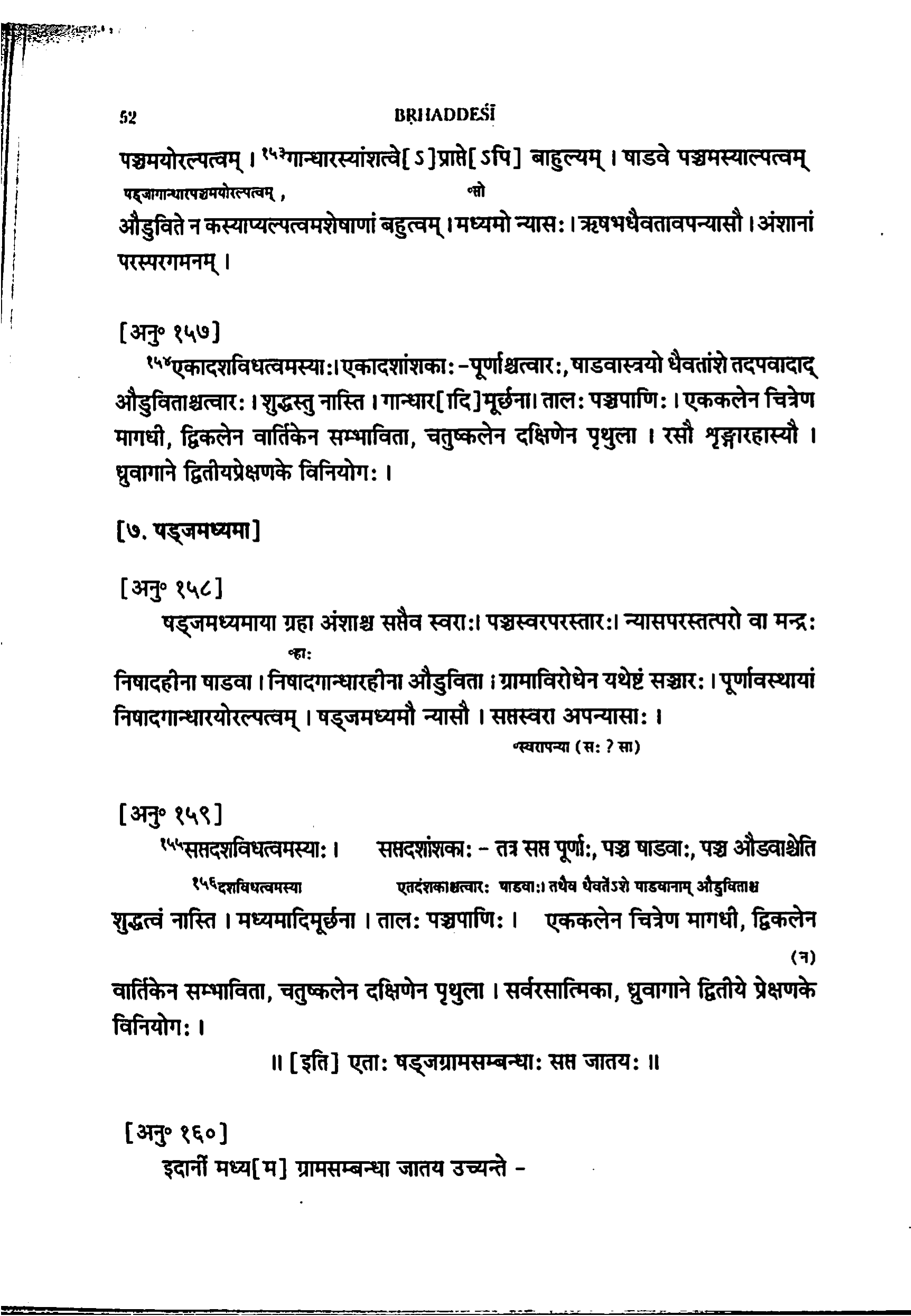
Gāndhāra is characterized as being excessively abundant in Kārmāravi
"Gāndhāra is excessively abundant."