Source scans · vol_II_p081
recto · open full
scan recto
verso · open full
scan verso
Bṛhaddeśī · Volume II
pp. 0–145folio 081
Devanāgarī
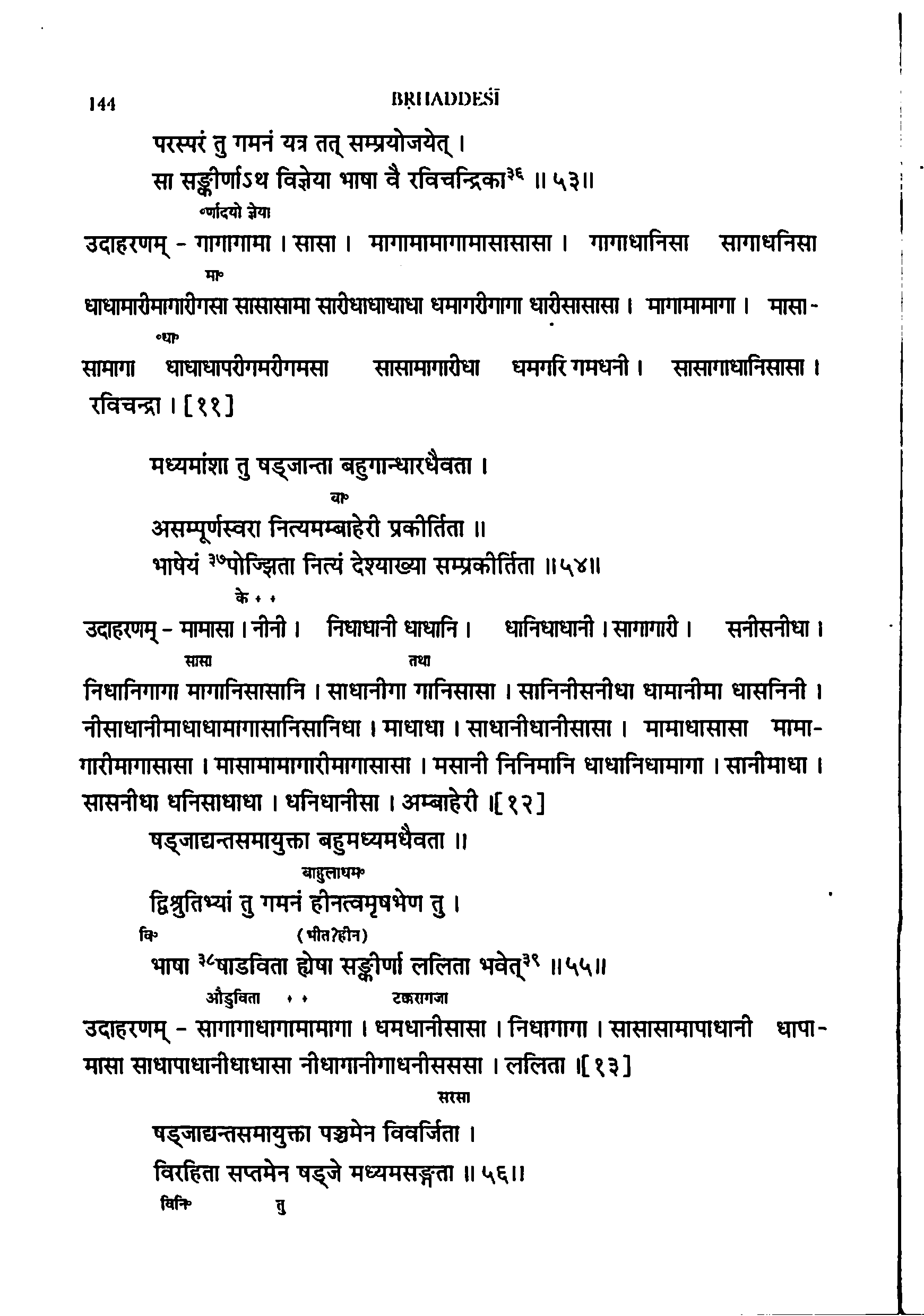
परस्परं तु गमनं यत्र तत् सम्प्रयोजयेत् । सा सङ्कीर्णाऽथ॰र्णादयो जेया विज्ञेया भाषा वै रविचन्द्रिका43३६2 ॥५३॥ उदाहरणम् - गागागामामा॰ । सासा । मागामामागामासासासा । गागाधानिसासागाधनिसा धाधामारीमागारीगसा॰धाः सासासामा सारीधाधाधाधा धमागरीगागा धारीसासासा । मागामामागा ।ZZANNZZWE1__ZZANNZZWS1__
्सासामागारीधाधाधाधापरीगमरीगमसा धमगरि गमधनी। सासागाधानिसासा।
सामागा रविचन्द्रा।[११]
मध्यमांशा तु षड्जान्तावा॰ बहुगान्धारधैवता ।
असम्पूर्णस्वरा नित्यमम्बाहेरी प्रकीर्तिता ॥
भाषेयं ३७पोज्झिताके + + नित्यं देश्याख्या सम्प्रकीर्तिता61 ॥५४॥ उदाहरणम् – मामासा । नीनी ।ZZANNZZWE0__ZZANNZZWS0__ धानिधाधानीसासातथा । सागागारी ।ZZANNZZWE1__ZZANNZZWS1__
निधानिगागा मागानिसासानि । साधानीगा गानिसासा । सानिनीसनीधा धामानीमा धासनिनी ।
नीसाधानीमाधाधामागासानिसानिधा । माधाधा । साधानीधानीसासा । मामाधासासामामा-
गारीमागासासा । मासामामागारीमागासासा । मसानी निनिमानि धाधानिधामागा । सानीमाधा ।
सासनीधा धनिसाधाधा । धनिधानीसा । अम्बाहेरी ।8[१२]
षड्जाद्यन्तसमायुक्ताबाहुलाधमः बहुमध्यमधैवता ॥
द्विश्रुतिभ्यांविभ तु गमनं10 हीनत्वमृषभेण तु ।
(भीत?हीन) भाषा ३८षाडविताऔडुविता ++ ह्येषा सङ्कीर्णाटकरागजा ललिता भवेत्9३९ ॥५५॥ उदाहरणम् - सागागाधागामामागा । धमधानीसासासरसा । निधागागा । सासासामापाधानीधापा- मासा साधापाधानीधाधासा नीधागानीगाधनीसससा । लिलता ।[१३]
षड्जाद्यन्तसमायुक्ता पञ्चमेन विवर्जिता ।
विरहिताविनि सप्तमेनत् षड्जे मध्यमसङ्गता ॥५६॥
English — Sharma (translation)
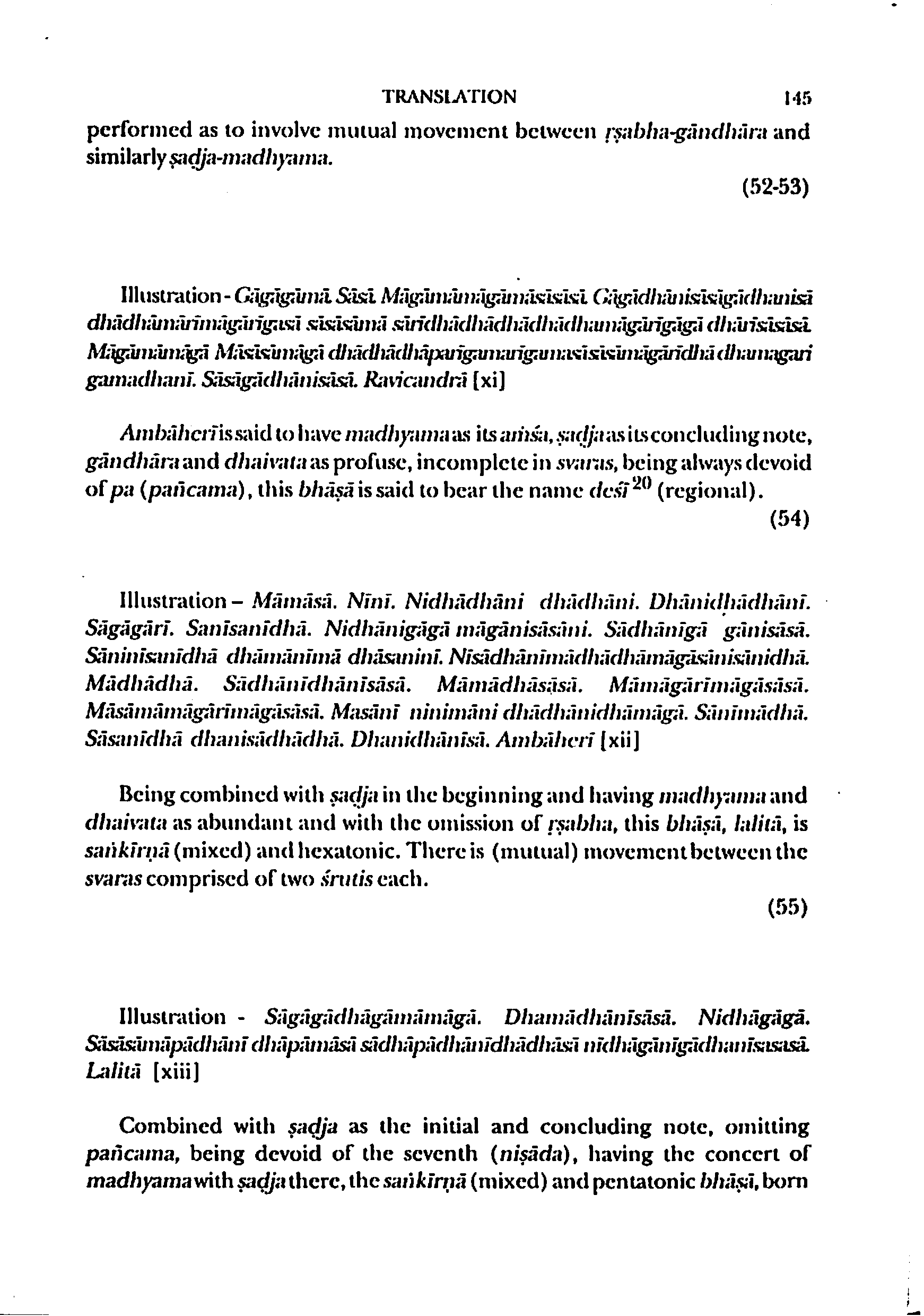
performed as to involve mutual movement between rşabha-gandhara and similarly şadja-madhyama. <math>(52-53)</math> Illustration - Gāgāgāmā. Sāsī. Māgāmāmāgāmāsīsāsī. Gāgādhānisīsīgādhanisā dhādhāmārīmāgārīgasā sāsāsāmā sārīdhādhādhādhadhamāgārīgāgā dhārīsāsīsā. Māgāmāmāgā Māsīsimāgā dhādhādhāparīgamarīgamasīsisīmāgārīdhā dhamagari gamadhanī. Sāsāgādhānisāsā. Ravicandrā [xi] Ambāherī is said to have madhyama as its amśa, ṣadja as its concluding note, gāndhāra and dhaivata as profuse, incomplete in svaras, being always devoid of pa (pancama), this bhāṣā is said to bear the name <math>desi^{20}</math> (regional).
(54)
Illustration – Māmāsā. Nīnī. Nidhādhāni dhādhāni. Dhānidhādhānī. Sāgāgārī. Sanīsanīdhā. Nidhānigāgā māgānisāsāni. Sādhānīgā gānisāsā. Sāninisanīdhā dhāmānīmā dhāsanini. Nisādhānīmādhādhāmāgāsānisānidhā. Mādhādhā. Sādhānīdhānīsāsā. Māmādhāsāsā. Māmāgārīmāgāsāsā. Māsāmāmāgārīmāgāsāsā. Masānī ninimāni dhādhānidhāmāgā. Sānīmādhā. Sāsanīdhā dhanisādhādhā. Dhanidhānīsā. Ambāherī [xii] Being combined with sadja in the beginning and having madhyama and dhaivata as abundant and with the omission of rşabha, this bhāṣā, lalitā, is sankīrņā (mixed) and hexatonic.9 There is (mutual) movement between the svaras comprised of two śrutis each.107
(55)
Illustration - Sāgāgādhāgāmāmāgā. Dhamādhānīsāsā. Nidhāgāgā. Säsäsämäpädhäni dhäpämäsä sädhäpädhänidhädhäsä nidhägänigädhanisasasa. Lalitā [xiii] Combined with şadja as the initial and concluding note, omitting pañcama, being devoid of the seventh (niṣāda), having the concert of madhyamawith ṣaḍja there, the saii kīrṇā (mixed) and pentatonic bhāṣā, born
1.[attribution] Ambāherī is designated as a desi (regional) bhāṣāभाषेयं ३७पोज?्झिता नित्यं देश्याख्या सम्प्रकीर्तिता
2.[citation]Ravicandrā is the title given to an illustration or example of sankīrņā bhāṣāसा सङ्कीर्णाऽथ विज?्ञेया भाषा वै रविचन्द्रिका३६
3.[definition]Sankīrņā is a bhāṣā (musical form) characterized by mutual movement between svarasपरस्परं तु गमनं यत्र तत् सम्प्रयोजयेत् । सा सङ्कीर्णाऽथ विज?्ञेया भाषा वै रविचन्द्रिका
4.[definition]Bhāṣā is a musical form that can be characterized as sankīrņā (mixed)सा सङ्कीर्णाऽथ विज?्ञेया भाषा वै रविचन्द्रिका
6.[definition] Desi indicates a regional designation for a bhāṣā formभाषेयं ३७पोज?्झिता नित्यं देश्याख्या सम्प्रकीर्तिता
7.[enumeration] Bhāṣā can be enumerated in varieties with different structural properties like hexatonic and pentatonic formsद्विश्रुतिभ्या तु गमनं हीनत्वमृषभेण तु । विभ (भीत?हीन) भाषा ३८षाडविता ह्येषा सङ्कीर्णा ललिता भवेत्
8.[structural] Ambāherī is a bhāṣā with madhyama as its aṁśa and ṣaḍja as its concluding noteअम्बाहेरी
9.[structural] Lalitā is a sankīrņā (mixed) and hexatonic bhāṣā with ṣaḍja combined at beginningभाषा ३८षाडविता ह्येषा सङ्कीर्णा ललिता भवेत्
10.[structural] Lalitā has mutual movement between svaras comprised of two śrutis eachद्विश्रुतिभ्या तु गमनं
1.[attribution]Ambāherī is designated as a desi (regional) bhāṣāthis bhāṣā is said to bear the name desi^{20} (regional).
2.[citation] Ravicandrā is the title given to an illustration or example of sankīrņā bhāṣāthis bhāṣā is said to bear the name desi^{20} (regional).
3.[definition] Sankīrņā is a bhāṣā (musical form) characterized by mutual movement between svarasperformed as to involve mutual movement between rşabha-gandhara and similarly şadja-madhyama.
4.[definition] Bhāṣā is a musical form that can be characterized as sankīrņā (mixed)this bhāṣā is said to bear the name desi^{20} (regional).
5.[definition]Aṁśa refers to a characteristic svara that defines a bhāṣāAmbāherī is said to have madhyama as its aṁśa, ṣaḍja as its concluding note
6.[definition]Desi indicates a regional designation for a bhāṣā formthis bhāṣā is said to bear the name desi^{20} (regional).
7.[enumeration]Bhāṣā can be enumerated in varieties with different structural properties like hexatonic and pentatonic formsthis bhāṣā, lalitā, is sankīrņā (mixed) and hexatonic. There is (mutual) movement between the svaras comprised of two śrutis each.
8.[structural]Ambāherī is a bhāṣā with madhyama as its aṁśa and ṣaḍja as its concluding noteAmbāherī is said to have madhyama as its aṁśa, ṣaḍja as its concluding note, gāndhāra and dhaivata as profuse, incomplete in svaras, being always devoid of pa (pancama)
9.[structural]Lalitā is a sankīrņā (mixed) and hexatonic bhāṣā with ṣaḍja combined at beginningBeing combined with sadja in the beginning and having madhyama and dhaivata as abundant and with the omission of rşabha, this bhāṣā, lalitā, is sankīrņā (mixed) and hexatonic.
10.[structural]Lalitā has mutual movement between svaras comprised of two śrutis eachThere is (mutual) movement between the svaras comprised of two śrutis each.