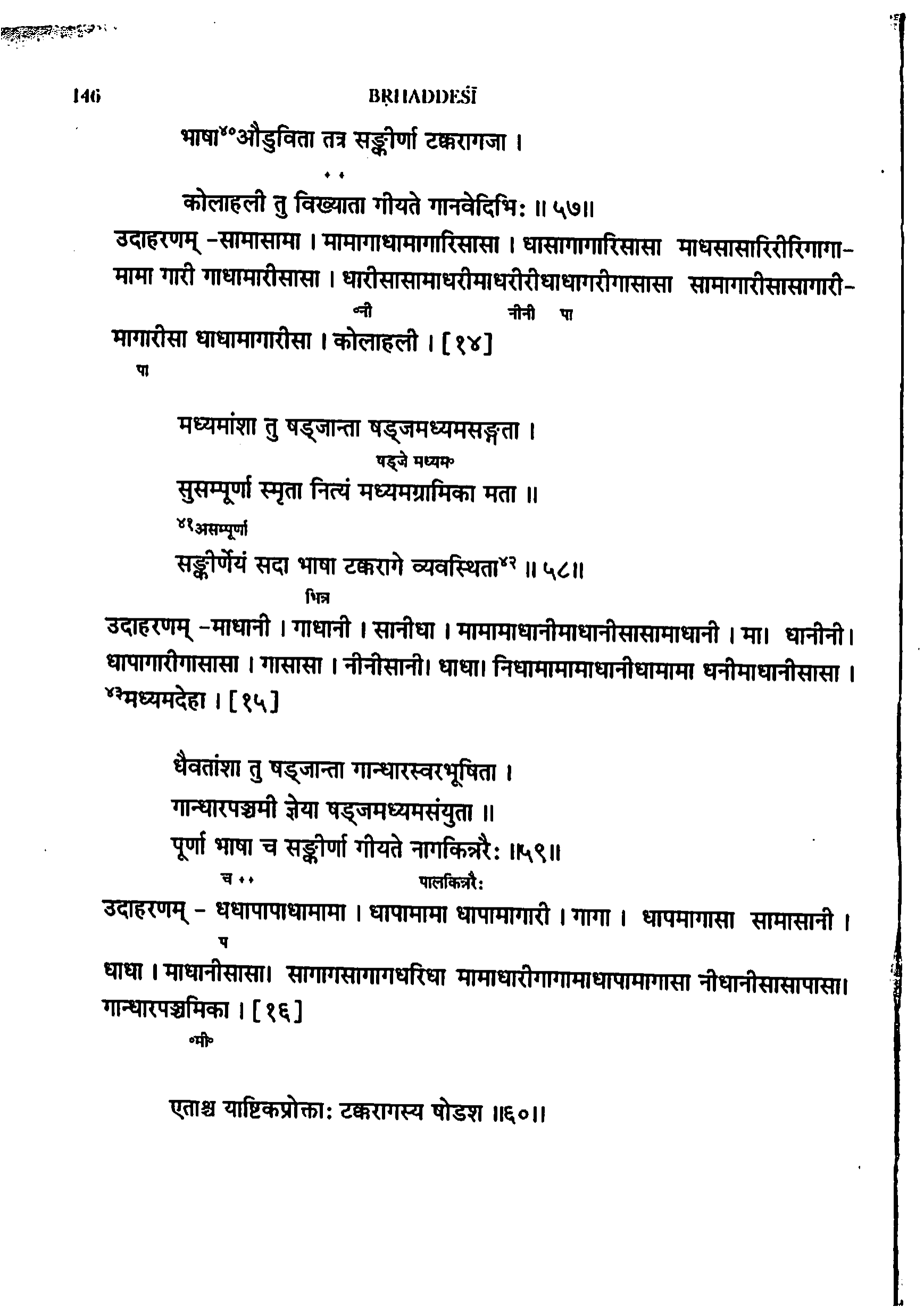
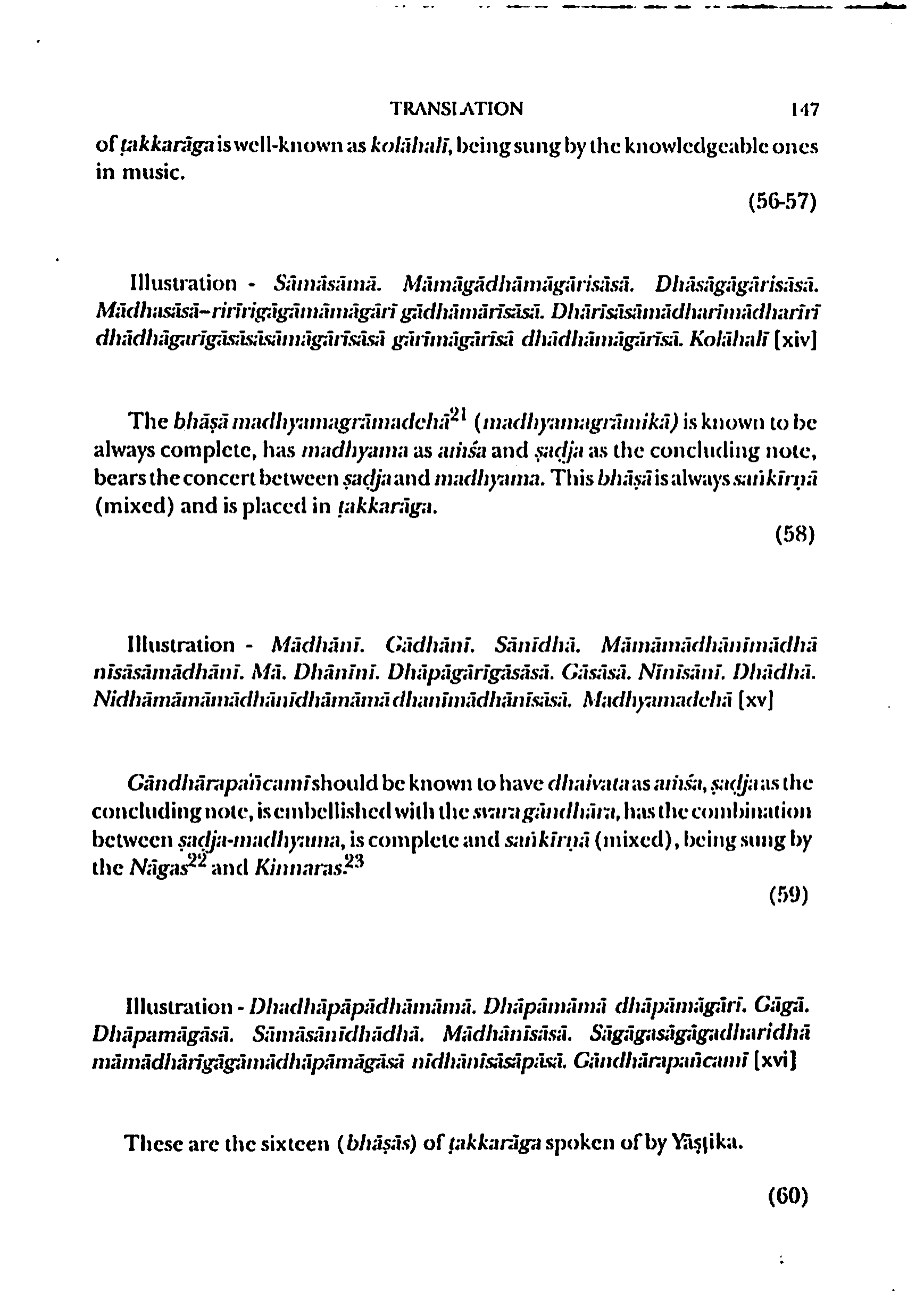
of takkarāga is well-known as kolāhalī8, being sung by the knowledgeable ones
in music.1
<math>(56-57)</math>
Illustration - Sāmāsāmā. Māmāgādhāmāgārisāsā. Dhāsāgāgārisāsā.
Mādhasāsā-rirīrigāgāmāmāgārī gādhāmārīsāsā. Dhārīsāsāmādharīmādharīrī
dhādhāgarīgāsāsāsāmāgārīsāsā gārīmāgārīsā dhādhāmāgārīsā.
Kolāhalī [xiv]
The bhāṣā
madhyamagrāmadehā21 (
madhyamagrāmikā) is known to be
always complete, has
madhyama as amśa and sadja as the concluding note,
bears the concert between
ṣaḍja and
madhyama. This
bhāṣā is always
saṅkīrṇā
(mixed) and is placed in
takkarāga.
(58)
Illustration - Mādhānī, Gādhānī, Sānīdhā, Māmāmādhānīmādhā
nīsāsāmādhānī. Mā. Dhānīnī. Dhāpāgārīgāsāsā. Gāsāsā. Nīnīsānī. Dhādhā.
Nidhāmāmāmādhānīdhāmāmā dhanīmādhānīsāsā. Madhyamadehā (xv)
Gāndhārapahācamī should be known to have
dhaivata as amśa, sadja as the
concluding note,
is embellished with the svara gandhara, has the combination
between ṣaḍja-madhyama11, is complete and
saṅkīrṇā (mixed), being sung by
the
Nāgas22 and
Kinnaras.
23
(59)
Illustration - Dhadhāpāpādhāmāmā. Dhāpāmāmā dhāpāmāgārī. Gāgā.
Dhāpamāgāsā. Sāmāsānīdhādhā. Mādhānīsāsā. Sāgāgasāgāgadharidhā
māmādhārīgāgāmādhāpāmāgāsā nidhānisāsāpāsā. Gāndhārapancami [xvi]
These are the sixteen (bhāṣās) of ṭakkarāga spoken of by Yāṣṭika.653
(60)