Source scans · vol_II_p083
recto · open full
scan recto
verso · open full
scan verso
Bṛhaddeśī · Volume II
pp. 148–149folio 083
Devanāgarī
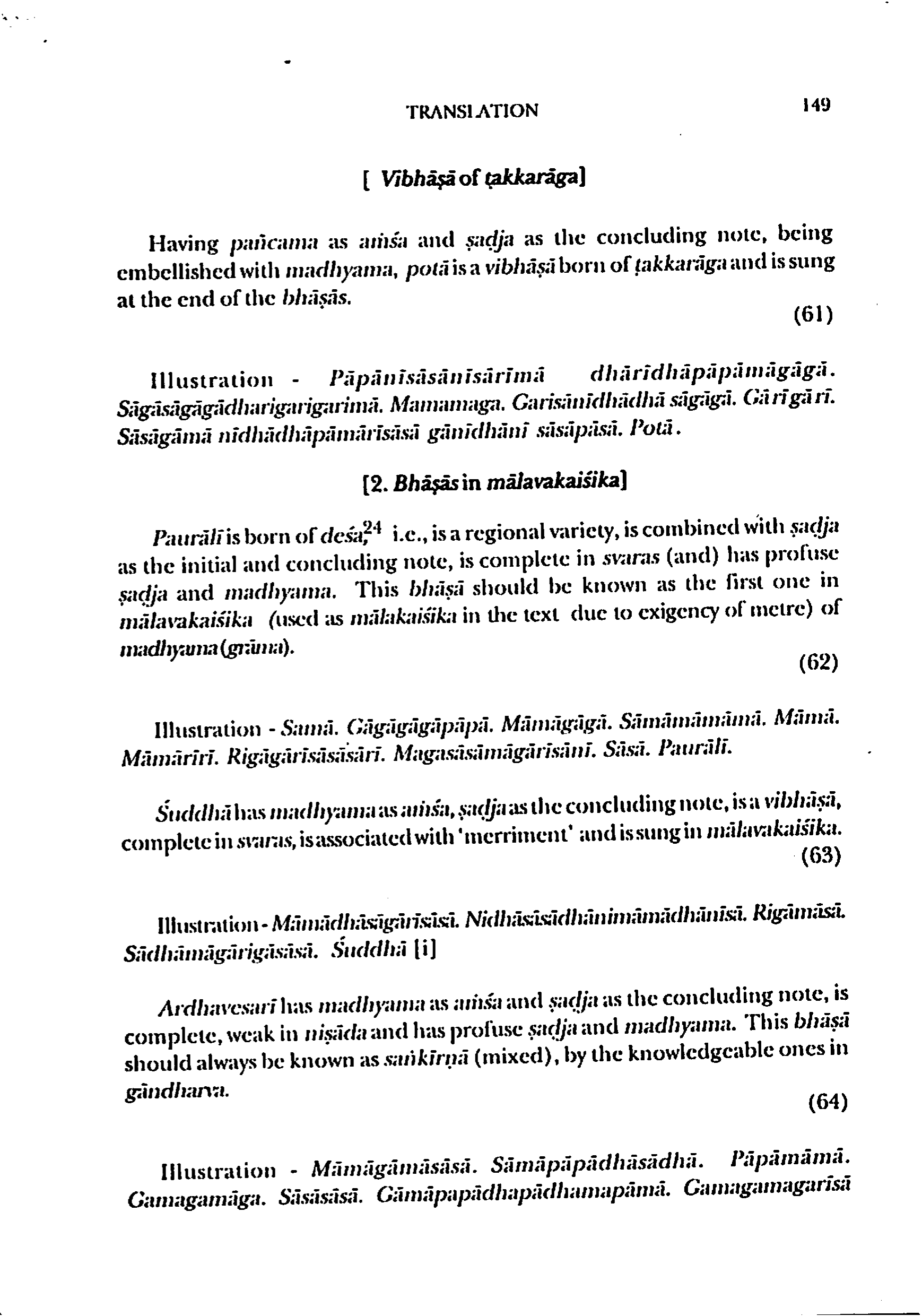
BŖHADDEŚĪ ४४ [टक्कराग-विभाषा]
पञ्चमांशा तु षड्ज?ान्ता ४५पोता मध्यमभूषिता ।
शुद्धा विभाषा टक्करागोत्था भाषान्तेषु च गीयते ॥६१॥
उदाहरणम् – पापानीसासानीसारीमा धारीधापापामागागा । ४६सागासागागाधरिगरिगरिमा । म म म ग ।
ग रि सा नी धा धा सा गा गा । गारीगारी । सा सा गा मा नीधाधापामारीसासा गा नी धा नी सा सा पा सा । पोता ।
शुद्धा
[२.अथ मालवकैशिके]
षड्ज?ाद्यन्तसमायुक्ता बहुलौ षड्जमध्यमौ ।
सुसम्पूर्णस्वरा ज?्ञेया पौराली देशसम्भवा2
भाषेयं प्रथमा ज?्ञेया मध्यमे मालकैशिके ॥६२॥
मामारीरी ।
[उदाहरणम् ]- समा । गा गा गा गा पा पा । मा मा गा गा । सा मा मा मा । मामा ।
रिगागारीसासासारी । मगसासामागारीसानी । सासा । पौराली४७
मध्यमांशा तु षड्ज?ान्ता विभाषा पूर्णसुस्वरा ।
गीयते ४८ हर्षसंयुक्ता शुद्धा मालवकैशिके ॥६३॥ र्ष+(?) उदाहरणम् – मामाधासागारीसासा । नि धा सा सा धा नि मा मा धा नी सा । रि गा मा सा । साधा- मा गा रि गा सा सा । शुद्धा । [१]
मध्यमांशा तु षड्ज?ान्ता सम्पूर्णा चार्धवेसरी४९
चाद्यभ
दुर्बला च निषादेन बहुलौ षड्जमध्यमौ ॥
सङ्कीर्णेयं सदा ज?्ञेया भाषा गान्धर्ववेदिभिः ॥६४॥ यदा
सा सा सा सा ।
उदाहरणम् – मा मा गा मा सा सा । सा मा पा पा धा सा धा । पा पा मा मा ।
ग म ग मा ग ।
English — Sharma (translation)
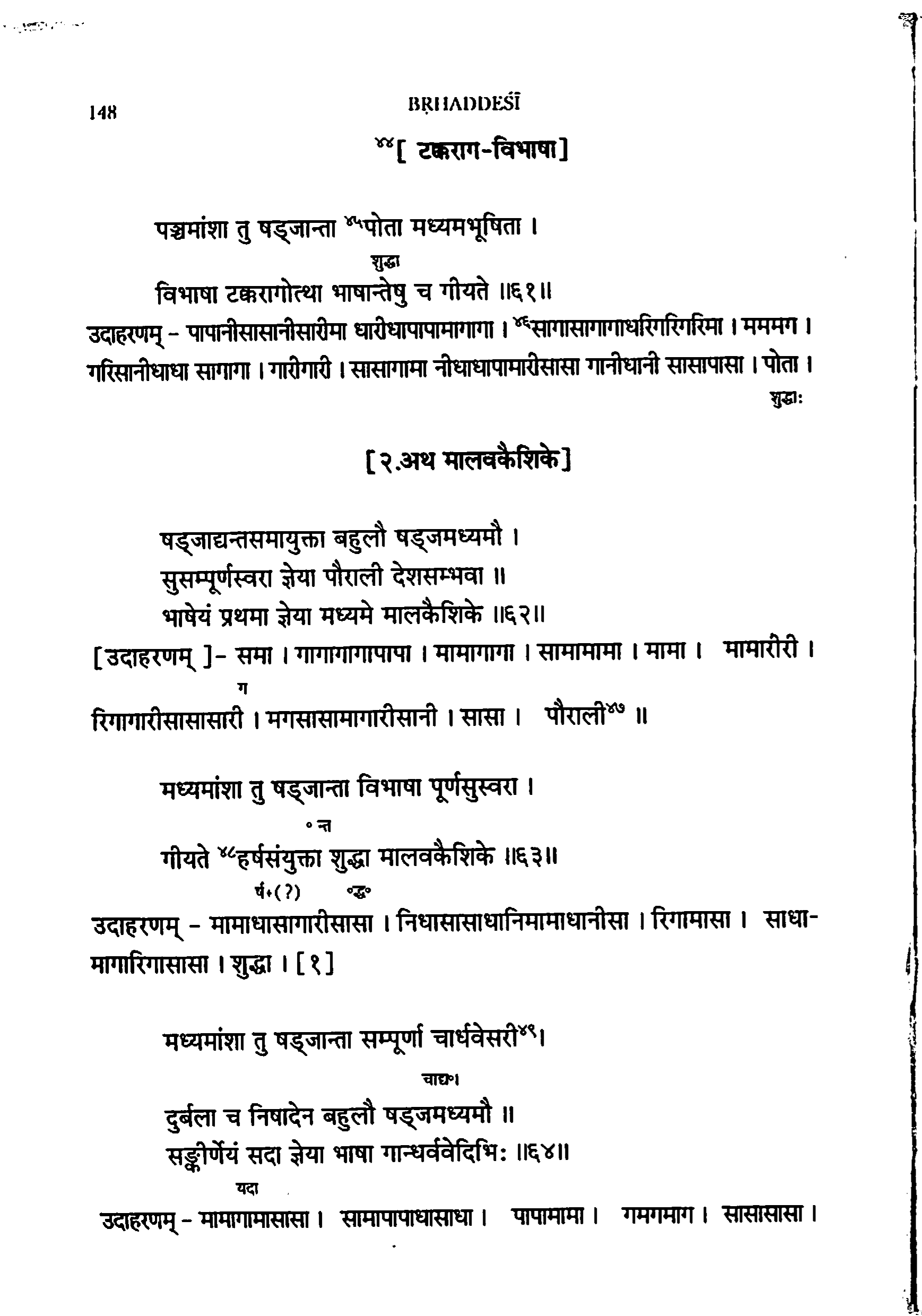
4 - 1 Having pañcama as amsa and sadja as the concluding note, being embellished with madhyama, potā9 is a vibhāṣā born of ṭakkarāga61 and is sung at the end of the bhāṣās3.
(61)
Illustration - Pāpānīsāsānīsārīmā dhārīdhāpāpāmāgāgā. Sāgāsāgāgādharigarigarimā. Mamamaga. Garisānīdhādhā sāgāgā. Gā rī gā rī. Sāsāgāmā nīdhādhāpāmārīsāsā gānīdhānī sāsāpāsā. Potā.
[2. Bhāṣās in mālavakaiśika]
Paurālī is born of <math>deśa^{24}</math>, i.e., is a regional variety, is combined with şadja as the initial and concluding note, is complete in svaras (and) has profuse șadja and madhyama. This bhāṣā should be known as the first one in mālavakaišika (used as mālakaišika in the text due to exigency of metre) of madhyama (grāma).
(62)
Illustration - Samā. Gāgāgāgāpāpā. Māmāgāgā. Sāmāmāmāmā. Māmā. Māmārīrī. Rigāgārīsāsāsārī. Magasāsāmāgārīsānī. Sāsā. Paurālī. Šuddhāhas madhyama as amśa, ṣadja as the concluding note, is a vibhāṣā, complete in svaras, is associated with 'merriment' and is sung in mālavakaišika.
(63)
Illustration - Māmādhāsāgārīsāsā. Nidhāsāsādhānimāmādhānīsā. Rigāmāsā. Sādhāmāgārigāsāsā. Suddhā [i] Ardhavesarī has madhyama as amśa and ṣadja as the concluding note, is complete, weak in niṣāda and has profuse ṣaḍja and madhyama. This bhāṣā should always be known as sankīrņā (mixed), by the knowledgeable ones in gändharva.75
(64)
Pāpāmāmā. Illustration - Māmāgāmāsāsā. Sāmāpāpādhāsādhā. Gamagamāga. Sāsāsāsā. Gāmāpapādhapādhamapāmā. Gamagamagarīsā
2.[definition] Paurālī is born of deśa (regional variety), combined with sadja as initial and concluding note, complete in svarasषड्ज?ाद्यन्तसमायुक्ता बहुलौ षड्जमध्यमौ । सुसम्पूर्णस्वरा ज?्ञेया पौराली देशसम्भवा
3.[definition]vibhāṣā is a musical category that can be born from (derived from) a rāgavibhāṣā ṭakkarāgotthā bhāṣānteṣu ca gīyate
4.[enumeration] vibhāṣā varieties in mālavakaiśika are enumerated and include Paurālī, Śuddhā, and Ardhavesarīषड्ज?ाद्यन्तसमायुक्ता बहुलौ षड्जमध्यमौ । सुसम्पूर्णस्वरा ज?्ञेया पौराली देशसम्भवा ॥ भाषेयं प्रथमा ज?्ञेया मध्यमे मालकैशिके
5.[relation]sankīrņā (mixed) is a category descriptor applicable to certain bhāṣās, to be recognized by knowledgeable ones in gändharvasańkīrņeyaṁ sadā jñeyā bhāṣā gāndharvavedibiḥ
6.[relation]ṭakkarāga is a rāga from which vibhāṣās (specifically potā) are derivedvibhāṣā ṭakkarāgotthā
7.[relation]gändharva refers to a class of knowledgeable musicians or practitioners with authority to recognize certain musical categoriessańkīrņeyaṁ sadā jñeyā bhāṣā gāndharvavedibiḥ
9.[structural]amsa is a structural property of rāga varieties, functioning as a characteristic notepañcamāṁśā tu ṣaḍjānta potā
10.[structural]mālavakaiśika is a grāma (tonal system) within which multiple bhāṣās are classifiedbhāṣeyaṁ prathamā jñeyā madhyame mālakaišike
1.[definition]potā is a vibhāṣā born of ṭakkarāga, having pañcama as amsa and sadja as concluding note, embellished with madhyamaHaving pañcama as amsa and sadja as the concluding note, being embellished with madhyama, potā is a vibhāṣā born of ṭakkarāga
2.[definition]Paurālī is born of deśa (regional variety), combined with sadja as initial and concluding note, complete in svarasPaurālī is born of deśa^{24}, i.e., is a regional variety, is combined with şadja as the initial and concluding note, is complete in svaras
3.[definition] vibhāṣā is a musical category that can be born from (derived from) a rāgavibhāṣā born of ṭakkarāga and is sung at the end of the bhāṣās
4.[enumeration]vibhāṣā varieties in mālavakaiśika are enumerated and include Paurālī, Śuddhā, and ArdhavesarīPaurālī is born of deśa^{24}, i.e., is a regional variety, is combined with şadja as the initial and concluding note, is complete in svaras (and) has profuse șadja and madhyama. This bhāṣā should be known as the first one in mālavakaišika
5.[relation] sankīrņā (mixed) is a category descriptor applicable to certain bhāṣās, to be recognized by knowledgeable ones in gändharvaThis bhāṣā should always be known as sankīrņā (mixed), by the knowledgeable ones in gändharva.
6.[relation] ṭakkarāga is a rāga from which vibhāṣās (specifically potā) are derivedvibhāṣā born of ṭakkarāga
7.[relation] gändharva refers to a class of knowledgeable musicians or practitioners with authority to recognize certain musical categoriesThis bhāṣā should always be known as sankīrņā (mixed), by the knowledgeable ones in gändharva.
8.[structural]Ardhavesarī has madhyama as amsa and sadja as concluding note, is complete, weak in nisada, and has profuse sadja and madhyamaArdhavesarī has madhyama as aṁśa and ṣaḍja as the concluding note, is complete, weak in niṣāda and has profuse ṣaḍja and madhyama.
9.[structural] amsa is a structural property of rāga varieties, functioning as a characteristic noteHaving pañcama as amsa and sadja as the concluding note, being embellished with madhyama, potā